• Wyszukiwanie zaawansowane
  • Kategorie
  • Kategorie BISAC
  • Książki na zamówienie
  • Promocje
  • Granty
  • Książka na prezent
  • Opinie
  • Pomoc
  • Załóż konto
  • Zaloguj się

Technological Change, Economic Development and Space » książka


zaloguj się | załóż konto
Logo Krainaksiazek.pl

koszyk

konto

szukaj
topmenu
Księgarnia internetowa
Szukaj
Książki na zamówienie
Promocje
Granty
Książka na prezent
Moje konto
Pomoc
 
 
Wyszukiwanie zaawansowane
Pusty koszyk
Bezpłatna dostawa dla zamówień powyżej 20 złBezpłatna dostawa dla zamówień powyżej 20 zł

Kategorie główne

• Nauka
 [2949965]
• Literatura piękna
 [1857847]

  więcej...
• Turystyka
 [70818]
• Informatyka
 [151303]
• Komiksy
 [35733]
• Encyklopedie
 [23180]
• Dziecięca
 [617748]
• Hobby
 [139972]
• AudioBooki
 [1650]
• Literatura faktu
 [228361]
• Muzyka CD
 [398]
• Słowniki
 [2862]
• Inne
 [444732]
• Kalendarze
 [1620]
• Podręczniki
 [167233]
• Poradniki
 [482388]
• Religia
 [509867]
• Czasopisma
 [533]
• Sport
 [61361]
• Sztuka
 [243125]
• CD, DVD, Video
 [3451]
• Technologie
 [219309]
• Zdrowie
 [101347]
• Książkowe Klimaty
 [123]
• Zabawki
 [2362]
• Puzzle, gry
 [3791]
• Literatura w języku ukraińskim
 [253]
• Art. papiernicze i szkolne
 [7933]
Kategorie szczegółowe BISAC

Technological Change, Economic Development and Space

ISBN-13: 9783642797620 / Angielski / Miękka / 2011 / 354 str.
Cristoforo S. Bertuglia; Manfred M. Fischer; Giorgio Preto
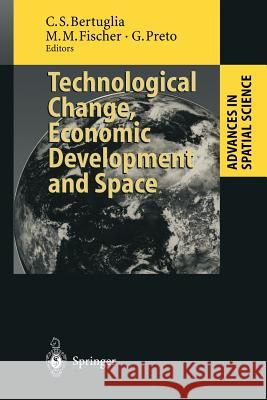
Technological Change, Economic Development and Space Cristoforo S. Bertuglia Manfred M. Fischer Giorgio Preto 9783642797620 Springer - książkaWidoczna okładka, to zdjęcie poglądowe, a rzeczywista szata graficzna może różnić się od prezentowanej.

Technological Change, Economic Development and Space

ISBN-13: 9783642797620 / Angielski / Miękka / 2011 / 354 str.

Cristoforo S. Bertuglia; Manfred M. Fischer; Giorgio Preto
cena 403,47 zł
(netto: 384,26 VAT:  5%)

Najniższa cena z 30 dni: 385,52 zł
Termin realizacji zamówienia:
ok. 22 dni roboczych
Bez gwarancji dostawy przed świętami

Darmowa dostawa!

What are the most favourable conditions for the generation of innovative ideas and forms of enterprise? Can they be stimulated by intervention policies? To what extent does the injection of new technology stimulate local economic development? Do Science Parks really work? It is increasingly important in a world of global competition to be able to provide answers to these questions. There is an urgent need for positive guidance to achieving the necessary economic and physical "reshaping" of our cities and regions. This volume provides a compact in-depth investigation of these issues, bringing together the work of leading scholars from a number of different countries who present insights gained from both theoretical and empirical research.


Kategorie:
Nauka, Ekonomia i biznes
Kategorie BISAC:
Science > Earth Sciences - Geography
Business & Economics > Urban & Regional
Business & Economics > Development - Economic Development
Wydawca:
Springer
Seria wydawnicza:
Advances in Spatial Science
Język:
Angielski
ISBN-13:
9783642797620
Rok wydania:
2011
Wydanie:
1995
Numer serii:
000354648
Ilość stron:
354
Waga:
0.57 kg
Wymiary:
23.5 x 15.5
Oprawa:
Miękka
Wolumenów:
01

1. Technological Change, Economic Development and Space: An Introduction.- 1.1 The Context.- 1.2 The Structure of the Book.- References.- A: Diffusion of Knowledge, Network Externalities and Economic Development.- 2. Creation, Innovation and Diffusion of Knowledge: General and Specific Economic Impacts.- 2.1 Fast and Slow Processes of Development.- 2.2 Creativity, Innovation and Diffusion.- 2.3 The Creative Process.- 2.4 Small Scale Creative Cooperation.- 2.5 Productivity versus Creativity: ASocial Conflict.- 2.6 Research and Development, Innovations and Patenting.- 2.7 Dynamics of Merger in Knowledge Intensive Markets.- 2.8 Slow Processes of Knowledge and Networks and the Size and Structure of Dominant Regions.- 2.9 Some Historical Evidence.- 2.10 The Emerging C-Society and C-Regions of the Future.- 2.11 Small Plants and Large Corporations.- 2.12 New Macro C-corridors in Europe, the US and Japan.- 2.13 Summary and Conclusions.- References.- 3. A Territorial Socio-ecological Approach to Innovation Diffusion, Schumpeterian Competition and Dynamic Choice.- 3.1 Introduction.- 3.2 Characterization of the Territorial Environment: Territorial Decentralized Systems, the Superposition Principle and the Phenomenon of Unilinear Evolution.- 3.3 From the Concept of ‘Homo Economicus’ to the Concept of ‘Homo Socialist’ Innovation Diffusion as a Collective Socio- ecological Dynamic Choice Process.- 3.4 Diffusion of One Innovation within a Territorial Unit: A Reinterpretation of Verhulst and Pearl-Reed Logistic Differential Equations.- 3.5 A Mathematical Model of the Diffusion of a Cluster of Competitive Innovations within an Active Territorial Environment: The Creation of Innovation Adoption Niches.- 3.6 Qualitative Analysis of Results of the Dynamic Competition Hypergame for Diffusion of Clusters of Competitive Innovations: Schumpeter Competition Cycles.- 3.7 Variational Principle for Dynamic Competition Hypergames: Law of Collective Meso-level Choice Behaviour.- 3.8 Conclusions: Competition and Environment in the Innovation Diffusion Process.- References.- 4. Innovation, Communication Networks and Urban Milieus: A Sociological Approach.- 4.1 Introduction.- 4.2 Phases of the Innovation Process and Resources.- 4.3 Innovation as the Output of Communication Networks.- 4.4 A Typology of Innovative Contexts.- 4.5 Conclusions.- References.- 5. Transportation, Communications and Patterns of Location.- 5.1 Introduction.- 5.2 Present Trends and Emerging Problems.- 5.3 A Conceptual Framework for the Analysis of Location — Transport Systems.- 5.4 The Spatial Implications of Technological Innovation in Communication Networks.- 5.5 Fields of Application.- 5.6 Conclusions.- References.- 6. The Interacting Choice Processes of Innovation, Location and Mobility: A Compartmental Approach.- 6.1 Introduction.- 6.2 The Conceptual and Methodological Background.- 6.3 The Choice Processes Involved in Innovation Adoption.- 6.4 The Location Choice Process.- 6.5 The Modal Choice between Transport and NIT.- 6.6 The Pattern of Flows.- 6.7 The Structure of the Telemaco Model.- 6.8 Conclusions.- Acknowledgements.- References.- B: Innovation Behaviour of Individual Firms.- 7. Technological Change and Innovation Behaviour.- 7.1 Introduction.- 7.2 A Conceptual Model of the Technological Innovation Process.- 7.3 Factors Influencing Innovation Behaviour.- 7.4 Summary and Conclusions.- References.- 8. Company Classification and Technological Change: A New Perspective on Regional Innovation.- 8.1 Introduction.- 8.2 Company Classification.- 8.3 Technological Profiles of Establishment Types.- 8.4 Implications for Regional Analysis.- 8.5 Conclusions.- Acknowledgements.- References.- 9. Innovation Adoption, Innovation Networks and Agglomeration Economies.- 9.1 Introduction.- 9.2 Networks and Innovation Adoption.- 9.3 Agglomeration Economies, Innovation Networks and Innovation Adoption.- 9.4 Innovation Networks and the Adoption and Diffusion of Information Technology: Some Empirical Evidence from Earlier Studies.- 9.5 The Data and the Estimation Procedures.- 9.6 Empirical Results.- 9.7 Conclusions.- References.- 10. Network Externalities: Towards a Taxonomy of the Concept and a Theory of Their Effects on the Performance of Firms and Regions.- 10.1 Introduction.- 10.2 The Concept of Network Externality.- 10.3 A Taxonomy of Network Externalities.- 10.4 Private, Club and Public Goods: The Role of Network Externalities.- 10.5 Effects of Network Externalities on the Performance of Firms and Regions.- 10.6 Conclusions.- Acknowledgements.- References.- 11. Industrial Dynamics and Rational Expectations in a Spatial Setting.- 11.1 Introduction.- 11.2 Spatial Investment Behaviour of Firms.- 11.3 The Data Base.- 11.4 Specification of a Probit Model.- 11.5 Regional Investment Dynamics and Expectation of Enterprises.- 11.6 Concluding Remarks.- References.- C: Local/Global Networks: What Policy, What Future?.- 12. The Region as an Evolutive System.- 12.1 Introduction.- 12.2 Is the Region a Recognizable Geographical Entity?.- 12.3 The Networks and Their Nodes.- 12.4 The Region as the Space of a Node’s Internal Connectivity.- 12.5 The Region as the Space of a Final Goods Market.- 12.6 The Economic Base as a Propulsor of Regional Dynamics.- 12.7 The Local Subsystems of Basic Production.- 12.8 Some Useful Elements for Defining a Regional Typology.- 12.9 Conclusion.- References.- 13. The New Flexible Economy: Shaping Regional and Local Institutions for Global Competition.- 13.1 Introduction.- 13.2 Flexibility: The New Context for Policy.- 13.3 Bottom-up Strategies.- 13.4 Globalization and the Limits of Networks.- References.- 14. High-tech Centres and Regional Innovation: Some Case Studies in the UK, Germany, Japan and Korea.- 14.1 Introduction.- 14.2 The High-tech Centre Concept.- 14.3 The Aims of High-tech Centre Policy.- 14.4 Some Case Studies: The UK, Germany, Japan and Korea.- 14.5 Evaluation.- References.- 15. Concluding Comments and Future Outlook.- References.- Author Index.- List of Contributors.

Manfred M. Fischer (born in 1947, Nuremberg, Germany) graduated in geography and mathematics from the Friedrich-Alexander University in Erlangen (Germany). He holds a Ph.D. (summa cum laude) on urban modelling from the same university (1975), and a habilitation degree in human geography from the University of Vienna (1982). Since 1988 he is professor in economic geography and GIScience at the Vienna University of Economics and Business.
For more than thirty years he has consistently made significant contributions to regional science and GIScience in general, and spatial analysis, GeoComputation and spatial econometrics in particular. He has published widely, both books and articles in more than 30 distinct academic journals.


Udostępnij

Facebook - konto krainaksiazek.pl


Opinie o Krainaksiazek.pl na Opineo.pl

Partner Mybenefit

Krainaksiazek.pl w programie rzetelna firma Krainaksiaze.pl - płatności przez paypal

Czytaj nas na:

Facebook - krainaksiazek.pl
  • książki na zamówienie
  • granty
  • książka na prezent
  • kontakt
  • pomoc
  • opinie
  • regulamin
  • polityka prywatności

Zobacz:

  • Księgarnia czeska

  • Wydawnictwo Książkowe Klimaty

1997-2025 DolnySlask.com Agencja Internetowa

© 1997-2022 krainaksiazek.pl
     
KONTAKT | REGULAMIN | POLITYKA PRYWATNOŚCI | USTAWIENIA PRYWATNOŚCI
Zobacz: Księgarnia Czeska | Wydawnictwo Książkowe Klimaty | Mapa strony | Lista autorów
KrainaKsiazek.PL - Księgarnia Internetowa

Polityka prywatnosci - link
Krainaksiazek.pl - płatnośc Przelewy24
Przechowalnia Przechowalnia





