• Wyszukiwanie zaawansowane
  • Kategorie
  • Kategorie BISAC
  • Książki na zamówienie
  • Promocje
  • Granty
  • Książka na prezent
  • Opinie
  • Pomoc
  • Załóż konto
  • Zaloguj się

Techniques to Measure Food Safety and Quality: Microbial, Chemical, and Sensory » książka

zaloguj się | załóż konto
Logo Krainaksiazek.pl

koszyk

konto

szukaj
topmenu
Księgarnia internetowa
Szukaj
Książki na zamówienie
Promocje
Granty
Książka na prezent
Moje konto
Pomoc
 
 
Wyszukiwanie zaawansowane
Pusty koszyk
Bezpłatna dostawa dla zamówień powyżej 20 złBezpłatna dostawa dla zamówień powyżej 20 zł

Kategorie główne

• Nauka
 [2946912]
• Literatura piękna
 [1852311]

  więcej...
• Turystyka
 [71421]
• Informatyka
 [150889]
• Komiksy
 [35717]
• Encyklopedie
 [23177]
• Dziecięca
 [617324]
• Hobby
 [138808]
• AudioBooki
 [1671]
• Literatura faktu
 [228371]
• Muzyka CD
 [400]
• Słowniki
 [2841]
• Inne
 [445428]
• Kalendarze
 [1545]
• Podręczniki
 [166819]
• Poradniki
 [480180]
• Religia
 [510412]
• Czasopisma
 [525]
• Sport
 [61271]
• Sztuka
 [242929]
• CD, DVD, Video
 [3371]
• Technologie
 [219258]
• Zdrowie
 [100961]
• Książkowe Klimaty
 [124]
• Zabawki
 [2341]
• Puzzle, gry
 [3766]
• Literatura w języku ukraińskim
 [255]
• Art. papiernicze i szkolne
 [7810]
Kategorie szczegółowe BISAC

Techniques to Measure Food Safety and Quality: Microbial, Chemical, and Sensory

ISBN-13: 9783030686352 / Angielski / Twarda / 2021 / 431 str.
Mohidus Samad Khan; Mohammad Shafiur Rahman
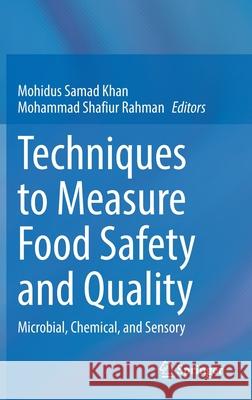
Techniques to Measure Food Safety and Quality: Microbial, Chemical, and Sensory Mohidus Samad Khan Mohammad Shafiu 9783030686352 Springer - książkaWidoczna okładka, to zdjęcie poglądowe, a rzeczywista szata graficzna może różnić się od prezentowanej.

Techniques to Measure Food Safety and Quality: Microbial, Chemical, and Sensory

ISBN-13: 9783030686352 / Angielski / Twarda / 2021 / 431 str.

Mohidus Samad Khan; Mohammad Shafiur Rahman
cena 885,61
(netto: 843,44 VAT:  5%)

Najniższa cena z 30 dni: 848,19
Termin realizacji zamówienia:
ok. 22 dni roboczych
Bez gwarancji dostawy przed świętami

Darmowa dostawa!
inne wydania
Kategorie:
Nauka, Biologia i przyroda
Kategorie BISAC:
Technology & Engineering > Food Science - Chemistry & Biotechnology
Science > Spectroscopy & Spectrum Analysis
Science > Mikrobiologia
Wydawca:
Springer
Język:
Angielski
ISBN-13:
9783030686352
Rok wydania:
2021
Wydanie:
2021
Ilość stron:
431
Waga:
0.85 kg
Wymiary:
23.39 x 15.6 x 2.69
Oprawa:
Twarda
Wolumenów:
01
Dodatkowe informacje:
Wydanie ilustrowane


Chapter 1. Overview on the types of microbial contaminants in foods and their risk factors
Chapter 2. Types of chemical contaminants and their sources
Chapter 3. Basic understanding of sensory properties and their overview
Chapter 4. Conventional microbial counting and identification techniques
Chapter 5. DNA Sequencing Technique for microbial analysis
Chapter 6. Polymerase Chain Reaction (PCR): (q-PCR and immuno-PCR) Technique for food analysis
Chapter 7. Reverse Transcription PCR (RT-PCR) Technique and Rapid Validity PCR (RV-PCR) Techniques for food analysis
Chapter 8. Enzyme-Linked Immunosorbent Assay (ELISA) Technique
Chapter 9. VITEC automated instrument for fast, accurate microbial identification, and antibiotic susceptibility testing
Chapter 10. High-Performance Liquid Chromatography (HPLC) Techniques in determining chemical contaminants in foods
Chapter 11. Nuclear Magnetic Resonance (NMR) food analysis
Chapter 12. Fourier-Transform Infrared Spectroscopy (FTIR) Technique for food analysis and authentication
Chapter 13. Ultraviolet-Visible Spectroscopy (UV-vis) Technique for food analysis
Chapter 14. NIR Spectroscopy for food analysis
Chapter 15. Gas Chromatography and Mass Spectroscopy (GS-MS) Technique for food analysis
Chapter 16. Extraction Techniques of food components and contaminants by Supercritical Fluid Extraction (SFE), Solid-Phase Micro Extraction (SPME) and Stir Bar Sorption Extraction (SBSE) Techniques
Chapter 17. Extraction Techniques of food components and contaminants by Microwave-Assisted Extraction (MAE) Technique
Chapter 18. Paper based kits for food analysis and authentication
Chapter 19. Laser-Induced Breakdown Spectroscopy (LIBS) Technique for food analysis
Chapter 20. Surface Enhanced Laser Desorption Ionization (SELDI) Technique for food analysis
Chapter 21. Surface Plasmon Resonance (SPR) Technique for food analysis
Chapter 22. Image analysis techniques for food defects and quality assessment
Chapter 23. Hyperspectral Imaging for food quality assessment
Chapter 24. Electronic-Tongue for food safety and quality assessment
Chapter 25. Texture Profile Analysis (TPA) for measuring food structure and its relation to sensory texture
Chapter 26. Low Field-Nuclear Magnetic Resonance (LF-NMR) for food structure analysis
Chapter 27. Differential Scanning Calorimetry (DSC) for food thermal characteristics and its relation to composition and structure
Chapter 28. Sensory Attributes Discrimination Measurement Techniques
Chapter 29. Sensory Descriptive Measurement Techniques
Chapter 30. Assessment of the microbial and chemical contaminants of specialized food items
Chapter 31. Assessment of the sensory quality of specialized food items

Professor Mohammad Shafiur Rahman is the author or co-author of more than 400 technical articles, including 150 refereed journal papers, 137 conference papers, 78 book chapters, and 13 books. He is the author of the internationally acclaimed and award-wining Food Properties Handbook, and the popular Handbook of Food Preservation, published by CRC Press, Boca Raton, Florida. He also published another 11 books in the field of Food Science and Technology. Professor Rahman has initiated the International Journal of Food Properties and serving as the founding Editor-in-Chief for more than 20 years. He is also serving as Editor-in-Chief for the Journal of Agricultural and Marine Sciences, published by Sultan Qaboos University.


Dr. Mohidus Samad Khan has authored and co-authored over 80 technical articles, which include peer-reviewed journal and conference articles, international patents, books and book chapters. He also serves as a reviewer of several reputed international journals. His research work on biotechnology won several major awards including University Medals for Best PhD Thesis, 'Young Innovator Award' organized by 'MIT Technology Review Inc' and ‘iCFP2016 Young Scientist Award’. Dr. Khan has been involved in health, food and environment projects led by the WHO, UNDP, the Government of Bangladesh (GoB), and local Industries.

This book addresses the basic understanding of food contaminants and their sources, followed by the techniques to measure food safety and quality.  It is divided into four parts: Part A - sources of contaminants in foods, their associated health risks, and integrated management and alternative options to minimize contaminants; Part B - Technological assessment of conventional methods and selected advanced methods for the detection, identification and enumeration of microbial contaminates; Part C - Technological assessment of different chemical measurements techniques; and Part D – Technological assessment of different instrumental techniques to assess sensory properties of foods.

Food safety is a growing concern due to the increase in food-borne illnesses caused by food adulteration, excessive use of pesticides, use of chemical preservatives and artificial fruit ripening agents, microbial contaminations, and improper food handling. Chemical contaminants in food could be transferred from environmental or agrochemical sources, personal care products, and other by-products of water disinfects. In addition, microbial food safety can be threatened due to the presence of many pathogens, such as Salmonella, Escherichia coli, Clostridium botulinum, Staphylococcus aureus, and Listeria monocytogenes in foods. Globally, strict regulations are imposed to limit the potential contaminants in foods. Development of accurate, rapid, and inexpensive approaches to test food contamination and adulteration would be highly valued to ensure global food safety. There are existing processes to ensure safety of food products from chemical and microbial contaminants. Apart from the existing measurement technologies, varieties of new techniques are also being emerged and these could be potential to ensure food safety and quality.

In addition to chemical and microbial properties, sensory properties such as texture, mouth feel, flavor, and taste, are among the most important attributes of food products to ensure their acceptability by consumers. Two approaches are available to evaluate sensory properties of food products, namely subjective and objective analyses. The responses are perceived by all five senses: smell, taste, sight, touch, and hearing. The approach used in sensory evaluation varies depending on the types of foods and the ultimate goal of the testing. Sensory attributes are the most important quality parameters after ensuring the safety of foods.


Udostępnij

Facebook - konto krainaksiazek.pl


Opinie o Krainaksiazek.pl na Opineo.pl

Partner Mybenefit

Krainaksiazek.pl w programie rzetelna firma Krainaksiaze.pl - płatności przez paypal

Czytaj nas na:

Facebook - krainaksiazek.pl
  • książki na zamówienie
  • granty
  • książka na prezent
  • kontakt
  • pomoc
  • opinie
  • regulamin
  • polityka prywatności

Zobacz:

  • Księgarnia czeska

  • Wydawnictwo Książkowe Klimaty

1997-2025 DolnySlask.com Agencja Internetowa

© 1997-2022 krainaksiazek.pl
     
KONTAKT | REGULAMIN | POLITYKA PRYWATNOŚCI | USTAWIENIA PRYWATNOŚCI
Zobacz: Księgarnia Czeska | Wydawnictwo Książkowe Klimaty | Mapa strony | Lista autorów
KrainaKsiazek.PL - Księgarnia Internetowa

Polityka prywatnosci - link
Krainaksiazek.pl - płatnośc Przelewy24
Przechowalnia Przechowalnia







