Teaching World History Thematically: Essential Questions and Document-Based Lessons to Connect Past and Present » książka

topmenu




Teaching World History Thematically: Essential Questions and Document-Based Lessons to Connect Past and Present
ISBN-13: 9780807764466 / Angielski / Miękka / 2020 / 285 str.
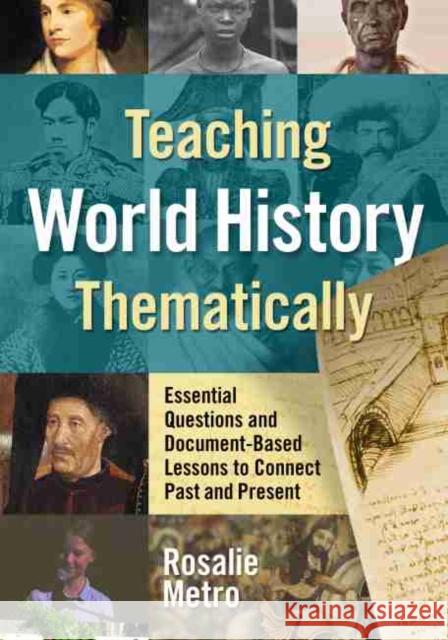
Teaching World History Thematically: Essential Questions and Document-Based Lessons to Connect Past and Present
ISBN-13: 9780807764466 / Angielski / Miękka / 2020 / 285 str.
cena 170,37
(netto: 162,26 VAT: 5%)
Najniższa cena z 30 dni: 156,09
(netto: 162,26 VAT: 5%)
Najniższa cena z 30 dni: 156,09
Termin realizacji zamówienia:
ok. 22 dni roboczych.
ok. 22 dni roboczych.
Darmowa dostawa!
Kategorie BISAC:
Wydawca:
Teachers College Press
Język:
Angielski
ISBN-13:
9780807764466
Rok wydania:
2020
Ilość stron:
285
Oprawa:
Miękka
Wolumenów:
01
Dodatkowe informacje:
Bibliografia
Wydanie ilustrowane
Wydanie ilustrowane
- Contents
- Acknowledgments xiii
- Introduction: Why Use a Thematic, Document-Based Approach for Teaching World History? 1
- Why Thematic? 2
- Why Document Based? 3
- Meeting Common Core and Other State and National Standards 7
- What Are the Long-Term Changes and Recurring Patterns in World History? 9
- Structure of a Unit 9
- Structure of a Lesson 13
- Assessment 17
- Accounting for Grade Level and Differentiating Instruction 18
- Classroom Climate 19
- Designing Your Own Thematic Units 22
- 1. Forms of Government: What Should Be the Rights and Responsibilities of the Rulers and the Ruled? 23
- Lesson 1.1: What Are Activists Asking the United Nations to Do About the Murder of Journalist Jamal Khashoggi? 24
- Lesson 1.2: What Kind of Laws Did King Hammurabi Make for His Subjects? 26
- Lesson 1.3: How Did Pericles Describe Direct Democracy in Athens? 29
- Lesson 1.4: How Did Sparta’s Oligarchy Work? 31
- Lesson 1.5: What Was the Role of the Imperial Monarch in Han Dynasty China? 33
- Lesson 1.6: How Did the Roman Republic Resemble a Monarchy, an Aristocracy, and a Democracy? 35
- Lesson 1.7: How Did Suryavarman II Rule as Devaraja? 38
- Lesson 1.8: How Did Muawiyah I Govern His Caliphate? 40
- Lesson 1.9: How Did Louis XIV Create an Absolute Monarchy in France? 42
- Lesson 1.10: How Did Igbo Women Command Respect in a Stateless Society? 45
- Lesson 1.11: How Is India’s Democracy Structured? 47
- Lesson 1.12: How Does Finland Guarantee Social Welfare to Its Citizens? 49
- Lesson 1.13: How Have Inuit People Practiced Egalitarianism? 52
- 2. Religion and Society: How Should Belief Systems Influence Our Lives? 55
- Lesson 2.1: What Were Albert Einstein’s Arguments for Agnosticism? 56
- Lesson 2.2: How Is Brahman Described in the Hindu Upanishads? 58
- Lesson 2.3: How Did Confucius Envision the Ideal Society? 60
- Lesson 2.4: What Did the Dao De Jing Advise People to Do? 63
- Lesson 2.5: What Did the Buddha Teach Was the Path to Enlightenment? 65
- Lesson 2.6: What Did God Command Jewish People to Do in the Torah? 67
- Lesson 2.7: What Did Jesus Command Christians to Do in the Holy Bible? 70
- Lesson 2.8: What Did Allah Command Muslims to Do in the Holy Quran? 72
- 3. Us vs. Them: Who Is Civilized, and Who Is a Barbarian? 75
- Lesson 3.1: How Did François Hollande React to ISIS’s Attack on France? 76
- Lesson 3.2: How Was Sumerian Civilization Different From What Came Before It? 78
- Lesson 3.3: How Did Alexander the Great Try to Civilize the World? 80
- Lesson 3.4: Why Did Ancient Romans Blame the Collapse of Their Empire on Barbarians? 83
- Lesson 3.5: Why Did Portuguese Colonists Portray Africans as Uncivilized? 85
- Lesson 3.6: How Did Ideas of Civilization Differ in the Ottoman and Austrian Empires? 87
- Lesson 3.7: Did Spanish Colonization of the Americas Bring Civilization or Barbarism? 89
- Lesson 3.8: Why Did Qing Dynasty Chinese See People From Europe as Barbarians? 91
- Lesson 3.9: How Did Enlightenment Philosophers Redefine Civilization? 94
- Lesson 3.10: Why Did French People Think They Needed to Civilize “Inferior Races”? 96
- Lesson 3.11: How Did Meiji Japanese Leaders Define Civilization? 99
- Lesson 3.12: What Kind of Civilization Did Hitler Envision for the World? 101
- Lesson 3.13: How Does the Universal Declaration of Human Rights Describe a Civilized Society? 104
- 4. Conflict: What Is Worth Fighting For? 107
- Lesson 4.1: What Are the Effects of the War in Yemen on Civilians? 108
- Lesson 4.2: How Did the Greeks Try to Convince the Ionians to Join Their Fight Against the Persians? 110
- Lesson 4.3: Why Did King Aśoka Want to Stop Wars? 112
- Lesson 4.4: Why Did Hannibal Attack the Roman Empire? 115
- Lesson 4.5: Why Did the Normans Attack the Anglo-Saxons in the Battle of Hastings? 117
- Lesson 4.6: How Did Christians Justify the Crusades? 119
- Lesson 4.7: How Did Napoleon Motivate Soldiers to Fight for Him? 121
- Lesson 4.8: Why Did King Leopold II Fight for Control of the Congo? 123
- Lesson 4.9: Why Did Serbian Nationalists Ignite World War I? 126
- Lesson 4.10: Why Did Costa Rica Abolish Its Military? 128
- Lesson 4.11: Why Were Jewish People Willing to Fight for a Country of Their Own? 131
- Lesson 4.12: Why Have Palestinians Fought Against Israel? 133
- Lesson 4.13: Why Were Hutus Willing to Kill Tutsis in Rwanda? 136
- 5. Equality vs. Hierarchy: What Should Be the Balance Between Social Equality and Social Hierarchy? 139
- Lesson 5.1: How Are Ordinary People in South Sudan Working Together for Justice? 140
- Lesson 5.2: How Did Athenian Democrats Justify Slavery? 142
- Lesson 5.3: What Social Classes Existed in the Maya Empire? 144
- Lesson 5.4: How Did Mongol Pastoralists Organize Their Nomadic Society? 146
- Lesson 5.5: How Did the Incan Allyu System Work? 149
- Lesson 5.6: How Did the Tokugawa Shogunate Practice Feudalism? 151
- Lesson 5.7: Why Did Karl Marx Envision a Classless Society? 153
- Lesson 5.8: How Did White South Africans Justify Apartheid Rule? 156
- Lesson 5.9: How Did Dalit People Seek Equality in India? 158
- Lesson 5.10: How Did the Khmer Rouge Justify Violence in the Name of Equality? 161
- 6. Economics, Technology, and the Environment: How Should People Get the Resources They Need? 165
- Lesson 6.1: What Did Greta Thunberg Ask World Leaders to Do About Climate Change? 166
- Lesson 6.2: How Have Australian Aboriginal People Interacted With Their Environment? 168
- Lesson 6.3: What Were the Causes and Effects of the Neolithic Revolution? 170
- Lesson 6.4: How Did Ancient Egyptians Use the Nile River to Gain Resources? 172
- Lesson 6.5: How Did Trade Promote Cultural Diffusion Along the Silk Road? 174
- Lesson 6.6: How Did the Mali Empire Profit From Trade in Gold and Salt? 176
- Lesson 6.7: How Did Leonardo da Vinci Envision the Ideal City During the Renaissance? 178
- Lesson 6.8: How Did the Netherlands Profit From Colonization? 180
- Lesson 6.9: How Did Aztec Technology Aid Agriculture? 183
- Lesson 6.10: How Did Enslaved Africans Experience the Transatlantic Slave Trade? 185
- Lesson 6.11: How Was Free-Market Capitalism Supposed to Work? 187
- Lesson 6.12: What Were the Goals and Results of Mao Zedong’s Command Economy? 189
- Lesson 6.13: What Were the Effects of the Chernobyl Nuclear Disaster? 192
- 7. Gender: What Should Be the Roles of Women and Men in Society? 195
- Lesson 7.1: How Are Transgender People Challenging Assumptions About Women and Men? 196
- Lesson 7.2: Why Did Roman Women Protest Being Taxed? 198
- Lesson 7.3: What Role Did Ibn Rushd Think Women Should Play in Islamic Society? 200
- Lesson 7.4: How Did Queen Elizabeth I Defend Her Leadership? 202
- Lesson 7.5: How Did Queen Nzinga Resist Portuguese Colonizers? 204
- Lesson 7.6: How Did Catherine the Great Present Herself as a Leader? 206
- Lesson 7.7: What Were Mary Wollstonecraft’s Arguments for Women’s Rights? 209
- Lesson 7.8: Why Did Qiu Jin Argue for Chinese Women’s Freedoms? 211
- Lesson 7.9: Why Did Some Women Oppose Getting the Right to Vote? 213
- Lesson 7.10: How Did Käthe Kollwitz Work for Peace Through Art? 216
- Lesson 7.11: How Did Huda Sha’arawi Argue for Feminist Nationalism in Egypt? 218
- Lesson 7.12: How Did Una Marson Participate in Worldwide Struggles Against Sexism and Racism? 220
- 8. Resistance, Revolution, and Reform: How Should People Bring About Political and Social Change? 223
- Lesson 8.1: How Did Egyptians Use Social Media and Protest to Bring About Political Change? 224
- Lesson 8.2: How Did Julius Caesar Gain Control of Rome? 226
- Lesson 8.3: How Did the Safavid Empire Use Diplomacy to Accomplish Its Goals? 228
- Lesson 8.4: How Did Martin Luther Bring About the Protestant Reformation? 231
- Lesson 8.5: Why Did Maximilien Robespierre Believe Violence Was Necessary to Achieve the Goals of the French Revolution? 233
- Lesson 8.6: How Did Haitians End Slavery and Gain Independence From France? 236
- Lesson 8.7: How Did Southeast Asians Avoid Rulers Who Wanted to Control Them? 238
- Lesson 8.8: How Did Gandhi Use Nonviolent Resistance Against British Colonization? 241
- Lesson 8.9: Why Did Emiliano Zapata Think Land Reform Was Necessary for Mexico? 243
- Lesson 8.10: How Did Joseph Stalin Try to Revolutionize Soviet Society? 246
- Lesson 8.11: Why Did Algerians Believe That Violence Was Necessary to Decolonize Their Country? 249
- Lesson 8.12: How Did Rigoberta Menchú Resist the Human Rights Abuses of the Guatemalan Government? 251
- Lesson 8.13: How Did Václav Havel Spread Dissent Against the Totalitarian Regime in Czechoslovakia? 253
- 9. Continuity and Change: What Are the Long-Term Changes and Recurring Patterns in World History? 257
- Lesson 9.1: How Did Human Societies Begin? 257
- Lesson 9.2: How Did Early Civilizations and Pastoral Peoples Emerge in the Fifth to the First Millennia BCE? 257
- Lesson 9.3: How Did Classical Traditions, Major Religions, and Giant Empires Emerge in the First Millennium BCE? 258
- Lesson 9.4: How Did Zones of Exchange and Encounter Expand in the First Millennium CE? 258
- Lesson 9.5: How Did Hemispheric Interactions Intensify in the Second Millennium CE? 258
- Lesson 9.6: Why Did the First Global Age Emerge in the 15th to 18th Centuries? 258
- Lesson 9.7: What Were the Causes and Effects of Revolutions in the 18th to 20th Centuries? 259
- Lesson 9.8: What Were the Crises and Achievements of the First Half of the 20th Century? 259
- Lesson 9.9: What Have Been the Promises and Paradoxes of the Second Half of the 20th Century? 259
- Appendixes 261
- Appendix A: Quick Reference Guide 261
- Appendix B: Course Entry Survey 272
- Appendix C: Course Exit Survey 272
- Appendix D: Unit Entry Survey 273
- Appendix E: Biographical Research Paper Instructions 273
- Appendix F: Summit Research Worksheet 273
- Appendix G: Unit Exit Survey 274
- Appendix H: 21st-Century Issue Letter Instructions 274
- Appendix I: Designing Your Own Thematic Units 275
- Appendix J: Online Content 275
- References 277
- Index 279
- About the Author 287




Czytaj nas na:
1997-2026 DolnySlask.com Agencja Internetowa
Zobacz: Księgarnia Czeska | Wydawnictwo Książkowe Klimaty | Mapa strony | Lista autorów
KrainaKsiazek.PL - Księgarnia Internetowa

KrainaKsiazek.PL - Księgarnia Internetowa

