• Wyszukiwanie zaawansowane
  • Kategorie
  • Kategorie BISAC
  • Książki na zamówienie
  • Promocje
  • Granty
  • Książka na prezent
  • Opinie
  • Pomoc
  • Załóż konto
  • Zaloguj się

Tallgrass Prairie Restoration in the Midwestern and Eastern United States: A Hands-On Guide » książka


zaloguj się | załóż konto
Logo Krainaksiazek.pl

koszyk

konto

szukaj
topmenu
Księgarnia internetowa
Szukaj
Książki na zamówienie
Promocje
Granty
Książka na prezent
Moje konto
Pomoc
 
 
Wyszukiwanie zaawansowane
Pusty koszyk
Bezpłatna dostawa dla zamówień powyżej 20 złBezpłatna dostawa dla zamówień powyżej 20 zł

Kategorie główne

• Nauka
 [2946600]
• Literatura piękna
 [1856966]

  więcej...
• Turystyka
 [72221]
• Informatyka
 [151456]
• Komiksy
 [35826]
• Encyklopedie
 [23190]
• Dziecięca
 [619653]
• Hobby
 [140543]
• AudioBooki
 [1577]
• Literatura faktu
 [228355]
• Muzyka CD
 [410]
• Słowniki
 [2874]
• Inne
 [445822]
• Kalendarze
 [1744]
• Podręczniki
 [167141]
• Poradniki
 [482898]
• Religia
 [510455]
• Czasopisma
 [526]
• Sport
 [61590]
• Sztuka
 [243598]
• CD, DVD, Video
 [3423]
• Technologie
 [219201]
• Zdrowie
 [101638]
• Książkowe Klimaty
 [124]
• Zabawki
 [2473]
• Puzzle, gry
 [3898]
• Literatura w języku ukraińskim
 [254]
• Art. papiernicze i szkolne
 [8170]
Kategorie szczegółowe BISAC

Tallgrass Prairie Restoration in the Midwestern and Eastern United States: A Hands-On Guide

ISBN-13: 9781441974266 / Angielski / Twarda / 2010 / 276 str.
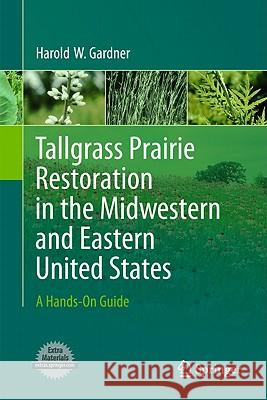
Howard W. Gardner
Tallgrass Prairie Restoration in the Midwestern and Eastern United States: A Hands-On Guide Gardner, Harold 9781441974266 Not Avail - książkaWidoczna okładka, to zdjęcie poglądowe, a rzeczywista szata graficzna może różnić się od prezentowanej.

Tallgrass Prairie Restoration in the Midwestern and Eastern United States: A Hands-On Guide

ISBN-13: 9781441974266 / Angielski / Twarda / 2010 / 276 str.

Howard W. Gardner
cena 806,99 zł
(netto: 768,56 VAT:  5%)

Najniższa cena z 30 dni: 771,08 zł
Termin realizacji zamówienia:
ok. 22 dni roboczych
Bez gwarancji dostawy przed świętami

Darmowa dostawa!

This work advocates the restoration of the North American tallgrass prairie, which is rapidly disappearing. Historical descriptions of prairie aesthetics are outlined. As we are experiencing a worldwide mixing of plant species, prairie restoration is particularly important. Plants alien to North America do not readily support insect populations, including all animal species higher on the food chain. Prairie restoration methods are described for amateurs, academics, and land managers. Some of the techniques described are growing crops for seed production, times of seed gathering for specific species, facile seed processing for amateurs, land preparation, segregation of seed into its preference for habitat, and required seed treatment for germination. Over 200 species are described that comprise the predominant species found in tallgrass prairie nature preserves, as well as degraded prairies. Some additional plants of especial interest are also described. The appendix tabulates all likely species found on prairies regardless of their scarcity. Safe fire management of prairies is described in detail. Finally, methods of controlling aggressive alien weeds by herbicides are detailed.


Kategorie:
Nauka, Biologia i przyroda
Kategorie BISAC:
Nature > Ecosystems & Habitats - Plains & Prairies
Science > Life Sciences - Ecology
Wydawca:
Not Avail
Język:
Angielski
ISBN-13:
9781441974266
Rok wydania:
2010
Ilość stron:
276
Waga:
0.61 kg
Wymiary:
23.5 x 15.5
Oprawa:
Twarda
Wolumenów:
01
Dodatkowe informacje:
Bibliografia
Glosariusz/słownik
Wydanie ilustrowane

TABLE OF CONTENTS: Sections numbered

Section 1. PREFACE

An introduction outlining past work by the author and volunteers, and gives compelling arguments for using methods outlined in the book to restore prairie.

Section 2. WHY PRAIRIE?

This section describes the aesthetic beauty of prairies and historical accounts of their former grandeur.

Section 3. PRAIRIE ORIGINS

This section discusses the origins of prairie millennia before present, and the role of fire.

Section 4. ECO-SYSTEM DIVERSITY

Description of several different plant communities dependent on moisture, soil-type, degree of disturbance, and amount of available light; that is, prairies are rarely identical. Several eco-typical prairies are illustrated from wet-mesic to "dry" sands.

Section 5. PRAIRIES ATTRACT WILDLIFE

This section outlines the varieties of wildlife, including mammals, amphibians, reptiles, birds, and insects, the latter being critical to sustain higher forms, except herbivores.

Section 6. FULL SUN AND PARTIAL SHADE NATIVE SPECIES

193 plants are described and fully illustrated with high quality photos. In addition, 34 other species are described without photos, but often accompanied by computer scans of fresh herbarium samples and/or seed-head/seeds on CD. The plants described are typical of those found on prairies or open areas in the Midwest and East plus several plants of special interest. Descriptions are given of their ranges by states and Canadian provinces. Also outlined are methods of their restoration, such as their growth preferences, tolerance for disturbance, and methods of seed collection, and critical conditions for seed germination. Most species can be easily grown in the mid-latitudes, including the south and west. Most often, the typical species is found in its northern limit from Maine to Ontario west to Minnesota, South Dakota, and Nebraska ranging south and east from this northern limit to all states, often excluding Louisiana, Florida, and South Carolina. Species gradually change as conditions become drier, warmer, or cooler, but most species persist over a large area of a region compatible to tallgrass and associated wildflowers. This section of the book represents the major portion of the work (131 pages of the 215 pages total).

Section 7. RESTORATION METHODS

    1. Landscaping Your Home with Wildflowers
    2. This section gives suggestions on methods of using native plants to enhance the appearance and increase native wildlife in suburban settings. Tips are given to avoid the appearance of "a weed patch."

    3. Where and What to Plant
    4. It is critical to know the soil type and average moisture availability in planning the type of species to restore. Tolerance to disturbance is discussed with reference to the Coefficient of Conservatism introduced by Taft et al.

    5. Seed Production
    6. Seed production is an essential prerequisite of every restoration. Starter seeds can be collected from the wild or purchased from nurseries.

    7. Seed Suppliers
    8. If the seeds of certain species are not readily available, seeds can be purchased from nurseries, of which several are recommended.

    9. Seed Collection
    10. Since wild seeds shatter with a seeming degree of unpredictability, methods of seed collection are outlined, including the crucial optimal dates of collection.

    11. Seed Treatment
    12. Each species has a specific requirement for successful seed germination. Most seeds require over-wintering with a period of cool-moist conditions. Others need light, dry storage, specific temperatures, a hole in the seed coat, de-hulling, etc. Successful restoration requires knowledge of seed germination requirements.

    13. Soil Preparation and Planting Rates
    14. Many factors are involved in restoration of a plot of land. It is essential to initially eliminate aggressive alien perennials with glyphosate herbicide. Annual weeds can be a lesser problem, and management methods are suggested. A variety of methods are discussed for treatment of soil, and amount of seed to use. Ecological equilibrium after restoration is an important factor permitting the option of sowing seed of conservative species.

    15. Food for Insects and Wildlife (a.k.a. Plant Predation)

Specific problems with animal and insect predation are described. Rationale is given for permitting nature to take its course, as wildlife will definitely increase after restoration. However, there is imbalance caused by alien species, such as Japanese beetles. Often alien insects are not sufficiently utilized by native insectivores.

Section 8. PRAIRIE ECO-SYSTEMS IN FARMING PRACTICE

This section describes potential for prairies in an era of diminishing fossil fuel, particularly because prairie is a perennial eco-system. Because many prairie plants are "C-4" CO2 fixers, they produce copious amounts of dry matter. And, prairie legumes supply nitrogen to the soil. Some farmers and ranchers have discovered that grazing native bison provides a way of producing premium low-fat meat with a minimum of energy input. Other perennial food crops for humans will require much more development.

Section 9. GLOBAL WARMING

This section predicts possible effects on prairie, such as warming and CO2 levels.

CO2 levels could have a profound effect on species predominance depending on their C-3 or C-4 method of CO2 fixation.

Section 10. FIRE MANAGEMENT (improving prairie using proper methods of burning)

    1. Rationale for Use of Fire
    2. Formerly prairie was maintained by regular fire caused by accident or set by man. Recent lack of fire has caused prairie to significantly degrade.

    3. Optimal Times for Burning
    4. Early spring (March) is best depending on conditions of wind, humidity, and time of day. Fall burning is also possible, but often not optimal.

    5. Tools for Fire Control
    6. Recommended fire fighting tools are described and shown in a figure.

    7. Required Clothing
    8. Synthetic clothing is not permitted. Long-sleeves, gloves, sturdy shoes are required to prevent burns by radiant heat.

    9. Burn Strategies
    10. Many strategies are required, but the foremost requirement is starting the fire upwind with the security of a firebreak and a team of fire fighters.

    11. Murphy’s Law: What Went Wrong
    12. This section gives an insight into some of the most common errors encountered in prairie fires.

    13. Alternative to the Use of Fire

Fall mowing is one of the best alternatives to management by fire, but it is impractical for large areas.

Section 10. CONTROL OF AGGRESSIVE ALIEN PLANTS

This section describes methods of control of more than 20 aggressive alien plants as follows: trees and brush, Bromus inermis, Meliotus sp., Pastinaca sativa, Dipsacus sp., Coronilla varia, Lonicera sp., Centaurea sp., Phalaris arundinacea, Lythrum salicaria, Daucus carota, Alliaria petiolata, Agropyron repens, Saponaria officinalis, Hesperis matronalis, Festuca sp., Cirsium arvense, Poa pratensis, Lespedeza sp. (Asian), many other potential aggressive alien weeds are listed.

Section 11. OTHER RECOMMENDED READINGS

This section describes four relevant references describing methods of prairie restoration.

REFERENCES

44 references

THREE TWO-PAGE TABLES

Describes required eco-systems; lifetime of species; seed collection times.

FIGURES

In addition to color photos of 193 plants, there are 15 color figures illustrating important considerations.

APPENDIX

The appendix contains 31 pages of detailed data for over 1,000 species, including those described in Section 6.

Tallgrass Prarie Restoration in theMidwest and Eastern United States: A Hands-On Guide describes all aspects of restoring tallgrass prairie. Outlined are techniques from creating a prairie from scratch to improving diversity of existing prairies. The importance of selecting species for soil type is emphasized in this book. Methods are described for soil preparation, seed collection, seed treatment for germination, and planting rates. After creating a prairie, management is essential, such as safely conducting controlled burns and eliminating aggressive alien plants. Prairie restoration is essential, not only for aesthetic beauty, but prairies provide food for a variety of insects evolved to feed on our native plants. Insects in turn sustain a population of native birds, amphibians, and reptiles. Described in detail are over 200 species of grasses and forbs most commonly found in tallgrass prairies, most with accompanying photo illustrations. An appendix outlines about 900 additional species that are occasionally found on prairies. In addition, the Springer website illustrates detailed scanned herbarium samples and scanned seeds with accompanying seed-heads. These digitally scanned samples are invaluable for positive identification. This book is recommended for students, landscapers, horticulturists, hobbyists, and land managers. About the Author: Dr. Harold W. Gardner received a Ph.D. from Penn State University in biochemistry. His primary area of research was enzymatic oxidation of fatty acids, which serve as bio-signals in higher plants and fungi. Although his research took him to Hawaii, Sweden, California, and Illinois, he spent more than 30 years in Illinois where he became obsessed with attractive prairie eco-systems. Others joined him in prairie restoration efforts, eventually becoming known as the “Prairie Dawgs.” The Prairie Dawgs continue their dedication to prairie restoration in Illinois. Upon retirement to a farm in Pennsylvania, Gardner discovered that prairies also thrive in the East, where he manages about 20 acres of prairie.


Udostępnij

Facebook - konto krainaksiazek.pl


Opinie o Krainaksiazek.pl na Opineo.pl

Partner Mybenefit

Krainaksiazek.pl w programie rzetelna firma Krainaksiaze.pl - płatności przez paypal

Czytaj nas na:

Facebook - krainaksiazek.pl
  • książki na zamówienie
  • granty
  • książka na prezent
  • kontakt
  • pomoc
  • opinie
  • regulamin
  • polityka prywatności

Zobacz:

  • Księgarnia czeska

  • Wydawnictwo Książkowe Klimaty

1997-2025 DolnySlask.com Agencja Internetowa

© 1997-2022 krainaksiazek.pl
     
KONTAKT | REGULAMIN | POLITYKA PRYWATNOŚCI | USTAWIENIA PRYWATNOŚCI
Zobacz: Księgarnia Czeska | Wydawnictwo Książkowe Klimaty | Mapa strony | Lista autorów
KrainaKsiazek.PL - Księgarnia Internetowa

Polityka prywatnosci - link
Krainaksiazek.pl - płatnośc Przelewy24
Przechowalnia Przechowalnia






