• Wyszukiwanie zaawansowane
  • Kategorie
  • Kategorie BISAC
  • Książki na zamówienie
  • Promocje
  • Granty
  • Książka na prezent
  • Opinie
  • Pomoc
  • Załóż konto
  • Zaloguj się

Tales of Electrologica: Computers, Software and People » książka


zaloguj się | załóż konto
Logo Krainaksiazek.pl

koszyk

konto

szukaj
topmenu
Księgarnia internetowa
Szukaj
Książki na zamówienie
Promocje
Granty
Książka na prezent
Moje konto
Pomoc
 
 
Wyszukiwanie zaawansowane
Pusty koszyk
Bezpłatna dostawa dla zamówień powyżej 20 złBezpłatna dostawa dla zamówień powyżej 20 zł

Kategorie główne

• Nauka
 [2949965]
• Literatura piękna
 [1857847]

  więcej...
• Turystyka
 [70818]
• Informatyka
 [151303]
• Komiksy
 [35733]
• Encyklopedie
 [23180]
• Dziecięca
 [617748]
• Hobby
 [139972]
• AudioBooki
 [1650]
• Literatura faktu
 [228361]
• Muzyka CD
 [398]
• Słowniki
 [2862]
• Inne
 [444732]
• Kalendarze
 [1620]
• Podręczniki
 [167233]
• Poradniki
 [482388]
• Religia
 [509867]
• Czasopisma
 [533]
• Sport
 [61361]
• Sztuka
 [243125]
• CD, DVD, Video
 [3451]
• Technologie
 [219309]
• Zdrowie
 [101347]
• Książkowe Klimaty
 [123]
• Zabawki
 [2362]
• Puzzle, gry
 [3791]
• Literatura w języku ukraińskim
 [253]
• Art. papiernicze i szkolne
 [7933]
Kategorie szczegółowe BISAC

Tales of Electrologica: Computers, Software and People

ISBN-13: 9783031130328 / Angielski / Twarda / 2023 / 201 str.
Gerard Alberts; Jan Friso Groote
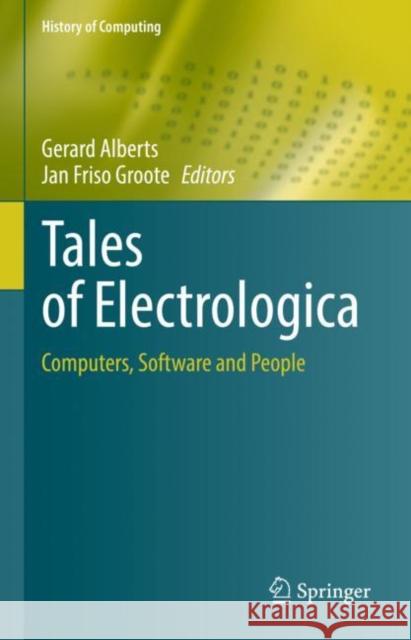
Tales of Electrologica: Computers, Software and People Gerard Alberts Jan Friso Groote 9783031130328 Springer - książkaWidoczna okładka, to zdjęcie poglądowe, a rzeczywista szata graficzna może różnić się od prezentowanej.

Tales of Electrologica: Computers, Software and People

ISBN-13: 9783031130328 / Angielski / Twarda / 2023 / 201 str.

Gerard Alberts; Jan Friso Groote
cena 141,19 zł
(netto: 134,47 VAT:  5%)

Najniższa cena z 30 dni: 134,90 zł
Termin realizacji zamówienia:
ok. 22 dni roboczych
Bez gwarancji dostawy przed świętami

Darmowa dostawa!

Manufacturing computers in series was quite a feat in the 1950s. As mathematical as it gets, the machines discussed here were called X1 and X8.The industrial achievement combined with the background in a mathematical research center made the company Electrologica a legend in Dutch computing. The tales in this book are told by those who have a right to tell. Highly engaged professionals take readers back to their pioneering work with the machines and in retrospect unveil some of the values, which went without saying in the 1960s.To disagree,Paul Klintrelates the contrasting views on software in Dutch research traditions.ALGOL culture:Frans Kruseman Aretztakes the reader along to the detailed decisions on constructing compilers and shows the values of an ALGOL culture transpiring.Signposts:Dirk Dekkerfor the first time ‘owns’ his algorithm for mutual exclusion.In particle physics:René van Dantzig’s use case was an Electrologica X8 computer controlling two other computers in three-dimensional detection of colliding particles.Early steps in AI:Lambert Meertens’tale of the X8 machine composing a violin quartet comes with his original presentation, as well as the code in ALGOL 60.The reflections of first hand experiences combine well with the second thoughts of historical research into archival sources. Historians Huub de Beer and Gerard Alberts offer a view into the boardrooms of the local enterprise Electrologica, and of the electronics multinational Philips. Where pioneers and historians meet in an inspiring dialogue, the reader gains a view on the often implicit decisions constituting the field.Fortuitously, a copy of the X8 was retrieved from Kiel, Germany, and put on display at Rijksmuseum Boerhaave, Leiden. Sparked by the very material presence of an X8, the present book takes stock of the state of historiography of Electrologica.Gerard Albertsis an associate professor in History of Digital Cultures, retired from the University of Amsterdam.Jan Friso Grooteis a full professor of Formal Methods at the Eindhoven University of Technology.

Manufacturing computers in series was quite a feat in the 1950s. As mathematical as it gets, the machines discussed here were called X1 and X8.The industrial achievement combined with the background in a mathematical research center made the company Electrologica a legend in Dutch computing. The tales in this book are told by those who have a right to tell. Highly engaged professionals take readers back to their pioneering work with the machines and in retrospect unveil some of the values, which went without saying in the 1960s.


  • To disagree, Paul Klint relates the contrasting views on software in Dutch research traditions.
  • ALGOL culture: Frans Kruseman Aretz takes the reader along to the detailed decisions on constructing compilers and shows the values of an ALGOL culture transpiring.
  • Signposts: Dirk Dekker for the first time ‘owns’ his algorithm for mutual exclusion.
  • In particle physics: René van Dantzig’s use case was an Electrologica X8 computer controlling two other computers in three-dimensional detection of colliding particles.
  • Early steps in AI: Lambert Meertens’ tale of the X8 machine composing a violin quartet comes with his original presentation, as well as the code in ALGOL 60.
  • The reflections of first hand experiences combine well with the second thoughts of historical research into archival sources. Historians Huub de Beer and Gerard Alberts offer a view into the boardrooms of the local enterprise Electrologica, and of the electronics multinational Philips. Where pioneers and historians meet in an inspiring dialogue, the reader gains a view on the often implicit decisions constituting the field.Fortuitously, a copy of the X8 was retrieved from Kiel, Germany, and put on display at Rijksmuseum Boerhaave, Leiden. Sparked by the very material presence of an X8, the present book takes stock of the state of historiography of Electrologica.Gerard Alberts is an associate professor in History of Digital Cultures, retired from the University of Amsterdam. Jan Friso Groote is a full professor of Formal Methods at the Eindhoven University of Technology.  

    Kategorie:
    Informatyka
    Kategorie BISAC:
    Computers > History
    Business & Economics > Industries - Computers & Information Technology
    Computers > Hardware - General
    Wydawca:
    Springer
    Seria wydawnicza:
    History of Computing
    Język:
    Angielski
    ISBN-13:
    9783031130328
    Rok wydania:
    2023
    Dostępne języki:
    Numer serii:
    000010838
    Ilość stron:
    201
    Oprawa:
    Twarda
    Dodatkowe informacje:
    Wydanie ilustrowane

    Chapter 1. Electrologica, A Gem (Gerard Alberts).- Chapter 2. Philips and the Fate of Electrologica (Gerard Alberts).- Chapter 3. From the X1 to the X8 (Huub de Beer).- Chapter 4. Software Without Memory (Paul Klint).- Chapter 5. The Mathematical Center, ALGOL 60 and the Electrologica X8 (Frans Kruseman Aretz).- Chapter 6. History of Dekker’s Algorithm for Mutual Exclusion (Dirk Dekker).- Chapter 7. The Electrologica X8 and the BOL Detector (René van Dantzig).- Chapter 8. An Early Experiment in Algorithmic Composition (Lambert Meertens).

    Gerard Alberts (1954) is an historian of digital cultures and historian of mathematical thought. He graduated  in mathematics and took his PhD cum laude in History. Gerard's key contribution to the history of mathematical thinking is pinpointing the rise of mathematical modeling in the middle of the twentieth century. In history of computing his focus has been on the history of software, and history of hacker culture. Recent work has been on webarchaeology. He his member of the editorial board of Annals of the history of computing and of Internet histories.

    Gerard Alberts served the research Eurocores project "Software for Europe" (2007-2011) as its project leader. He is retired associate professor history of digital cultures at University of Amsterdam. 

    Gerard Alberts is the editor of the Springer series History of Computing.

    Jan Friso Groote (1965) is a full professor in Formal Methods at Eindhoven University of Technology. His interest is in efficiently proving the correctness of the software in computer controlled systems. This for instance led to the book, Modeling and Analysis of Communicating Systems, The MIT Press 2014. Before commencing in Eindhoven, in 1997, he studied Computer Science at Twente University and wrote a PhD on process algebra at CWI, Amsterdam (1991), where he later became a leader of the research group SEN2.

    Manufacturing computers in series was quite a feat in the 1950s. As mathematical as it gets, the machines discussed here were called X1 and X8.

    The industrial achievement combined with the background in a mathematical research center made the company Electrologica a legend in Dutch computing. The tales in this book are told by those who have a right to tell. Highly engaged professionals take readers back to their pioneering work with the machines and in retrospect unveil some of the values, which went without saying in the 1960s.

    • To disagree, Paul Klint relates the contrasting views on software in Dutch research traditions.
    • ALGOL culture: Frans Kruseman Aretz takes the reader along to the detailed decisions on constructing compilers and shows the values of an ALGOL culture transpiring.
    • Signposts: Dirk Dekker for the first time ‘owns’ his algorithm for mutual exclusion.
    • In particle physics: René van Dantzig’s use case was an Electrologica X8 computer controlling two other computers in three-dimensional detection of colliding particles.
    • Early steps in AI: Lambert Meertens’ tale of the X8 machine composing a violin quartet comes with his original presentation, as well as the code in ALGOL 60.

    The reflections of first hand experiences combine well with the second thoughts of historical research into archival sources. Historians Huub de Beer and Gerard Alberts offer a view into the boardrooms of the local enterprise Electrologica, and of the electronics multinational Philips. Where pioneers and historians meet in an inspiring dialogue, the reader gains a view on the often implicit decisions constituting the field.

    Fortuitously, a copy of the X8 was retrieved from Kiel, Germany, and put on display at Rijksmuseum Boerhaave, Leiden. Sparked by the very material presence of an X8, the present book takes stock of the state of historiography of Electrologica.

    Gerard Alberts is an associate professor in History of Digital Cultures, retired from the University of Amsterdam. Jan Friso Groote is a full professor of Formal Methods at the Eindhoven University of Technology.


    Groote, Jan Friso Jan Friso Groote is Professor of Computer Science ... więcej >


    Udostępnij

    Facebook - konto krainaksiazek.pl


    Opinie o Krainaksiazek.pl na Opineo.pl

    Partner Mybenefit

    Krainaksiazek.pl w programie rzetelna firma Krainaksiaze.pl - płatności przez paypal

    Czytaj nas na:

    Facebook - krainaksiazek.pl
    • książki na zamówienie
    • granty
    • książka na prezent
    • kontakt
    • pomoc
    • opinie
    • regulamin
    • polityka prywatności

    Zobacz:

    • Księgarnia czeska

    • Wydawnictwo Książkowe Klimaty

    1997-2025 DolnySlask.com Agencja Internetowa

    © 1997-2022 krainaksiazek.pl
         
    KONTAKT | REGULAMIN | POLITYKA PRYWATNOŚCI | USTAWIENIA PRYWATNOŚCI
    Zobacz: Księgarnia Czeska | Wydawnictwo Książkowe Klimaty | Mapa strony | Lista autorów
    KrainaKsiazek.PL - Księgarnia Internetowa

    Polityka prywatnosci - link
    Krainaksiazek.pl - płatnośc Przelewy24
    Przechowalnia Przechowalnia





