• Wyszukiwanie zaawansowane
  • Kategorie
  • Kategorie BISAC
  • Książki na zamówienie
  • Promocje
  • Granty
  • Książka na prezent
  • Opinie
  • Pomoc
  • Załóż konto
  • Zaloguj się

Symbioses and Stress: Joint Ventures in Biology » książka


zaloguj się | załóż konto
Logo Krainaksiazek.pl

koszyk

konto

szukaj
topmenu
Księgarnia internetowa
Szukaj
Książki na zamówienie
Promocje
Granty
Książka na prezent
Moje konto
Pomoc
 
 
Wyszukiwanie zaawansowane
Pusty koszyk
Bezpłatna dostawa dla zamówień powyżej 20 złBezpłatna dostawa dla zamówień powyżej 20 zł

Kategorie główne

• Nauka
 [2946600]
• Literatura piękna
 [1856966]

  więcej...
• Turystyka
 [72221]
• Informatyka
 [151456]
• Komiksy
 [35826]
• Encyklopedie
 [23190]
• Dziecięca
 [619653]
• Hobby
 [140543]
• AudioBooki
 [1577]
• Literatura faktu
 [228355]
• Muzyka CD
 [410]
• Słowniki
 [2874]
• Inne
 [445822]
• Kalendarze
 [1744]
• Podręczniki
 [167141]
• Poradniki
 [482898]
• Religia
 [510455]
• Czasopisma
 [526]
• Sport
 [61590]
• Sztuka
 [243598]
• CD, DVD, Video
 [3423]
• Technologie
 [219201]
• Zdrowie
 [101638]
• Książkowe Klimaty
 [124]
• Zabawki
 [2473]
• Puzzle, gry
 [3898]
• Literatura w języku ukraińskim
 [254]
• Art. papiernicze i szkolne
 [8170]
Kategorie szczegółowe BISAC

Symbioses and Stress: Joint Ventures in Biology

ISBN-13: 9789048194483 / Angielski / Twarda / 2010 / 666 str.
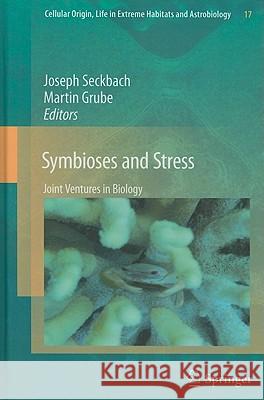
Joseph Seckbach; Martin Grube
Symbioses and Stress: Joint Ventures in Biology Seckbach, Joseph 9789048194483 Not Avail - książkaWidoczna okładka, to zdjęcie poglądowe, a rzeczywista szata graficzna może różnić się od prezentowanej.

Symbioses and Stress: Joint Ventures in Biology

ISBN-13: 9789048194483 / Angielski / Twarda / 2010 / 666 str.

Joseph Seckbach; Martin Grube
cena 1331,56 zł
(netto: 1268,15 VAT:  5%)

Najniższa cena z 30 dni: 1272,31 zł
Termin realizacji zamówienia:
ok. 22 dni roboczych
Bez gwarancji dostawy przed świętami

Darmowa dostawa!

When one picks up a multiauthored book in a series like this, one wonders what will be distinctive about its contents. one wonders about the "Concept of Symbiosis. " does it have the same meaning for all authors and all potential readers? one is further tempted to question the concept of stress. What is the meaning of the c- cept of stress? Some change in the biotic or abiotic aspects of the environment or habitat of the symbiotic partners? many might support the more general def- tion of symbiosis credited to de bary (1879), that symbiosis is the living together of separately named organisms. Something like Smith's (1992) more restricted PoLLnPia (P ermanent or Long-Lived intimate associations between diffe- ent organisms, usually of different sizes, in which the larger organism, the host, exploits the capabilities of one or more smaller organisms) seems to be a better ft for a book centered on the effects of stress on symbiosis. PoLLnPia implies an integrated holobiont system that has adapted itself to living successfully in a particular environment that could be construed as harsh for nonsymbiotic s- tems. often, when queried for examples, one thinks of lichens, of corals living in oligotrophic tropical waters, of Pompeii worms living in association with che- lithotrophic bacteria, and of all sorts of herbivorous animals living in associations with microorganisms. Presumably, the hosts could not survive, or thrive, in their habitats without their smaller partners doing their trophic work for their holo- otic systems.


Kategorie:
Nauka, Biologia i przyroda
Kategorie BISAC:
Science > Life Sciences - Ecology
Science > Life Sciences - Evolution
Science > Mikrobiologia
Wydawca:
Not Avail
Seria wydawnicza:
Cellular Origin, Life in Extreme Habitats and Astrobiology
Język:
Angielski
ISBN-13:
9789048194483
Rok wydania:
2010
Numer serii:
000296976
Ilość stron:
666
Waga:
1.08 kg
Wymiary:
23.11 x 15.75 x 3.81
Oprawa:
Twarda
Wolumenów:
01
Dodatkowe informacje:
Bibliografia
Wydanie ilustrowane

Foreword / John. J. Lee Preface / Joseph Seckbach and Martin Grube Acknowledgements List of authors and their addresses PART 1: GENERAL INTRODUCTION On the Origin of Symbiosis [Jan Sapp] Symbioses and Stress [Martin Grube, James F. White, and Joseph Seckbach] PART 2: SYMBIOTIC ORIGIN OF EUKARYOTES Problems and Progress in Understanding the Origins of Mitochondria and Plastids [Bruce A. Curtis and John M. Archibald] The Origin of Eukarya as a Stress Response of Two-Membrane-Bounded Sexual Pre-Karyote to an Aggressive a-Proteobacterial Periplasmic Infection [Matej Vesteg and Juraj Kraj?ovi?] Low CO2 Stress: Glaucocystophytes May Have Found a Unique Solution [Wolfgang Löffelhardt] PART 3: AQUATIC SYMBIOSES Animal-Bacterial Endosymbioses of Gutless Tube-Dwelling Worms in Marine Sediments [Takeshi Naganuma] Multibiont Symbioses in the Coral Reef Ecosystem [Orit Barneah and Itzchak Brickner] Cnidarian/Dinoflagellate Symbiosis-Mediated Adaptation to Environmental Pertubations [Sophie Richier, Cécile Sabourault, Christine Ferrier-Pagès, Pierre-Laurent Merle, Paola Furla and Denis Allemand] Oxidative Stress-Mediated Development of Symbiosis in Green Paramecia [Tomonoro Kawano, K. Irie and Takashi Kadono] Coral Symbiosis under Stress [Noga Stambler] Azolla as a Superorganism: Its Implication in Symbiotic Studies [Francisco Carrapiço] PART 4: TERRESTRIAL SYMBIOSES Parasitism is a Strong Force Shaping the Fungus-Growing Ant-Microbe Symbiosis [Ainslie E.F. Little] Evolution and Consequences of Nutrition-Based Symbioses in Insects: More than Food Stress [Edouard Jurkevitch] Three in a Boat: Host-Plant, Insect Herbivore and Fungal Entomopathogen [Shalom W. Applebaum, Dana Ichelczik and Richard A. Humber] Symbiotic Foraminifera and Stress [Alexander V. Altenbach, Christine Böhmer, Frank Gitter, Benjamin Läuchli and Hanne-Lore Wieczorek] Arbuscular Mycorrhizal Symbiosis under Stress Conditions: Benefits and Costs [Hinanit Koltai and Yoram Kapulnik] Modulation of AquaporinGenes by the Arbuscular Mycorrhizal Symbiosis in Relation to Osmotic Stress Tolerance: Aquaporin in Plants under Osmotic Stress [Juan M. Ruiz-Lozano and Ricardo Aroca] How Rhizobia Survive in the Absence of a Legume Host, a Stressful World Indeed [Ann Hirsch] Life on a Leaf: Bacterial Epiphytes of a Salt-Excreting Desert Tree [Shimshon Belkin and Noga Qvit-Raz] Physiological Responses to Stress in the Vibrionaceae [William Soto, C. Phoebe Lostroh and Michele K. Nishiguchi] The Stressed Life of Microbes in Plants [Maria Grilli Caiola and Antonella Canini] Symbiotic Plant-Microbe Interactions: Stress Protection, Plant Growth Promotion and Biocontrol by Stenotrophomonas [Gabriele Berg, Dilfuza Egamberdieva, Ben Lugtenberg and Martin Hagemann] Adaptation and Survival of Plants in High Stress Habitats via Fungal Endophyte Conferred Stress Tolerance [Rusty J. Rodriguez, Claire Woodward, and Regina S. Redman] Grass Endophyte-Mediated Plant Stress Tolerance: Alkaloids and their Functions [Monica S. Torres and James F. White] Endocytosis in Plant – Fungal Interactions [Maya Bar and Adi Avni] Die Hard: Lichens [Martin Grube] Stress and Developmental Strategies in Lichens [Elfriede Stocker-Wörgötter] Green Algae and Fungi in Lichens Symbionts - but Friends or Foes? [Russel L. Chapman and Melanie R. Chapman] Green Biofilms on Tree Barks: More than Just Algae [Katharina Freystein and Werner Reisser] PART 5: SYMBIOSES AND ASTROBIOLOGY Space Flight Effects on Lichen Ultrastructure and Physiology: Following the Lichens 2005 Experiment On-Board the Biopan V Space Exposure Facility [Asunción de los Ríos, Carmen Ascaso, Jacek Wierzchos and Leopoldo G. Sancho] Resistance of Symbiotic Eukaryotes Survival to Simulated Space Conditions and Asteroid Impact Cataclysms [Jean-Pierre P. de Vera and Sieglinde Ott] PART 6: SUMMARY AND CONCLUSIONS Symbioses and Stress: Final comments [Martin Grube and Joseph Seckbach] Organisms Index Subject Index Authors Index

Symbioses and Stress centers on the question of how organisms in tight symbiotic associations cope with various types of abiotic and biotic stress. In its original sense, symbioses cover all kinds of interactions among unrelated organisms, whereas in a narrower concept, the term is often referred to as mutualism. Evolutionary biology recognizes symbiosis as an integrative process, and most fundamental evolutionary innovations arose from cooperative symbioses. Mutualisms contribute to stress tolerance, ecosystem stability, and evolutionary radiation of cooperating organisms. Modern eukaryotic cells are the result of the endosymbiotic union of prokaryotic ancestors as well as diverse exosymbiotic associations. This cooperative aggregation appears more successful than its independent parts. This new book presents functional and evolutionary aspects of mutually beneficial symbioses among unrelated organisms.


Udostępnij

Facebook - konto krainaksiazek.pl


Opinie o Krainaksiazek.pl na Opineo.pl

Partner Mybenefit

Krainaksiazek.pl w programie rzetelna firma Krainaksiaze.pl - płatności przez paypal

Czytaj nas na:

Facebook - krainaksiazek.pl
  • książki na zamówienie
  • granty
  • książka na prezent
  • kontakt
  • pomoc
  • opinie
  • regulamin
  • polityka prywatności

Zobacz:

  • Księgarnia czeska

  • Wydawnictwo Książkowe Klimaty

1997-2025 DolnySlask.com Agencja Internetowa

© 1997-2022 krainaksiazek.pl
     
KONTAKT | REGULAMIN | POLITYKA PRYWATNOŚCI | USTAWIENIA PRYWATNOŚCI
Zobacz: Księgarnia Czeska | Wydawnictwo Książkowe Klimaty | Mapa strony | Lista autorów
KrainaKsiazek.PL - Księgarnia Internetowa

Polityka prywatnosci - link
Krainaksiazek.pl - płatnośc Przelewy24
Przechowalnia Przechowalnia





