• Wyszukiwanie zaawansowane
  • Kategorie
  • Kategorie BISAC
  • Książki na zamówienie
  • Promocje
  • Granty
  • Książka na prezent
  • Opinie
  • Pomoc
  • Załóż konto
  • Zaloguj się

Swansea and Nantgarw Porcelains: A Scientific Reappraisal » książka


zaloguj się | załóż konto
Logo Krainaksiazek.pl

koszyk

konto

szukaj
topmenu
Księgarnia internetowa
Szukaj
Książki na zamówienie
Promocje
Granty
Książka na prezent
Moje konto
Pomoc
 
 
Wyszukiwanie zaawansowane
Pusty koszyk
Bezpłatna dostawa dla zamówień powyżej 20 złBezpłatna dostawa dla zamówień powyżej 20 zł

Kategorie główne

• Nauka
 [2949965]
• Literatura piękna
 [1857847]

  więcej...
• Turystyka
 [70818]
• Informatyka
 [151303]
• Komiksy
 [35733]
• Encyklopedie
 [23180]
• Dziecięca
 [617748]
• Hobby
 [139972]
• AudioBooki
 [1650]
• Literatura faktu
 [228361]
• Muzyka CD
 [398]
• Słowniki
 [2862]
• Inne
 [444732]
• Kalendarze
 [1620]
• Podręczniki
 [167233]
• Poradniki
 [482388]
• Religia
 [509867]
• Czasopisma
 [533]
• Sport
 [61361]
• Sztuka
 [243125]
• CD, DVD, Video
 [3451]
• Technologie
 [219309]
• Zdrowie
 [101347]
• Książkowe Klimaty
 [123]
• Zabawki
 [2362]
• Puzzle, gry
 [3791]
• Literatura w języku ukraińskim
 [253]
• Art. papiernicze i szkolne
 [7933]
Kategorie szczegółowe BISAC

Swansea and Nantgarw Porcelains: A Scientific Reappraisal

ISBN-13: 9783319487120 / Angielski / Twarda / 2017 / 279 str.
Howell G. M. Edwards
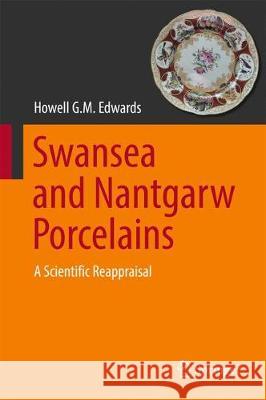
Swansea and Nantgarw Porcelains: A Scientific Reappraisal Edwards, Howell G. M. 9783319487120 Springer - książkaWidoczna okładka, to zdjęcie poglądowe, a rzeczywista szata graficzna może różnić się od prezentowanej.

Swansea and Nantgarw Porcelains: A Scientific Reappraisal

ISBN-13: 9783319487120 / Angielski / Twarda / 2017 / 279 str.

Howell G. M. Edwards
cena 524,53
(netto: 499,55 VAT:  5%)

Najniższa cena z 30 dni: 501,19
Termin realizacji zamówienia:
ok. 22 dni roboczych
Bez gwarancji dostawy przed świętami

Darmowa dostawa!

This book describes a holistic study of the porcelain manufactured at Nantgarw and Swansea in the first quarter of the 19th Century, using both scientific analytical data and historical provenancing. This porcelain is acclaimed as some of the finest and most translucent porcelain ever produced. These two porcelain factories are linked through the artistic and creative activities of the enigmatic William Billingsley and had a strictly limited production over only three or four years during the period 1812-1820. The earliest chemical analysis of these porcelains were undertaken almost 100 years ago and are compared with the results of more recent analyses The chemical composition of these porcelains, their artistic decoration and the struggle to maintain quality production is reviewed. Scientific explanations are proposed for the characteristic Swansea duck-egg porcelain translucency and for the Nantgarw iridescence. The book is well illustrated throughout and affords a good basis for the further in-depth study of Swansea and Nantgarw porcelains.


Kategorie:
Technologie
Kategorie BISAC:
Technology & Engineering > Materials Science - Ceramics
Science > Chemia - Analityczna
Social Science > Antropologia - Kultury
Wydawca:
Springer
Język:
Angielski
ISBN-13:
9783319487120
Rok wydania:
2017
Wydanie:
2017
Ilość stron:
279
Waga:
6.55 kg
Wymiary:
23.5 x 15.5
Oprawa:
Twarda
Wolumenów:
01
Dodatkowe informacje:
Glosariusz/słownik

Foreword

Preface

Prologue: The Origins of Porcelain

1: Introduction and Present-Day Scenario 

2 : Porcelain Manufacture in South Wales in the 19th Century 

2.1. The Influence of William Billingsley 

2.2 Factory Output 

3 : Historical Research Issues

3.1. Pattern Numbers : Absence in Nantgarw

3.2. Swansea Set Pattern Numbers

3.3. Attribution of Artist and Source 

3.4. The Swansea and Nantgarw Artists

4 : A Chronological Summary of the Billingsley Family and Their Contribution to Porcelain Manufacture and Decoration

5 : Burnishing and Gilding

6 : Commercial Exploitation

7 . Service Types and the Importance of Nomenclature in Their Attribution

7.1. Sponsors of Swansea and Nantgarw Porcelains

7.2. A Cautionary Word

8 : Armorial Porcelains

8.1. Armorial Provenancing and Historical Dating

9 : Documentary Porcelain and Historical Provenancing

10 : The Production of Porcelain Services

10.1. Gilding versus Painting

10.2. Copies of Well-Known Services

10.3. Difficulties in Attribution

11 : The Scientific Analysis of Porcelain

11.1. Porcelain Bodies : A Scientific Appreciation

11.2. The Production of Porcelain : Source Materials and Chemistry 

11.3. Lewis Weston Dillwyn’s Recipes for the Swansea Porcelain Body 

11.3.1. Chemistry of Phyllosilicates 

11.4. Early Analyses of Swansea and Nantgarw Porcelains

11.4.1. Summary  of the Wet Chemical Analyses of Eccles & Rackham

11.5. Later Analytical Studies

11.6. General Analytical Conclusions

11.7. Molecular Composition of Porcelain Bodies from Modern Microanalytical Studies 

11.8. Final Analytical Conclusions

12 : Named Artists

12. 1. The Three Williams: Turner, Price and Billingsley

13 : Classification of Factory Output

14 : Nantgarw Porcelain : Named Services 

15 : Swansea Porcelain : Named Services 

16 : Summary of Identified Named Services 

16.1. Summary of Stylised Services with Descriptive Names 

17  : Conclusions 

18. The Discovery of a Long-Lost Nantgarw Dinner-Dessert Service

19. The Attribution of Unknown Porcelain to Swansea and Nantgarw: A Protocol

19.1. Measurements of Swansea and Nantgarw Porcelains

20. Statement Made by Henry Morris to Colonel Grant Davidson in 1850

21. William Billingsley - An Epilogue

Appendix 1 : Notes on the Experimental Production of Swansea Porcelain

Appendix 2 : Transcript of an Interview given by Henry Morris

Appendix 3 : Some Scientific Thoughts on Swansea and Nantgarw Porcelains

Appendix 4. The Pendock-Barry Service: A Re-Appraisal
Appendix 5. Detailed Comparison Between the Derby Lord Ongley Service
                     and its Nantgarw Precursors

Appendix 6. Nantgarw Porcelain – Measurements and Sizes

Appendix 7. Swansea Script Marks and their Attribution to
                    William Billingsley’s Decoration

Glossary of Terms Used in this Book 


Professor H.G.M. Edwards M.A., B.Sc., D.Phil., C.Chem., F.R.S.C. Emeritus Professor of Molecular Spectroscopy, Director of the Centre for Astrobiology and Extremophiles Research , Faculty of Life Sciences , University of Bradford, Bradford BD7 1DP, UK. Honorary Scientific Adviser to The De Brecy Trust for the scientific evaluation and pigment composition of Renaissance and later period paintings.

Howell Edwards studied Chemistry at Jesus College, University of Oxford. Following a Research Fellowship at Jesus College at the University of Cambridge, he took a lectureship in Structural and Inorganic Chemistry at the University of Bradford where he subsequently became Professor of Molecular Spectroscopy and Head of the Chemical and Forensic Sciences Division. In 2003, he received the Sir Harold Thompson Award from Elsevier Science for his international contributions to vibrational spectroscopy. He is the recipient of the Emanuel Boricky Medal for 2008/2009 from Charles University, Prague, for distinguished international contributions to geochemistry and mineralogical analysis. He was awarded the Charles Mann Award from the US Federation of Analytical Chemical Spectroscopic Societies in 2011 for his distinguished international work on the applications of Raman spectroscopy.

In his research career he has published over 1250 papers on Raman spectroscopy and its applications and is the co-editor of five books: “A Handbook of Raman Spectroscopy: From the Research Laboratory to the Process Line” (with IR Lewis, Marcel Dekker, New York, 2001), “Raman Spectroscopy in Archaeology and Art History” (with JM Chalmers, RSC Publishing, Cambridge, 2005), “Selected Topics in Raman Spectroscopic Applications: Geology, Biomaterials and Art” (with F Rull Perez, P Vandenabeele and DC Smith, Publidisa Valladolid, 2007), “ Raman and Infrared Spectroscopy in Forensic Science” (with JM Chalmers and MD Hargreaves, John Wiley & Sons, Chichester, UK, 2012) and “ Selected Topics in Analytical Archaeometry” (with P. Vandenabeele, RSC Publishing, Cambridge, 2012). 

Professor Edwards has wide-ranging interests in the applications of Raman spectroscopy to the characterisation of materials particularly in forensic, art historical, astrobiological and archaeological contexts. He is a guest editor and contributing author of the Philosophical Transactions of the Royal Society, the oldest scientific journal in the world. He has been a forerunner in the Raman spectroscopic identification of chemicals produced in biodegradation processes for prehistoric and contemporary systems in an archaeological context — he first investigated the Raman spectra of Dirina lichen colonization of toxic metal substrates on Italian Renaissance wall–paintings in 1991 and has extensively studied the pigments and associated materials involved in paintings from prehistoric cave art to the 20th Century. He is science lead on the European Space agency/Roscosmos ExoMars Raman Laser spectrometer instrument in the Pasteur suite of a planetary rover which will interrogate the Martina surface and subsurface to search for biosignatures and signs of extant and extinct life, scheduled to launch in 2020, with particular responsibility for the interpretation of Raman spectroscopic biosignatures from biogeological niche environments on Mars. He is also UK representative on the ESA/Roscosmos Landing Site Selection Group dedicated to determine where the spacecraft will land on Mars for the deployment of the rover vehicle.

This book describes a holistic study of the porcelain manufactured at Nantgarw and Swansea in the first quarter of the 19th Century, using both scientific analytical data and historical provenancing. This porcelain is acclaimed as some of the finest and most translucent porcelain ever produced. These two porcelain factories are linked through the artistic and creative activities of the enigmatic William Billingsley and had a strictly limited production over only three or four years during the period 1812-1820. The earliest chemical analysis of these porcelains were undertaken almost 100 years ago and are compared with the results of more recent analyses The chemical composition of these porcelains, their artistic decoration and the struggle to maintain quality production is reviewed. Scientific explanations are proposed for the characteristic Swansea duck-egg porcelain translucency and for the Nantgarw iridescence. The book is well illustrated throughout and affords a good basis for the further in-depth study of Swansea and Nantgarw porcelains.




Udostępnij

Facebook - konto krainaksiazek.pl


Opinie o Krainaksiazek.pl na Opineo.pl

Partner Mybenefit

Krainaksiazek.pl w programie rzetelna firma Krainaksiaze.pl - płatności przez paypal

Czytaj nas na:

Facebook - krainaksiazek.pl
  • książki na zamówienie
  • granty
  • książka na prezent
  • kontakt
  • pomoc
  • opinie
  • regulamin
  • polityka prywatności

Zobacz:

  • Księgarnia czeska

  • Wydawnictwo Książkowe Klimaty

1997-2025 DolnySlask.com Agencja Internetowa

© 1997-2022 krainaksiazek.pl
     
KONTAKT | REGULAMIN | POLITYKA PRYWATNOŚCI | USTAWIENIA PRYWATNOŚCI
Zobacz: Księgarnia Czeska | Wydawnictwo Książkowe Klimaty | Mapa strony | Lista autorów
KrainaKsiazek.PL - Księgarnia Internetowa

Polityka prywatnosci - link
Krainaksiazek.pl - płatnośc Przelewy24
Przechowalnia Przechowalnia




