• Wyszukiwanie zaawansowane
  • Kategorie
  • Kategorie BISAC
  • Książki na zamówienie
  • Promocje
  • Granty
  • Książka na prezent
  • Opinie
  • Pomoc
  • Załóż konto
  • Zaloguj się

Sustainable Crop Protection Under Protected Cultivation » książka


zaloguj się | załóż konto
Logo Krainaksiazek.pl

koszyk

konto

szukaj
topmenu
Księgarnia internetowa
Szukaj
Książki na zamówienie
Promocje
Granty
Książka na prezent
Moje konto
Pomoc
 
 
Wyszukiwanie zaawansowane
Pusty koszyk
Bezpłatna dostawa dla zamówień powyżej 20 złBezpłatna dostawa dla zamówień powyżej 20 zł

Kategorie główne

• Nauka
 [2946600]
• Literatura piękna
 [1856966]

  więcej...
• Turystyka
 [72221]
• Informatyka
 [151456]
• Komiksy
 [35826]
• Encyklopedie
 [23190]
• Dziecięca
 [619653]
• Hobby
 [140543]
• AudioBooki
 [1577]
• Literatura faktu
 [228355]
• Muzyka CD
 [410]
• Słowniki
 [2874]
• Inne
 [445822]
• Kalendarze
 [1744]
• Podręczniki
 [167141]
• Poradniki
 [482898]
• Religia
 [510455]
• Czasopisma
 [526]
• Sport
 [61590]
• Sztuka
 [243598]
• CD, DVD, Video
 [3423]
• Technologie
 [219201]
• Zdrowie
 [101638]
• Książkowe Klimaty
 [124]
• Zabawki
 [2473]
• Puzzle, gry
 [3898]
• Literatura w języku ukraińskim
 [254]
• Art. papiernicze i szkolne
 [8170]
Kategorie szczegółowe BISAC

Sustainable Crop Protection Under Protected Cultivation

ISBN-13: 9789812879509 / Angielski / Twarda / 2016 / 434 str.
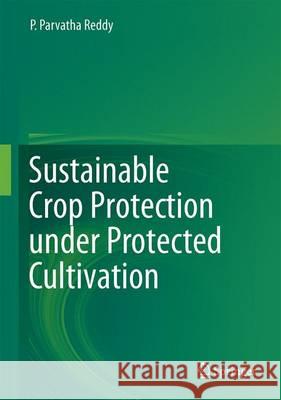
P. Parvatha Reddy
Sustainable Crop Protection Under Protected Cultivation Reddy, P. Parvatha 9789812879509 Springer - książkaWidoczna okładka, to zdjęcie poglądowe, a rzeczywista szata graficzna może różnić się od prezentowanej.

Sustainable Crop Protection Under Protected Cultivation

ISBN-13: 9789812879509 / Angielski / Twarda / 2016 / 434 str.

P. Parvatha Reddy
cena 887,69 zł
(netto: 845,42 VAT:  5%)

Najniższa cena z 30 dni: 771,08 zł
Termin realizacji zamówienia:
ok. 22 dni roboczych
Bez gwarancji dostawy przed świętami

Darmowa dostawa!

This book focuses on pests (insect and mite) and diseases (fungal, bacterial, viral and nematode) in protected horticulture (fruits, vegetables and ornamentals) using physical, cultural, chemical, biological, host resistance, and integrated methods. It opens with chapters describing the setting in which integrated pest and disease control operates, i.e., the greenhouse and its environment. Subsequent chapters present the basic strategies and tactics of different control methods including integrated control, with special reference to greenhouse crops. Further chapters include the different facets of biological pest and disease control its scientific bases, its development in practice, its commercialization and quality control. The concluding chapters of the book highlight the present status of integrated pest and disease control for the most important greenhouse crops (fruits, vegetables and flower crops) worldwide. The book s final chapter explores future challenges for researchers assigned to identify non-pesticide methods and integrate sustainable pest management technologies that can contribute to increased productivity, such as breeding for durable resistance, biological control and devising integrated methods that will have minimal adverse environmental and social impacts.Among productivity-enhancing technologies, protected cultivation has a tremendous potential to increase the yield of vegetables andflower crops by several fold. Pests and diseases are one of the major challenges to protected cultivation. Year-round warm temperatures and relatively high humidity together with abundant food make the protected environment of greenhouses highly attractive to pests and diseases. Nevertheless, very little attention has been paid to the manipulation of greenhouse environments expressly to avoid disease epidemics and insect infestations, which together can easily account for 30% of crop losses.This book will be of immense value to all members of the scientific community involved in teaching, research and extension activities on protected horticulture. It also offers a useful reference guide for policymakers and practicing farmers, and can be used as a textbook for postgraduate courses."


Kategorie:
Nauka, Biologia i przyroda
Kategorie BISAC:
Technology & Engineering > Agriculture - Agronomy - General
Technology & Engineering > Agriculture - Sustainable Agriculture
Technology & Engineering > Pest Control
Wydawca:
Springer
Język:
Angielski
ISBN-13:
9789812879509
Rok wydania:
2016
Ilość stron:
434
Waga:
1.00 kg
Wymiary:
18.7 x 26.4 x 2.3
Oprawa:
Twarda
Wolumenów:
01
Dodatkowe informacje:
Wydanie ilustrowane

1. Protected Cultivation.- 2. Greenhouse Technology.- 3. Crop Protection.-  4.  Disinfestation Of Soil And Growth Media For Management Of Soil-Borne Diseases.- 5. Biological Control Of Plant Pathogens.- 6. Compost In Disease Management.- 7. Grafted Vegetables For Management Of Soil-Borne Pathogens.- 8. Biorational Pest Management.- 9. Drip Chemigation For Insect Pest Management.- 10. Selective Pesticides In IPM.- 11. Plant Diseases And Their Management.- 12. Fungal Diseases And Their Management.- 13. Bacterial Diseases And Their Management.- 14. Viral Diseases And Their Management.- 15. Nematode Diseases And Their Management.- 16. Insects Pests And Their Management.- 17. Aphids And Their Management.- 18. Thrips And Their Management.- 19. Whiteflies And Their Management.- 20. Pest And Predatory Mites.- 21. Strawberry.- 22. Tomato.- 23. Bell Pepper.- 24. Cucumber.- 25. Cole Crops.- 26. Lettuce.- 27. Rose.- 28. Carnation.- 29. Gerbera.- 30. Chrysanthemum.- 31. Gladiolus.- 32. Lilies.- 33. Orchids.- 34. Anthuriums.- 35. The Way Forward.

Dr. P. Parvatha Reddy obtained his Ph.D. degree jointly from the University of Florida, USA and the University of Agricultural Sciences, Bangalore.

Dr. Reddy served as the Director of the prestigious Indian Institute of Horticultural Research (IIHR) at Bangalore from 1999 to 2002 during which period the Institute was honored with “ICAR Best Institution Award”. He also served as the Head, Division of Entomology and Nematology at IIHR and gave tremendous impetus and direction to research, extension and education in developing bio-intensive integrated pest management strategies in horticultural crops. These technologies are being practiced widely by the farmers across the country since they are effective, economical, eco-friendly and residue-free. Dr. Reddy has about 34 years of experience working with horticultural crops and involved in developing an F1 tomato hybrid “Arka Varadan” resistant to root-knot nematodes.     

Dr. Reddy has over 250 scientific publications to his credit, which also include 30 books. He has also guided two Ph.D. students at the University of Agricultural Sciences, Bangalore.

Dr. Reddy served as Chairman, Research Advisory Committee, Indian Institute of Vegetable Research, Varanasi; Member, RAC of National Research Centre for Integrated Pest Management, New Delhi; National Research Centre for Citrus, Nagpur and the Project Directorate of Biological Control, Bang

alore. He served as a Member, QRT to review the progress of AICRP on Nematodes; AINRP on Betelvine; Central Tuber Crops Research Institute, Trivandrum and AICRP on Tuber Crops. He also served as a Member of the Expert Panel for monitoring the research program of National Initiative on Climate Resilient Agriculture (NICRA) in the theme of Horticulture including Pest Dynamics and Pollinators. He is the Honorary Fellow of the Society for Plant Protection Sciences, New Delhi; Fellow of the Indian Phytopathological Society, New Delhi and Founder President of the Association for Advancement of Pest Management in Horticultural Ecosystems (AAPMHE), Bangalore.

Dr. Reddy has been awarded with the prestigious “Association for Advancement Pest Management in Horticultural Ecosystems Award”, “Dr. G.I. D’souza Memorial Lecture Award”, “Prof. H.M. Shah Memorial Award” and “ Hexamar Agricultural Research and Development Foundation Award” for his unstinted efforts in developing sustainable, bio-intensive and eco-friendly integrated pest management strategies in horticultural crops.

Dr. Reddy has organized “Fourth International Workshop on Biological Control and Management of Chromolaena odorata”, “National Seminar on Hitech Horticulture”, “First National Symposium on Pest Management in Horticultural Crops: Environmental Implications and Thrusts” and “Second National Symposium on Pest Management in Horticultural Crops: N

ew Molecules and Biopesticides”.

This book focuses on pests (insect and mite) and diseases (fungal, bacterial, viral and nematode) in protected horticulture (fruits, vegetables and ornamentals) using physical, cultural, chemical, biological, host resistance, and integrated methods. It opens with chapters describing the setting in which integrated pest and disease control operates, i.e., the greenhouse and its environment. Subsequent chapters present the basic strategies and tactics of different control methods including integrated control, with special reference to greenhouse crops. Further chapters include the different facets of biological pest and disease control – its scientific bases, its development in practice, its commercialization and quality control. The concluding chapters of the book highlight the present status of integrated pest and disease control for the most important greenhouse crops (fruits, vegetables and flower crops) worldwide. The book’s final chapter explores future challenges for researchers assigned to identify non-pesticide methods and integrate sustainable pest management technologies that can contribute to increased productivity, such as breeding for durable resistance, biological control and devising integrated methods that will have minimal adverse environmental and social impacts.

Among productivity-enhancing technologies, protected cultivation has a tremendous potential to increase the yield of vegetables and flower crops by severa

l fold. Pests and diseases are one of the major challenges to protected cultivation. Year-round warm temperatures and relatively high humidity together with abundant food make the protected environment of greenhouses highly attractive to pests and diseases. Nevertheless, very little attention has been paid to the manipulation of greenhouse environments expressly to avoid disease epidemics and insect infestations, which together can easily account for 30% of crop losses.

This book will be of immense value to all members of the scientific community involved in teaching, research and extension activities on protected horticulture. It also offers a useful reference guide for policymakers and practicing farmers, and can be used as a textbook for postgraduate courses.


Udostępnij

Facebook - konto krainaksiazek.pl


Opinie o Krainaksiazek.pl na Opineo.pl

Partner Mybenefit

Krainaksiazek.pl w programie rzetelna firma Krainaksiaze.pl - płatności przez paypal

Czytaj nas na:

Facebook - krainaksiazek.pl
  • książki na zamówienie
  • granty
  • książka na prezent
  • kontakt
  • pomoc
  • opinie
  • regulamin
  • polityka prywatności

Zobacz:

  • Księgarnia czeska

  • Wydawnictwo Książkowe Klimaty

1997-2025 DolnySlask.com Agencja Internetowa

© 1997-2022 krainaksiazek.pl
     
KONTAKT | REGULAMIN | POLITYKA PRYWATNOŚCI | USTAWIENIA PRYWATNOŚCI
Zobacz: Księgarnia Czeska | Wydawnictwo Książkowe Klimaty | Mapa strony | Lista autorów
KrainaKsiazek.PL - Księgarnia Internetowa

Polityka prywatnosci - link
Krainaksiazek.pl - płatnośc Przelewy24
Przechowalnia Przechowalnia





