• Wyszukiwanie zaawansowane
  • Kategorie
  • Kategorie BISAC
  • Książki na zamówienie
  • Promocje
  • Granty
  • Książka na prezent
  • Opinie
  • Pomoc
  • Załóż konto
  • Zaloguj się

Sustainability Management in Heritage and Tourism » książka


zaloguj się | załóż konto
Logo Krainaksiazek.pl

koszyk

konto

szukaj
topmenu
Księgarnia internetowa
Szukaj
Książki na zamówienie
Promocje
Granty
Książka na prezent
Moje konto
Pomoc
 
 
Wyszukiwanie zaawansowane
Pusty koszyk
Bezpłatna dostawa dla zamówień powyżej 20 złBezpłatna dostawa dla zamówień powyżej 20 zł

Kategorie główne

• Nauka
 [2952079]
• Literatura piękna
 [1850969]

  więcej...
• Turystyka
 [71058]
• Informatyka
 [151066]
• Komiksy
 [35579]
• Encyklopedie
 [23181]
• Dziecięca
 [620496]
• Hobby
 [139036]
• AudioBooki
 [1646]
• Literatura faktu
 [228729]
• Muzyka CD
 [379]
• Słowniki
 [2932]
• Inne
 [445708]
• Kalendarze
 [1409]
• Podręczniki
 [164793]
• Poradniki
 [480107]
• Religia
 [510956]
• Czasopisma
 [511]
• Sport
 [61267]
• Sztuka
 [243299]
• CD, DVD, Video
 [3411]
• Technologie
 [219640]
• Zdrowie
 [100984]
• Książkowe Klimaty
 [124]
• Zabawki
 [2281]
• Puzzle, gry
 [3363]
• Literatura w języku ukraińskim
 [258]
• Art. papiernicze i szkolne
 [8020]
Kategorie szczegółowe BISAC

Sustainability Management in Heritage and Tourism

ISBN-13: 9783031402685 / Angielski / Twarda / 2023
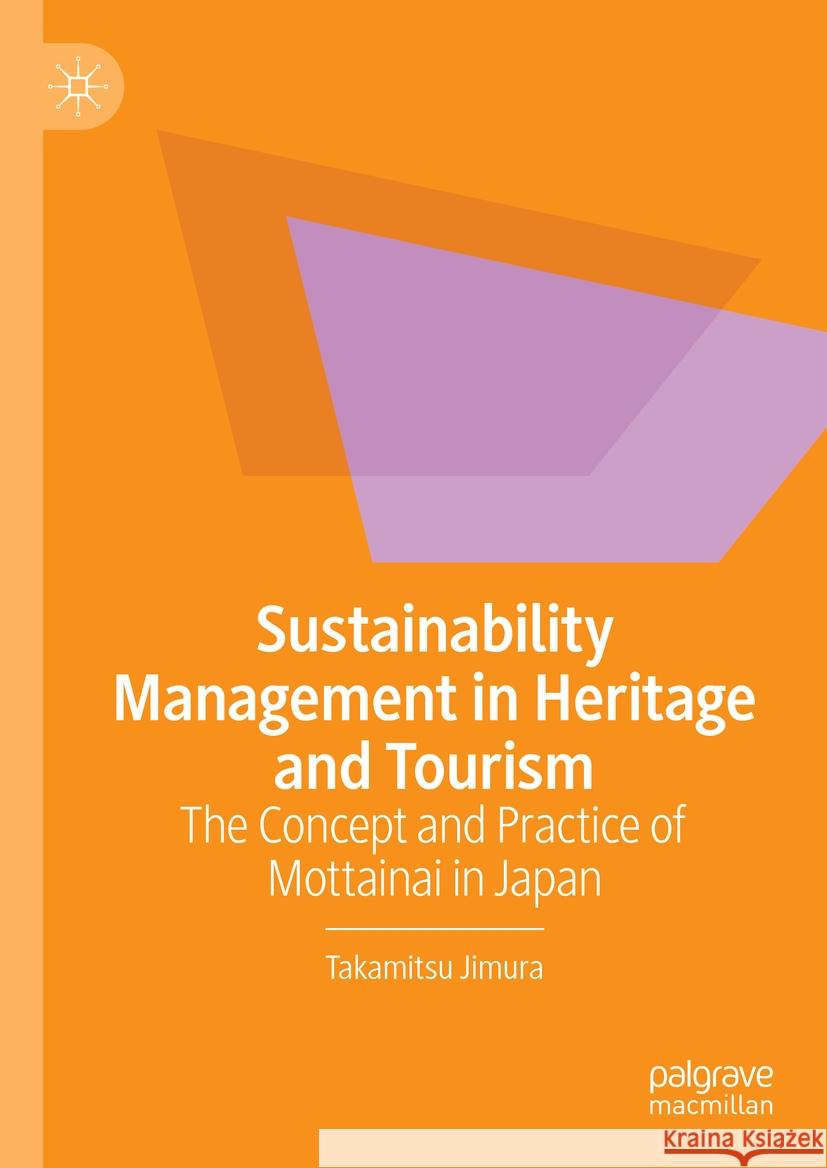
Takamitsu Jimura
Sustainability Management in Heritage and Tourism  Takamitsu Jimura 9783031402685 Springer International Publishing - książkaWidoczna okładka, to zdjęcie poglądowe, a rzeczywista szata graficzna może różnić się od prezentowanej.

Sustainability Management in Heritage and Tourism

ISBN-13: 9783031402685 / Angielski / Twarda / 2023

Takamitsu Jimura
cena 603,81
(netto: 575,06 VAT:  5%)

Najniższa cena z 30 dni: 539,74
Termin realizacji zamówienia:
ok. 22 dni roboczych.

Darmowa dostawa!

Increasingly, the tourism industry is looking towards sustainability, responding to public demand and local environmental policy. This monograph explores the concept of sustainability in the context of heritage and tourism studies, as well as examining the practices adopted to realize or enhance the sustainability of these industries. Beginning with a broad overview, outlining the theory and scholarly landscape, this book then focuses on cases of sustainable tourism in Japan, exploring the concept of ‘mottainai’. Mottainai is a traditional Japanese term and means an ethical attitude towards the use of a range of resources needed for human life. This Japanese word can be understood as ‘what a waste’, and can promote the environmentally-friendly way of life, encouraging reduce, reuse and recycle.This book will be of interest to scholars and students of heritage, tourism, and sustainability management; both those interested in Japan specifically, and those who are interested in new approaches for sustainability in tourism management. 

Kategorie:
Nauka, Ekonomia i biznes
Kategorie BISAC:
Business & Economics > Industries - Hospitality, Travel & Tourism
Business & Economics > Green Business
Business & Economics > Zarządzenie i techniki zarządzania
Wydawca:
Springer International Publishing
Język:
Angielski
ISBN-13:
9783031402685
Rok wydania:
2023
Waga:
0.58 kg
Wymiary:
21.0 x 14.8
Oprawa:
Twarda
Dodatkowe informacje:
Wydanie ilustrowane


PART 1 - INTRODUCTION 1 Introduction – Sustainability and Japan’s Heritage and Tourism

First of all, this opening chapter discusses the concept of ‘sustainability’, referring to its historical development, and also explains the idea of ‘mottainai’, which is a key Japanese notion related to sustainability. Second, this chapter provides the overview of current heritage and tourism industries generally, showing the interrelationships between heritage and tourism. Third, the chapter outlines general understanding and practices of sustainability in the heritage and tourism industries broadly at international level. On the other hand, fourth, this chapter overviews the understanding and practices of sustainability in the heritage and tourism industries specifically those in Japan. This part also covers Japan’s institutional framework (e.g. laws and regulations) that plays an important role in the practice of sustainability, and the overall attitudes of key stakeholders of heritage and tourism towards sustainability. This fourth point leads to the contents of Parts 2 and 3 below.


PART 2 – SUSTAINABILITY OF HERITAGE 2 Sustainability of Japan’s Tangible Cultural Heritage This chapter focuses on the sustainability of tangible cultural heritage in Japan such as historic buildings and invaluable monuments. For instance, the chapter looks at how the original structures of Japanese Buddhist temples have been conserved for several centuries, especially in the tourism settings, in terms of sustainability and mottainai.


3 Sustainability of Japan’s Intangible Cultural Heritage

On the contrary to Chapter 2, this chapter sheds a light on the sustainability of intangible cultural heritage in Japan  Representative examples of Japan’s intangible cultural heritage such as its popular culture (e.g. Japanese films) and food and drink (e.g. washoku) are examined in terms of sustainability and mottainai, particularly in the tourism settings.  


4 Sustainability of Japan’s Natural Heritage

The notion of heritage can include not only cultural heritage but natural heritage (see Chapters 2 and 3). In contrast to Chapters 2 and 3, Chapter 4 investigates the sustainability of natural heritage in Japan such as local mountains and streams. For example, how these local natural resources have been utilised for a variety of human activities, including tourism, and how sustainable such uses have been is also be considered.


PART 3 – SUSTAINABILITY OF TOURISM 5 Sustainability of Japan’s Transport Sector

Chapter 5 probes the sustainability of transport sector in Japan such as domestic flights, trains and coaches. For example, the chapter examines what kinds of technological advancement have been adopted to make the transport sector more environmentally friendly. This chapter also discusses the role of transport in the sustainability of tourism destinations, especially those in remote and rural areas and the sustainability of endangered train and coach services which are vital for local residents in and visitors to these isolated regions.


6 Sustainability of Japan’s Accommodation Sector

This chapter discusses the sustainability of accommodation sector in Japan, typically Japanese-style and Western-style inns. For instance, Chapter 6 argues the measures the hotels in Japan have been conducted to decrease the amount of wastewater, considering the practice of mottainai.


7 Sustainability of Food and Drink Sector in Japan

Chapter 7 considers the sustainability of food and drink sector in Japan, including Japanese restaurants and Japanese sweets cafés. To cite a case, this chapter discusses how the specialists in this sector have conserved specific meals and sweets from generation to generation. This chapter also examines the problems of food waste in Japan’s restaurant and café sectors in the context of mottainai.


8 Sustainability of Visitor Attractions and Events Sector in Japan

This chapter discusses the sustainability of conventional visitor attractions and events in Japan (e.g. folk museums) and traditional festivals (i.e. matsuri) events. For instance, Chapter 8 explores the roles of local folklore museums in socio-cultural sustainability of local customs. In addition, the sustainability of more contemporary visitor attractions (e.g. theme parks) and events (e.g. modern Olympics) are examined, considering their roles as key attraction factors of present-day tourism.


9 Sustainability of Tourism Intermediaries in Japan This chapter sheds a light on the sustainability of tourism intermediaries in Japan such as Japan’s large travel agencies (e.g. JTB) and independent tour operators. The business environment surrounding Japan’s intermediaries have been increasing challenging due to various factors. Chapter 9 examines this tough business environment and explores the strategies that Japan’s tourism intermediaries have been implementing to make their businesses financially and economically sustainable.


PART 4 - Conclusions 10 Conclusions – Reflections and Futures 

First, this final chapter revisits the comparative perspective demonstrated in Chapter 1 Introduction. More precisely, the chapter reconsiders the similarities and differences in the understanding and practice of sustainability in the heritage and tourism industries between the world and Japan, considering the discussions in Chapters 2-9. Second, this chapter evaluates and summarises various practices positive or negative for sustainability of Japan’s heritage and tourism industries from the viewpoint of mottainai. In light of this, Chapter 10 intends to suggest recommendations that should be useful and effective for the realisation or enhancement of sustainability of Japan’s heritage and tourism industries.


Takamitsu Jimura is Professor in Tourism, Culture and Heritage at Musashi University, Japan. His key research interests include cultural heritage and tourism, tourism and destination marketing and sustainable tourism. He is especially interested in exploring the impacts of World Heritage Site designation on tourism development, local communities, and heritage management and conservation activities.


ivities.


ivities.


ivities.


ivities.


ivities.


ivities.


ivities.


ivities.


ivities.


ivities.


ivities.


ivities.


ivities.


ivities.


ivities.


Increasingly, the tourism industry is looking towards sustainability, responding to public demand and local environmental policy. This monograph explores the concept of sustainability in the context of heritage and tourism studies, as well as examining the practices adopted to realize or enhance the sustainability of these industries. Beginning with a broad overview, outlining the theory and scholarly landscape, this book then focuses on cases of sustainable tourism in Japan, exploring the concept of ‘mottainai’. Mottainai is a traditional Japanese term and means an ethical attitude towards the use of a range of resources needed for human life. This Japanese word can be understood as ‘what a waste’, and can promote the environmentally-friendly way of life, encouraging reduce, reuse and recycle.

This book will be of interest to scholars and students of heritage, tourism, and sustainability management; both those interested in Japan specifically, and those who are interested in new approaches for sustainability in heritage and tourism management.

Takamitsu Jimura is Professor in Tourism, Culture and Heritage at Musashi University, Japan. His key research interests include cultural heritage and tourism, tourism and destination marketing and sustainable tourism. He is especially interested in exploring the impacts of World Heritage Site designation on tourism development, local communities, and heritage management and conservation activities.


Udostępnij

Facebook - konto krainaksiazek.pl


Opinie o Krainaksiazek.pl na Opineo.pl

Partner Mybenefit

Krainaksiazek.pl w programie rzetelna firma Krainaksiaze.pl - płatności przez paypal

Czytaj nas na:

Facebook - krainaksiazek.pl
  • książki na zamówienie
  • granty
  • książka na prezent
  • kontakt
  • pomoc
  • opinie
  • regulamin
  • polityka prywatności

Zobacz:

  • Księgarnia czeska

  • Wydawnictwo Książkowe Klimaty

1997-2026 DolnySlask.com Agencja Internetowa

© 1997-2022 krainaksiazek.pl
     
KONTAKT | REGULAMIN | POLITYKA PRYWATNOŚCI | USTAWIENIA PRYWATNOŚCI
Zobacz: Księgarnia Czeska | Wydawnictwo Książkowe Klimaty | Mapa strony | Lista autorów
KrainaKsiazek.PL - Księgarnia Internetowa

Polityka prywatnosci - link
Krainaksiazek.pl - płatnośc Przelewy24
Przechowalnia Przechowalnia






