• Wyszukiwanie zaawansowane
  • Kategorie
  • Kategorie BISAC
  • Książki na zamówienie
  • Promocje
  • Granty
  • Książka na prezent
  • Opinie
  • Pomoc
  • Załóż konto
  • Zaloguj się

Suspension Geometry and Computation » książka


zaloguj się | załóż konto
Logo Krainaksiazek.pl

koszyk

konto

szukaj
topmenu
Księgarnia internetowa
Szukaj
Książki na zamówienie
Promocje
Granty
Książka na prezent
Moje konto
Pomoc
 
 
Wyszukiwanie zaawansowane
Pusty koszyk
Bezpłatna dostawa dla zamówień powyżej 20 złBezpłatna dostawa dla zamówień powyżej 20 zł

Kategorie główne

• Nauka
 [2946600]
• Literatura piękna
 [1856966]

  więcej...
• Turystyka
 [72221]
• Informatyka
 [151456]
• Komiksy
 [35826]
• Encyklopedie
 [23190]
• Dziecięca
 [619653]
• Hobby
 [140543]
• AudioBooki
 [1577]
• Literatura faktu
 [228355]
• Muzyka CD
 [410]
• Słowniki
 [2874]
• Inne
 [445822]
• Kalendarze
 [1744]
• Podręczniki
 [167141]
• Poradniki
 [482898]
• Religia
 [510455]
• Czasopisma
 [526]
• Sport
 [61590]
• Sztuka
 [243598]
• CD, DVD, Video
 [3423]
• Technologie
 [219201]
• Zdrowie
 [101638]
• Książkowe Klimaty
 [124]
• Zabawki
 [2473]
• Puzzle, gry
 [3898]
• Literatura w języku ukraińskim
 [254]
• Art. papiernicze i szkolne
 [8170]
Kategorie szczegółowe BISAC

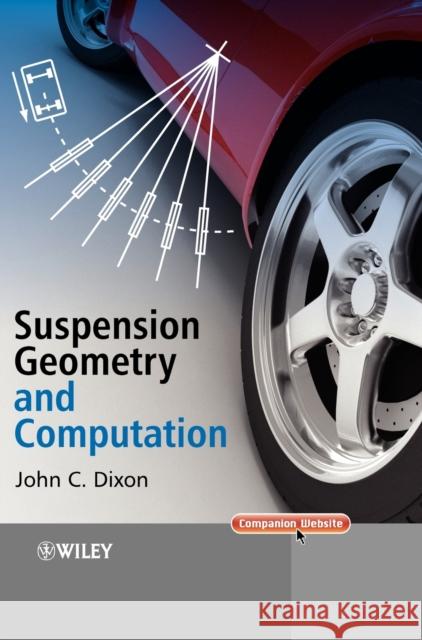
Suspension Geometry and Computation

ISBN-13: 9780470510216 / Angielski / Twarda / 2009 / 440 str.
John Dixon
Suspension Geometry and Computation John Dixon 9780470510216 John Wiley & Sons - książkaWidoczna okładka, to zdjęcie poglądowe, a rzeczywista szata graficzna może różnić się od prezentowanej.

Suspension Geometry and Computation

ISBN-13: 9780470510216 / Angielski / Twarda / 2009 / 440 str.

John Dixon
cena 532,64 zł
(netto: 507,28 VAT:  5%)

Najniższa cena z 30 dni: 528,28 zł
Termin realizacji zamówienia:
ok. 30 dni roboczych
Bez gwarancji dostawy przed świętami

Darmowa dostawa!

Revealing suspension geometry design methods in unique detail, John Dixon shows how suspension properties such as bump steer, roll steer, bump camber, compliance steer and roll centres are analysed and controlled by the professional engineer. He emphasizes the physical understanding of suspension parameters in three dimensions and methods of their calculation, using examples, programs and discussion of computational problems. The analytical and design approach taken is a combination of qualitative explanation, for physical understanding, with algebraic analysis of linear and non-linear coefficients, and detailed discussion of computer simulations and related programming methods.

  • Includes a detailed and comprehensive history of suspension and steering system design, fully illustrated with a wealth of diagrams
  • Explains suspension characteristics and suspension geometry coefficients, providing a unique and in-depth understanding of suspension design not found elsewhere.
  • Describes how to obtain desired coefficients and the limitations of particular suspension types, with essential information for suspension designers, chassis technicians and anyone else with an interest in suspension characteristics and vehicle dynamics.
  • Discusses the use of computers in suspension geometry analysis, with programming techniques and examples of suspension solution, including advanced discussion of three-dimensional computational geometry applied to suspension design.
  • Explains in detail the direct and iterative solutions of suspension geometry.

Kategorie:
Technologie
Kategorie BISAC:
Technology & Engineering > Drafting & Mechanical Drawing
Transportation > Automotive - General
Wydawca:
John Wiley & Sons
Język:
Angielski
ISBN-13:
9780470510216
Rok wydania:
2009
Ilość stron:
440
Waga:
0.88 kg
Wymiary:
24.89 x 17.27 x 3.05
Oprawa:
Twarda
Wolumenów:
01
Dodatkowe informacje:
Bibliografia
Wydanie ilustrowane

Preface.

1 Introduction and History.

1.1 Introduction.

1.2 Early Steering History.

1.3 Leaf–Spring Axles.

1.4 Transverse Leaf Springs.

1.5 Early Independent Fronts.

1.6 Independent Front Suspension.

1.7 Driven Rigid Axles.

1.8 De Dion Rigid Axles.

1.9 Undriven Rigid Axles.

1.10 Independent Rear Driven.

1.11 Independent Rear Undriven.

1.12 Trailing–Twist Axles.

1.13 Some Unusual Suspensions.

References.

2 Road Geometry.

2.1 Introduction.

2.2 The Road.

2.3 Road Curvatures.

2.4 Pitch Gradient and Curvature.

2.5 Road Bank Angle.

2.6 Combined Gradient and Banking.

2.7 Path Analysis.

2.8 Particle–Vehicle Analysis.

2.9 Two–Axle–Vehicle Analysis.

2.10 Road Cross–Sectional Shape.

2.11 Road Torsion.

2.12 Logger Data Analysis.

References.

3 Road Profiles.

3.1 Introduction.

3.2 Isolated Ramps.

3.3 Isolated Bumps.

3.4 Sinusoidal Single Paths.

3.5 Sinusoidal Roads.

3.6 Fixed Waveform.

3.7 Fourier Analysis.

3.8 Road Wavelengths.

3.9 Stochastic Roads.

References.

4 Ride Geometry.

4.1 Introduction.

4.2 Wheel and Tyre Geometry.

4.3 Suspension Bump.

4.4 Ride Positions.

4.5 Pitch.

4.5 Roll.

4.7 Ride Height.

4.8 Time–Domain Ride Analysis.

4.9 Frequency–Domain Ride Analysis.

4.10 Workspace.

5 Vehicle Steering.

5.1 Introduction.

5.2 Turning Geometry – Single Track.

5.3 Ackermann Factor.

5.4 Turning Geometry – Large Vehicles.

5.5 Steering Ratio.

5.6 Steering Systems.

5.7 Wheel Spin Axis.

5.8 Wheel Bottom Point.

5.9 Wheel Steering Axis.

5.10 Caster Angle.

5.11 Camber Angle.

5.12 Kingpin Angle Analysis.

5.13 Kingpin Axis Steered.

5.14 Steer Jacking.

References.

6 Bump and Roll Steer.

6.1 Introduction.

6.2 Wheel Bump Steer.

6.3 Axle Steer Angles.

6.4 Roll Steer and Understeer.

6.5 Axle Linear Bump and Roll Steer.

6.6 Axle Non–Linear Bump and Roll Steer.

6.7 Axle Double–Bump Steer.

6.8 Vehicle Roll Steer.

6.9 Vehicle Heave Steer.

6.10 Vehicle Pitch Steer.

6.11 Static Toe–In and Toe–Out.

6.12 Rigid Axles with Link Location.

6.13 Rigid Axles with Leaf Springs.

6.14 Rigid Axles with Steering.

References.

7 Camber and Scrub.

7.1 Introduction.

7.2 Wheel Inclination and Camber.

7.3 Axle Inclination and Camber.

7.4 Linear Bump and Roll.

7.5 Non–Linear Bump and Roll.

7.6 The Swing Arm.

7.7 Bump Camber Coefficients.

7.8 Roll Camber Coefficients.

7.9 Bump Scrub.

7.10 Double–Bump Scrub.

7.11 Roll Scrub.

7.12 Rigid Axles.

References.

8 Roll Centres.

8.1 Introduction.

8.2 The Swing Arm.

8.3 The Kinematic Roll Centre.

8.4 The Force Roll Centre.

8.5 The Geometric Roll Centre.

8.6 Symmetrical Double Bump.

8.7 Linear Single Bump.

8.8 Asymmetrical Double Bump.

8.9 Roll of a Symmetrical Vehicle.

8.10 Linear Symmetrical Vehicle Summary.

8.11 Roll of an Asymmetrical Vehicle.

8.12 Road Coordinates.

8.13 GRC and Latac.

8.14 Experimental Roll Centres.

References.

9 Compliance Steer.

9.1 Introduction.

9.2 Wheel Forces and Moments.

9.3 Compliance Angles.

9.4 Independent Suspension Compliance.

9.5 Discussion of Matrix.

9.6 Independent–Suspension Summary.

9.7 Hub Centre Forces.

9.8 Steering.

9.9 Rigid Axles.

9.10 Experimental Measurements.

References.

10 Pitch Geometry.

10.1 Introduction.

10.2 Acceleration and Braking.

10.3 Anti–Dive.

10.4 Anti–Rise

10.5 Anti–Lift.

10.6 Anti–Squat.

10.7 Design Implications.

11 Single–Arm Suspensions.

11.1 Introduction.

11.2 Pivot Axis Geometry.

11.3 Wheel Axis Geometry.

11.4 The Trailing Arm.

11.5 The Sloped–Axis Trailing Arm.

11.6 The Semi–Trailing Arm.

11.7 The Low–Pivot Semi–Trailing Arm.

11.8 The Transverse Arm.

11.9 The Sloped–Axis Transverse Arm.

11.10 The Semi–Transverse Arm.

11.11 The Low–Pivot Semi–Transverse Arm.

11.12 General Case Numerical Solution.

11.13 Comparison of Solutions.

11.14 The Steered Single Arm.

11.15 Bump Scrub.

References.

12 Double–Arm Suspensions.

12.1 Introduction.

12.2 Configurations.

12.3 Arm Lengths and Angles.

12.4 Equal Arm Length.

12.5 Equally–Angled Arms.

12.6 Converging Arms.

12.7 Arm Length Difference.

12.8 General Solution.

12.9 Design Process.

12.10 Numerical Solution in Two Dimensions.

12.11 Pitch.

12.12 Numerical Solution in Three Dimensions.

12.13 Steering.

12.14 Strut Analysis in Two Dimensions.

12.15 Strut Numerical Solution in Two Dimensions.

12.16 Strut Design Process.

12.17 Strut Numerical Solution in Three Dimensions.

12.18 Double Trailing Arms.

12.19 Five–Link Suspension.

13 Rigid Axles.

13.1 Introduction.

13.2 Example Configuration.

13.3 Axle Variables.

13.4 Pivot–Point Analysis.

13.5 Link Analysis.

13.6 Equivalent Links.

13.7 Numerical Solution.

13.8 The Sensitivity Matrix.

13.9 Results: Axle 1.

13.10 Results: Axle 2.

13.11 Coefficients.

14 Installation Ratios.

14.1 Introduction.

14.2 Motion Ratio.

14.3 Displacement Method.

14.4 Velocity Diagrams.

14.5 Computer Evaluation.

14.6 Mechanical Displacement.

14.7 The Rocker.

14.8 The Rigid Arm.

14.9 Double Wishbones.

14.10 Struts.

14.11 Pushrods and Pullrods.

14.12 Solid Axles.

14.13 The Effect of Motion Ratio on Inertia.

14.14 The Effect of Motion Ratio on Springs.

14.15 The Effect of Motion Ratio on Dampers.

14.16 Velocity Diagrams in Three Dimensions.

14.17 Acceleration Diagrams.

References.

15 Computational Geometry in Three Dimensions.

15.1 Introduction.

15.2 Coordinate Systems.

15.3 Transformation of Coordinates.

15.4 Direction Numbers and Cosines.

15.5 Vector Dot Product.

15.6 Vector Cross Product.

15.7 The Sine Rule.

15.8 The Cosine Rule.

15.9 Points.

15.10 Lines.

15.11 Planes.

15.12 Spheres.

15.13 Circles.

15.14 Routine PointFPL2P.

15.15 Routine PointFPLPDC.

15.16 Routine PointITinit.

15.17 Routine PointIT.

15.18 Routine PointFPT.

15.19 Routine Plane3P.

15.20 Routine PointFP.

15.21 Routine PointFPPl3P.

15.22 Routine PointATinit.

15.23 Routine PointAT.

15.24 Routine Points3S.

15.25 Routine Points2SHP.

15.26 Routine Point3Pl.

15.27 Routine ′PointLP′.

15.28 Routine Point3SV.

15.29 Routine PointITV.

15.30 Routine PointATV.

15.31 Rotations.

16 Programming Considerations.

16.1 Introduction.

16.2 The RASER Value.

16.3 Failure Modes Analysis.

16.4 Reliability.

16.5 Bad Conditioning.

16.6 Data Sensitivity.

16.7 Accuracy.

16.8 Speed.

16.9 Ease of Use.

16.10 The Assembly Problem.

16.11 Checksums.

17 Iteration.

17.1 Introduction.

17.2 Three Phases of Iteration.

17.3 Convergence.

17.4 Binary Search.

17.5 Linear Iterations.

17.6 Iterative Exits.

17.7 Fixed–Point Iteration.

17.8 Accelerated Convergence.

17.9 Higher Orders without Derivatives.

17.10 Newton’s Iterations.

17.11 Other Derivative Methods.

17.12 Polynomial Roots.

17.13 Testing.

References.

Appendix A: Nomenclature.

Appendix B: Units.

Appendix C: Greek Alphabet.

Appendix D: Quaternions for Engineers.

Appendix E: Frenet, Serret and Darboux.

Appendix F: The Fourier Transform.

References and Bibliography.

Index.

Dr John C. Dixon, Eur. Ing., M.A., Ph.D., C.Eng, C.Phys, FIMechE, FRAeS, MinstP, MIET, is a Senior Lecturer at the Open University. He has extensive experience in vehicle dynamics, including shock absorber design and testing for leading racing teams. His previous books include The Shock Absorber Handbook Second Edition, Tires, Suspension and Handling Second Edition and The High Performance Two Stroke Engine.

Revealing suspension geometry design methods in unique detail, John Dixon shows how suspension properties such as bump steer, roll steer, bump camber, compliance steer and roll centres are analysed and controlled by the professional engineer. He emphasizes the physical understanding of suspension parameters in three dimensions and methods of their calculation, using examples, programs and discussion of computational problems. The analytical and design approach taken is a combination of qualitative explanation, for physical understanding, with algebraic analysis of linear and non–linear coefficients, and detailed discussion of computer simulations and related programming methods.

  • Includes a detailed and comprehensive history of suspension and steering system design, fully illustrated with a wealth of diagrams.
  • Explains suspension characteristics and suspension geometry coefficients, providing a unique and in–depth understanding of suspension design not found elsewhere.
  • Describes how to obtain desired coefficients and the limitations of particular suspension types, with essential information for suspension designers, chassis technicians and anyone else with an interest in suspension characteristics and vehicle dynamics.
  • Discusses the use of computers in suspension geometry analysis, with programming techniques and examples of suspension solution, including advanced discussion of three–dimensional computational geometry applied to suspension design.
  • Explains in detail the direct and iterative solutions of suspension geometry.

Dixon, John Dixon is at the University of Plymouth.... więcej >


Udostępnij

Facebook - konto krainaksiazek.pl


Opinie o Krainaksiazek.pl na Opineo.pl

Partner Mybenefit

Krainaksiazek.pl w programie rzetelna firma Krainaksiaze.pl - płatności przez paypal

Czytaj nas na:

Facebook - krainaksiazek.pl
  • książki na zamówienie
  • granty
  • książka na prezent
  • kontakt
  • pomoc
  • opinie
  • regulamin
  • polityka prywatności

Zobacz:

  • Księgarnia czeska

  • Wydawnictwo Książkowe Klimaty

1997-2025 DolnySlask.com Agencja Internetowa

© 1997-2022 krainaksiazek.pl
     
KONTAKT | REGULAMIN | POLITYKA PRYWATNOŚCI | USTAWIENIA PRYWATNOŚCI
Zobacz: Księgarnia Czeska | Wydawnictwo Książkowe Klimaty | Mapa strony | Lista autorów
KrainaKsiazek.PL - Księgarnia Internetowa

Polityka prywatnosci - link
Krainaksiazek.pl - płatnośc Przelewy24
Przechowalnia Przechowalnia





