• Wyszukiwanie zaawansowane
  • Kategorie
  • Kategorie BISAC
  • Książki na zamówienie
  • Promocje
  • Granty
  • Książka na prezent
  • Opinie
  • Pomoc
  • Załóż konto
  • Zaloguj się

Surfactants from Renewable Resources » książka


zaloguj się | załóż konto
Logo Krainaksiazek.pl

koszyk

konto

szukaj
topmenu
Księgarnia internetowa
Szukaj
Książki na zamówienie
Promocje
Granty
Książka na prezent
Moje konto
Pomoc
 
 
Wyszukiwanie zaawansowane
Pusty koszyk
Bezpłatna dostawa dla zamówień powyżej 20 złBezpłatna dostawa dla zamówień powyżej 20 zł

Kategorie główne

• Nauka
 [2950560]
• Literatura piękna
 [1849509]

  więcej...
• Turystyka
 [71097]
• Informatyka
 [151150]
• Komiksy
 [35848]
• Encyklopedie
 [23178]
• Dziecięca
 [617388]
• Hobby
 [139064]
• AudioBooki
 [1657]
• Literatura faktu
 [228597]
• Muzyka CD
 [383]
• Słowniki
 [2855]
• Inne
 [445295]
• Kalendarze
 [1464]
• Podręczniki
 [167547]
• Poradniki
 [480102]
• Religia
 [510749]
• Czasopisma
 [516]
• Sport
 [61293]
• Sztuka
 [243352]
• CD, DVD, Video
 [3414]
• Technologie
 [219456]
• Zdrowie
 [101002]
• Książkowe Klimaty
 [124]
• Zabawki
 [2311]
• Puzzle, gry
 [3459]
• Literatura w języku ukraińskim
 [254]
• Art. papiernicze i szkolne
 [8079]
Kategorie szczegółowe BISAC

Surfactants from Renewable Resources

ISBN-13: 9780470760413 / Angielski / Twarda / 2010 / 352 str.
Mikael Kjellin; Ingegard Johansson
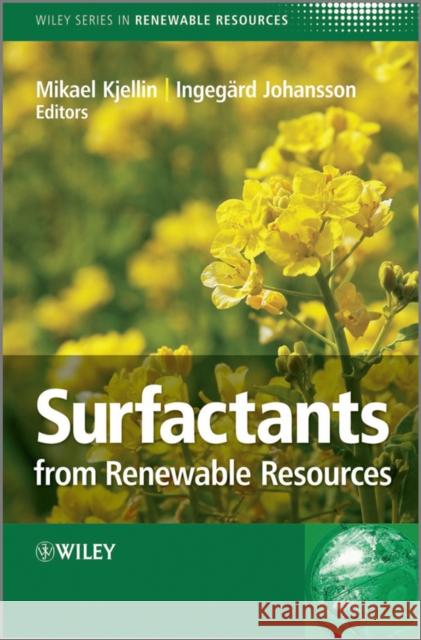
Surfactants from Renewable Resources Mikael Kjellin Ingegard Johansson 9780470760413 John Wiley & Sons - książkaWidoczna okładka, to zdjęcie poglądowe, a rzeczywista szata graficzna może różnić się od prezentowanej.

Surfactants from Renewable Resources

ISBN-13: 9780470760413 / Angielski / Twarda / 2010 / 352 str.

Mikael Kjellin; Ingegard Johansson
cena 641,40
(netto: 610,86 VAT:  5%)

Najniższa cena z 30 dni: 640,08
Termin realizacji zamówienia:
ok. 30 dni roboczych
Dostawa w 2026 r.

Darmowa dostawa!

Most modern surfactants are readily biodegradable and exhibit low toxicity in the aquatic environment, the two criteria for green surfactants. However the majority are synthesised from petroleum, so over the past decade the detergent industry has turned its attention to developing greener routes to create these surfactants via renewable building blocks. Surfactants from Renewable Resources presents the latest research and commercial applications in the emerging field of sustainable surfactant chemistry, with emphasis on production technology, surface chemical properties, biodegradability, ecotoxicity, market trends, economic viability and life-cycle analysis. Reviewing traditional sources for renewable surfactants as well as recent advances, this text focuses on techniques with potential for large scale application. Topics covered include:

  • Renewable hydrophobes from natural fatty acids and forest industry by-products
  • Renewable hydrophiles from carbohydrates, amino acids and lactic acid
  • New ways of making renewable building blocks; ethylene from renewable resources and complex mixtures from waste biomass
  • Biosurfactants
  • Surface active polymers
This book is a valuable resource for industrial researchers in companies that produce and use surfactants, as well as academic researchers in surface and polymer chemistry, sustainable chemistry and chemical engineering.

Kategorie:
Technologie
Kategorie BISAC:
Technology & Engineering > Chemical & Biochemical
Science > Chemistry - Industrial & Technical
Wydawca:
John Wiley & Sons
Seria wydawnicza:
Wiley Series in Renewable Resource
Język:
Angielski
ISBN-13:
9780470760413
Rok wydania:
2010
Ilość stron:
352
Waga:
0.70 kg
Wymiary:
24.89 x 17.27 x 2.29
Oprawa:
Twarda
Wolumenów:
01
Dodatkowe informacje:
Bibliografia
Wydanie ilustrowane

"The book is highly concentrated on technical aspects with big expertise in the different production technologies, it aims to be used as a chemical and technical reference for industrial and academic researchers in this field." (Encyclopedia of Industrial Biotechnology, 30 August 2011)

Series Preface.

Preface.

Acknowledgements.

List of Contributors.

PART 1 RENEWABLE HYDROPHOBES.

1 Surfactants Based on Natural Fatty Acids (Martin Svensson).

1.1 Introduction and History.

1.2 Fats and Oils as Raw Materials.

1.3 Fatty Acid Soaps.

1.4 Polyethylene Glycol Fatty Acid Esters.

1.5 Polyglycerol Fatty Acid Esters.

1.6 Conclusions.

References.

2 Nitrogen Derivatives of Natural Fats and Oils (Ralph Franklin).

2.1 Introduction.

2.2 Manufacture of Fatty Nitrogen Derivatives.

2.3 Production Data.

2.4 Ecological Aspects.

2.5 Biodegradation.

2.6 Properties of Nitrogen–Based Surfactants.

2.7 Applications.

2.8 Conclusions.

References.

3 Surface–Active Compounds as Forest–Industry By–Products (Bjarne Holmbom, Anna Sundberg and Anders Strand).

3.1 Introduction.

3.2 Resin and Fatty Acids.

3.3 Sterols and Sterol Ethoxylates.

3.4 Hemicelluloses.

Acknowledgements.

References.

PART 2 REWNEWABLE HYDROPHILES.

4 Surfactants Based on Carbohydrates and Proteins for Consumer Products and Technical Applications (Karlheinz Hill).

4.1 Introduction.

4.2 Raw Materials.

4.3 Products and Applications.

4.4 Conclusion.

Acknowledgements.

References.

5 Amino Acids, Lactic Acid and Ascorbic Acid as Raw Materials for Biocompatible Surfactants (Carmen Moran, Lourdes Perez, Ramon Pons, Aurora Pinazo and Maria Rosa Infante).

5.1 Introduction.

5.2 Production of Raw Materials.

5.3 Lysine–Based Surfactants.

5.4 Lactic Acid–Based Surfactants.

5.5 Ascorbic Acid–Based Surfactants.

References.

PART 3 NEW WAYS OF MAKING RENEWABLE BUILDING BLOCKS.

6 Ethylene from Renewable Resources (Anna Lundgren and Thomas Hjertberg).

6.1 Introduction.

6.2 Why Produce Ethylene from Renewable Resources?

6.3 Production of Ethylene from Renewable Feedstock.

6.4 Commercialization of Bioethylene.

6.5 Environmental Impact of Bioethylene.

6.6 Certificate of Green Carbon Content.

6.7 Concluding Remarks.

References.

7 Fermentation–Based Building Blocks for Renewable Resource–Based Surfactants (Kris Arvid Berglund, Ulrika Rova, David B Hodge).

7.1 Introduction.

7.2 Existing and Potential Classes of Surfactants from Biologically–Derived Metabolites.

7.3 Fermentation–Based Building Blocks with Large Existing Markets.

7.4 New Fermentation–Based Building Blocks.

Conclusion.

References.

PART 4 BIOSURFACTANTS.

8 Synthesis of Surfactants Using Enzymes (Patrick Adlercreutz and Rajni Hatti–Kaul).

8.1 Introduction.

8.2 Enzymes as Catalysts for Synthesis of Surfactants.

8.3 Enzymatic Synthesis of Polar Lipids Useful as Surfactants.

8.4 Carbohydrate Esters.

8.5 Fatty Amide Surfactants.

8.6 Amino Acid–Based Surfactants.

8.7 Alkyl Glycosides.

8.8 Future Prospects.

Acknowledgements.

References.

9 Surfactants from Waste Biomass (Flor Yunuen García–Becerra, David Grant Allen, and Edgar Joel Acosta).

9.1 Introduction.

9.2 Surfactants Obtained from Biological Transformation of Waste Biomass.

9.3 Surfactants Obtained from Chemical Transformation of Waste Biomass.

9.4 Summary and Outlook.

9.5 References.

10 Lecithin and Other Phospholipids (Willem van Nieuwenhuyzen).

10.1 Introduction.

10.2 Sources and Production.

10.3 Composition.

10.4 Quality and Analysis of Lecithins.

10.5 Modification.

10.6 Emulsifying Properties.

10.7 Applications.

10.8 Legislation and Reach.

10.9 Conclusion.

References.

11 Sophorolipids and Rhamnolipids (Dirk W. G. Develter and Steve J. J. Fleurackers).

11.1 Sophorolipids.

11.2 Derivatives of Native Sophorolipids.

11.3 Biosynthesis of Novel Sophorolipids.

11.4 Rhamnolipids.

11.5 Cleaning Applications Using Sophorolipids and Rhamnolipids.

References.

12 Saponin–Based Surfactants (Wieslaw Oleszek and Arafa Hamed).

12.1 Introduction.

12.2 Molecular Properties.

12.3 Sources of Saponins.

12.4 Saponins as Emulsifiers and Surfactants.

12.5 Application of Saponins as Surfactants and Emulsifiers.

Acknowledgements.

References.

PART 5 POLYMERIC SURFACTANTS/SURFACE–ACTIVE POLYMERS

13 Surface–Active Polymers from Cellulose (Leif Karlson).

13.1 Introduction.

13.2 Structure and Synthesis of Cellulose Ether.

13.3 Cellulose Ethers in Aqueous Solution.

13.4 Interaction with Surfactants.

13.5 Clouding.

References.

14 New Developments in the Commercial Utilization of Lignosulfonates (Rolf Andreas Lauten, Bernt O. Myrvold and Stig Are Gundersen).

14.1 Introduction.

14.2 Lignosulfonates.

14.3 Lignosulfonate Production.

14.4 Environmental Issues.

14.5 Lignosulfonates as Stabilizers for Emulsions and Suspoemulsions.

14.6 Superplasticizers for Concrete.

14.7 Summary.

Acknowledgements.

References.

15 Dispersion Stabilizers Based on Inulin (Tharwat Tadros and Bart Levecke).

15.1 Introduction.

15.2 Solution Properties of Long–Chain Inulin and Hydrophobically Modified Inulin (HMI).

15.3 Interfacial Aspects of HMI at Various Interfaces.

15.4 Emulsions Stabilized Using HMI.

15.5 Emulsion Polymerization Using HMI.

15.6 Use of HMI for Preparation and Stabilization of Nanoemulsions.

References

Index.

Dr Mikael Kjellin is based at the Institute for Surface Chemistry, Stockholm, Sweden, which works with many industrial branches including pharmaceuticals, personal care products, biotech, food, industrial chemicals, household products, engineering and materials industries, pulp and paper, coatings, adhesives, paints, and printing.
In addition, Dr Kjellin is the coordinator of the research centre SNAP, which aims to build from an industrial need, long–term knowledge and experience relating to new environmentally safe surfactants derived entirely or partly from natural products.

Ingegard.Johansson is a research scientists based at Akzo Nobel Surfactants Europe in Sweden.

Most modern surfactants are readily biodegradable and exhibit low toxicity in the aquatic environment, the two criteria for green surfactants. However the majority are synthesized from petroleum, so over the past decade the detergent industry has turned its attention to developing greener routes to create these surfactants via renewable building blocks.

Surfactants from Renewable Resources presents the latest research and commercial applications in the emerging field of sustainable surfactant chemistry, with emphasis on production technology, surface chemical properties, biodegradability, ecotoxicity, market trends, economic viability and life–cycle analysis.

Reviewing traditional sources for renewable surfactants as well as recent advances, this text focuses on techniques with potential for large scale application.

Topics covered include:

  • Renewable hydrophobes from natural fatty acids and forest industry by–products
  • Renewable hydrophiles from carbohydrates, amino acids and lactic acid
  • New ways of making renewable building blocks; ethylene from renewable resources and complex mixtures from waste biomass
  • Biosurfactants
  • Surface active polymers

This book is a valuable resource for industrial researchers in companies that produce and use surfactants, as well as academic researchers in surface and polymer chemistry, sustainable chemistry and chemical engineering.


Udostępnij

Facebook - konto krainaksiazek.pl


Opinie o Krainaksiazek.pl na Opineo.pl

Partner Mybenefit

Krainaksiazek.pl w programie rzetelna firma Krainaksiaze.pl - płatności przez paypal

Czytaj nas na:

Facebook - krainaksiazek.pl
  • książki na zamówienie
  • granty
  • książka na prezent
  • kontakt
  • pomoc
  • opinie
  • regulamin
  • polityka prywatności

Zobacz:

  • Księgarnia czeska

  • Wydawnictwo Książkowe Klimaty

1997-2025 DolnySlask.com Agencja Internetowa

© 1997-2022 krainaksiazek.pl
     
KONTAKT | REGULAMIN | POLITYKA PRYWATNOŚCI | USTAWIENIA PRYWATNOŚCI
Zobacz: Księgarnia Czeska | Wydawnictwo Książkowe Klimaty | Mapa strony | Lista autorów
KrainaKsiazek.PL - Księgarnia Internetowa

Polityka prywatnosci - link
Krainaksiazek.pl - płatnośc Przelewy24
Przechowalnia Przechowalnia







