• Wyszukiwanie zaawansowane
  • Kategorie
  • Kategorie BISAC
  • Książki na zamówienie
  • Promocje
  • Granty
  • Książka na prezent
  • Opinie
  • Pomoc
  • Załóż konto
  • Zaloguj się

Supercomputers & Their Performance in Computational Fluid Dynamics » książka


zaloguj się | załóż konto
Logo Krainaksiazek.pl

koszyk

konto

szukaj
topmenu
Księgarnia internetowa
Szukaj
Książki na zamówienie
Promocje
Granty
Książka na prezent
Moje konto
Pomoc
 
 
Wyszukiwanie zaawansowane
Pusty koszyk
Bezpłatna dostawa dla zamówień powyżej 20 złBezpłatna dostawa dla zamówień powyżej 20 zł

Kategorie główne

• Nauka
 [2949965]
• Literatura piękna
 [1857847]

  więcej...
• Turystyka
 [70818]
• Informatyka
 [151303]
• Komiksy
 [35733]
• Encyklopedie
 [23180]
• Dziecięca
 [617748]
• Hobby
 [139972]
• AudioBooki
 [1650]
• Literatura faktu
 [228361]
• Muzyka CD
 [398]
• Słowniki
 [2862]
• Inne
 [444732]
• Kalendarze
 [1620]
• Podręczniki
 [167233]
• Poradniki
 [482388]
• Religia
 [509867]
• Czasopisma
 [533]
• Sport
 [61361]
• Sztuka
 [243125]
• CD, DVD, Video
 [3451]
• Technologie
 [219309]
• Zdrowie
 [101347]
• Książkowe Klimaty
 [123]
• Zabawki
 [2362]
• Puzzle, gry
 [3791]
• Literatura w języku ukraińskim
 [253]
• Art. papiernicze i szkolne
 [7933]
Kategorie szczegółowe BISAC

Supercomputers & Their Performance in Computational Fluid Dynamics

ISBN-13: 9783528076375 / Angielski / Miękka / 1993 / 199 str.
Kozo Fujii
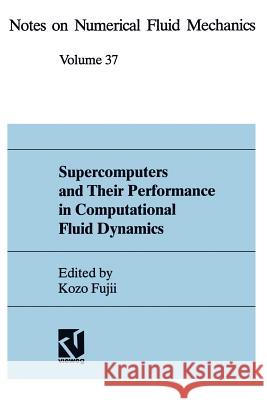
Supercomputers & Their Performance in Computational Fluid Dynamics Fujii, Kozo 9783528076375 Vieweg+teubner Verlag - książkaWidoczna okładka, to zdjęcie poglądowe, a rzeczywista szata graficzna może różnić się od prezentowanej.

Supercomputers & Their Performance in Computational Fluid Dynamics

ISBN-13: 9783528076375 / Angielski / Miękka / 1993 / 199 str.

Kozo Fujii
cena 403,47 zł
(netto: 384,26 VAT:  5%)

Najniższa cena z 30 dni: 385,52 zł
Termin realizacji zamówienia:
ok. 22 dni roboczych
Bez gwarancji dostawy przed świętami

Darmowa dostawa!

Supercomputer technologies have evolved rapidly since the first commercial-based supercomputer, CRAY-1 was introduced in 1976. In early 1980's three Japanese super computers appeared, and Cray Research delivered the X-MP series. These machines including the later-announced CRAY-2 and NEC SX series created one generation of supercomputers, and the market was spread dramatically. The peak performance was higher than 1 GFLOPS and the compiler improvement was remarkable. There appeared many articles and books that described their architecture and their performance on The late 1980's saw a new generation of supercomputers. several benchmark problems. Following CRAY Y-MP and Hitachi S-820 delivered in 1988, NEC announced SX-3 and Fujitsu announced the VP2000 series in 1990. In addition, Cray Research announced the Y-MP C-90 late in 1991. The peak performance of these machines reached several to a few ten's GFLOPS. The hardware characteristics of these machines are known, but their practical performance has not been well documented so far. Computational Fluid Dynamics (CFD) is one of the important research fields that have been progressing with the growth of supercomputers. Today's fluid dynamic re search cannot be discussed without supercomputers and since CFD is one of the im portant users of supercomputers, future development of supercomputers has to take the requirements of CFD into account. There are many benchmark reports available today. However, they mostly use so called kernels. For fluid dynamics researchers, benchmark test on real fluid dynamic codes are necessary."


Kategorie:
Technologie
Kategorie BISAC:
Computers > Computer Science
Comics & Graphic Novels > General
Mathematics > Matematyka stosowana
Wydawca:
Vieweg+teubner Verlag
Seria wydawnicza:
Notes on Numerical Fluid Mechanics
Język:
Angielski
ISBN-13:
9783528076375
Rok wydania:
1993
Wydanie:
1993
Numer serii:
000170313
Ilość stron:
199
Waga:
0.34 kg
Wymiary:
23.5 x 15.5
Oprawa:
Miękka
Wolumenów:
01

I.: Cray Y-MP C90 Supercomputer.- 1. Introducing The Cray Y-MP C90 Supercomputer.- 2. Redefining High-Performance Computing.- 3. Bridging the Gap Between Potential and Productivity.- 4. Protecting Your High-End Supercomputing Investments.- 5. The Best Overall Supercomputing Solutions.- 6. New Technologies Maximize System Availability.- 7. Physical Description.- 8. Cray Y-MP C90 Highlights.- 9. The Most Powerful I/O Technology Available.- 10. Input/Output Highlights.- 11. Advanced SSD Technology.- 12. SSD Highlights.- 13. Disk Drives.- 14. Software.- 14.1 Performance Oriented, Feature-Rich Software.- 14.2 UNICOS Operating System.- 14.3 UNICOS Highlights.- 14.4 Compilers.- 14.5 Autotasking.- 14.6 UNICOS Storage System.- 14.7 Applications.- 14.8 The Power of Visualization.- 15. Network Supercomputing.- 15.1 Delivering Supercomputing Power to Your Desktop.- 16. Supportability.- 16.1 Maximized System Availability.- 17. The Cray Y-MP C90 Supercomputer, Nothing Else Comes Close.- II. Fujitsu VP2000 Series Supercomputer.- 1. Introduction.- 2. Architecture.- 2.1 Scalar Unit (SU).- 2.2 Vector Unit (VU).- 2.3 Main Storage Unit (MSU).- 2.4 System Storage Unit (SSU).- 2.5 Channel Processor (CHP).- 2.5.1 High-speed optical channel.- 2.5.2 HIPPI channel.- 3. Hardware Implementation.- 3.1 Vector Pipelines.- 3.2 Parallel Processing.- 3.3 Advanced Scalar Operation.- 3.4 Other Features for High Speed Processing.- 4. Multiprocessor System.- 4.1 Dual Scalar Processor (DSP).- 4.2 Quadruple Scalar Processor (QSP).- 5. Hardware Technology.- 5.1 Advanced LSIs.- 5.2 High Density Packaging.- 5.3 Cooling Technology.- 6. MSP System.- 6.1 System Storage Usage.- 6.1.1 High speed large scale virtual I/O.- 6.1.2 High speed swapping.- 6.2 Support of DSP/QSP.- 6.3 Virtual Machine.- 6.4 TCP/IP Support.- 7. Unix System.- 7.1 Optimization of Vector Processes.- 7.2 High-Speed I/O Access.- 7.3 Effective Resource Management.- 7.4 High-Speed Swapping.- 8. Language Processing System.- 8.1 Optimization.- 8.1.1 Parallel pipeline scheduling (PPS).- 8.1.2 Loop unrolling.- 8.2 Parallelization.- 8.2.1 Automatic parallelization.- 8.2.2 Parallelism description.- 9. Performance.- 10. Conclusion.- 11. References.- III. Hitachi S-820 Supercomputer System.- 1. Introduction.- 2. Architecture and System Organization.- 2.1 Overview.- 2.2 Extended Storage.- 2.3 Vector Register.- 2.4 Vector Instruction Set.- 3. Logic Structure.- 3.1 Overview.- 3.2 Vector Execution Control.- 3.2.1 Parallel construction.- 3.2.2 Elementwise parallel processing.- 3.3 Storage Control.- 4. Hardware Technology.- 5. Software.- 6. Performance.- 7. Conclusion.- 8. References.- IV. NEC SX-3 Supercomputer System.- 1. Introduction.- 2. System Configuration.- 3. Processor Configuration and Architecture.- 4. The Super-Ux Operating System.- 5. Fortran and Tools.- 6. Performance Results.- 7. Conclusion.- 8. References.- V. Trends in Vector and Parallel Supercomputer Architectures.- 1. Introduction.- 2. The Supercomputer CPU: An Overview.- 3. A Summary of Supercomputer Hardware Characteristics.- 4. Parallel Vector Computation, and Latency in Design.- 5. A Study of Vector Start-Up Time.- 6. Parallel Computation.- 7. Risc Architectures.- 8. Conclusion.- 9. References.- VI. Navier-Stokes Benchmark Tests.- 1. Introduction.- 2. Benchmark Test Features.- 3. Benchmark Test Result — 1.- 4. Benchmark Test Result — 2.- 5. Final Remarks On Both Benchmark Tests.- 5.1 Assessment of the Result.- 5.2 CFD View Point.- 6. Cray Y-MP C-90 Benchmark Report.- 7. Future Requirements.- 8. Final Remarks.- 9. Acknowledgment.- 10. References.- VII. Vectorization and Parallelization Techniques for Modern Supercomputers.- 1. Introduction.- 2. Basic Aspects of Vector and Parallel Processing.- 2.1 Vector Architectures and Vector Processing.- 2.2 Parallel Architectures and Parallel Processing.- 2.3 Shared-Memory Systems.- 2.4 Distributed-Memory Systems.- 3. Vectorization and Parallelization of Algorithms.- 3.1 Vectorization.- 3.2 Parallelization.- 3.3 Example: Restructuring of the SOR-Poisson Solver.- 3.4 Example: Vectorization of Sparse Matrix Vector Products.- 3.5 Parallelization of SOR for Shared-Memory Systems.- 3.6 Parallelization of SOR for Distributed-Memory Systems.- 3.7 Example: Numerical Grid Generation.- 4. Concluding Remarks.- VIII.: UHSNWT Initiative at National Aerospace Laboratory.- 1. Background of Numerical Wind Tunnel.- 1.1 Present Situation of CFD.- 1.2 From Ultra High Speed Supercomputer to Ultra High Speed Numerical Wind Tunnel.- 2. Demands in the System Manager’s Eyes.- 2.1 Costs.- 2.2 Reliability.- 3. The Uhsnwt Initiative.- 3.1 Starting Point.- 3.2 Hierarchical Structure of the UHSNWT Memory.- 3.3 Required Performance — From the Manager’s Viewpoints.- 3.4 Configuration of PE.- 3.4.1 Speed-up of PE.- 3.4.1.1 Pipelined vector computers with large VR.- 3.4.1.2 VTAP simulation.- 3.4.2 VTAP simulation results.- 3.4.3 PE model and its feasibility.- 3.4.4 PE models.- 3.4.5 Analysis of VTAP simulation.- 3.4.6 LSI chips for PE.- 3.5 Configuration of Main Memory.- 3.5.1 Realization of target main memory capacity.- 3.5 2 Affinity with CFD programs.- 4. Overall Hardware Configuration of the Uhsnwt.- 4.1 Summary.- 4.2 Reliability of the UHSNWT.- 4.3 Overall Performance.- 4.4 Feasibility of UHSNWT Meeting Requirement (R2).- 5. Concluding Remarks.- 6. References.- IX. Addresses of Contributors.


Udostępnij

Facebook - konto krainaksiazek.pl


Opinie o Krainaksiazek.pl na Opineo.pl

Partner Mybenefit

Krainaksiazek.pl w programie rzetelna firma Krainaksiaze.pl - płatności przez paypal

Czytaj nas na:

Facebook - krainaksiazek.pl
  • książki na zamówienie
  • granty
  • książka na prezent
  • kontakt
  • pomoc
  • opinie
  • regulamin
  • polityka prywatności

Zobacz:

  • Księgarnia czeska

  • Wydawnictwo Książkowe Klimaty

1997-2025 DolnySlask.com Agencja Internetowa

© 1997-2022 krainaksiazek.pl
     
KONTAKT | REGULAMIN | POLITYKA PRYWATNOŚCI | USTAWIENIA PRYWATNOŚCI
Zobacz: Księgarnia Czeska | Wydawnictwo Książkowe Klimaty | Mapa strony | Lista autorów
KrainaKsiazek.PL - Księgarnia Internetowa

Polityka prywatnosci - link
Krainaksiazek.pl - płatnośc Przelewy24
Przechowalnia Przechowalnia





