• Wyszukiwanie zaawansowane
  • Kategorie
  • Kategorie BISAC
  • Książki na zamówienie
  • Promocje
  • Granty
  • Książka na prezent
  • Opinie
  • Pomoc
  • Załóż konto
  • Zaloguj się

Studies on the Chinese Economy During the Mao Era » książka


zaloguj się | załóż konto
Logo Krainaksiazek.pl

koszyk

konto

szukaj
topmenu
Księgarnia internetowa
Szukaj
Książki na zamówienie
Promocje
Granty
Książka na prezent
Moje konto
Pomoc
 
 
Wyszukiwanie zaawansowane
Pusty koszyk
Bezpłatna dostawa dla zamówień powyżej 20 złBezpłatna dostawa dla zamówień powyżej 20 zł

Kategorie główne

• Nauka
 [2946912]
• Literatura piękna
 [1852311]

  więcej...
• Turystyka
 [71421]
• Informatyka
 [150889]
• Komiksy
 [35717]
• Encyklopedie
 [23177]
• Dziecięca
 [617324]
• Hobby
 [138808]
• AudioBooki
 [1671]
• Literatura faktu
 [228371]
• Muzyka CD
 [400]
• Słowniki
 [2841]
• Inne
 [445428]
• Kalendarze
 [1545]
• Podręczniki
 [166819]
• Poradniki
 [480180]
• Religia
 [510412]
• Czasopisma
 [525]
• Sport
 [61271]
• Sztuka
 [242929]
• CD, DVD, Video
 [3371]
• Technologie
 [219258]
• Zdrowie
 [100961]
• Książkowe Klimaty
 [124]
• Zabawki
 [2341]
• Puzzle, gry
 [3766]
• Literatura w języku ukraińskim
 [255]
• Art. papiernicze i szkolne
 [7810]
Kategorie szczegółowe BISAC

Studies on the Chinese Economy During the Mao Era

ISBN-13: 9789811954092 / Angielski / Twarda / 2023 / 260 str.
Katsuji Nakagane
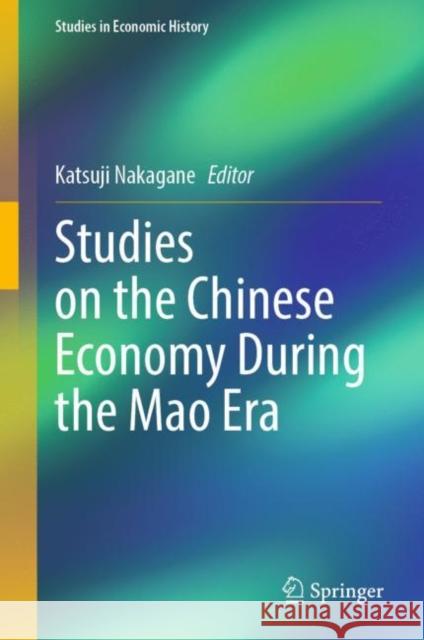
Studies on the Chinese Economy During the Mao Era Katsuji Nakagane 9789811954092 Springer - książkaWidoczna okładka, to zdjęcie poglądowe, a rzeczywista szata graficzna może różnić się od prezentowanej.

Studies on the Chinese Economy During the Mao Era

ISBN-13: 9789811954092 / Angielski / Twarda / 2023 / 260 str.

Katsuji Nakagane
cena 644,07
(netto: 613,40 VAT:  5%)

Najniższa cena z 30 dni: 616,85
Termin realizacji zamówienia:
ok. 22 dni roboczych
Bez gwarancji dostawy przed świętami

Darmowa dostawa!
inne wydania

This book focuses on several specific features characterizing China’s economy in the Mao era (1952–1976), and discusses whether and how they are related to the new economic strategy called “reforms and opening-up” under Deng Xiaoping’s leadership with the result of the aftermath of well-known rapid growth.It provides the reader with basic knowledge of the continuity and discontinuity between the Mao and Deng eras. Readers are provided with some important clues for thinking about how Maoist China could have contributed to or alternatively prevented today’s economic development. The topics addressed here include a brief overview of economic development under Mao, significant differences between Mao and Deng economics, and socialist transformations during the early Mao era. These include collectivization as well as communization and the effects on agricultural productivity; water supply construction drives utilizing a vast amount of rural surplus labor; rural finance; the effects on national savings, and the development of heavy and light industry. Also considered are the effects on the socialist industrialization, rural small-scale industries during the Cultural Revolution and their aftermath, and the realities of social life in a Third-front construction site promoted by Mao’s military strategy in the 1960s. This book is highly recommended to readers who are interested in contemporary China’s economy, particularly to scholars and students. The volume gives new insight into the background or preconditions that made possible historically rare miracles of the Chinese economy after Mao.


This book focuses on several specific features characterizing China’s economy in the Mao era (1952–1976), and discusses whether and how they are related to the new economic strategy called “reforms and opening-up” under Deng Xiaoping’s leadership with the result of the aftermath of well-known rapid growth.  It provides the reader with basic knowledge of the continuity and discontinuity between the Mao and Deng eras. Readers are provided with some important clues for thinking about how Maoist China could have contributed to or alternatively prevented today’s economic development. The topics addressed here include a brief overview of economic development under Mao, significant differences between Mao and Deng economics, and socialist transformations during the early Mao era. These include collectivization as well as communization and the effects on agricultural productivity; water supply construction drives utilizing a vast amount of rural surplus labor; rural finance; the effects on national savings, and the development of heavy and light industry. Also considered are the effects on the socialist industrialization, rural small-scale industries during the Cultural Revolution and their aftermath, and the realities of social life in a Third-front construction site promoted by Mao’s military strategy in the 1960s. This book is highly recommended to readers who are interested in contemporary China’s economy, particularly to scholars and students. The volume gives new insight into the background or preconditions that made possible historically rare miracles of the Chinese economy after Mao.

Kategorie:
Nauka, Ekonomia i biznes
Kategorie BISAC:
Business & Economics > Historia ekonomii
Business & Economics > Economics - Comparative
Business & Economics > Development - Economic Development
Wydawca:
Springer
Seria wydawnicza:
Studies in Economic History
Język:
Angielski
ISBN-13:
9789811954092
Rok wydania:
2023
Dostępne języki:
Numer serii:
000097462
Ilość stron:
260
Oprawa:
Twarda
Dodatkowe informacje:
Wydanie ilustrowane

Preface

Introduction: Economic outcomes and their background

Chapter 1: Mao’s political economy and Deng’s economics

Chapter 2: From new democracy to socialist transformations---with special reference to Chongqing city’s case

Chapter 3: People’s communes (1)---management of collective agriculture based on production surveys

Chapter 4; People’s communes (2)---production team and agricultural households in view of accounting records of a commune

Chapter 5: Water supply construction---flood control, irrigation, and labor accumulation

Chapter 6: Rural finance---national banks and rural financial collectives from a perspective of capital flows

Chapter 7: Heavy and chemical industry---priority industrialization policy and its effects

Chapter 8: Light industry---socialist industrialization and textile industry

Chapter 9: Rural industries---five small industries policy in view of fertilizer and cement industries

Chapter 10: Chinese society in the Mao era---production and life in a Shanghai’s third front site in Anhui Province

Conclusion: Initial conditions for reform and opening-up

Katsuji Nakagane is a professor emeritus of The University of Tokyo. He also taught at Hitotsubashi University and Aoyama Gakuin University. He obtained his Ph.D. in international economics at The University of Tokyo in 1992. He was formerly president of the Japan Association of Asian Studies, president of the Japan Association of Comparative Economics Studies, president of the Japan Association of Chinese Economic and Management Studies, and editor-in-chief of the Developing Economies. He has published several books on the Chinese economy, development economics and systemic transition in Japanese, such as Studies on the Chinese Economy (University of Tokyo Press, 1992), Studies on the Development of the Chinese Economy (Yuhikaku, 1999), The Political Economy of Systemic Transitions (Nagoya University Press 2010), Contemporary China and Development Economics (Nagoya University Press, 2012), and Mao Zedong—The Truth Falls Down from Heaven (Nagoya University Press, 2021).

This book focuses on several specific features characterizing China’s economy in the Mao era (1952–1976), and discusses whether and how they are related to the new economic strategy called “reforms and opening-up” under Deng Xiaoping’s leadership with the result of the aftermath of well-known rapid growth. 

It provides the reader with basic knowledge of the continuity and discontinuity between the Mao and Deng eras. Readers are provided with some important clues for thinking about how Maoist China could have contributed to or alternatively prevented today’s economic development. The topics addressed here include a brief overview of economic development under Mao, significant differences between Mao and Deng economics, and socialist transformations during the early Mao era. These include collectivization as well as communization and the effects on agricultural productivity; water supply construction drives utilizing a vast amount of rural surplus labor; rural finance; the effects on national savings, and the development of heavy and light industry. Also considered are the effects on the socialist industrialization, rural small-scale industries during the Cultural Revolution and their aftermath, and the realities of social life in a Third-front construction site promoted by Mao’s military strategy in the 1960s. This book is highly recommended to readers who are interested in contemporary China’s economy, particularly to scholars and students. The volume gives new insight into the background or preconditions that made possible historically rare miracles of the Chinese economy after Mao.




Udostępnij

Facebook - konto krainaksiazek.pl


Opinie o Krainaksiazek.pl na Opineo.pl

Partner Mybenefit

Krainaksiazek.pl w programie rzetelna firma Krainaksiaze.pl - płatności przez paypal

Czytaj nas na:

Facebook - krainaksiazek.pl
  • książki na zamówienie
  • granty
  • książka na prezent
  • kontakt
  • pomoc
  • opinie
  • regulamin
  • polityka prywatności

Zobacz:

  • Księgarnia czeska

  • Wydawnictwo Książkowe Klimaty

1997-2025 DolnySlask.com Agencja Internetowa

© 1997-2022 krainaksiazek.pl
     
KONTAKT | REGULAMIN | POLITYKA PRYWATNOŚCI | USTAWIENIA PRYWATNOŚCI
Zobacz: Księgarnia Czeska | Wydawnictwo Książkowe Klimaty | Mapa strony | Lista autorów
KrainaKsiazek.PL - Księgarnia Internetowa

Polityka prywatnosci - link
Krainaksiazek.pl - płatnośc Przelewy24
Przechowalnia Przechowalnia




