• Wyszukiwanie zaawansowane
  • Kategorie
  • Kategorie BISAC
  • Książki na zamówienie
  • Promocje
  • Granty
  • Książka na prezent
  • Opinie
  • Pomoc
  • Załóż konto
  • Zaloguj się

Structural Fire Engineering » książka


zaloguj się | załóż konto
Logo Krainaksiazek.pl

koszyk

konto

szukaj
topmenu
Księgarnia internetowa
Szukaj
Książki na zamówienie
Promocje
Granty
Książka na prezent
Moje konto
Pomoc
 
 
Wyszukiwanie zaawansowane
Pusty koszyk
Bezpłatna dostawa dla zamówień powyżej 20 złBezpłatna dostawa dla zamówień powyżej 20 zł

Kategorie główne

• Nauka
 [2946912]
• Literatura piękna
 [1852311]

  więcej...
• Turystyka
 [71421]
• Informatyka
 [150889]
• Komiksy
 [35717]
• Encyklopedie
 [23177]
• Dziecięca
 [617324]
• Hobby
 [138808]
• AudioBooki
 [1671]
• Literatura faktu
 [228371]
• Muzyka CD
 [400]
• Słowniki
 [2841]
• Inne
 [445428]
• Kalendarze
 [1545]
• Podręczniki
 [166819]
• Poradniki
 [480180]
• Religia
 [510412]
• Czasopisma
 [525]
• Sport
 [61271]
• Sztuka
 [242929]
• CD, DVD, Video
 [3371]
• Technologie
 [219258]
• Zdrowie
 [100961]
• Książkowe Klimaty
 [124]
• Zabawki
 [2341]
• Puzzle, gry
 [3766]
• Literatura w języku ukraińskim
 [255]
• Art. papiernicze i szkolne
 [7810]
Kategorie szczegółowe BISAC

Structural Fire Engineering

ISBN-13: 9780784415047 / Angielski
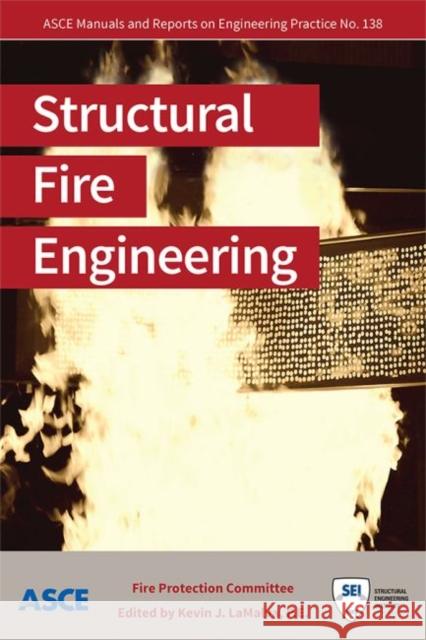
Fire Protection Committee;Kevin J. LaMalva
Structural Fire Engineering Fire Protection Committee Kevin J. LaMalva  9780784415047 American Society of Civil Engineers - książkaWidoczna okładka, to zdjęcie poglądowe, a rzeczywista szata graficzna może różnić się od prezentowanej.

Structural Fire Engineering

ISBN-13: 9780784415047 / Angielski

Fire Protection Committee;Kevin J. LaMalva
cena 562,35
(netto: 535,57 VAT:  5%)

Najniższa cena z 30 dni: 551,90
Termin realizacji zamówienia:
ok. 30 dni roboczych
Bez gwarancji dostawy przed świętami

Darmowa dostawa!

Prepared by the Fire Protection Committee of the Structural Engineering Institute of ASCE Structural Fire Engineering provides best practices for the field of performance-based structural fire engineering design. When structural systems are heated by fire, they experience thermal effects that are not contemplated by conventional structural engineering design. Traditionally, structural fire protection is prescribed for structures after they have been optimized for ambient design loads, such as gravity, wind, and seismic, among others. This century-old prescriptive framework endeavors to reduce the heating of individual structural components with the intent of mitigating the risk of structural failure under fire exposure. Accordingly, the vulnerability of buildings to structural failure from uncontrolled fire varies across jurisdictions-which have differing structural design requirements for ambient loads-and as a function of building system and component configuration. As an alternative approach, Standard ASCE 7-16 permits the application of performance-based structural fire design (also termed structural fire engineering design) to evaluate the performance of structural systems explicitly under fire exposure in a similar manner as other design loads are treated in structural engineering practice. Structural fire engineering design is the calculated design of a structure to withstand the thermal load effects of fire, which have the potential to alter the integrity of a structure, based on specific performance criteria. This manual, MOP 138, addresses the current practice, thermal and structural analysis methods, and available information to support structural fire engineering design. It covers: Background information on the protection of structures from fire and the effects of fire on different types of construction, Key distinctions between standard fire resistance design and structural fire engineering design, Guidance for evaluating thermal boundary conditions on a structure because of fire exposure and on conducting heat transfer calculations based on the material thermal properties, Performance objectives for structures under fire exposure, and Analysis techniques that can be used to quantify structural response to fire effects. This Manual of Practice is a valuable resource for structural engineers, architects, building officials, and academics concerned with performance-based design for structural fire safety.


Kategorie:
Technologie
Kategorie BISAC:
Technology & Engineering > Structural
Wydawca:
American Society of Civil Engineers
Język:
Angielski
ISBN-13:
9780784415047

  • Preface
  • Acknowledgments
  • PART 1: INTRODUCTION TO STRUCTURAL FIRE ENGINEERING DESIGN
  • Chapter 1: INTRODUCTION AND KEY TERMINOLOGY
  • 1.1 Overview
  • 1.2 Background
  • Chapter 2: DESIGN APPROACHES
  • 2.1 Overview
  • 2.2 Standard Fire Resistance Design (SFRD)
  • 3.2.1 Standard Fire Testing
  • 3.2.2 Calculation Methods
  • 2.3 Structural Fire Engineering Design (SFED)
  • 3.3.1 Professional Responsibility
  • Chapter 3: PERFORMANCE OBJECTIVES
  • 3.1 Minimum Performance Objectives
  • 3.2 Discretionary Performance Objectives
  • Part 2: Thermal Response of Structures Under Fire
  • Chapter 4: Thermal Boundary Conditions
  • 4.1 Fuel Load
  • 4.2 Fire Exposure Conditions
  • 4.2.1 Enclosure Fires
  • 4.2.2 Localized Fires
  • 4.2.3 Exterior Fire Exposure
  • 4.2.4 Traveling Fires
  • 4.2.5 Post-Hazard Event Fires
  • 4.3 Fire Exposure Calculation Methods
  • 4.3.1 Algebraic Correlations
  • 4.3.2 Zone Models
  • 4.3.3 Field Models
  • 4.3.4 Validation of Fire Models
  • Chapter 5: MATERIAL THERMAL PROPERTIES
  • 5.1 SFRM
  • 5.2 Gypsum Board Products
  • 5.3 Intumescent Coatings
  • 5.4 Steel
  • 5.5 Concrete
  • 5.6 Masonry
  • 5.7 Timber
  • Chapter 6: HEAT TRANSFER CALCULATION
  • 6.1 Steel Structures
  • 6.1.1 Variability of SFRM Thickness and Density
  • 6.1.2 Localized Insulation Damage
  • 6.1.3 Thermal Bridging
  • 6.2 Concrete Structures
  • 6.3 Timber Structures
  • 6.4 Nonuniform Heating
  • 6.5 Mechanical Integrity
  • 6.6 Methods of Heat Transfer Analysis
  • 6.6.1 Lumped Mass Method
  • 6.6.2 Finite Element Method
  • 6.6.3 Finite Difference Method
  • Part 3: Structural Response to Fire Effects
  • Chapter 7: STRUCTURAL FIRE EFFECTS
  • 7.1 Overview
  • 7.2 Fire Effects on Structural Demand and Capacity
  • 7.2.1 Thermal Expansion and Contraction
  • 7.2.2 Nonuniform Heating
  • 7.2.3 Cooling Phase Effects
  • 7.3 Failure Modes
  • 7.3.1 Structural Steel
  • 7.3.2 Reinforced Concrete and Masonry
  • 7.3.3 Timber
  • 7.3.4 Nonstructural Components
  • Chapter 8: MECHANICAL MATERIAL PROPERTIES
  • 8.1 Overview
  • 8.2 Mechanical Properties of Steel
  • 8.2.1 Structural Steel
  • 8.2.2 High Strength Bolts
  • 8.2.3 High Strength Steel
  • 8.2.4 Cold Formed Steel
  • 8.2.5 Steel Grades with Improved Properties
  • 8.3 Mechanical Properties of Concrete and Reinforcing Steel
  • 8.3.1 Concrete
  • 8.3.2 Reinforcing Steel
  • 8.3.3 Prestressing Steel
  • 8.4 Mechanical Properties of Masonry
  • 8.4.1 Stress–Strain–Temperature Response
  • 8.5 Mechanical Properties of Timber
  • 8.5.1 Moisture Effects
  • 8.5.2 Parallel-to-Grain Properties
  • 8.5.3 Perpendicular-to-Grain Properties
  • 8.5.4 Char Rates
  • Chapter 9: STRUCTURAL ANALYSIS FOR FIRE EFFECTS
  • 9.1 Load Combinations
  • 9.2 Structural Analysis Tools
  • 9.2.1 Mapping Thermal Results to the Structural Model
  • 9.2.2 Simplified Analytical Tools
  • 9.2.3 Finite Element Analysis
  • 9.3 Structural Analysis Methods
  • 9.3.1 Primary Structural Framing
  • 9.3.2 Composite Slabs and Floor Systems
  • 9.3.3 Structural Connections
  • 9.3.4 Structural Walls
  • Chapter 10: STRUCTURAL ACCEPTANCE CRITERIA
  • 10.1 Overview
  • 10.2 Structural Steel
  • 10.2.1 Local Behavior
  • 10.2.2 Gross Member Behavior
  • 10.2.3 Connection Design
  • 10.2.4 Compartmentalization
  • 10.2.5 Egress Path Levelness
  • 10.2.6 Exit Stairways
  • 10.3 Composite Steel and Concrete
  • 101.3.1 Local Behavior
  • 10.3.2 Gross Member
  • 10.3.3 Connection Design
  • 10.4 Reinforced and Prestressed Concrete
  • 10.4.1 Concrete Cover Spalling
  • 10.4.2 Local and Global Behavior
  • 10.4.3 Analytical Tools and Analysis
  • 10.5 Timber
  • 10.5.1 Gross Member
  • 10.5.2 Connection Design
  • INDEX


Udostępnij

Facebook - konto krainaksiazek.pl


Opinie o Krainaksiazek.pl na Opineo.pl

Partner Mybenefit

Krainaksiazek.pl w programie rzetelna firma Krainaksiaze.pl - płatności przez paypal

Czytaj nas na:

Facebook - krainaksiazek.pl
  • książki na zamówienie
  • granty
  • książka na prezent
  • kontakt
  • pomoc
  • opinie
  • regulamin
  • polityka prywatności

Zobacz:

  • Księgarnia czeska

  • Wydawnictwo Książkowe Klimaty

1997-2025 DolnySlask.com Agencja Internetowa

© 1997-2022 krainaksiazek.pl
     
KONTAKT | REGULAMIN | POLITYKA PRYWATNOŚCI | USTAWIENIA PRYWATNOŚCI
Zobacz: Księgarnia Czeska | Wydawnictwo Książkowe Klimaty | Mapa strony | Lista autorów
KrainaKsiazek.PL - Księgarnia Internetowa

Polityka prywatnosci - link
Krainaksiazek.pl - płatnośc Przelewy24
Przechowalnia Przechowalnia






