Structural-Chemical Systematics of Minerals » książka





Structural-Chemical Systematics of Minerals
ISBN-13: 9783319728766 / Angielski / Twarda / 2019 / 313 str.
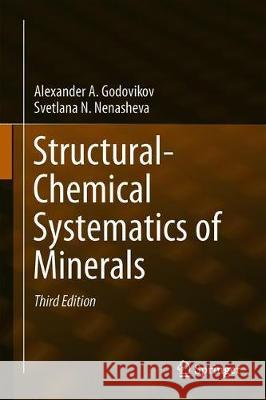
Structural-Chemical Systematics of Minerals
ISBN-13: 9783319728766 / Angielski / Twarda / 2019 / 313 str.
(netto: 575,06 VAT: 5%)
Najniższa cena z 30 dni: 578,30
ok. 22 dni roboczych.
Darmowa dostawa!
The signs which are in the basis for systematization give the chance to find the place for new mineral types in the tables, to change the place of mineral in connection with specification of its formula or structure.
Introduction
Division of elementary substances on metals, semi-metals and nonmetals
Basic types of chemical substances, selected by primary type of chemical bond
Simple compounds, binary and more complex compounds, salts.
Geochemical classification of elements and cations
Highest taxons of structural-chemical systematic of minerals, preceding classes
Classes and their sequence
The sequence of highest taxons in developed structural-chemical systematic of minerals
Table #1.General enumeration of the taxons of structural-chemical classification of minerals
Chemical-structural systematic of minerals
1.Type: Minerals with principal metallic and metallic-covalent bond – native metals and semimetals, metallides and sevimetallides
1.1. Subtype: Metals and metallides
1.1.1. Class: Metal
s and metallides of sidero- and chalcophyllic elements1.2. Class: Metalls and metallides of lithophyllic elements
1.2. Subtype: Semimetals and semimetallides (ohly of sidero- and chalcophyllic cations)
1.2.1.Quassubtype*: Semimetals and semimetallides of Va-elements
1.2.1а. Class: Native Va-semimetalls
1.2.1b. Class: Va-Semimetals – arsenides, antimonides,bismuthides
1.2.2. Quasisubtype*: Semimetals and semimetallidess of Va-semimetals
1.2.2а. Class: Native VIa-semimetals
1.2.2b. Class: VIa-semimetalls-tellurides
2. Type: Minerals with principal metallic-covalent and ionic-covalent bond, rare van der Waals forses (native VIa-nonmetals) – chalcogenic compounds: chalcogenides (isodesmical) ®chalcosalts (anisodesmical)
2a. Quasitype*: Native VIa-nonmetals (van der Waals forses).
2b. Quasitype*: Chalcogenic compounds (metallic-covalent and ionic-covalent bond , rar
e van der Waals forses) – simple (isodesmical) ® complex ® chalcosalts (anisodesmical)2b.1. Subtype: Chalcogenic compounds of sidero- and chalcophyllic cations
2b.1а<. Quasisubtype*: Sulfides and sulfosalts of sidero- and chalcophyllic cations
2b.1a.1. Class: Sulfides of sidero- and chalcophyllic cations
2b.1а.2. Class: Sulfosalts of sidero- and chalcophyllic cations
2b.1b. Quasisubtype*: Selenides and selenosalts of sidero- and chalcophilic cations
2b.1b.1. Class: Selenides sidero- and chalcophilic cations
2b.1b.2. Class: Selenosalts of sidero- and chalcophyllic cations3
2b.2. Subtype: Chalcogen compound of lithophyllic cations
2b.2.1. Class: Sulfides (and selenides ) of lithophyllic cations.
2b.2.2. Class: Sulfosalts of lithophyllic cations
3. Type: Minerals with principal ionic-covalent and covalent-ionic bond – nonmetallides of light (typical, noncenosymmetrical) VIa-elements (O) – ox
ygen compounds: oxides and hydroxydes (isodesmical ® anisodesmical) ® oxosalts (anisodesmical)3.1. Subtype: : Oxides and hydroxydes (isodesmical)
3.1а. Quasisubtype*: Oxides and hydroxydes of lithophyllic cations with low FC
3.1а.1. Class: Oxides and hydroxydes of s-, ds- and ps-cations
3.1а.2.Class: Oxides and hydroxides of 4-valence f-cations
3.1a.3.Class: Oxides and hydroxides of f-cations with middle FC – 6-valence f-cations (U6+) ® compound uranyl (UO2)2+ – uranil asids, uranates and their derivates (uranium micas and related minerals)
3.1b. Quasisubtype*: Oxides and hydroxides of lithophyllic cations with middle FC
3.1b.1. Overclass*: Oxides of Zr
3.1b.1а. Class: Simple oxides of Zr
3.1b.1b. Class: Complex oxides of Zr4+ ® titanates of Zr4+ ® zirconoti
tanates3.1b.2. Overclass*: Oxides of Sn4+ and Ti4+
3.1b.2а. Class: Oxides and hydroxides of Sn4+ and Ti4+
3.1b.2b. Class: Complex oxides of Ti4+ (Sn4+) ® titanates (stannates) (only (6)-titanates, (6)- stannates)
3.1b.3. Overclass*: Oxides and hydroxides of Nb5+ and Ta5+
3.1b.3а. Class: Simple oxides and hydroxides of Nb5+ and Ta5+
3.1b.3b. Class: Complex oxides of Nb5+ and Ta5+ ((6)-tantaloniobates ® (4)-tantaloniobates)
3.1b.4. Overclass*: Oxides and hydroxides of Mo and W
3.1b.4а. Class: Simple oxides and hydroxides of Mo and W
3.1b.4b.Class: Complex oxides and hydroxides of Mo and W ((6)-molybdates and tungstenates ® (4)-molybdates and tungstenates)
3.1b.5. Overclass*: Oxides and hydroxides of Mn4+.
3.1b.5а. Class: Si
mple oxides and hydroxides of Mn4+ ® complex oxides and hydroxides of Mn4+3.1b.5b. Class: Complex oxides and hydroxides of Mn4+
3.1b.6. Overclass*: Oxides and hydroxides of V4+3.1b.6а. Class: Simple oxides and hydroxides of V4+
3.1b.6b.Class: Complex oxides and hydroxides of V4+ ® vanadites
3.1b.7. Overclass*: Oxides and hydroxides of V5+3.1b.7а. Class: Simple oxides and hydroxides of V5+
3.1b.7b. Class: Complex oxides and hydroxides of V5+ ® (6)-vanadates ® (5)-vanadates ® (4)-vanadates
3.1b.7b.1. Quasiclass: (6)-Vanadates
3.1b.7b.2. Quasiclass: (5)-Vanadates
3.1b.7b.3. Quasiclass : (4)-Vanadates3.1c. Quasisubtype*: Oxides and hydroxides of chalcophyllic cations (without Va-and VIa-cations)
3.1c.1. Overclass*: oxides and hydroxides of Ib-cations
3.1c.2. Overclass*: Oxides an
d hydroxides of IIb-cations.3.1c.3.Overclass*: Oxides and hydroxides of IIIа-cations
3.1c.4. Overclass*: Oxides and hydroxides of IVа-cations
3.1d. Quasisubtype*: Oxides and hydroxides of V
3.1d.1. Overclass*: Oxides and hydroxides of As3+,Sb3+,Bi3+
3.1d.1а. Class: Simple oxides and hydroxides of As3+, Sb3+, Bi3+
3.1d.1b. Class: Complex oxides and hydroxides of As3+, Sb3+, Bi3+ ® (6)-arsenites, antiminites, bismuthites
3.1d.2. Overclass: Oxides and hydroxides of As5+, Sb5+, Bi5+ (all complex) ® arsenates, antimonates and bismuthates (only (6)-arsenates, (6)-antimonates and (6)-bismuthates)
3.1d.2.1. Quasiclass: (6)-antimonates and (6)-bismuthates
3.1e. Quasisubtype*: Oxides and hydroxides of VIa-cations (Te)
3.1e.1. Overclass*: Oxides and hydroxides
of Те4+3.1e.1а. Class: Simple oxides and hydroxides of Те4+
3.1e.1b. Class: Complex oxides and hydroxides Те4+ ® tellurites
3.1e.2. Overclass: Oxides and hydroxides of Те6+ (all complex) ® tellurates (all (6)-tellurates )
3.1f. Quasisubtype*: Oxides and hydroxides of nonmetals (lithophyllic) elements
3.1f.1. Class: Oxides and hydroxides of Si and Ge (silicic and germanium anhydrides, silicic and germanium asids)
3.1f.2. Class: Oxides and hydroxides of B (boric anhydride and boric acids)
3.1f.3. Class: Oxides and hydroxides of Se (selenium anhydrite)
3.2. Subtype: Oxosalts (anisodesmical)
3.2.1. Class: Silicates
3.2.1а. Class: Germanates (zone of oxidization of Tsumeb and at France ?)
3.2.2. Class: Borates
3.2.2.1. Quasiclass: (4)-Borates of cations with low FC
3.2.2.2. Quasiclass: (3)-Borates
3.2.3. Class
: Carbonates3.2.4. Class: Phosphates
3.2.4.1. Quasiclass: Orthophosphates
3.2.4.2. Quasiclass: Pyrophosphates
3.2.4.3. Quasiclass: Triphosphates
3.2.4а. Class: Arsenates
3.2.4а.1. Quasiclass: (6)-Arsenates
3.2.4а.2. Quasiclass: (4)-Arsenates (orthoarsenates)
*3.2.4б. Class: Arsenites
3.2.5. Class: Sulfates
3.2.6. Class: Sulfites
3.2.6а. Class: Selenates
3.2.6b. Class: Selenites
3.2.7. Class: Chromates
3.2.8. Class: Nitrates
3.2.8а. Class: Iodates
*3.2.8б. Class: Iodites
3.2.8c. Class: Rhodonates (tiocyanates)
4. Type: Minerals with principal covalent-ionic and ionic bond – halogen compounds: halogenides (isodesmical) ® halogenosalts (anisodesmical)
4.1. Subtype: Halogenides (isodesmical)
4.1.1.Class: Fluorides
4.1.2. Class: Chlorides and bromides
4.1.2а. Class: Iodides
4.2. Subtype: Halogeno
salts (anisodesmical) (with hexacyanoferrates and hexatiocyanates, rhodonides)4.2а. Quasisubtype*: Halogenosalts with d-cation-complexformers
4.2а.1. Class: Chloroferrites and chlorocuprites (only s-cations and NH+4)
4.2а.2. Class: Hexachloroferrates and hexachloromanganates (only s-cations)
4.2b. Quasisubtype*: Halogenosalts with p-cation-complexformers
4.2b.1. Class: Fluoroaluminates (only s-cations)
4.2b.2. Class: Fluoroborates (only s-cations)
4.2b.3. Class: Fluorosilicates (only s-cations and NH+4)
4.2b.4. Class: Chloroaluminates (only s-cations)
5. Type: Carbon, its compounds (without carbonates) and related substances
5а. Quasitype*:Inorganic carbon compounds (without carbonates) and related substances
5а.1. Subtype: Native minerals
5а.2. Subtype: Minerals with principal covalent and metallic-covalent bond – carbides and relat
ed substances – silicides, nitrides and phosphides5а.2.1. Class: Carbides
5а.2.1а. Class: Silicides
5а.2.2. Class: Nitrides
5а.2.2а. Class: Phosphides
5b. Quasitype*: Organic carbon compounds (minerals with principal van der Waals forces bond)
5b.1. Subtype: Salts of organic acids
5b.1.1. Class: Salts of benzopolycarbonic acids (С6H6-n(COOH)n; n = 6)
5b.1.2. Class: Salts of citric acid (citrates)
5b.1.3. Class: Salts of acetic acid (acetates)5b.1.4. Class: Salts of oxalic acid (oxalates)
*5б.1.5. Class: Salts of formic acid (formates)
5b.2. Subtype: Hydrocarbons and related compounds
5b.2.1. Class: Hydrocarbons cyclic (in the order of decreasing х = Н : С)………..
5b.2.2. Class: Hydrocarbons oxygenbearing (in the order of increasing О : С).
5b.2.3. Class: Nitrogenbearing organic compounds
5b.3.
Subtype: Mixtures of organic substances including amber and related substancesReferences
Index
Alexander AleksandrovichGodovikov (10.04.1927. – 03.07.1995).–Soviet and Russian mineralogist, doctor of geol.-min. sciences, professor, the outstanding scientist in the field of theoretical, genetic, descriptive and experimental mineralogy, growth of crystals, development of studying techniques of natural and synthetic products. His scientific interests were connected with study of oredeposits, mineral balances in dry halkogenideand hydrothermal silicate systems for the establishment of stability areas,solubilities of minerals,forms of transfer ore-forming elements, synthesis of new connections at usual conditions and also at high and ultrahigh pressures and temperatures. Being based on modern knowledge of an atom structure developed ideasof chemical bond types in mineralsentered a concept of power characteristics. They formed the basis ofcommunicationsestablishment between a structure of atoms and a formationpossibility of different chemical compounds including minerals. As a result of all these investigationshe offered new structural and chemical systematization of minerals.A.A. Godovikov is the author of 276 scientific publications including 19 monographs and 17 copyright certificates. The main tasks of A.A. Godovikov are: 1) A.A. Godovikov. Mineralogy. 1973. Moscow. Nedra. 519 p.; 2) A.A. Godovikov. Chemical bases of systematization of minerals." M.: Nedra, 1979, 300 p.(in the Russian); 3) A.A. Godovikov. Mineralogy. 1983, Moscow. Nedra. 647 p (in the Russian);4) A.A. Godovikov. Structural and chemical systematization of minerals. 1997. Moscow. 247 p. (in the Russian and English). 4) A.A. Godovikov, S.N. Nenasheva. Structural and chemical systematization of minerals. 2007. Moscow. Ekostassociation. 296 pages (intheRussianandEnglishlanguages).
A.A. Godovikov taught the following programs: "Mineralogy", "Introduction to mineralogy", "Crystal chemistry", "Genetic mineralogy"at the geologic-geophysical faculty of Novosibirsk State Universityfrom 1963 to 1983. A.A. Godovikov owned a collection of minerals (about 4500 samples) which he donated to the FersmanMineralogical Museum of the Russian Academy of Sciences. He was the director of this museum in Moscow from 1983 to 1995.
Svetlana NikolaevnaNenasheva 1940 of year of birth. – russian mineralogist, phD in geol.-min. sciences, the expert in experimental mineralogy (studied phase charts in dry sulphidic and halkogenide systems for clarification of mineral balances, fields of stability of minerals, parameters of synthesis of minerals and new possibleconnections in usual conditions). Her scientific interests were connected also with mineralogy investigations of ore deposits and systematization of minerals. S.N. Nenashevais the author of 178 scientific publications, including following 3 monographs: 1) S.N. Nenasheva. Experimental study of the nature of impurity of silver, antimony and bismuth in a galenite. 1975. Novosibirsk. Nauka.123 p. (in Russian); 2) Minerals of Mongolia. 2006. Moscow. Ekost association. 350 p. (in Russian); A.A. Godovikov, S.N. Nenasheva. Structural and chemical systematization of minerals. 2007. Moscow. Ekost association. 296 p. (in the Russian and English languages).
This book represents new structural-chemical minerals of A.A. Godovikov which reflects the latest data on communication of the chemical composition with structure and properties of minerals, conditions of their formation, their paragenesis. The following features lay its basis: a) the numerous, often not considered earlier chemical signs on which chemical properties of minerals, conditions of their formation or paragenesis may depend; b) the determined consistent patterns of communication between chemical compounds structure and fundamental properties of the elements forming them; c) regularities of structure change and properties of minerals depending on physical and chemical parameters of formation or environment systems. This systematiс considers real associations, differences in physical and chemical parameters at which minerals are forming and existing. In this systematic sometimes the preference is given to the last signs because all natural associations aren't casual in an arrangement of minerals, so they formed as a result of difficult and longtime selection. The properties of minerals are coordinated with their structure, formation conditions. The transition conditions from one taxon to another both at one level and at its deepenings are accurately formulated. The primary type of a chemical bond was accepted as leading sign of five highest taxons. The lowest taxons were allocated on: a) the mineral belongings to izodesmichesky or anizodesmichesky connections; b) the type of anion, cation; c) the coordination number of an anionoobrazovatel; d) the size of CX; e) the type of the structure. The signs which are in the basis for systematization give the chance to find the place for new mineral types in the tables, to change the place of mineral in connection with specification of its formula or structure. They also allow to distinguish new taxons for the new mineral types representing chemical compounds, earlier not known in nature. Thus this systematic is not a stiffened representation but the developing system.




Czytaj nas na:
1997-2026 DolnySlask.com Agencja Internetowa
KrainaKsiazek.PL - Księgarnia Internetowa


