• Wyszukiwanie zaawansowane
  • Kategorie
  • Kategorie BISAC
  • Książki na zamówienie
  • Promocje
  • Granty
  • Książka na prezent
  • Opinie
  • Pomoc
  • Załóż konto
  • Zaloguj się

Structural Analysis of Printed Circuit Board Systems » książka


zaloguj się | załóż konto
Logo Krainaksiazek.pl

koszyk

konto

szukaj
topmenu
Księgarnia internetowa
Szukaj
Książki na zamówienie
Promocje
Granty
Książka na prezent
Moje konto
Pomoc
 
 
Wyszukiwanie zaawansowane
Pusty koszyk
Bezpłatna dostawa dla zamówień powyżej 20 złBezpłatna dostawa dla zamówień powyżej 20 zł

Kategorie główne

• Nauka
 [2946600]
• Literatura piękna
 [1856966]

  więcej...
• Turystyka
 [72221]
• Informatyka
 [151456]
• Komiksy
 [35826]
• Encyklopedie
 [23190]
• Dziecięca
 [619653]
• Hobby
 [140543]
• AudioBooki
 [1577]
• Literatura faktu
 [228355]
• Muzyka CD
 [410]
• Słowniki
 [2874]
• Inne
 [445822]
• Kalendarze
 [1744]
• Podręczniki
 [167141]
• Poradniki
 [482898]
• Religia
 [510455]
• Czasopisma
 [526]
• Sport
 [61590]
• Sztuka
 [243598]
• CD, DVD, Video
 [3423]
• Technologie
 [219201]
• Zdrowie
 [101638]
• Książkowe Klimaty
 [124]
• Zabawki
 [2473]
• Puzzle, gry
 [3898]
• Literatura w języku ukraińskim
 [254]
• Art. papiernicze i szkolne
 [8170]
Kategorie szczegółowe BISAC

Structural Analysis of Printed Circuit Board Systems

ISBN-13: 9780387979397 / Angielski / Twarda / 1993 / 291 str.
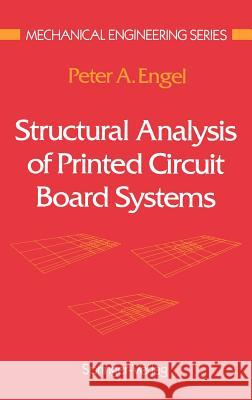
Peter A. Engel
Structural Analysis of Printed Circuit Board Systems Peter A. Engel 9780387979397 Springer - książkaWidoczna okładka, to zdjęcie poglądowe, a rzeczywista szata graficzna może różnić się od prezentowanej.

Structural Analysis of Printed Circuit Board Systems

ISBN-13: 9780387979397 / Angielski / Twarda / 1993 / 291 str.

Peter A. Engel
cena 605,23 zł
(netto: 576,41 VAT:  5%)

Najniższa cena z 30 dni: 578,30 zł
Termin realizacji zamówienia:
ok. 22 dni roboczych
Bez gwarancji dostawy przed świętami

Darmowa dostawa!

This book discusses the building blocks of electronic circuits - the microchips, transistors, resistors, condensers, and so forth, and the boards that support them - from the point of view of mechanics: What are the stresses that result from thermal expansion and contraction? What are the elastic parameters that determine whether a component will survive a certain acceleration? After an introduction to the elements of structural analysis and finite-element analysis, the author turns to components, data and testing. A discussion of leadless chip carriers leads to a detailed thermal analysis of pin grid arrays. For compliant leaded systems, both mechanical (bending and twisting) and thermal stresses are discussed in detail. The book concludes with discussions of the dynamic response of circuit cards, plated holes in cards and boards, and the final assembly of cards and boards.


Kategorie:
Technologie
Kategorie BISAC:
Technology & Engineering > Mechanical
Science > Mechanics - General
Technology & Engineering > Materials Science - General
Wydawca:
Springer
Seria wydawnicza:
Applications of Mathematics
Język:
Angielski
ISBN-13:
9780387979397
Rok wydania:
1993
Wydanie:
1993
Numer serii:
000001250
Ilość stron:
291
Waga:
1.37 kg
Wymiary:
23.5 x 15.5
Oprawa:
Twarda
Wolumenów:
01
Dodatkowe informacje:
Wydanie ilustrowane

1. Elements of Structural Analysis.- 1. Rods.- 2. Beams.- 2.1. Flexure.- 2.2. Beams on Elastic Foundation.- 2.3. Torsion.- 2.4. Frames.- 3. Plates.- 3.1. Cylindrical Bending.- 3.2. Pure Bending.- 3.3. Circular Plates.- 3.4. Rectangular Plates in Flexure.- 4. Thermal Stress.- 4.1. One-Dimensional Treatment: Bimaterial Rods.- 4.2. Timoshenko’s Formula for Thermal Bending of Bimaterial Circular Plates.- 5. Plastic Beam Deformation.- 6. Energy Methods in Structural Analysis.- 7. Experimental Methods of Analysis.- 7.1. Load Testers.- 7.2. Strain Gauges.- 7.3. Capacitance Measurement.- 7.4. Fiberoptic Probe/Photodiode Measurement.- 7.5. Photoelasticity.- 7.6. Holographic Interferometry.- 7.7. Piezo-electric Stress Sensors.- 7.8. Moire Interferometry.- 7.9. Electrical Resistance Method.- References.- 2. Finite Element Analysis.- 1. Preliminaries.- 2. Direct Stiffness Matrix Approach.- 3. The Principle of Minimum Potential Energy.- 4. Element Types.- 5. Finite Element Dynamic Analysis.- 6. Stress and Strain Calculations.- 7. Structural Codes.- 8. Steps in the Use of Finite Element Analysis.- References.- 3. Components, Data, and Testing.- 1. Modules.- 2. Circuit Cards and Boards.- 2.1. General Description.- 2.2. Properties of Laminated Construction.- 3. Pin Leads of PGA Modules.- 4. Strength of Compliant Leads in Surface-Mount Construction.- 5. Stiffness of Compliant Leads.- 6. Solder Strength.- References.- 4. Leadless Chip Carriers.- 1. Loads and Materials.- 2. Thermal Stress Analysis.- 3. The Influence of Solder Joint Shape.- 4. Constitutive Equation for Solder Mount.- 5. Conclusions.- 6. Exercises and Questions.- References.- 5. Thermal Stress in Pin-Grid Arrays: Primary Analysis of Pins.- 1. Introduction.- 2. Elastic Foundation Modulus of a Soldered Pin.- 3. Elastic Foundation Treatment for the Embedded Pin.- 4. Solder Pressure Calculation.- 5. Plastic Analysis of the Pin.- 6. Axial Pin Force Due to Flexure.- 7. A Magnified-Scale Experiment.- 8. Conclusions.- 9. Exercises and Questions.- References.- 6. Thermal Stress in Pin-Grid Arrays: Interaction Between Module and Circuit Card.- 1. Pin Force Analysis Due to Module and Card Bending.- 2. Influence of Pin-End Moments.- 3. Influence of the Primary Axial Pin Forces.- 4. Influence of Secondary Axial Pin Forces.- 5. Solution of the System of Equations.- 6. Module and Card Stretch Due to Pin Shear.- 7. System Reduction Factor.- 8. Conclusions.- 9. Exercises and Questions.- References.- 7. Compliant Leaded Systems: The Local Assembly.- 1. Experimental Studies.- 2. Analytical Model.- 3. Properties of Simple Local Assemblies.- 4. Discrete Local Assembly.- 5. Built-up (Multiple-Module) Local Assemblies.- 5.1. Stacked-Module Arrangement.- 5.2. Double-Sided Module Assemblies.- 5.3. Card Longer Than Module.- 5.4. Experimental Results.- 6. Orthotropy of Local Assemblies.- 7. Module Group Assemblies.- 8. Conclusions.- 9. Exercises and Questions.- References.- 8. Bending in Compliant Leaded Systems.- 1. The Role of Leads.- 2. Application of the Finite Element Method.- 3. Strip Method.- 4. Building Block Method.- 5. Hybrid Experimental/Analytical Method.- 6. Conclusions.- 7. Exercises and Questions.- References.- 9. Approximate Engineering Theory for the Twisting of Compliant Leaded Circuit Card/Module Systems.- 1. Fundamental Approach.- 2. Torsional Stiffness Calculation.- 3. Rectangular Cards with a Module.- 4. Module Clusters.- 5. Finite Element Check of the Approximate Theory.- 6. Conclusions.- 7. Exercises and Questions.- References.- 10. Analytical Theory and Experimental Work in Compliant Leaded Systems Subjected to Twisting.- 1. Analytical Theory.- 2. Torsional Stiffness.- 3. Experimental Study.- 4. Large Displacements.- 5. Approximate Large Displacement Analysis of a Square Card.- 6. Torsional Fatigue.- 7. Conclusions.- 8. Exercises and Questions.- References.- 11. Thermal Stresses in Compliant Leaded Systems.- 1. Motivation for Analysis.- 2. Analytical Lead Stress Computation.- 2.1. Plane Frame Analysis.- 2.2. Three-Dimensional Frame Analysis.- 3. Finite Element Thermal Stress Analysis.- 4. Stress Reduction in Compliant Leaded Solder Joints.- 5. Thermal Fatigue in Solder Joints of Compliant Leads.- 6. Thermal Cycling Reliability.- 7. Exercises and Questions.- References.- 12. Dynamic Response of Circuit Card Systems.- 1. General Considerations.- 2. Dynamic Load Levels and Measurement.- 3. Vibration Analysis in Circuit Card Systems.- 4. Transient Vibration and Shock Response.- 5. Fatigue Considerations.- 6. Conclusions.- 7. Exercises and Questions.- References.- 13. Plated Holes in Cards and Boards.- 1. Introduction.- 2. Thermal Stress from Module-to-Card Mismatch.- 3. Thermal Stress from Barrel-to-Board Mismatch.- 3.1. Failure Mechanisms.- 3.2. Structural Modeling.- 3.3. Finite Element Models.- 3.4. Copper Inner-Plane Bending.- 4. Experimental Methods.- 5. Vias.- 6. Conclusions.- 7. Exercises and Questions.- References.- 14. Assembly of Cards and Boards.- 1. Physical Description.- 2. ZIF Connector Actuation.- 3. Connector Contact.- 3.1. Contact Forces and Friction Regimes.- 3.2. Electrical Contact Resistance.- 3.3. Plating Ductility.- 3.4. Friction and Wear (Tribology).- 3.5. Contact Temperature.- 4. Dynamic Response.- 5. Thermal Stress.- 6. A Combined Permanent and Separable Connector System.- 7. Conclusions.- 8. Exercises and Questions.- References.- Author Index.


Udostępnij

Facebook - konto krainaksiazek.pl


Opinie o Krainaksiazek.pl na Opineo.pl

Partner Mybenefit

Krainaksiazek.pl w programie rzetelna firma Krainaksiaze.pl - płatności przez paypal

Czytaj nas na:

Facebook - krainaksiazek.pl
  • książki na zamówienie
  • granty
  • książka na prezent
  • kontakt
  • pomoc
  • opinie
  • regulamin
  • polityka prywatności

Zobacz:

  • Księgarnia czeska

  • Wydawnictwo Książkowe Klimaty

1997-2025 DolnySlask.com Agencja Internetowa

© 1997-2022 krainaksiazek.pl
     
KONTAKT | REGULAMIN | POLITYKA PRYWATNOŚCI | USTAWIENIA PRYWATNOŚCI
Zobacz: Księgarnia Czeska | Wydawnictwo Książkowe Klimaty | Mapa strony | Lista autorów
KrainaKsiazek.PL - Księgarnia Internetowa

Polityka prywatnosci - link
Krainaksiazek.pl - płatnośc Przelewy24
Przechowalnia Przechowalnia





