Stress and Animal Welfare: Key Issues in the Biology of Humans and Other Animals » książka





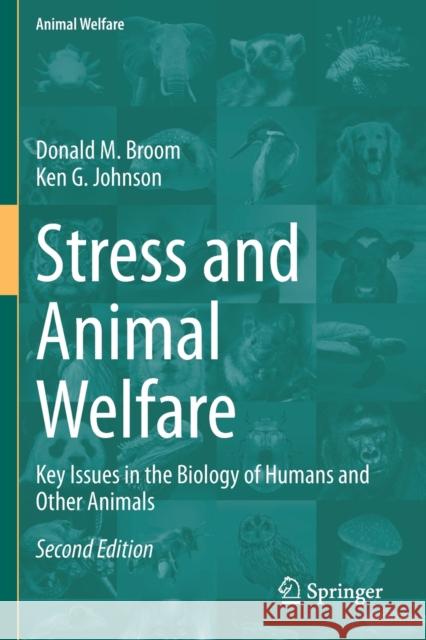
Stress and Animal Welfare: Key Issues in the Biology of Humans and Other Animals
ISBN-13: 9783030321550 / Angielski / Miękka / 2020 / 230 str.
Stress and Animal Welfare: Key Issues in the Biology of Humans and Other Animals
ISBN-13: 9783030321550 / Angielski / Miękka / 2020 / 230 str.
(netto: 536,72 VAT: 5%)
Najniższa cena z 30 dni: 501,19
ok. 22 dni roboczych
Dostawa w 2026 r.
Darmowa dostawa!
Wydanie ilustrowane
"This work encapsulates a very wide body of literature on scientific aspects of animal welfare and will thus prove a valuable asset for animal welfare scientists, psychologists, students and teachers of all forms of biology, behaviour, medicine, veterinary medicine and animal usage." (LASA Forum, 2020)
"This book is an excellent reference text for both students who will be studying animal welfare and researchers in the field. It provides an excellent background on both physiological and behavioral measures. ... This book is recommended for people who will be doing research in animal welfare because it provides an overview of most of the methods for measuring physiology and behavior. It will be especially useful for new research scientists in animal welfare." (Temple Grandin, Animals, Vol. 10 (2), 2020)
Animal Welfare Series Preface
Preface to second edition
Acknowledgments
Chapter 1 One welfare, one health, one stress, humans and other animals
Abstract
1.1. The terms animal, welfare, health and stress
1.2. Animal welfare and social change
1.3. The debate about animal usage
1.4 Genetics, epigenetics and what the environment can change
1.5 The challenge ahead
References
Chapter 2 Adaptation, regulation, sentience and brain control
Abstract
2.1 Adaptation
2.2 Homeostatic control
2.3 Sentience and the role of the brain in coping
2.4. Habituation and sensitisation
2.5 Motivational state
2.6 Outputs from decision centres
2.7 Control systems and needs
2.8 Types of control2.9 Pain
2.10 Other feelings and emotions: positive and negative2.11Development of regulatory systems
References
Chapter 3 Limits to adaptation
3.1 Limitations of timing and temporal aspects of stimulus modality
3.2 Limitations of intensity as an adaptation basis for adaptation
3.3 Variation in adaptation has consequences for responses to stimulation
3.4 Integrating time, intensity and mode of stimulation
3.5 The concepts of tolerance and coping
3.6 Variations in patterns of adaptation
3.7 Other factors affecting adaptation
3.8 Effects of human selection of animals on their ability to adapt
References
Chapter 4 Stress and welfare: history and usage of concepts
Abstract4.1 Stress
4.2 Welfare
4.3 Welfare assessment
4.4 Welfare in relation to stress
4.5 Naturalness and welfare
4.6 Welfare in relation to well-being
4.7 Welfare in relation to quality of life
4.8 Welfare and “a life worth living”
4.9 Welfare in relation to sentience
4.10 Welfare in relation to health
4.11 Linguistic problems with health and well-being
References
Chapter 5 Assessing welfare: short-term responses
Abstract
5.1 Behavioural measures of welfare
5.2 Physiological measures of welfare
5.3 Using indicators to evaluate welfare
5.4 Short-term welfare problems and concepts of stress
References
Chapter 6 Assessing welfare: long-term responses
Abstract
6.1 Direct measures of good welfare
6.2 Cognitive bias and other indirect measures of good welfare
6.3 Qualitative behavioural assessment
6.4 Reduced reproductive success
6.5 Reduced life expectancy
6.6 Weight, growth and body condition
6.7 Cardiovascular and blood parameters
6.8 Adrenal axes
6.9 Measures of immune system function
6.10 Bone strength, muscle strength and injury
6.11 Disease incidence measures
6.12 Brain measures
6.13 Behavioural measures
6.14 Other consequences of frustration and lack of control
6.15 Lack of stimulation and overstimulation
6.16 Interrelationships among measures and welfare outcome measures
References
Chapter 7 Preference studies and welfare
Abstract
7.1 Time and energy allocation in a rich environment
7.2 Experimental studies of animal preferences
7.3 Environmental enrichment
7.4 Do preference studies tell us what is important for animals?
References
Chapter 8 Ethics: considering world issues
Abstract
8.1 World problems
8.2 Value systems
8.3 Anti-microbial resistance
8.4 Climate change
8.5 Sustainability
8.6 How humans impose on other animals – and vice versa
8.7 Setting ethical limits to assessed welfare
8.8 Food production systems for the future
8.9 Stress and welfare in the general ethical framework
References
Chapter 9 Stress and welfare in the world
Abstract
9.1 Studying stress and welfare
9.2 Using the term stress scientifically9.3 Welfare in the moral world
Glossary
Subject and Author Index
Professor Donald M. Broom, Emeritus Professor of Animal Welfare at Cambridge University, Department of Veterinary Medicine and St Catharine’s College, has developed concepts and methods of scientific assessment of animal welfare. He has studied the cognitive abilities of animals, the welfare of animals in relation to housing and transport, behaviour problems, attitudes to animals, sustainable livestock production and ethics of animal usage. Donald M. Broom has published over 350 refereed papers, lectured in 45 countries and served on UK (FAWC, APC, Seals) and Council of Europe committees. He has been Chairman and Vice Chairman of EU Scientific Committees on Animal Welfare between 1990 and 2009, a member of the European Food Safety Authority Panel on Animal Health and Welfare to 2012, represented EU in WTO challenges and prepared a Study on Animal Welfare in the EU for the European Parliament which was published in 2017. He chaired the World Organization for Animal Health (O.I.E.) land transport group. His books include: "Stress and Animal Welfare" (1993/2000 Springer, with K.G. Johnson), "Coping with Challenge: Welfare in Animals Including Man" (2001 Dahlem University Press), "The Evolution of Morality and Religion" (2003 CUP), "Domestic Animal Behaviour and Welfare" (5th Edition 2015 CABI, with A.F. Fraser), "Sentience and Animal Welfare" (2014 CABI) and “Tourism and Animal Welfare” (2018 CABI, with N. Carr).
Dr. Ken G. Johnson is a former Senior Lecturer in Physiology at the Department of Physiology, Murdoch University in Western Australia.
This is the Second Edition of a well-received book that reflects a fresh, integrated coverage of the concepts and scientific measurement of stress and welfare of animals including humans. This book explains the basic biological principles of coping with many forms of adversity. The major part of this work is devoted to explaining scientifically usable concepts in stress and welfare. A wide range of welfare indicators are highlighted in detail with examples being drawn from man and other species. The necessity for combining information from disciplines is emphasized with a one-health, one-welfare approach. This information forms the basis for a synthesis of new ideas. Among the issues covered are:
- How brain and body systems regulate using feelings, physiological responses, behaviour and responses to pathology
- Limits to adaptation
- Assessing positive and negative welfare during both short-term and long-term situations
- Ethical problems and suggested solutions
A proper assessment of animal welfare is essential to take informed decisions about what is morally acceptable in terms of practice and in the development of a more effective legislation. This work encapsulates a very wide body of literature on scientific aspects of animal welfare and will thus prove a valuable asset for animal welfare scientists, psychologists, students and teachers of all forms of biology, behaviour, medicine, veterinary medicine and animal usage.




Czytaj nas na:
1997-2025 DolnySlask.com Agencja Internetowa
KrainaKsiazek.PL - Księgarnia Internetowa


