• Wyszukiwanie zaawansowane
  • Kategorie
  • Kategorie BISAC
  • Książki na zamówienie
  • Promocje
  • Granty
  • Książka na prezent
  • Opinie
  • Pomoc
  • Załóż konto
  • Zaloguj się

Stop, That and One Hundred Other Sleep Scales » książka


zaloguj się | załóż konto
Logo Krainaksiazek.pl

koszyk

konto

szukaj
topmenu
Księgarnia internetowa
Szukaj
Książki na zamówienie
Promocje
Granty
Książka na prezent
Moje konto
Pomoc
 
 
Wyszukiwanie zaawansowane
Pusty koszyk
Bezpłatna dostawa dla zamówień powyżej 20 złBezpłatna dostawa dla zamówień powyżej 20 zł

Kategorie główne

• Nauka
 [2950560]
• Literatura piękna
 [1849509]

  więcej...
• Turystyka
 [71097]
• Informatyka
 [151150]
• Komiksy
 [35848]
• Encyklopedie
 [23178]
• Dziecięca
 [617388]
• Hobby
 [139064]
• AudioBooki
 [1657]
• Literatura faktu
 [228597]
• Muzyka CD
 [383]
• Słowniki
 [2855]
• Inne
 [445295]
• Kalendarze
 [1464]
• Podręczniki
 [167547]
• Poradniki
 [480102]
• Religia
 [510749]
• Czasopisma
 [516]
• Sport
 [61293]
• Sztuka
 [243352]
• CD, DVD, Video
 [3414]
• Technologie
 [219456]
• Zdrowie
 [101002]
• Książkowe Klimaty
 [124]
• Zabawki
 [2311]
• Puzzle, gry
 [3459]
• Literatura w języku ukraińskim
 [254]
• Art. papiernicze i szkolne
 [8079]
Kategorie szczegółowe BISAC

Stop, That and One Hundred Other Sleep Scales

ISBN-13: 9781441998927 / Angielski / Twarda / 2012 / 421 str.
Colin M. Shapiro; Azmeh Shahid; Kate Wilkinson
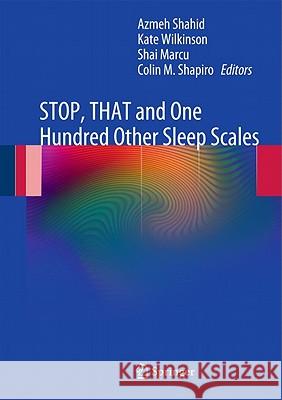
Stop, That and One Hundred Other Sleep Scales Shahid, Azmeh 9781441998927 Not Avail - książkaWidoczna okładka, to zdjęcie poglądowe, a rzeczywista szata graficzna może różnić się od prezentowanej.

Stop, That and One Hundred Other Sleep Scales

ISBN-13: 9781441998927 / Angielski / Twarda / 2012 / 421 str.

Colin M. Shapiro; Azmeh Shahid; Kate Wilkinson
cena 603,81
(netto: 575,06 VAT:  5%)

Najniższa cena z 30 dni: 578,30
Termin realizacji zamówienia:
ok. 22 dni roboczych
Dostawa w 2026 r.

Darmowa dostawa!
inne wydania

There are at least four reasons why a sleep clinician should be familiar with rating scales that evaluate different facets of sleep. First, the use of scales facilitates a quick and accurate assessment of a complex clinical problem. In three or four minutes (the time to review ten standard scales), a clinician can come to a broad understanding of the patient in question. For example, a selection of scales might indicate that an individual is sleepy but not fatigued; lacking alertness with no insomnia; presenting with no symptoms of narcolepsy or restless legs but showing clear features of apnea; exhibiting depression and a history of significant alcohol problems. This information can be used to direct the consultation to those issues perceived as most relevant, and can even provide a springboard for explaining the benefits of certain treatment approaches or the potential corollaries of allowing the status quo to continue. Second, rating scales can provide a clinician with an enhanced vocabulary or language, improving his or her understanding of each patient. In the case of the sleep specialist, a scale can help him to distinguish fatigue from sleepiness in a patient, or elucidate the differences between sleepiness and alertness (which is not merely the inverse of the former). Sleep scales are developed by researchers and clinicians who have spent years in their field, carefully honing their preferred methods for assessing certain brain states or characteristic features of a condition. Thus, scales provide clinicians with a repertoire of questions, allowing them to draw upon the extensive experience of their colleagues when attempting to tease apart nuanced problems.Third, some scales are helpful for tracking a patient's progress. A particular patient may not remember how alert he felt on a series of different stimulant medications. Scale assessments administered periodically over the course of treatment provide an objective record of the intervention, allowing the clinician to examine and possibly reassess her approach to the patient. Finally, for individuals conducting a double-blind crossover trial or a straightforward clinical practice audit, those who are interested in research will find that their own clinics become a source of great discovery. Scales provide standardized measures that allow colleagues across cities and countries to coordinate their practices. They enable the replication of previous studies and facilitate the organization and dissemination of new research in a way that is accessible and rapid. As the emphasis placed on evidence-based care grows, a clinician's ability to assess his or her own practice and its relation to the wider medical community becomes invaluable. Scales make this kind of standardization possible, just as they enable the research efforts that help to formulate those standards.

The majority of Rating Scales in Sleep and Sleep Disorders:100 Scales for Clinical Practice is devoted to briefly discussing individual scales. When possible, an example of the scale is provided so that readers may gain a sense of the instrument's content. Groundbreaking and the first of its kind to conceptualize and organize the essential scales used in sleep medicine, Rating Scales in Sleep and Sleep Disorders:100 Scales for Clinical Practice is an invaluable resource for all clinicians and researchers interested in sleep disorders.


Kategorie:
Nauka, Medycyna
Kategorie BISAC:
Psychology > General
Medical > Neurologia i neurofizjologia kliniczna
Medical > Psychiatria
Wydawca:
Not Avail
Język:
Angielski
ISBN-13:
9781441998927
Rok wydania:
2012
Wydanie:
2012
Ilość stron:
421
Waga:
0.97 kg
Wymiary:
25.4 x 17.78 x 2.54
Oprawa:
Twarda
Wolumenów:
01
Dodatkowe informacje:
Wydanie ilustrowane

From the reviews:

"This is a comprehensive textbook of individual sleep scales that are used in clinical and/or research practices. ... Although targeted primarily for sleep clinicians and sleep researchers, the book also may be useful for medical students, residents, fellows, sleep technologists, or other members of the medical team. ... It provides an extensive compilation of the relevant scales and questionnaires that are used in the field of sleep medicine." (Margaret Park, Doody's Review Service, May, 2012)

     Preface                                                                                        

  1. Adolescent Sleep Habit Survey                                                         
  2. Adolescent Sleep Wake Schedule                                                     
  3. Apnea belief scale      
  4. Apnea Knowledge Test                                                                     
  5. Athens Insomnia Scale                                                                                  
  6. Basic Nordic Sleep Questionnaire (BNSQ)                                                   
  7. BEARS Sleep Screening Tool                                                           
  8. Beck Depression Inventory                                                               
  9. Behavioral Evaluation of Disorders of Sleep Scale                           
  10. Berlin Questionnaire                                                                          
  11. Brief Fatigue Inventory                                                                     
  12. Brief Infant Sleep Questionnaire                                                       
  13. Brief Pain Inventory                                                                          
  14. Calgary Sleep Apnea Quality of Life Index ( SAQLI)
  15. Cataplexy Emotional Trigger Questionnaire                                      
  16. CES-DC                                                                                             
  17. Chalder Fatigue Scale                                                                        
  18. CBCL (1 ½ - 5 years)                                                
  19. CBCL (6 - 18 years)                                                                          
  20. Children’s Morningness-Evening Scale                                             
  21. Children’s Sleep Habit Questionnaire (CSHQ)
  22. Circadian Type Inventory (CTI)
  23. Cleveland Adolescent Sleepiness Questionnaire                               
  24. Columbia-Suicide Severity Rating Scale                                           
  25. Composite Morningness Questionnaire                                             
  26. CPAP Use Questionnaire (CCUQ)
  27. Depression and Somatic Symptom Scale                                          
  28. Dysfunctional Beliefs and Attitudes About Sleep Scale (DBAS)    
  29. Epworth Sleepiness Scale
  30. Espie Sleep Disturbance Questionnaire (SDQ)
  31. FACES                                                                                              
  32. Fatigue Assessment Inventory (FAI)                                                
  33. Fatigue Assessment Scale (FAS)                                                       
  34. Fatigue Impact Scale (FIS)                                                                
  35. Fatigue Severity Scale (FSS)                                                             
  36. Fatigue Symptom Inventory (FSI)                                                    
  37. FibroFatigue Scale                                                                             
  38. Frontal Lobe Epilepsy and Parasomnias Scale (FLEP)                                             
  39. Functional Outcomes of Sleep Questionnaire            (FOSQ)                     
  40. General Sleep Disturbance Scale (GSDS)                                         
  41. Glasgow Content of Thoughts Inventory (GCTI)                                                     
  42. Hamilton Rating Scale for Depression ( HAM-D)                            
  43. Insomnia Severity Index (ISI)
  44. International Restless Legs Severity Scale (IRLSS)
  45. Jenkins Sleep Scale                                                                            
  46. John Hopkins Restless Legs Severity Scale (JHRLSS)
  47. Karolinska Sleepiness Scale (KSS)                
  48. Leeds Sleep Evaluation Questionnaire (LSEQ)                                
  49. Maastrict Vital Exhaustion Questionnaire (MQ)
  50. Medical Outcomes Study Sleep Scale (MOS-SS)                                                     
  51. Mini-Mental Status Examination (MMSE)                                                    
  52. Modified checklist for autism in toddlers (MCHAT)                                   
  53. Mood Disorder Questionnaire            (MDQ)                                                                      
  54. Morningness eveningness questionnaire                                            
  55. Motivation and Energy Inventory (MEI)                                          
  56. Multidimensional Dream Inventory (MDI)   
  57. Multidimensional Fatigue Inventory (MFI)                                                               
  58. Munich Chrono-type Questionnaire                                                  
  59. Normative Beliefs About Aggression Scale                          
  60. Parkinson’s Disease Sleep Scale                                                        
  61. Pediatric Daytime Sleepiness Scale (PDSS)
  62. Pediatric Quality of Life Inventory (PedsQL) Multidimensional Fatigue Scale       
  63. Pediatric Sleep Questionnaire (PSQ)
  64. Perceived Stress Questionnaire (PSQ)                                               
  65. Personal Health Questionnaire (PHQ)                                               
  66. Pictorial Sleepiness Scale Based On Cartoon Faces                          
  67. Pittsburgh Sleep Quality Index (PSQI)
  68. Profile of Mood State (POMS)                                                         
  69. Psychosocial Adjustment to Illness Scale (PAIS)                             
  70. Quebec Sleep Questionnaire (QSQ)                                                  
  71. Resistance to Sleepiness Scale (RSS)                                                
  72. Restless Legs Syndrome Quality of Life Questionnaire (RLSQoL)             
  73. Richard-Campbell sleep questionnaire (RCSQ)
  74. School Sleep Habits Survey                                                               
  75. Self Efficacy Measure for Sleep Apnea, (SEMSA)                          
  76. SF-36 Health Survey
  77. SLEEP-50 Questionnaire                               
  78. Sleep Belief Scale (SBS)                                                       
  79. Sleep Disorders Inventory for Students—(Adolescent Form)  (SDIS-A)    
  80. Sleep Disorders Inventory for Students—(Children Form) (SDIS-C)
  81. Sleep Disorders Questionnaire (SDQ)                                               
  82. Sleep Disturbance Scale for Children (SDSC)                                  
  83. Sleep Locus of Control Scale (SLOC)                                              
  84. Sleep Preoccupation Scale (SPS)                                                       
  85. Sleep Quality Scale (SQS)                                                                 
  86. Sleep Timing Questionnaire(STQ)                                                     
  87. Sleep-Wake Activity Inventory (SWAI)                                           
  88. Snore Outcome Survey (SOS)                                                                       
  89. St. Mary’s Hospital Questionnaire
  90. State-Trait Anxiety Inventory (STAI)
  91. Stanford Sleepiness Scale (SSS)
  92. STOP-BANG Questionnaire                                     
  93. Tayside Children’s Sleep Questionnaire (TCSQ)                              
  94. Teacher’s Daytime Sleepiness Questionnaire (TDSQ)                      
  95. Time of Day Sleepiness Scale (TODSS)                                            
  96. Toronto Hospital Alertness Scale (THAT)    
  97. Twenty-Item Toronto Alexithymia Scale (TAS-20)                          
  98. Ullanlinna Narcolepsy Scale (UNS)              
  99. Verran and Snyder-Halpern Sleep Scale (VSH)                                

100.  Visual Analogue Scale to Evaluate Fatigue Severity (VAS-F)        101.    Women’s Health Initiative Insomnia Rating Scale (WHIIRS)      

102.    ZOGIM-A              

Appendix                                                 

STOP, THAT and One Hundred Other Sleep Scales represents a unique, practical addition to the literature in sleep medicine.  There are at least four reasons why a sleep clinician should be familiar with rating scales that evaluate different facets of sleep.  First, the use of scales facilitates a quick and accurate assessment of a complex clinical problem.  In three or four minutes (the time to review ten standard scales), a clinician can come to a broad understanding of the patient in question. For example, a selection of scales might indicate that an individual is sleepy but not fatigued; lacking alertness with no insomnia; presenting with no symptoms of narcolepsy or restless legs but showing clear features of apnea; exhibiting depression and a history of significant alcohol problems.  Second, rating scales can provide a clinician with an enhanced vocabulary or language, improving his or her understanding of each patient.  In the case of the sleep specialist, a scale can help him to distinguish fatigue from sleepiness in a patient, or elucidate the differences between sleepiness and alertness (which is not merely the inverse of the former).   Scales provide clinicians with a repertoire of questions, allowing them to draw upon the extensive experience of their colleagues when attempting to tease apart nuanced problems.   Third, some scales are helpful for tracking a patient’s progress.  A particular patient may not remember how alert he felt on a series of different stimulant medications. Scale assessments administered periodically over the course of treatment provide an objective record of the intervention, allowing the clinician to examine and possibly reassess her approach to the patient.  Finally, for individuals conducting a double-blind crossover trial or a straightforward clinical practice audit, those who are interested in research will find that their own clinics become a source of great discovery. Scales provide standardized measures that allow colleagues across cities and countries to coordinate their practices. They enable the replication of previous studies and facilitate the organization and dissemination of new research in a way that is accessible and rapid. The majority of STOP, THAT and One Hundred Other Sleep Scales is devoted to briefly discussing individual scales. When possible, an example of the scale is provided so that readers may gain a sense of the instrument’s content.  Groundbreaking and the first of its kind to conceptualize and organize the essential scales used in sleep medicine, STOP, THAT and One Hundred Other Sleep Scales is  an invaluable resource for all clinicians and  researchers interested in sleep disorders.



Udostępnij

Facebook - konto krainaksiazek.pl


Opinie o Krainaksiazek.pl na Opineo.pl

Partner Mybenefit

Krainaksiazek.pl w programie rzetelna firma Krainaksiaze.pl - płatności przez paypal

Czytaj nas na:

Facebook - krainaksiazek.pl
  • książki na zamówienie
  • granty
  • książka na prezent
  • kontakt
  • pomoc
  • opinie
  • regulamin
  • polityka prywatności

Zobacz:

  • Księgarnia czeska

  • Wydawnictwo Książkowe Klimaty

1997-2025 DolnySlask.com Agencja Internetowa

© 1997-2022 krainaksiazek.pl
     
KONTAKT | REGULAMIN | POLITYKA PRYWATNOŚCI | USTAWIENIA PRYWATNOŚCI
Zobacz: Księgarnia Czeska | Wydawnictwo Książkowe Klimaty | Mapa strony | Lista autorów
KrainaKsiazek.PL - Księgarnia Internetowa

Polityka prywatnosci - link
Krainaksiazek.pl - płatnośc Przelewy24
Przechowalnia Przechowalnia




