• Wyszukiwanie zaawansowane
  • Kategorie
  • Kategorie BISAC
  • Książki na zamówienie
  • Promocje
  • Granty
  • Książka na prezent
  • Opinie
  • Pomoc
  • Załóż konto
  • Zaloguj się

Steps To Follow: A Guide to the Treatment of Adult Hemiplegia » książka


zaloguj się | załóż konto
Logo Krainaksiazek.pl

koszyk

konto

szukaj
topmenu
Księgarnia internetowa
Szukaj
Książki na zamówienie
Promocje
Granty
Książka na prezent
Moje konto
Pomoc
 
 
Wyszukiwanie zaawansowane
Pusty koszyk
Bezpłatna dostawa dla zamówień powyżej 20 złBezpłatna dostawa dla zamówień powyżej 20 zł

Kategorie główne

• Nauka
 [2946912]
• Literatura piękna
 [1852311]

  więcej...
• Turystyka
 [71421]
• Informatyka
 [150889]
• Komiksy
 [35717]
• Encyklopedie
 [23177]
• Dziecięca
 [617324]
• Hobby
 [138808]
• AudioBooki
 [1671]
• Literatura faktu
 [228371]
• Muzyka CD
 [400]
• Słowniki
 [2841]
• Inne
 [445428]
• Kalendarze
 [1545]
• Podręczniki
 [166819]
• Poradniki
 [480180]
• Religia
 [510412]
• Czasopisma
 [525]
• Sport
 [61271]
• Sztuka
 [242929]
• CD, DVD, Video
 [3371]
• Technologie
 [219258]
• Zdrowie
 [100961]
• Książkowe Klimaty
 [124]
• Zabawki
 [2341]
• Puzzle, gry
 [3766]
• Literatura w języku ukraińskim
 [255]
• Art. papiernicze i szkolne
 [7810]
Kategorie szczegółowe BISAC

Steps To Follow: A Guide to the Treatment of Adult Hemiplegia

ISBN-13: 9783540134367 / Angielski / Miękka / 1985 / 300 str.
Patricia M. Davies;David J. Brühwiller;W. M. Zinn
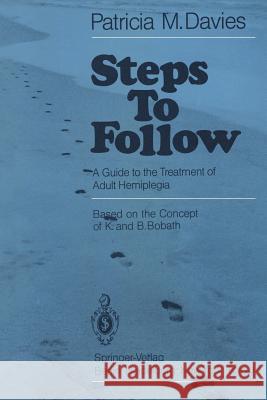
Steps To Follow: A Guide to the Treatment of Adult Hemiplegia Patricia M. Davies, David J. Brühwiller, W. M. Zinn 9783540134367 Springer-Verlag Berlin and Heidelberg GmbH &  - książkaWidoczna okładka, to zdjęcie poglądowe, a rzeczywista szata graficzna może różnić się od prezentowanej.

Steps To Follow: A Guide to the Treatment of Adult Hemiplegia

ISBN-13: 9783540134367 / Angielski / Miękka / 1985 / 300 str.

Patricia M. Davies;David J. Brühwiller;W. M. Zinn
cena 407,16
(netto: 387,77 VAT:  5%)

Najniższa cena z 30 dni: 404,63
Termin realizacji zamówienia:
ok. 10-14 dni roboczych
Bez gwarancji dostawy przed świętami

Darmowa dostawa!

The treatment and reintegration of adults with brain damage sustained as a result of illness or accident is one of the most important and challenging tasks in the field of rehabilitation. This is not only due to the complexity of the lost functions, but also because stroke is the most frequent cause of severe disability in our society. Approx- imately 25% of all severely disabled persons are hemiplegics (Nichols 1976). Brain damage caused by vascular disease is a tremendous problem for any population and civilization. Causes and effects, with the resulting symptoms, vary so widely that the problems are only gradually being recognized, and then perhaps not fully, even by the most committed research workers, doctors and therapists. The function- al disturbances that arise as a result of cerebro-vascular accident, that is following stroke, in young and old do not differ fundamentally for the different age groups. Treatment and rehabilitation do however become more difficult with increasing age due mainly to the frequent presence of multiple disease, multiple sites, the diffuse spread of the vascular disease and the brain damage itself, the decreasing plasticity of the central nervous system and the frequent absence of a partner, of relatives and friends in later years. Deep down inside everyone knows that a stroke is one of the most devastating traumas to the whole personality, that it is a dreadful blow to the person directly af- fected and to his family and friends as well.


Kategorie:
Nauka, Medycyna
Kategorie BISAC:
Medical > Allied Health Services - Physical Therapy
Medical > Terapia zajęciowa
Medical > Physical Medicine & Rehabilitation
Wydawca:
Springer-Verlag Berlin and Heidelberg GmbH &
Język:
Angielski
ISBN-13:
9783540134367
Rok wydania:
1985
Dostępne języki:
Angielski
Wydanie:
1985. 9th Print
Ilość stron:
300
Waga:
0.70 kg
Wymiary:
23.523.5 x 15.5
Oprawa:
Miękka
Wolumenów:
01

1 The Problems We Cannot See.- 1.1 Perception and Perceptual Problems.- 1.2 Implications for Therapy.- 1.3 Application to Therapy.- 1.4 Guiding.- 1.5 Considerations.- 2 Normal Movement Sequences and Balance Reactions.- 2.1 Analysis of Certain Everyday Movements.- 2.1.1 Rolling over from Supine to Prone.- 2.1.2 Sitting, Leaning Forwards to Touch the Feet.- 2.1.3 Standing up from Sitting on a Chair.- 2.1.4 Standing up from the Floor.- 2.1.5 Going up and down Stairs.- 2.1.6 Walking.- 2.2 Balance, Righting and Equilibrium Reactions.- 2.2.1 Lying on a Surface Which Tilts Sideways.- 2.2.2 Sitting on a Surface Which Tilts Sideways.- 2.2.3 Sitting, Being Drawn Sideways by Another Person.- 2.2.4 Sitting with Both Legs Flexed and Turned to One Side.- 2.2.5 Sitting, Reaching out to Grasp an Object.- 2.2.6 Standing, Tipped Backwards.- 2.2.7 Standing, Tipped Forwards.- 2.2.8 Standing, Tipped Sideways.- 2.2.9 Standing on a Tilting Surface, Such as a Tilt-Board.- 2.2.10 Steps to Save.- 2.2.11 Balancing on One Leg.- 2.2.12 Protective Extension of the Arms.- 2.3 Considerations.- 3 Abnormal Movement Patterns in Hemiplegia.- 3.1 Persistence of Primitive Mass Synergies.- 3.2 The Synergies as They Appear in Association with Hemiplegia.- 3.2.1 In the Upper Limb.- 3.2.1.1 Flexor Synergy.- 3.2.1.2 Extensor Synergy.- 3.2.2 In the Lower Limb.- 3.2.2.1 Flexor Synergy.- 3.2.2.2 Extensor Synergy.- 3.3 Abnormal Muscle Tone.- 3.3.1 The Typical Patterns of Spasticity.- 3.4 Placing.- 3.5 Relevant Tonic Reflexes.- 3.5.1 Tonic Labyrinthine Reflex.- 3.5.2 Symmetrical Tonic Neck Reflex.- 3.5.3 Asymmetrical Tonic Neck Reflex.- 3.5.4 Positive Supporting Reflex.- 3.5.5 Crossed Extensor Reflex.- 3.5.6 Grasp Reflex.- 3.6 Associated Reactions and Associated Movements.- 3.7 Disturbed Sensation.- 3.8 Considerations.- 4 Practical Assessment — A Continuing Process.- 4.1 The Aims of Assessment.- 4.2 Immediate Observation.- 4.3 Subjective History.- 4.4 Appropriate Clothing for Assessment and Treatment.- 4.5 Muscle Tone.- 4.6 Joint Range.- 4.7 Muscle Charts.- 4.8 Recording the Assessment.- 4.8.1 The Head.- 4.8.2 The Trunk.- 4.8.3 The Upper Limbs.- 4.8.4 The Lower Limbs.- 4.8.5 Sitting.- 4.8.6 Standing.- 4.8.7 Weight Transference and Balance Reactions.- 4.8.8 Walking.- 4.8.9 Negotiating Stairs.- 4.8.10 Getting up from the Floor.- 4.8.11 Comprehension.- 4.8.12 The Face, Speaking and Eating.- 4.8.13 Sensation.- 4.8.14 Functional Abilities.- 4.8.15 Considerations.- 5 The Acute Phase — Positioning and Moving in Bed and in the Chair.- 5.1 The Arrangement of the Patient’s Room.- 5.2 Positioning the Patient in Bed.- 5.2.1 Lying on the Hemiplegic Side.- 5.2.2 Lying on the Unaffected Side.- 5.2.3 Lying Supine.- 5.2.4 General Points to Note When Positioning the Patient.- 5.2.5 Sitting in Bed.- 5.3 Sitting in a Chair.- 5.4 Self-Assisted Arm Activity with Clasped Hands.- 5.5 Moving in Bed.- 5.5.1 Moving Sideways.- 5.5.2 Rolling over on to the Hemiplegic Side.- 5.5.3 Rolling over on to the Unaffected Side.- 5.5.4 Moving Forwards and Backwards While Sitting in Bed.- 5.5.5 Sitting up over the Side of the Bed.- 5.6 Transferring from Bed to Chair and Back Again.- 5.6.1 The Passive Transfer.- 5.6.2 The More Active Transfer.- 5.6.3 The Active Transfer.- 5.7 Incontinence.- 5.8 Constipation.- 5.9 Considerations.- 6 Normalising Postural Tone and Teaching the Patient to Move Selectively and Without Excessive Effort.- 6.1 Activities in Lying.- 6.1.1 Inhibiting Extensor Spasticity in the Leg.- 6.1.2 Control of the Leg Through Range.- 6.1.3 Placing the Leg in Different Positions.- 6.1.4 Inhibition of Knee Extension with the Hip in Extension.- 6.1.5 Active Control at the Hip.- 6.1.6 Bridging (Selective Hip Extension).- 6.1.7 Isolated Knee Extension.- 6.1.8 Stimulating Active Dorsiflexion of the Foot and Toes.- 6.2 Activities in Sitting.- 6.2.1 Isolated Extension and Flexion of the Pelvis.- 6.2.2 Placing the Hemiplegic Leg and Facilitating Crossing It over the Other Leg.- 6.2.3 Stamping the Heel on the Floor.- 6.2.4 Weight-Bearing with Selective Extension.- 6.3 Activities in Standing to Train Weight-Bearing on the Hemiplegic Leg.- 6.3.1 Improving Extension of the Hip with External Rotation.- 6.3.2 Standing with a Rolled Bandage Under the Toes to Maintain Dorsiflexion.- 6.3.3 Coming off a High Plinth on to the Hemiplegic Leg.- 6.3.4 Stepping up on to a Step with the Hemiplegic Leg.- 6.4 Activities in Standing to Train Selective Movement of the Hemiplegic Leg.- 6.4.1 Releasing the Hip and Knee.- 6.4.2 Taking Steps Backwards with the Hemiplegic Leg.- 6.4.3 Placing the Hemiplegic Leg.- 6.4.4 Allowing the Leg to Be Drawn Forwards Passively.- 6.4.5 Walking Along a Line with the Legs Outwardly Rotated.- 6.5 Rolling Over.- 6.6 Considerations.- 7 Retraining Balance Reactions in Sitting and Standing.- 7.1 Activities in Sitting.- 7.1.1 Moving to Elbow Support Sideways.- 7.1.2 Transferring the Weight Sideways.- 7.1.3 Sitting with the Legs Crossed — Weight Transference Towards the Side of the Underneath Leg.- 7.1.4 Stimulating Head and Trunk Reactions by Turning Both Flexed Knees to the Side.- 7.1.5 Reaching Forward to Touch the Floor.- 7.1.6 Reaching Forward with Clasped Hands.- 7.2 Activities in Standing with the Weight on Both Legs.- 7.2.1 Both Knees Flexed — Weight Transference Sideways.- 7.2.2 Pushing a Ball Away with Clasped Hands.- 7.2.3 Playing with a Balloon.- 7.2.4 Being Tipped Backwards.- 7.3 Activities in Standing with the Weight on the Hemiplegic Leg.- 7.4 Activities Where the Weight Is on Alternate Legs.- 7.4.1 Going up and down Stairs.- 7.4.2 Moving on the Tilt-Board.- 7.4.2.1 With Weight Transference Sideways.- 7.4.2.2 With Transference Forwards and Backwards.- 7.4.3 Stepping Sideways with One Leg Crossing over in Front of the Other.- 7.4.3.1 Moving Towards the Hemiplegic Side.- 7.4.3.2 Moving Towards the Sound Side.- 7.5 Activities in Standing with the Weight on the Sound Leg.- 7.5.1 Kicking a Football with the Affected Foot.- 7.5.2 Sliding a Towel or Piece of Paper Forwards with the Affected Foot.- 7.6 Considerations.- 8 Encouraging the Return of Activity in the Arm and Hand and Minimising Associated Reactions.- 8.1 Activities in Supine Lying.- 8.2 Activities in Sitting.- 8.3 Activities in Standing.- 8.4 Stimulation of Active and Functional Movement.- 8.4.1 By Applying an Excitatory Stimulus.- 8.4.2 By Using the Protective Extension Reaction.- 8.4.2.1 In Sitting.- 8.4.2.2 In Standing and While Walking.- 8.4.2.3 In a Kneeling Position.- 8.4.3 By Using the Hand for Simple Tasks.- 8.5 Considerations.- 9 The Re-education of Functional Walking.- 9.1 Important Considerations Before Facilitating Walking.- 9.2 Facilitation.- 9.2.1 Standing up and Sitting down.- 9.2.2 Walking.- 9.2.2.1 With Assistance Given to Either Side of the Pelvis to Facilitate Hip Extension and Weight Transference.- 9.2.2.2 With Both the Patient’s Arms Held Behind Him, Extended and Externally Rotated.- 9.2.2.3 With Rotation Assisted from the Patient’s Shoulders.- 9.2.2.4 With One Arm Held Forward and Upward in External Rotation.- 9.2.2.5 With the Hemiplegic Arm Resting on the Therapist’s Shoulder.- 9.2.2.6 With One Hand Against the Patient’s Thoracic Spine and the Other Flat Against His Sternum.- 9.3 Protective Steps to Regain Balance.- 9.3.1 Walking Backwards.- 9.3.2 Walking Sideways.- 9.3.3 Steps to Follow.- 9.4 Supporting the Hemiplegic Foot.- 9.4.1 Using a Bandage.- 9.4.2 Using a Calliper.- 9.5 Going up and down Stairs.- 9.6 Using a Stick.- 9.7 Considerations.- 10 Some Activities of Daily Living.- 10.1 Therapeutic Considerations.- 10.2 Personal Hygiene.- 10.2.1 Washing.- 10.2.2 Brushing Teeth.- 10.2.3 Having a Bath.- 10.2.4 Having a Shower.- 10.3 Dressing.- 10.4 Undressing.- 10.5 Eating.- 10.6 Driving a Car.- 10.7 Considerations.- 11 Mat Activities.- 11.1 Going down on to the Mat.- 11.2 Moving to Side-Sitting.- 11.3 Activities in Long-Sitting.- 11.4 Rolling.- 11.4.1 Rolling to the Hemiplegic Side.- 11.4.2 Rolling to the Unaffected Side.- 11.4.3 Rolling over to a Prone Position.- 11.5 Prone Lying.- 11.6 Moving to Prone Kneeling.- 11.7 Activities in Prone Kneeling.- 11.8 Activities in Kneel-Standing.- 11.9 Activities in Half-Kneel-Standing.- 11.10 Standing up from Half-Kneeling.- 11.11 Considerations.- 12 Shoulder Problems Associated with Hemiplegia.- 12.1 The Subluxed or Malaligned Shoulder.- 12.1.1 Causative Factors in Hemiplegia.- 12.1.2 Treatment.- 12.1.2.1 Correcting the Posture of the Scapula.- 12.1.2.2 Stimulating Activity or Tone in the Stabilising Muscles Around the Shoulder.- 12.1.2.3 Maintaining Full Pain-Free Range of Passive Movement.- 12.1.3 Conclusion.- 12.2 The Painful Shoulder.- 12.2.1 Causative Factors.- 12.2.1.1 Loss of the Scapulohumeral Rhythm.- 12.2.1.2 Inadequate External Rotation of the Humerus.- 12.2.1.3 Lack of the Downward Gliding Movement of the Head of the Humerus in the Glenoid Fossa.- 12.2.2 Activities Which Frequently Cause Painful Trauma.- 12.2.3 Prevention and Treatment.- 12.2.3.1 Overcoming Early Signs of Pain.- 12.2.3.2 Management of the Severely Painful Shoulder.- 12.3 The “Shoulder-Hand” Syndrome.- 12.3.1 Symptoms Arising in the Hand.- 12.3.1.1 Early Stage.- 12.3.1.2 Later Stages.- 12.3.1.3 Final or Residual Stage.- 12.3.2 Causative Factors in Hemiplegia.- 12.3.2.1 Prolonged Plantar Flexion of the Wrist Under Pressure.- 12.3.2.2 Overstretching of the Joints of the Hand May Produce an Inflammatory Reaction, with Oedema and Pain.- 12.3.2.3 Fluid from an Infusion Escapes into the Tissues of the Hand.- 12.3.2.4 Minor Accidents to the Hand.- 12.3.3 Prevention and Treatment.- 12.3.3.1 Prevention.- 12.3.3.2 Treatment of the Established Syndrome.- 12.4 Considerations.- 13 The Neglected Face.- 13.1 Important Considerations for the Facilitation of the Movements of the Face and Mouth.- 13.1.1 Movements Associated with Communication.- 13.1.2 Movements Associated with Eating and Drinking.- 13.1.2.1 Solids.- 13.1.2.2 Liquids.- 13.2 Dentures.- 13.3 Appropriate Treatment for the Common Difficulties.- 13.3.1 For Difficulties Associated with Non-verbal Communication.- 13.3.2 For Difficulties Associated with Speaking.- 13.3.3 For Difficulties Associated with Eating.- 13.4 Oral Hygiene.- 13.5 Considerations.- 14 Out of Line (The Pusher Syndrome).- 14.1 The Typical Signs.- 14.2 Specific Treatment.- 14.2.1 Restoring Movements of the Head.- 14.2.2 Stimulating Activity in the Hypotonic Trunk Side Flexors.- 14.2.3 Regaining the Mid-line in Standing.- 14.2.4 Climbing Stairs.- 14.3 Considerations.- 15 The Home Programme.- References.


Udostępnij

Facebook - konto krainaksiazek.pl


Opinie o Krainaksiazek.pl na Opineo.pl

Partner Mybenefit

Krainaksiazek.pl w programie rzetelna firma Krainaksiaze.pl - płatności przez paypal

Czytaj nas na:

Facebook - krainaksiazek.pl
  • książki na zamówienie
  • granty
  • książka na prezent
  • kontakt
  • pomoc
  • opinie
  • regulamin
  • polityka prywatności

Zobacz:

  • Księgarnia czeska

  • Wydawnictwo Książkowe Klimaty

1997-2025 DolnySlask.com Agencja Internetowa

© 1997-2022 krainaksiazek.pl
     
KONTAKT | REGULAMIN | POLITYKA PRYWATNOŚCI | USTAWIENIA PRYWATNOŚCI
Zobacz: Księgarnia Czeska | Wydawnictwo Książkowe Klimaty | Mapa strony | Lista autorów
KrainaKsiazek.PL - Księgarnia Internetowa

Polityka prywatnosci - link
Krainaksiazek.pl - płatnośc Przelewy24
Przechowalnia Przechowalnia





