• Wyszukiwanie zaawansowane
  • Kategorie
  • Kategorie BISAC
  • Książki na zamówienie
  • Promocje
  • Granty
  • Książka na prezent
  • Opinie
  • Pomoc
  • Załóż konto
  • Zaloguj się

Staying Maasai?: Livelihoods, Conservation and Development in East African Rangelands » książka


zaloguj się | załóż konto
Logo Krainaksiazek.pl

koszyk

konto

szukaj
topmenu
Księgarnia internetowa
Szukaj
Książki na zamówienie
Promocje
Granty
Książka na prezent
Moje konto
Pomoc
 
 
Wyszukiwanie zaawansowane
Pusty koszyk
Bezpłatna dostawa dla zamówień powyżej 20 złBezpłatna dostawa dla zamówień powyżej 20 zł

Kategorie główne

• Nauka
 [2949965]
• Literatura piękna
 [1857847]

  więcej...
• Turystyka
 [70818]
• Informatyka
 [151303]
• Komiksy
 [35733]
• Encyklopedie
 [23180]
• Dziecięca
 [617748]
• Hobby
 [139972]
• AudioBooki
 [1650]
• Literatura faktu
 [228361]
• Muzyka CD
 [398]
• Słowniki
 [2862]
• Inne
 [444732]
• Kalendarze
 [1620]
• Podręczniki
 [167233]
• Poradniki
 [482388]
• Religia
 [509867]
• Czasopisma
 [533]
• Sport
 [61361]
• Sztuka
 [243125]
• CD, DVD, Video
 [3451]
• Technologie
 [219309]
• Zdrowie
 [101347]
• Książkowe Klimaty
 [123]
• Zabawki
 [2362]
• Puzzle, gry
 [3791]
• Literatura w języku ukraińskim
 [253]
• Art. papiernicze i szkolne
 [7933]
Kategorie szczegółowe BISAC

Staying Maasai?: Livelihoods, Conservation and Development in East African Rangelands

ISBN-13: 9780387874913 / Angielski / Twarda / 2009 / 436 str.
Katherine Homewood; Patti Kristjanson; Pippa Trench
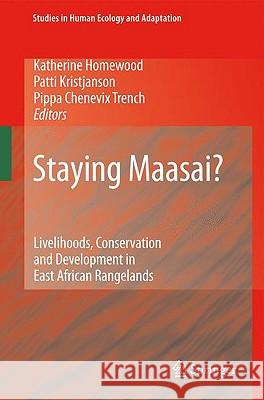
Staying Maasai?: Livelihoods, Conservation and Development in East African Rangelands Homewood, Katherine 9780387874913 Springer - książkaWidoczna okładka, to zdjęcie poglądowe, a rzeczywista szata graficzna może różnić się od prezentowanej.

Staying Maasai?: Livelihoods, Conservation and Development in East African Rangelands

ISBN-13: 9780387874913 / Angielski / Twarda / 2009 / 436 str.

Katherine Homewood; Patti Kristjanson; Pippa Trench
cena 605,23
(netto: 576,41 VAT:  5%)

Najniższa cena z 30 dni: 578,30
Termin realizacji zamówienia:
ok. 22 dni roboczych
Bez gwarancji dostawy przed świętami

Darmowa dostawa!

The area of eastern Africa, which includes Tanzania and Kenya, is known for its savannas, wildlife and tribal peoples. Alongside these iconic images lie concerns about environmental degradation, declining wildlife populations, and about worsening poverty of pastoral peoples. East Africa presents in microcosm the paradox so widely seen across sub Saharan Africa, where the world s poorest and most vulnerable populations live alongside some of the world s most outstanding biodiversity resources. Over the last decade or so, community conservation has emerged as a way out of poverty and environmental problems for these rural populations, focusing on the sustainable use of wildlife to generate income that could underpin equally sustainable development. Given the enduring interest in East African wildlife, and the very large tourist income it generates, these communities and ecosystems seem a natural case for green development based on community conservation. This volume is focused on the livelihoods of the Maasai in two different countries - Kenya and Tanzania. This cross-border comparative analysis looks at what people do, why they choose to do it, with what success and with what implications for wildlife. The comparative approach makes it possible to unpack the interaction of conservation and development, to identify the main drivers of livelihoods change and the main outcomes of wildlife conservation or other land use policies, while controlling for confounding factors in these semi-arid and perennially variable systems. This synthesis draws out lessons about the successes and failures of community conservation-based approach to development in Maasailand under different national political and economic contexts and different local social and historical particularities. "


Kategorie:
Nauka, Socjologia i społeczeństwo
Kategorie BISAC:
Social Science > Antropologia
Social Science > Human Geography
Business & Economics > Development - Sustainable Development
Wydawca:
Springer
Seria wydawnicza:
Studies in Human Ecology and Adaptation
Język:
Angielski
ISBN-13:
9780387874913
Rok wydania:
2009
Wydanie:
2009
Numer serii:
000307404
Ilość stron:
436
Waga:
0.74 kg
Wymiary:
23.37 x 15.75 x 2.54
Oprawa:
Twarda
Wolumenów:
01
Dodatkowe informacje:
Bibliografia
Wydanie ilustrowane

From the reviews: "This book is a product of a collaborative research programme 'Assessing trade-offs between poverty alleviation and wildlife conservation', and coordinated by the International Livestock Research Institute in Nairobi. ... provides in-depth description of the methodological approaches taken in the analysing livelihoods in the case studies. ... this will provide a valuable resource for researchers developing similar studies. ... an extremely useful resource for scholars and students of pastoralism. ... The book is extremely densely and precisely written, and provides a comprehensive review of the literature." (Nicky Allsopp, African Journal of Range & Forage Science, Vol. 26 (3), 2009)

Family Portraits – Mara.- Changing Land Use, Livelihoods and Wildlife Conservation in Maasailand.- Methods in the Analysis of Maasai Livelihoods.- Maasai Mara – Land Privatization and Wildlife Decline: Can Conservation Pay Its Way?.- Assessing Returns to Land and Changing Livelihood Strategies in Kitengela.- Family Portraits – Amboseli.- Pathways of Continuity and Change: Maasai Livelihoods in Amboseli, Kajiado District, Kenya.- Family Portraits – Longido.- Still “People of Cattle”? Livelihoods, Diversification and Community Conservation in Longido District.- Family Portraits – Tarangire.- Cattle and Crops, Tourism and Tanzanite: Poverty, Land-Use Change and Conservation in Simanjiro District, Tanzania.- Community-Based Conservation and Maasai Livelihoods in Tanzania.- Policy and Practice in Kenya Rangelands: Impacts on Livelihoods and Wildlife.- Staying Maasai? Pastoral Livelihoods, Diversification and the Role of Wildlife in Development.

People, livestock and wildlife have lived together on the savannas of East Africa for millennia. Their coexistence has declined as conservation policies increasingly exclude people and livestock from national wildlife parks, and fast-growing human populations and development push wildlife and pastoralists onto ever more marginal lands. The result has been less wildlife, and more pastoral people struggling to diversify their livelihoods as access to pasture and water becomes harder to find.

This book examines those livelihood and land use strategies in detail. In an integrated research effort that involved researchers, local communities and policy analysts, surveys were carried out across a wide range of Maasai communities providing contrasting land tenure and national policies and varying degrees of intensification of agriculture, tourism and other activities. The aim was to create a better understanding of current livelihood patterns and the decisions facing Maasai at the start of the 21st Century in the context of ongoing environmental, political, and societal change. With a research design that linked quantitative and qualitative methods and research teams across multiple pastoral sites for the first time, a comparison of livelihood strategies and returns to livestock, crops, wildlife tourism, and other activities across Kenyan and Tanzanian Maasailand was possible.

While livestock remains the critical anchor for most Maasai households, many are obtaining income from a variety of alternative sources. Unfortunately, income from wildlife/tourism, an option seen as most desirable by many because of its potential to provide economically and environmentally ‘win-win’ situations, still benefits relatively few Maasai. Similarly, although governments favor agricultural intensification, significant crop income or enhanced food security from subsistence cropping elude most.

This book provides a rich source of new data from across Maasailand and its unparallelled multi-site comparative analyses give valuable lessons of broader applicability. It is a valuable resource for anyone, researchers, development workers and policy makers, who is concerned with improving environmental as well as economic security on the wildlife-rich Maasai pastoral lands in Kenya and Tanzania.

Homewood, Katherine Katherine Homewood is Professor of Anthropology, U... więcej >


Udostępnij

Facebook - konto krainaksiazek.pl


Opinie o Krainaksiazek.pl na Opineo.pl

Partner Mybenefit

Krainaksiazek.pl w programie rzetelna firma Krainaksiaze.pl - płatności przez paypal

Czytaj nas na:

Facebook - krainaksiazek.pl
  • książki na zamówienie
  • granty
  • książka na prezent
  • kontakt
  • pomoc
  • opinie
  • regulamin
  • polityka prywatności

Zobacz:

  • Księgarnia czeska

  • Wydawnictwo Książkowe Klimaty

1997-2025 DolnySlask.com Agencja Internetowa

© 1997-2022 krainaksiazek.pl
     
KONTAKT | REGULAMIN | POLITYKA PRYWATNOŚCI | USTAWIENIA PRYWATNOŚCI
Zobacz: Księgarnia Czeska | Wydawnictwo Książkowe Klimaty | Mapa strony | Lista autorów
KrainaKsiazek.PL - Księgarnia Internetowa

Polityka prywatnosci - link
Krainaksiazek.pl - płatnośc Przelewy24
Przechowalnia Przechowalnia






