Statutes and Their Interpretation in the First Half of the Fourteenth Century » książka





Statutes and Their Interpretation in the First Half of the Fourteenth Century
ISBN-13: 9781584774853 / Angielski / Twarda / 2010 / 246 str.
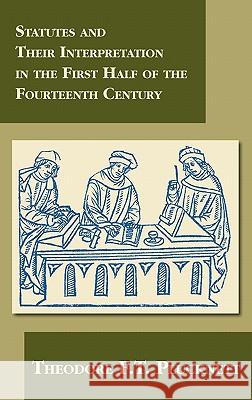
Statutes and Their Interpretation in the First Half of the Fourteenth Century
ISBN-13: 9781584774853 / Angielski / Twarda / 2010 / 246 str.
(netto: 116,58 VAT: 5%)
Najniższa cena z 30 dni: 112,54 zł
ok. 16-18 dni roboczych
Bez gwarancji dostawy przed świętami
Darmowa dostawa!
An important book by a preeminent scholar of English legal history Using evidence drawn from the Year Books from 20 Edw. I to 20 Edw. III Plucknett analyzes the nature of early statutes as seen in the rules for their construction and their use in court. He shows that the early statutes were more legislative than declaratory, and were treated as such by the courts. "This is an essay of absorbing interest and of great value to historians of the law. Every page shows not only immense industry, but sound learning." --Law Quarterly Review 39:138-139 Theodore F. T. Plucknett 1897-1965] was a Fellow of the British Academy, Professor of Legal History in the University of London and author of A Concise History of the Common Law (1929). CONTENTS General Preface by H.D. Hazeltine Author's Preface Table of Statutes Table of Year Book Cases Sources List of Incipits Introduction. The Problem and the Evidence PART I. Legislation and Legal thought in the Early Fourteenth Century The Scope of the Discussion CHAP. I. Origins and Early Forms of Written Law CHAP. II. Text and Translation CHAP. III. The Legislature and its Place CHAP. IV. Statutes and the Common Law CHAP. V. Statutes and Ordinances CHAP. VI. Legal Thought PART II. Examples of Interpretation Arrangement and Grouping CHAP. I. General Words and Literal Construction CHAP. II. The Intention of the Legislature CHAP. III. "Exceptions out of the Statute" CHAP. IV. Refusal of the Courts to Apply Statutes CHAP. V. Extension of the Words of a Statute CHAP. VI. Strict Interpretation CHAP. VII. Conflict of Statutes CHAP. VIII. Ignorance of Statutes among Contemporary Lawyers CHAP. IX. The Retrospective Effect of Statutes CHAP. X.Judicial Discretion CHAP. XI.Statutes and the Common Law CHAP. XII.Statutes and the Royal Prerogative CHAP. XIII.Statutory Writs CHAP. XIV.The Interpretation of Particular Statutes Conclusion APPENDIX I. Texts of Statutes APPENDIX II. Select Cases Index
An important book by a preeminent scholar of English legal historyUsing evidence drawn from the Year Books from 20 Edw. I to 20 Edw. III Plucknett analyzes the nature of early statutes as seen in the rules for their construction and their use in court. He shows that the early statutes were more legislative than declaratory, and were treated as such by the courts. "This is an essay of absorbing interest and of great value to historians of the law. Every page shows not only immense industry, but sound learning." --Law Quarterly Review 39:138-139Theodore F. T. Plucknett [1897-1965] was a Fellow of the British Academy, Professor of Legal History in the University of London and author of A Concise History of the Common Law (1929).CONTENTSGeneral Preface by H.D. HazeltineAuthors PrefaceTable of StatutesTable of Year Book CasesSourcesList of IncipitsIntroduction. The Problem and the EvidencePART I. Legislation and Legal thought in the Early Fourteenth CenturyThe Scope of the DiscussionCHAP. I. Origins and Early Forms of Written LawCHAP. II. Text and TranslationCHAP. III. The Legislature and its PlaceCHAP. IV. Statutes and the Common LawCHAP. V. Statutes and OrdinancesCHAP. VI. Legal ThoughtPART II. Examples of Interpretation Arrangement and GroupingCHAP. I. General Words and Literal ConstructionCHAP. II. The Intention of the LegislatureCHAP. III. "Exceptions out of the Statute"CHAP. IV. Refusal of the Courts to Apply StatutesCHAP. V. Extension of the Words of a StatuteCHAP. VI. Strict InterpretationCHAP. VII. Conflict of StatutesCHAP. VIII. Ignorance of Statutes among Contemporary LawyersCHAP. IX. The Retrospective Effect of StatutesCHAP. X.Judicial DiscretionCHAP. XI.Statutes and the Common LawCHAP. XII.Statutes and the Royal PrerogativeCHAP. XIII.Statutory WritsCHAP. XIV.The Interpretation of Particular StatutesConclusionAPPENDIX I. Texts of StatutesAPPENDIX II. Select CasesIndex




Czytaj nas na:
KrainaKsiazek.PL - Księgarnia Internetowa


