• Wyszukiwanie zaawansowane
  • Kategorie
  • Kategorie BISAC
  • Książki na zamówienie
  • Promocje
  • Granty
  • Książka na prezent
  • Opinie
  • Pomoc
  • Załóż konto
  • Zaloguj się

Statistical Theory and Modelin » książka


zaloguj się | załóż konto
Logo Krainaksiazek.pl

koszyk

konto

szukaj
topmenu
Księgarnia internetowa
Szukaj
Książki na zamówienie
Promocje
Granty
Książka na prezent
Moje konto
Pomoc
 
 
Wyszukiwanie zaawansowane
Pusty koszyk
Bezpłatna dostawa dla zamówień powyżej 20 złBezpłatna dostawa dla zamówień powyżej 20 zł

Kategorie główne

• Nauka
 [2944077]
• Literatura piękna
 [1814251]

  więcej...
• Turystyka
 [70679]
• Informatyka
 [151074]
• Komiksy
 [35590]
• Encyklopedie
 [23169]
• Dziecięca
 [611005]
• Hobby
 [136031]
• AudioBooki
 [1718]
• Literatura faktu
 [225599]
• Muzyka CD
 [379]
• Słowniki
 [2916]
• Inne
 [443741]
• Kalendarze
 [1187]
• Podręczniki
 [166463]
• Poradniki
 [469211]
• Religia
 [506887]
• Czasopisma
 [481]
• Sport
 [61343]
• Sztuka
 [242115]
• CD, DVD, Video
 [3348]
• Technologie
 [219293]
• Zdrowie
 [98602]
• Książkowe Klimaty
 [124]
• Zabawki
 [2385]
• Puzzle, gry
 [3504]
• Literatura w języku ukraińskim
 [260]
• Art. papiernicze i szkolne
 [7151]
Kategorie szczegółowe BISAC

Statistical Theory and Modelin

ISBN-13: 9780470689318 / Angielski / Twarda / 2010 / 376 str.
Paul P. Durbin; Bj?rn Anders B. Pettersson Reif; Bj?rn Anders B. Pettersson Reif
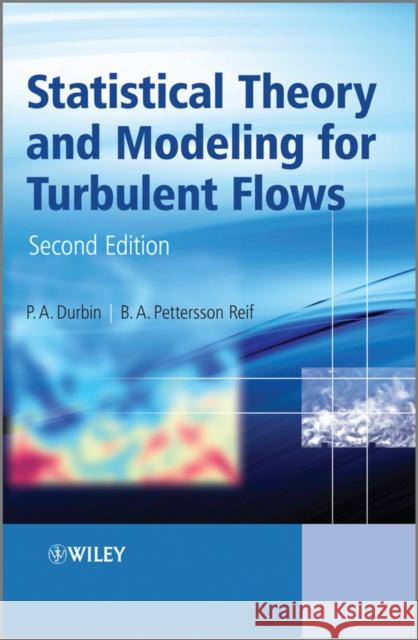
Statistical Theory and Modelin Reif, B. A. Pettersson 9780470689318 Wiley-Blackwell - książkaWidoczna okładka, to zdjęcie poglądowe, a rzeczywista szata graficzna może różnić się od prezentowanej.

Statistical Theory and Modelin

ISBN-13: 9780470689318 / Angielski / Twarda / 2010 / 376 str.

Paul P. Durbin; Bj?rn Anders B. Pettersson Reif; Bj?rn Anders B. Pettersson Reif
cena 427,64
(netto: 407,28 VAT:  5%)

Najniższa cena z 30 dni: 422,43
Termin realizacji zamówienia:
ok. 30 dni roboczych.

Darmowa dostawa!

Providing a comprehensive grounding in the subject of turbulence, Statistical Theory and Modeling for Turbulent Flows develops both the physical insight and the mathematical framework needed to understand turbulent flow. Its scope enables the reader to become a knowledgeable user of turbulence models; it develops analytical tools for developers of predictive tools. Thoroughly revised and updated, this second edition includes a new fourth section covering DNS (direct numerical simulation), LES (large eddy simulation), DES (detached eddy simulation) and numerical aspects of eddy resolving simulation. In addition to its role as a guide for students, Statistical Theory and Modeling for Turbulent Flows also is a valuable reference for practicing engineers and scientists in computational and experimental fluid dynamics, who would like to broaden their understanding of fundamental issues in turbulence and how they relate to turbulence model implementation.

  • Provides an excellent foundation to the fundamental theoretical concepts in turbulence.
  • Features new and heavily revised material, including an entire new section on eddy resolving simulation.
  • Includes new material on modeling laminar to turbulent transition.
  • Written for students and practitioners in aeronautical and mechanical engineering, applied mathematics and the physical sciences.
  • Accompanied by a website housing solutions to the problems within the book.

Kategorie:
Technologie
Kategorie BISAC:
Science > Mechanics - General
Technology & Engineering > Hydraulics
Wydawca:
Wiley-Blackwell
Język:
Angielski
ISBN-13:
9780470689318
Rok wydania:
2010
Ilość stron:
376
Waga:
0.79 kg
Wymiary:
24.89 x 17.27 x 2.54
Oprawa:
Twarda
Wolumenów:
01
Dodatkowe informacje:
Bibliografia
Wydanie ilustrowane

Preface.

Preface to second edition.

Preface to first edition.

Motivation.

Epitome.

Acknowledgements.

Part I FUNDAMENTALS OF TURBULENCE.

1 Introduction.

1.1 The turbulence problem.

1.2 Closure modeling.

1.3 Categories of turbulent flow.

Exercises.

2 Mathematical and statistical background.

2.1 Dimensional analysis.

2.1.1 Scales of turbulence.

2.2 Statistical tools.

2.2.1 Averages and probability density functions.

2.2.2 Correlations.

2.3 Cartesian tensors.

2.3.1 Isotropic tensors.

2.3.2 Tensor functions of tensors; Cayley Hamilton theorem.

Exercises.

3 Reynolds averaged Navier Stokes equations.

3.1 Background to the equations.

3.2 Reynolds averaged equations.

3.3 Terms of kinetic energy and Reynolds stress budgets.

3.4 Passive contaminant transport.

Exercises.

4 Parallel and self–similar shear flows.

4.1 Plane channel flow.

4.1.1 Logarithmic layer.

4.1.2 Roughness.

4.2 Boundary layer.

4.2.1 Entrainment.

4.3 Free–shear layers.

4.3.1 Spreading rates.

4.3.2 Remarks on self–similar boundary layers.

4.4 Heat and mass transfer.

4.4.1 Parallel flow and boundary layers.

4.4.2 Dispersion from elevated sources.

Exercises.

5 Vorticity and vortical structures.

5.1 Structures.

5.1.1 Free–shear layers.

5.1.2 Boundary layers.

5.1.3 Non–random vortices.

5.2 Vorticity and dissipation.

5.2.1 Vortex stretching and relative dispersion.

5.2.2 Mean–squared vorticity equation.

Exercises.

Part II SINGLE–POINT CLOSURE MODELING.

6 Models with scalar variables.

6.1 Boundary–layer methods.

6.1.1 Integral boundary–layer methods.

6.1.2 Mixing length model.

6.2 The k model.

6.2.1 Analytical solutions to the k model.

6.2.2 Boundary conditions and near–wall modifications.

6.2.3 Weak solution at edges of free–shear flow; free–stream sensitivity.

6.3 The k model.

6.4 Stagnation–point anomaly.

6.5 The question of transition.

6.5.1 Reliance on the turbulence model.

6.5.2 Intermittency equation.

6.5.3 Laminar fluctuations.

6.6 Eddy viscosity transport models.

Exercises.

7 Models with tensor variables.

7.1 Second–moment transport.

7.1.1 A simple illustration.

7.1.2 Closing the Reynolds stress transport equation.

7.1.3 Models for the slow part.

7.1.4 Models for the rapid part.

7.2 Analytic solutions to SMC models.

7.2.1 Homogeneous shear flow.

7.2.2 Curved shear flow.

7.2.3 Algebraic stress approximation and nonlinear eddy viscosity.

7.3 Non–homogeneity.

7.3.1 Turbulent transport.

7.3.2 Near–wall modeling.

7.3.3 No–slip condition.

7.3.4 Nonlocal wall effects.

7.4 Reynolds averaged computation.

7.4.1 Numerical issues.

7.4.2 Examples of Reynolds averaged computation.

Exercises.

8 Advanced topics.

8.1 Further modeling principles.

8.1.1 Galilean invariance and frame rotation.

8.1.2 Realizability.

8.2 Second–moment closure and Langevin equations.

8.3 Moving equilibrium solutions of SMC.

8.3.1 Criterion for steady mean flow.

8.3.2 Solution in two–dimensional mean flow.

8.3.3 Bifurcations.

8.4 Passive scalar flux modeling.

8.4.1 Scalar diffusivity models.

8.4.2 Tensor diffusivity models.

8.4.3 Scalar flux transport.

8.4.4 Scalar variance.

8.5 Active scalar flux modeling: effects of buoyancy.

8.5.1 Second–moment transport models.

8.5.2 Stratified shear flow.

Exercises.

Part III THEORY OF HOMOGENEOUS TURBULENCE.

9 Mathematical representations.

9.1 Fourier transforms.

9.2 Three–dimensional energy spectrum of homogeneous turbulence.

9.2.1 Spectrum tensor and velocity covariances.

9.2.2 Modeling the energy spectrum.

Exercises.

10 Navier Stokes equations in spectral space.

10.1 Convolution integrals as triad interaction.

10.2 Evolution of spectra.

10.2.1 Small–k behavior and energy decay.

10.2.2 Energy cascade.

10.2.3 Final period of decay.

Exercises.

11 Rapid distortion theory.

11.1 Irrotational mean flow.

11.1.1 Cauchy form of vorticity equation.

11.1.2 Distortion of a Fourier mode.

11.1.3 Calculation of covariances.

11.2 General homogeneous distortions.

11.2.1 Homogeneous shear.

11.2.2 Turbulence near a wall.

Exercises.

Part IV TURBULENCE SIMULATION.

12 Eddy–resolving simulation.

12.1 Direct numerical simulation.

12.1.1 Grid requirements.

12.1.2 Numerical dissipation.

12.1.3 Energy–conserving schemes.

12.2 Illustrations.

12.3 Pseudo–spectral method.

Exercises.

13 Simulation of large eddies.

13.1 Large eddy simulation.

13.1.1 Filtering.

13.1.2 Subgrid models.

13.2 Detached eddy simulation.

Exercises.

References.

Index.

P. A. Durbin, Stanford University, USA and B. A. Pettersson Reif, Norwegian Defence Research Establishment, Norway
Paul Durbin is a research professor within the flow physics and computational engineering department at Stanford University. He and his students carry out computational and modeling research on turbulent and transitional flows, exploring new analytical formulations and testing models in a wide range of applications with the practical aim of improving existing methods for computing engineering flows.

Björn Anders Pettersson Reif spent 4 years post–doc working as an R&D engineer at Kongsberg Defence and Aerospace (Norway) until he started his present position as a senior scientist at the Norwegian Defence Research Establishment. He was also appointed Adjunct Professor in Turbulence Modeling between 2003 and 2009. His research has mainly been dedicated to numerical fluid mechanics, turbulence physics and single–point turbulence modeling.

Providing a comprehensive grounding in the subject of turbulence, "Statistical Theory and Modeling for Turbulent Flows" develops both the physical insight and the mathematical framework needed to understand turbulent flow. Its scope enables the reader to become a knowledgeable user of turbulence models; it develops analytical tools for developers of predictive tools. Thoroughly revised and updated, this second edition includes a new fourth section covering DNS (direct numerical simulation), LES (large eddy simulation), DES (detached eddy simulation) and numerical aspects of eddy resolving simulation.

In addition to its role as a guide for students, "Statistical Theory and Modeling for Turbulent Flows" also is a valuable reference for practicing engineers and scientists in computational and experimental fluid dynamics, who would like to broaden their understanding of fundamental issues in turbulence and how they relate to turbulence model implementation.


Udostępnij

Facebook - konto krainaksiazek.pl


Opinie o Krainaksiazek.pl na Opineo.pl

Partner Mybenefit

Krainaksiazek.pl w programie rzetelna firma Krainaksiaze.pl - płatności przez paypal

Czytaj nas na:

Facebook - krainaksiazek.pl
  • książki na zamówienie
  • granty
  • książka na prezent
  • kontakt
  • pomoc
  • opinie
  • regulamin
  • polityka prywatności

Zobacz:

  • Księgarnia czeska

  • Wydawnictwo Książkowe Klimaty

1997-2026 DolnySlask.com Agencja Internetowa

© 1997-2022 krainaksiazek.pl
     
KONTAKT | REGULAMIN | POLITYKA PRYWATNOŚCI | USTAWIENIA PRYWATNOŚCI
Zobacz: Księgarnia Czeska | Wydawnictwo Książkowe Klimaty | Mapa strony | Lista autorów
KrainaKsiazek.PL - Księgarnia Internetowa

Polityka prywatnosci - link
Krainaksiazek.pl - płatnośc Przelewy24
Przechowalnia Przechowalnia







