• Wyszukiwanie zaawansowane
  • Kategorie
  • Kategorie BISAC
  • Książki na zamówienie
  • Promocje
  • Granty
  • Książka na prezent
  • Opinie
  • Pomoc
  • Załóż konto
  • Zaloguj się

Statistical Methods for Dose-Finding » książka


zaloguj się | załóż konto
Logo Krainaksiazek.pl

koszyk

konto

szukaj
topmenu
Księgarnia internetowa
Szukaj
Książki na zamówienie
Promocje
Granty
Książka na prezent
Moje konto
Pomoc
 
 
Wyszukiwanie zaawansowane
Pusty koszyk
Bezpłatna dostawa dla zamówień powyżej 20 złBezpłatna dostawa dla zamówień powyżej 20 zł

Kategorie główne

• Nauka
 [2946600]
• Literatura piękna
 [1856966]

  więcej...
• Turystyka
 [72221]
• Informatyka
 [151456]
• Komiksy
 [35826]
• Encyklopedie
 [23190]
• Dziecięca
 [619653]
• Hobby
 [140543]
• AudioBooki
 [1577]
• Literatura faktu
 [228355]
• Muzyka CD
 [410]
• Słowniki
 [2874]
• Inne
 [445822]
• Kalendarze
 [1744]
• Podręczniki
 [167141]
• Poradniki
 [482898]
• Religia
 [510455]
• Czasopisma
 [526]
• Sport
 [61590]
• Sztuka
 [243598]
• CD, DVD, Video
 [3423]
• Technologie
 [219201]
• Zdrowie
 [101638]
• Książkowe Klimaty
 [124]
• Zabawki
 [2473]
• Puzzle, gry
 [3898]
• Literatura w języku ukraińskim
 [254]
• Art. papiernicze i szkolne
 [8170]
Kategorie szczegółowe BISAC

Statistical Methods for Dose-Finding

ISBN-13: 9780470861233 / Angielski / Twarda / 2006 / 336 str.
Sylvie Chevret
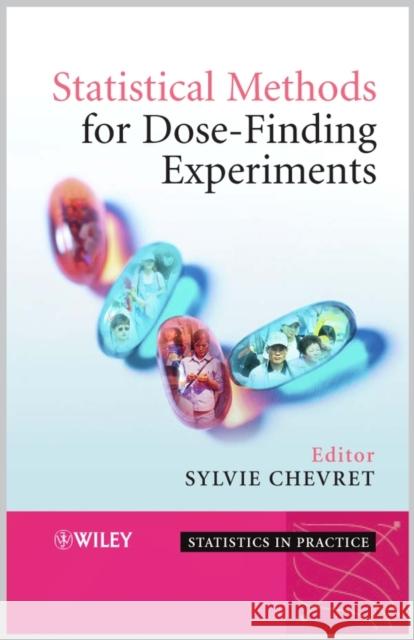
Statistical Methods for Dose-Finding Chevret, Sylvie 9780470861233 John Wiley & Sons - książkaWidoczna okładka, to zdjęcie poglądowe, a rzeczywista szata graficzna może różnić się od prezentowanej.

Statistical Methods for Dose-Finding

ISBN-13: 9780470861233 / Angielski / Twarda / 2006 / 336 str.

Sylvie Chevret
cena 476,28 zł
(netto: 453,60 VAT:  5%)

Najniższa cena z 30 dni: 472,37 zł
Termin realizacji zamówienia:
ok. 30 dni roboczych
Bez gwarancji dostawy przed świętami

Darmowa dostawa!

Dose-finding experiments define the safe dosage of a drug in development, in terms of the quantity given to a patient. Statistical methods play a crucial role in identifying optimal dosage. Used appropriately, these methods provide reliable results and reduce trial duration and costs. In practice, however, dose-finding is often done poorly, with widely used conventional methods frequently being unreliable, leading to inaccurate results. However, there have been many advances in recent years, with new statistical techniques being developed and it is important that these new techniques are utilized correctly. Statistical Methods for Dose-Finding Experiments reviews the main statistical approaches for dose-finding in phase I/II clinical trials and presents practical guidance on their correct use.

  • Includes an introductory section, summarizing the essential concepts in dose-finding.
  • Contains a section on algorithm-based approaches, such as the traditional 3+3 design, and a section on model-based approaches, such as the continual reassessment method.
  • Explains fundamental issues, such as how to stop trials early and how to cope with delayed or ordinal outcomes.
  • Discusses in detail the main websites and software used to implement the methods.
  • Features numerous worked examples making use of real data.
Statistical Methods for Dose-Finding Experiments is an important collaboration from the leading experts in the area. Primarily aimed at statisticians and clinicians working in clinical trials and medical research, there is also much to benefit graduate students of biostatistics.

Kategorie:
Nauka, Medycyna
Kategorie BISAC:
Medical > Biostatistics
Medical > Farmacja
Wydawca:
John Wiley & Sons
Seria wydawnicza:
Statistics in Practice
Język:
Angielski
ISBN-13:
9780470861233
Rok wydania:
2006
Numer serii:
000022326
Ilość stron:
336
Waga:
0.59 kg
Wymiary:
23.24 x 16.38 x 2.34
Oprawa:
Twarda
Wolumenów:
01
Dodatkowe informacje:
Wydanie ilustrowane

"This book is an important collaboration of leading experts in the area. Primarily aimed at statisticians and clinicians working in clinical trials and medical research, there is also much to benefit graduate students of biostatistics." (Zentralblatt MATH, 2011)

"It represents a good investment and would be a useful addition to the pharmaceutical researcher′s library." (Technometrics, August 2008)

"This book will play an important role in establishing some of the recent innovative dose–finding methods in this fast evolving field." (Journal of Biopharmaceutical Statistics, September 2007)

" very valuable to anyone working in the field...a very useful and complete textbook for graduate education." (AIChE Journal, October 2007)

" an easily readable comprehensive compilation of several decades of work in dose finding designs and issues " (Journal of the American Statistical Association, September 2007)

Contributors.

Preface.

Introduction (Sylvie Chevret).

Part I. General Principles and Controversial Issues in Dose–Findings.

1. Basic concepts in dose–finding (Sylvie Chevret).

1.1 Main concepts.

1.2 Main issues from a pharmaceutical point of view.

1.3 Statistical issues of dose–finding phase I trials.

1.4 Conclusion.

References.

2. Philosophy and methodology of dose–finding a regulatory perspective (Robert Hemmings).

2.1 Introduction.

2.2 In search of the optimal dose.

2.3 Regulatory requirements for drug licensure.

2.4 Benefits to the sponsor and the patient of providing data on dose–response over and above those required for licensing.

2.5 Trial designs for determining dose–response.

2.6 Discussion.

References.

Part II. Algorithm–Based Approaches.

3. Traditional and modified algorithm–based designs for phase I cancer clinical trials (Weichung Joe Shih and Yong Lin).

3.1 Introduction.

3.2 Notation and convention.

3.3 Traditional algorithm–based designs.

3.4 Modified algorithm–based designs.

3.5 Probability of a dose being chosen as the MTD.

3.6 Expected number of patients treated at each dose level.

3.7 Other statistical properties.

3.8 Examples.

3.9 Discussion.

Acknowledgments.

References.

4. Accelerated titration designs (Janet Dancey, Boris Freidlin and Larry Rubinstein)

4.1 Introduction.

4.2 Design.

4.3 Evaluation of performance.

4.4 Model–based analysis.

4.5 Clinical applications.

4.6 Conclusions.

References.

5. Group up–and–down designs in toxicity studies (Anna Ivanova and Nancy Flournoy).

5.1 Introduction.

5.2 Group up–and–down designs for phase I clinical trials.

5.3 Designs for acute toxicity studies.

5.4 Fully sequential designs for phase I clinical trials.

5.5 Start–up rules.

5.6 Estimation.

5.7 Up–and–down designs to find the dose with maximum success probability.

5.8 Discussion.

References.

Part III. Model–Based Approaches.

6. The continual reassessment method (Sylvie Chevret and Sarah Zohar).

6.1 Introduction.

6.2 The original continual reassessment method (CRM).

6.3 Likelihood CRM (CRML).

6.4 Modified continual reassessment method (MCRM).

6.5 Concluding remarks.

References.

7. Using Bayesian decision theory in dose–escalation studies (John Whitehead).

7.1 Introduction.

7.2 Example of a dose–escalation study.

7.3 A statistical model for the study.

7.4 Prior information.

7.5 Gain functions.

7.6 Safety constraints and stopping rules.

7.7 Evaluation of the Bayesian approach.

7.8 Discussion.

References.

8. Dose–escalation with overdose control (Mourad Tighiouart and Andr´e Rogatko).

8.1 Introduction.

8.2 Escalation with overdose control design.

8.3 Adjusting for covariates.

8.4 Choice of prior distributions.

8.5 Concluding remarks.

References.

9. Dose–escalation methods for phase I healthy volunteer studies (Y. Zhou).

9.1 Introduction.

9.2 Frequentist analysis.

9.3 A Bayesian analysis.

9.4 Conducting dose–escalation using a Bayesian decision theoretic approach.

9.5 Multiple simulations.

9.6 Conclusions.

Acknowledgements.

References.

Part IV. Future Trends for Past Issues.

10. Defining stopping rules (Sarah Zohar).

10.1 Introduction.

10.2 Background.

10.3 Dose–finding specificities.

10.4 Examples.

10.5 Conclusions.

Acknowledgment.

References.

11. Dose–finding with delayed binary outcomes in cancer trials (Ying Kuen Cheung).

11.1 Introduction.

11.2 Review of current practice.

11.3 Basic methods.

11.4 An example.

11.5 Simulation results.

11.6 Chronic toxicities.

11.7 Discussion.

11.8 Bibliographic notes.

References.

12. Dose–finding based on multiple ordinal toxicities in phase I oncology trials (B. Nebiyou Bekele and Peter F. Thall).

12.1 Introduction.

12.2 Probability model.

12.3 Dose–finding algorithm.

12.4 Elicitation process.

12.5 Application to the sarcoma trial.

12.6 Simulation study and sensitivity analyses.

12.7 Concluding remarks.

References.

13. A two–stage design for dose–finding with two agents (Peter F. Thall)

13.1 Introduction.

13.2 Dose–toxicity model.

13.3 A two–stage dose–finding algorithm.

13.4 Application.

13.5 Discussion.

References.

14. Using both efficacy and toxicity for dose–finding (Peter F. Thall and John D. Cook).

14.1 Introduction.

14.2 Illustrative trial.

14.3 Dose–outcome models.

14.4 The dose–finding algorithm.

14.5 Simulation studies.

14.6 Discussion.

References.

Part V. Conclusions.

15. Websites and software (Sarah Zohar).

15.1 Introduction.

15.2 Computation methods using statistical software.

15.3 Phase I or phase II dose–finding software.

15.4 Phase I/II dose–finding software.

15.5 Conclusions.

References.

Appendix: random numbers generation.

Index.

Sylvie Chevret, Hopital St Louis, Paris, France

Dose–finding experiments define the safe dosage of a drug in development, in terms of the quantity given to a patient. Statistical methods play a crucial role in identifying optimal dosage. Used appropriately, these methods provide reliable results and reduce trial duration and costs. In practice, however, dose–finding is often done poorly, with widely used conventional methods frequently being unreliable, leading to inaccurate results. However, there have been many advances in recent years, with new statistical techniques being developed and it is important that these new techniques are utilized correctly. Statistical Methods for Dose–Finding Experiments reviews the main statistical approaches for dose–finding in phase I/II clinical trials and presents practical guidance on their correct use.

  • Includes an introductory section, summarizing the essential concepts in dose–finding.
  • Contains a section on algorithm–based approaches, such as the traditional 3+3 design, and a section on model–based approaches, such as the continual reassessment method.
  • Explains fundamental issues, such as how to stop trials early and how to cope with delayed or ordinal outcomes.
  • Discusses in detail the main websites and software used to implement the methods.
  • Features numerous worked examples making use of real data.

Statistical Methods for Dose–Finding Experiments is an important collaboration from the leading experts in the area. Primarily aimed at statisticians and clinicians working in clinical trials and medical research, there is also much to benefit graduate students of biostatistics.

Chevret, Sylvie Sylvie Chevret, Hopital St Louis, Paris, France... więcej >


Udostępnij

Facebook - konto krainaksiazek.pl


Opinie o Krainaksiazek.pl na Opineo.pl

Partner Mybenefit

Krainaksiazek.pl w programie rzetelna firma Krainaksiaze.pl - płatności przez paypal

Czytaj nas na:

Facebook - krainaksiazek.pl
  • książki na zamówienie
  • granty
  • książka na prezent
  • kontakt
  • pomoc
  • opinie
  • regulamin
  • polityka prywatności

Zobacz:

  • Księgarnia czeska

  • Wydawnictwo Książkowe Klimaty

1997-2025 DolnySlask.com Agencja Internetowa

© 1997-2022 krainaksiazek.pl
     
KONTAKT | REGULAMIN | POLITYKA PRYWATNOŚCI | USTAWIENIA PRYWATNOŚCI
Zobacz: Księgarnia Czeska | Wydawnictwo Książkowe Klimaty | Mapa strony | Lista autorów
KrainaKsiazek.PL - Księgarnia Internetowa

Polityka prywatnosci - link
Krainaksiazek.pl - płatnośc Przelewy24
Przechowalnia Przechowalnia





