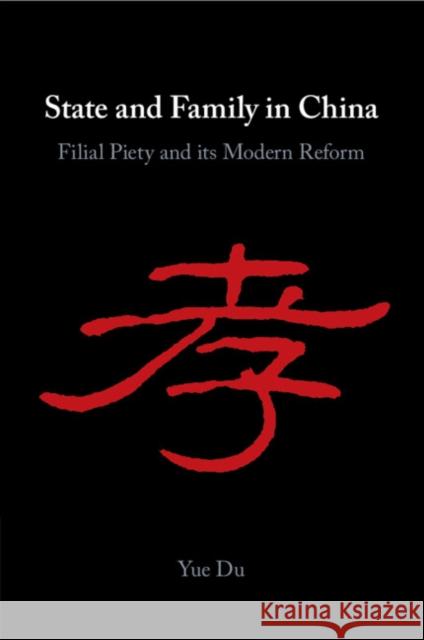
'Offering a dynamic and sweeping portrait of China's filial tradition from the Qing Dynasty to the present day, Yue Du proves that the multifaceted ways in which successive Chinese regimes cultivated, deployed (or denounced) filial obligation remain essential not only to understand Chinese society in the past, but also the PRC's vision of its future. Calling upon vivid legal records, this book demonstrates how filiality may well be the most significant relationship for interpreting Chinese law, family, and governance. In this book we find a startling and sobering analysis of the exploitation and manipulation of family hierarchies by parents, evolving legal systems, and an invasive state.' Johanna Ransmeier, University of Chicago
Introduction: filial piety beyond confucianism; Part I. Ruling the Empire through the Principle of Filialit: 1. 'Parents can never be wrong:' punishing rebellious children as a didactic show; 2. Policies and counterstrategies: negotiating state-sponsored filiality in the everyday; 3. 'Parenting all under heaven on behalf of heaven:' state-sponsored filiality and imperial rulership; Part II. Building the Nation through Restructuring the Family: 4. Reorienting parent-child relations: from parents' authority to children's rights; 5. Reconceptualizing parent-child relations: from life-long parental privilege to transitory guardianship; 6. A constitutional agenda: remaking the family to make a new state; Conclusion: filial piety toward the state.