• Wyszukiwanie zaawansowane
  • Kategorie
  • Kategorie BISAC
  • Książki na zamówienie
  • Promocje
  • Granty
  • Książka na prezent
  • Opinie
  • Pomoc
  • Załóż konto
  • Zaloguj się

Standard Relational and Network Database Languages » książka


zaloguj się | załóż konto
Logo Krainaksiazek.pl

koszyk

konto

szukaj
topmenu
Księgarnia internetowa
Szukaj
Książki na zamówienie
Promocje
Granty
Książka na prezent
Moje konto
Pomoc
 
 
Wyszukiwanie zaawansowane
Pusty koszyk
Bezpłatna dostawa dla zamówień powyżej 40 złBezpłatna dostawa dla zamówień powyżej 40 zł

Kategorie główne

• Nauka
 [2950887]
• Literatura piękna
 [1817392]

  więcej...
• Turystyka
 [70421]
• Informatyka
 [151509]
• Komiksy
 [36471]
• Encyklopedie
 [23146]
• Dziecięca
 [612016]
• Hobby
 [135856]
• AudioBooki
 [1813]
• Literatura faktu
 [226002]
• Muzyka CD
 [369]
• Słowniki
 [2975]
• Inne
 [447066]
• Kalendarze
 [1173]
• Podręczniki
 [166853]
• Poradniki
 [469656]
• Religia
 [507933]
• Czasopisma
 [503]
• Sport
 [61169]
• Sztuka
 [242521]
• CD, DVD, Video
 [3456]
• Technologie
 [219319]
• Zdrowie
 [99010]
• Książkowe Klimaty
 [124]
• Zabawki
 [2510]
• Puzzle, gry
 [3701]
• Literatura w języku ukraińskim
 [264]
• Art. papiernicze i szkolne
 [8012]
Kategorie szczegółowe BISAC

Standard Relational and Network Database Languages

ISBN-13: 9781447132899 / Angielski / Miękka / 2012 / 148 str.
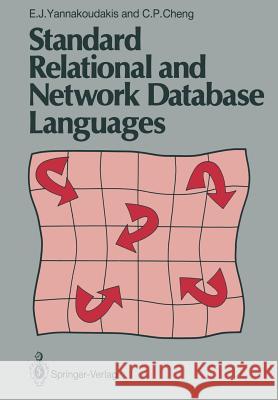
E. J. Yannakoudakis; C. P. Cheng
Standard Relational and Network Database Languages E. J. Yannakoudakis C. P. Cheng 9781447132899 Springer - książkaWidoczna okładka, to zdjęcie poglądowe, a rzeczywista szata graficzna może różnić się od prezentowanej.

Standard Relational and Network Database Languages

ISBN-13: 9781447132899 / Angielski / Miękka / 2012 / 148 str.

E. J. Yannakoudakis; C. P. Cheng
cena 201,72
(netto: 192,11 VAT:  5%)

Najniższa cena z 30 dni: 192,74
Termin realizacji zamówienia:
ok. 16-18 dni roboczych.

Darmowa dostawa!

For any type of software to become standard, whether a third genera- tion language or an integrated project support environment (IPSE), it must undergo a series of modifications and updates which are a direct result of theoretical and empirical knowledge gained in the process. The database approach to the design of general purpose infonn- ation systems has undergone a series of revisions during the last twenty years which have established it as a winner in many different spheres of infonnation processing, including expert systems and real- time control. It is now widely recognised by academics and practitioners alike, that the use of a database management system (DBMS) as the under- lying software tool for the development of infonnation/knowledge based systems can lead to environments which are: (a) flexible, (b) efficient, (c) user-friendly, (d) free from duplication, and (e) fully controllable. The concept of a DBMS is now mature and has produced the software necessary to design the actual database holding the data. The database languages proposed recently by the International Organisa- tion for Standardisation (ISO) are thorough enough for the design of the necessary software compilers (i.e programs which translate the high level commands into machine language for fast execution by the computer hardware). The ISO languages adopt two basic models of data and therefore two different sets of commands: (a) the relational, implemented via the relational database language (RDL), and (b) the network, imple- mented via the network database language (NDL).


Kategorie:
Informatyka, Bazy danych
Kategorie BISAC:
Computers > Database Administration & Management
Gardening > General
Computers > System Administration - Storage & Retrieval
Wydawca:
Springer
Język:
Angielski
ISBN-13:
9781447132899
Rok wydania:
2012
Wydanie:
Softcover Repri
Ilość stron:
148
Waga:
0.29 kg
Wymiary:
24.4 x 17.0
Oprawa:
Miękka
Wolumenów:
01

I: The Database Environment.- 1 Database Management Systems.- 1.1 Introduction.- 1.2 The Three Architectural Levels.- 1.2.1 Logical Schema.- 1.2.2 Logical Subschema.- 1.2.3 Storage Schema.- 1.3 Database Models.- 1.3.1 Hierarchic Model.- 1.3.2 Network Model.- 1.3.3 Relational Model.- 1.4 Database Languages.- 1.4.1 Data Definition Language (DDL).- 1.4.2 Data Manipulation Language (DML).- 1.4.3 Data Storage Definition Language (DSDL).- 1.4.4 Query Language (QL).- 1.4.5 Query By Example (QBE).- 1.4.6 Data Dictionary.- 1.5 Standard Database Languages.- 1.5.1 Notations.- 1.5.2 Elementary Terms.- II: Structured Query Language (SQL).- 2 Relational Database Language (RDL).- 2.1 Introduction.- 2.2 Elementary Terms in SQL.- 3 Schema Definition in SQL.- 3.1 Schema Definition Language.- 3.2 Table Definition.- 3.3 View Definition.- 3.3.1 Query Specification.- 3.3.2 With Check Option.- 3.3.3 Updatability of Viewed Tables.- 3.4 Privilege Definition.- 4 Module Language in SQL.- 4.1 Tasks of the Module Language.- 4.2 Module Definition and Procedure Definition.- 4.3 Using an Embedded SQL Module.- 4.4 Error Handling in Embedded SQL.- 5 Data Manipulation Language in SQL.- 5.1 Tasks of the Data Manipulation Language.- 5.2 DML Statements and their Classification.- 5.2.1 Handling of Transactions.- 5.2.2 Location and Manipulation of Rows.- 5.2.3 Manipulation of Cursors.- III: Network Database Language (NDL).- 6 Network Database Language (NDL).- 6.1 Introduction.- 6.2 General Structure of NDL.- 6.2.1 Schema Definition Language.- 6.2.2 Subschema Definition Language.- 6.2.3 Module Language and Data Manipulation Language.- 6.3 Remarks on NDL Terminology.- 6.4 Elementary Terms in NDL.- 7 Schema Definition in NDL.- 7.1 Schema Definition Language.- 7.2 Record Type Definition.- 7.2.1 Record Uniqueness Clause.- 7.2.2 Component Type.- 7.2.3 Record Check Clause.- 7.3 Set Type Definition.- 7.3.1 Owner Clause.- 7.3.2 Order Clause.- 7.3.3 Member Clause.- 7.4 Example Schema of Suppliers-and-Parts.- 8 Subschema Definition in NDL.- 8.1 Subschema Definition Language.- 9 Module Language in NDL.- 9.1 Tasks of the Module Language.- 9.2 Module Definition and Procedure Definition.- 9.3 Using an Embedded NDL Module.- 10 Data Manipulation in NDL.- 10.1 Tasks of the Data Manipulation Language.- 10.2 Sessions and Session State.- 10.2.1 Cursors.- 10.2.2 Temporary Sets.- 10.2.3 Ready List.- 10.3 DML Statements and their Classification.- 10.3.1 Handling of Transactions.- 10.3.2 Readying of Record Types for Processing.- 10.3.3 Location of Record Occurrences.- 10.3.4 Manipulation of Record Occurrences.- 10.3.5 Connection Between Records and Set Occurrences.- 10.3.6 Nullifying Cursors.- 10.3.7 Test for Database Key, Set and Set Membership.- Appendixes.- Appendix A. Values, Search Conditions and Queries in SQL.- Appendix B. Conditions in NDL.- Appendix C. Auxiliary NDL Operations.- Appendix D. An Example Database of Suppliers-and-Parts.- Appendix E. SQL Keywords.- Appendix F. NDL Keywords.- References.


Udostępnij

Facebook - konto krainaksiazek.pl


Opinie o Krainaksiazek.pl na Opineo.pl

Partner Mybenefit

Krainaksiazek.pl w programie rzetelna firma Krainaksiaze.pl - płatności przez paypal

Czytaj nas na:

Facebook - krainaksiazek.pl
  • książki na zamówienie
  • granty
  • książka na prezent
  • kontakt
  • pomoc
  • opinie
  • regulamin
  • polityka prywatności

Zobacz:

  • Księgarnia czeska

  • Wydawnictwo Książkowe Klimaty

1997-2026 DolnySlask.com Agencja Internetowa

© 1997-2022 krainaksiazek.pl
     
KONTAKT | REGULAMIN | POLITYKA PRYWATNOŚCI | USTAWIENIA PRYWATNOŚCI
Zobacz: Księgarnia Czeska | Wydawnictwo Książkowe Klimaty | Mapa strony | Lista autorów
KrainaKsiazek.PL - Księgarnia Internetowa

Polityka prywatnosci - link
Krainaksiazek.pl - płatnośc Przelewy24
Przechowalnia Przechowalnia





