• Wyszukiwanie zaawansowane
  • Kategorie
  • Kategorie BISAC
  • Książki na zamówienie
  • Promocje
  • Granty
  • Książka na prezent
  • Opinie
  • Pomoc
  • Załóż konto
  • Zaloguj się

Speech and Interaction of Preadolescents with Autism Spectrum Disorder: Focus on Prosody, Disfluencies and Comprehension Problems » książka


zaloguj się | załóż konto
Logo Krainaksiazek.pl

koszyk

konto

szukaj
topmenu
Księgarnia internetowa
Szukaj
Książki na zamówienie
Promocje
Granty
Książka na prezent
Moje konto
Pomoc
 
 
Wyszukiwanie zaawansowane
Pusty koszyk
Bezpłatna dostawa dla zamówień powyżej 20 złBezpłatna dostawa dla zamówień powyżej 20 zł

Kategorie główne

• Nauka
 [2950560]
• Literatura piękna
 [1849509]

  więcej...
• Turystyka
 [71097]
• Informatyka
 [151150]
• Komiksy
 [35848]
• Encyklopedie
 [23178]
• Dziecięca
 [617388]
• Hobby
 [139064]
• AudioBooki
 [1657]
• Literatura faktu
 [228597]
• Muzyka CD
 [383]
• Słowniki
 [2855]
• Inne
 [445295]
• Kalendarze
 [1464]
• Podręczniki
 [167547]
• Poradniki
 [480102]
• Religia
 [510749]
• Czasopisma
 [516]
• Sport
 [61293]
• Sztuka
 [243352]
• CD, DVD, Video
 [3414]
• Technologie
 [219456]
• Zdrowie
 [101002]
• Książkowe Klimaty
 [124]
• Zabawki
 [2311]
• Puzzle, gry
 [3459]
• Literatura w języku ukraińskim
 [254]
• Art. papiernicze i szkolne
 [8079]
Kategorie szczegółowe BISAC

Speech and Interaction of Preadolescents with Autism Spectrum Disorder: Focus on Prosody, Disfluencies and Comprehension Problems

ISBN-13: 9789811981166 / Angielski / Twarda / 2023 / 159 str.
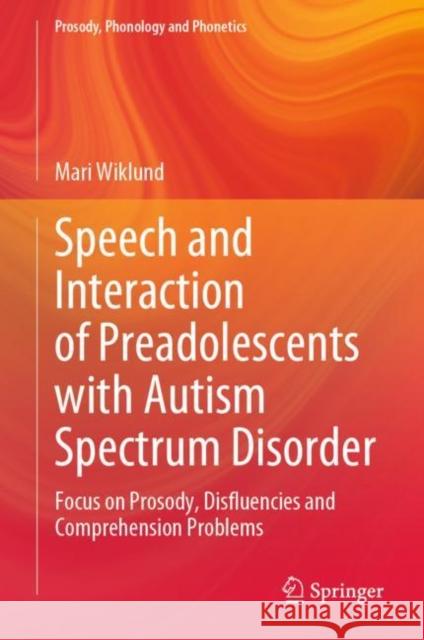
Mari Wiklund
Speech and Interaction of Preadolescents with Autism Spectrum Disorder: Focus on Prosody, Disfluencies and Comprehension Problems Mari Wiklund 9789811981166 Springer - książkaWidoczna okładka, to zdjęcie poglądowe, a rzeczywista szata graficzna może różnić się od prezentowanej.

Speech and Interaction of Preadolescents with Autism Spectrum Disorder: Focus on Prosody, Disfluencies and Comprehension Problems

ISBN-13: 9789811981166 / Angielski / Twarda / 2023 / 159 str.

Mari Wiklund
cena 441,75
(netto: 420,71 VAT:  5%)

Najniższa cena z 30 dni: 424,07
Termin realizacji zamówienia:
ok. 22 dni roboczych
Dostawa w 2026 r.

Darmowa dostawa!
inne wydania

The book focuses on the interaction of persons with autism spectrum disorder (ASD). ASD is a neurobiological developmental disorder, characterized by problems with social interaction, over-sensitivity to sensory stimuli and restricted interest (APA 2013). Problems with social interaction being a core feature of ASD, there is a scientific and a societal need for a book focusing on this topic. The book approaches the interaction of persons with ASD from a new angle. Firstly, where most studies on ASD are based on data coming from experimental settings, this book is based on naturally occurring data coming from group therapy sessions where 11–13-year-old Finnish- and French-speaking boys with ASD talk with each other and with their therapists. Secondly, the book treats a variety of themes that have so far been studied much less than, for example, the pragmatic problems of persons with ASD. These themes include the following aspects: speech prosody (characteristic features, perception of atypicality by neurotypical listeners), disfluencies of speech (comparison with neurotypical controls), comprehension problems (role of prosody, role of disfluencies, other causes), gaze behavior (eye contact avoidance strategies, using gaze as a source of feedback) as well as therapists’ response strategies and teaching orientations. The book is intended for researchers working in the field of autism, professionals working with persons with ASD as well as for families of persons with ASD.


The book focuses on the interaction of persons with autism spectrum disorder (ASD). ASD is a neurobiological developmental disorder, characterized by problems with social interaction, over-sensitivity to sensory stimuli and restricted interest (APA 2013). Problems with social interaction being a core feature of ASD, there is a scientific and a societal need for a book focusing on this topic. The book approaches the interaction of persons with ASD from a new angle. Firstly, where most studies on ASD are based on data coming from experimental settings, this book is based on naturally occurring data coming from group therapy sessions where 11–13-year-old Finnish- and French-speaking boys with ASD talk with each other and with their therapists. Secondly, the book treats a variety of themes that have so far been studied much less than, for example, the pragmatic problems of persons with ASD. These themes include the following aspects: speech prosody (characteristic features, perception of atypicality by neurotypical listeners), disfluencies of speech (comparison with neurotypical controls), comprehension problems (role of prosody, role of disfluencies, other causes), gaze behavior (eye contact avoidance strategies, using gaze as a source of feedback) as well as therapists’ response strategies and teaching orientations. The book is intended for researchers working in the field of autism, professionals working with persons with ASD as well as for families of persons with ASD.

Kategorie:
Nauka, Językoznawstwo
Kategorie BISAC:
Language Arts & Disciplines > Linguistics - Phonetics & Phonology
Medical > Zaburzenia mowy
Wydawca:
Springer
Seria wydawnicza:
Prosody, Phonology and Phonetics
Język:
Angielski
ISBN-13:
9789811981166
Rok wydania:
2023
Dostępne języki:
Numer serii:
000771850
Ilość stron:
159
Oprawa:
Twarda
Dodatkowe informacje:
Wydanie ilustrowane

Preface

1. Introduction
1.1. Background
1.2. Topics treated in the book
1.3. Data
1.4. Methods
2. Prosody
2.1. Overview of previous research on the prosody of persons with ASD
2.2. Prosodic characteristics of preadolescent boys with ASD
2.3. Perception of atypicality by neurotypical listeners
2.4. The role of prosodic features in the creation of comprehension problems
2.5. Conclusion
3. Disfluencies
3.1. Overview of previous research on disfluencies in the speech of persons with 
        ASD
3.2. Disfluencies in the speech of preadolescent boys with and without ASD
3.3. The role of disfluencies in the creation of comprehension problems
3.4. Conclusion
4. Comprehension problems
4.1. Overview of previous research on conversational repairs in the interaction of 
        persons with ASD
4.2. Causes of comprehension problems in group therapy sessions involving 
        preadolescent boys with ASD
4.2.1. Overly literal interpretation of speech
4.2.2. Topical discontinuities
4.2.3. Non-verbal features associated with trouble-source turns: the role of eye contact
4.2.4. Other causes of comprehension problems
4.3. Conclusion
5. Gaze behavior
5.1. Overview of previous studies on the role of gaze in interaction from a conversation analytic point of view 
5.2. Overview of previous studies on gaze-related features in the interaction of persons with ASD.
5.3. Three main patterns used for avoiding eye contact in group therapy sessions involving preadolescents boys with ASD
5.3.1. Fixing one’s gaze straight ahead
5.3.2. Letting one’s gaze wander around
5.3.3. Looking at one’s own hands when speaking
5.4. General remarks on the gaze behaviour of preadolescents boys with ASD
5.5. Conclusion

6. Therapists’ response strategies and teaching orientations 
6.1. Therapists’ response strategies in group therapy sessions involving preadolescent boys with ASD
6.1.1. Introduction
6.1.2. Five most common response strategies
6.1.2.1. Approval 
6.1.2.2. Comment on the contents of a turn / turns 
6.1.2.3. Question addressed to the whole group 
6.1.2.4. Question concerning the contents of a turn / turns 
6.1.2.5. Rephrasing the contents of a turn / turns 
6.2. Therapists’ teaching orientations in group therapy sessions involving preadolescent boys with ASD
6.2.1. Introduction
6.2.2. Implicit teaching orientation
6.2.3. Explicit teaching orientation
6.2.4. Prosodic problems: beyond teaching orientations?
6.3. Conclusion
7. Conclusion
Bibliography 
List of transcription conventions
Index of key words 

Mari Wiklund (Ph.D.) is University Lecturer at the Department of Languages of the University of Helsinki. She is currently (2020–2023) working as University Researcher funded by the Maija Lehtonen Fund at the University of Helsinki. She has also worked as University Researcher at the Helsinki Collegium for Advanced Studies (2015–2019). Her current research interests relate mainly to speech prosody, interaction of persons with autism spectrum disorder, disfluencies of speech, comprehension problems, asymmetric interaction, and foreign accent. She has worked on different types of data, including cases of spontaneous interaction, texts read aloud, as well as various interpretive contexts (audio description, speech-to-text, and telephone interpreting). Her methodological background is mainly in conversation analysis and prosodic analysis.

The book focuses on the interaction of persons with autism spectrum disorder (ASD). ASD is a neurobiological developmental disorder, characterized by problems with social interaction, over-sensitivity to sensory stimuli and restricted interest (APA 2013). Problems with social interaction being a core feature of ASD, there is a scientific and a societal need for a book focusing on this topic. The book approaches the interaction of persons with ASD from a new angle. Firstly, where most studies on ASD are based on data coming from experimental settings, this book is based on naturally occurring data coming from group therapy sessions where 11–13-year-old Finnish- and French-speaking boys with ASD talk with each other and with their therapists. Secondly, the book treats a variety of themes that have so far been studied much less than, for example, the pragmatic problems of persons with ASD. These themes include the following aspects: speech prosody (characteristic features, perception of atypicality by neurotypical listeners), disfluencies of speech (comparison with neurotypical controls), comprehension problems (role of prosody, role of disfluencies, other causes), gaze behavior (eye contact avoidance strategies, using gaze as a source of feedback) as well as therapists’ response strategies and teaching orientations. The book is intended for researchers working in the field of autism, professionals working with persons with ASD as well as for families of persons with ASD.




Udostępnij

Facebook - konto krainaksiazek.pl


Opinie o Krainaksiazek.pl na Opineo.pl

Partner Mybenefit

Krainaksiazek.pl w programie rzetelna firma Krainaksiaze.pl - płatności przez paypal

Czytaj nas na:

Facebook - krainaksiazek.pl
  • książki na zamówienie
  • granty
  • książka na prezent
  • kontakt
  • pomoc
  • opinie
  • regulamin
  • polityka prywatności

Zobacz:

  • Księgarnia czeska

  • Wydawnictwo Książkowe Klimaty

1997-2025 DolnySlask.com Agencja Internetowa

© 1997-2022 krainaksiazek.pl
     
KONTAKT | REGULAMIN | POLITYKA PRYWATNOŚCI | USTAWIENIA PRYWATNOŚCI
Zobacz: Księgarnia Czeska | Wydawnictwo Książkowe Klimaty | Mapa strony | Lista autorów
KrainaKsiazek.PL - Księgarnia Internetowa

Polityka prywatnosci - link
Krainaksiazek.pl - płatnośc Przelewy24
Przechowalnia Przechowalnia




