Speculative Theology and Common-Sense Religion: Mercersburg and the Conservative Roots of American Religion » książka





Speculative Theology and Common-Sense Religion: Mercersburg and the Conservative Roots of American Religion
ISBN-13: 9781556354762 / Angielski / Miękka / 2008 / 132 str.
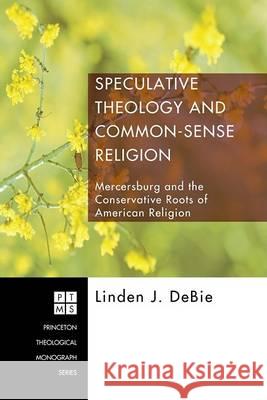
Speculative Theology and Common-Sense Religion: Mercersburg and the Conservative Roots of American Religion
ISBN-13: 9781556354762 / Angielski / Miękka / 2008 / 132 str.
(netto: 90,43 VAT: 5%)
Najniższa cena z 30 dni: 94,17
ok. 16-18 dni roboczych
Bez gwarancji dostawy przed świętami
Darmowa dostawa!
Description: Evangelicals in nineteenth-century America had a headquarters at Princeton. Charles Hodge never expected that a former student of Princeton and his own replacement during his hiatus in Europe, John W. Nevin, would lead the German Reformed Church's seminary in a new, and in his mind, destructive direction. The two, along with their institutions, would clash over philosophy and religion, producing some of the best historical theology ever written in the United States. The clash was broad, influencing everything from hermeneutics to liturgy, but at its core was the philosophical antagonism of Princeton's Scottish common-sense perspective and the German speculative method employed by Mercersburg. Both Princeton and Mercersburg were the cautious and critical beneficiaries of a century of European Protestant science, philosophy, and theology, and they were intent on adapting that legacy to the American religious context. For Princeton, much of the new European thought was suspect. In contrast, Mercersburg embraced a great deal of what the Continent offered. Princeton followed a conservative path, never straying far from the foundation established by Locke. They enshrined an evangelical perspective that would become a bedrock for conservative Protestants to this day. In contrast, Nevin and the Mercersburg school were swayed by the advances in theological science made by Germany's mediating school of theology. They embraced a churchy idealism called ""evangelical catholicism"" and emphatically warned that the direction of Princeton and with it Protestant American religion and politics, would grow increasingly subjective, thus divided and absorbed with individual salvation. They cautioned against the spirit of the growing evangelical bias toward personal religion as it led to sectarian disunity and they warned evangelicals not to confuse numerical success with spiritual success. In contrast, Princeton was alarmed at the direction of European philosophy and theology and they resisted Mercersburg with what today continues to be the fundamental teachings of evangelical theology. Princeton's appeal was in its common-sense philosophical moorings, which drew rapidly industrializing America into its arms. Mercersburg countered with a philosophically defended, churchly idealism based on a speculative philosophy that effectively critiqued what many to this day find divisive and dangerous about America's current Religious Right. Endorsements: ""German idealism, as set forth by such as Hegel, is reflected in a speculative theology, expressed as a ""mediating"" theology. In this, a more reconciliatory view of the relationship between God and His Creation is proposed in opposition to the traditional orthodox view that clearly separates the two. In America, traditional theologians, more influenced by British Empiricism, viewed such ""mediation"" as a direct violation of simple ""common sense."" This traditional ""common sense"" religion, reaching back to John Witherspoon, being more evangelical than speculative in nature, has both then and now, dominated theological studies. However, just prior to the Civil War, Princeton University, as the academic center of this tradition, found its hegemony challenged by a small group of speculative ""mediation"" theologians from the Mercersberg Academy, a small school in central Pennsylvania. It was not long before Princeton took critical notice of their innovative teachings, and something on the order of a minor heresy trial ensued, with all of its irritated arguments and condemnations. We are indebted to Linden DeBie who has admirably presented, in a clear, concise, and scholarly manner, not only the philosophical nature and origin of this neglected debate, but has allowed us to appreciate its enduring theological significance."" --Lawrence S. Stepelevich, PhD Professor Emeritus, Philosophy, Villanova University President (1994-1996), The Hegel Society of America Editor (1977-1996), The Owl of
Description:Evangelicals in nineteenth-century America had a headquarters at Princeton. Charles Hodge never expected that a former student of Princeton and his own replacement during his hiatus in Europe, John W. Nevin, would lead the German Reformed Churchs seminary in a new, and in his mind, destructive direction. The two, along with their institutions, would clash over philosophy and religion, producing some of the best historical theology ever written in the United States. The clash was broad, influencing everything from hermeneutics to liturgy, but at its core was the philosophical antagonism of Princetons Scottish common-sense perspective and the German speculative method employed by Mercersburg. Both Princeton and Mercersburg were the cautious and critical beneficiaries of a century of European Protestant science, philosophy, and theology, and they were intent on adapting that legacy to the American religious context. For Princeton, much of the new European thought was suspect. In contrast, Mercersburg embraced a great deal of what the Continent offered. Princeton followed a conservative path, never straying far from the foundation established by Locke. They enshrined an evangelical perspective that would become a bedrock for conservative Protestants to this day. In contrast, Nevin and the Mercersburg school were swayed by the advances in theological science made by Germanys mediating school of theology. They embraced a churchy idealism called ""evangelical catholicism"" and emphatically warned that the direction of Princeton and with it Protestant American religion and politics, would grow increasingly subjective, thus divided and absorbed with individual salvation. They cautioned against the spirit of the growing evangelical bias toward personal religion as it led to sectarian disunity and they warned evangelicals not to confuse numerical success with spiritual success. In contrast, Princeton was alarmed at the direction of European philosophy and theology and they resisted Mercersburg with what today continues to be the fundamental teachings of evangelical theology. Princetons appeal was in its common-sense philosophical moorings, which drew rapidly industrializing America into its arms. Mercersburg countered with a philosophically defended, churchly idealism based on a speculative philosophy that effectively critiqued what many to this day find divisive and dangerous about Americas current Religious Right.Endorsements:""German idealism, as set forth by such as Hegel, is reflected in a speculative theology, expressed as a ""mediating"" theology. In this, a more reconciliatory view of the relationship between God and His Creation is proposed in opposition to the traditional orthodox view that clearly separates the two. In America, traditional theologians, more influenced by British Empiricism, viewed such ""mediation"" as a direct violation of simple ""common sense."" This traditional ""common sense"" religion, reaching back to John Witherspoon, being more evangelical than speculative in nature, has both then and now, dominated theological studies. However, just prior to the Civil War, Princeton University, as the academic center of this tradition, found its hegemony challenged by a small group of speculative ""mediation"" theologians from the Mercersberg Academy, a small school in central Pennsylvania. It was not long before Princeton took critical notice of their innovative teachings, and something on the order of a minor heresy trial ensued, with all of its irritated arguments and condemnations. We are indebted to Linden DeBie who has admirably presented, in a clear, concise, and scholarly manner, not only the philosophical nature and origin of this neglected debate, but has allowed us to appreciate its enduring theological significance.""--Lawrence S. Stepelevich, PhDProfessor Emeritus, Philosophy, Villanova UniversityPresident (1994-1996), The Hegel Society of AmericaEditor (1977-1996), The Owl of




Czytaj nas na:
KrainaKsiazek.PL - Księgarnia Internetowa


