• Wyszukiwanie zaawansowane
  • Kategorie
  • Kategorie BISAC
  • Książki na zamówienie
  • Promocje
  • Granty
  • Książka na prezent
  • Opinie
  • Pomoc
  • Załóż konto
  • Zaloguj się

Special Types of Life Cycle Assessment » książka


zaloguj się | załóż konto
Logo Krainaksiazek.pl

koszyk

konto

szukaj
topmenu
Księgarnia internetowa
Szukaj
Książki na zamówienie
Promocje
Granty
Książka na prezent
Moje konto
Pomoc
 
 
Wyszukiwanie zaawansowane
Pusty koszyk
Bezpłatna dostawa dla zamówień powyżej 20 złBezpłatna dostawa dla zamówień powyżej 20 zł

Kategorie główne

• Nauka
 [2946350]
• Literatura piękna
 [1816154]

  więcej...
• Turystyka
 [70666]
• Informatyka
 [151172]
• Komiksy
 [35576]
• Encyklopedie
 [23172]
• Dziecięca
 [611458]
• Hobby
 [135995]
• AudioBooki
 [1726]
• Literatura faktu
 [225763]
• Muzyka CD
 [378]
• Słowniki
 [2917]
• Inne
 [444280]
• Kalendarze
 [1179]
• Podręczniki
 [166508]
• Poradniki
 [469467]
• Religia
 [507199]
• Czasopisma
 [496]
• Sport
 [61352]
• Sztuka
 [242330]
• CD, DVD, Video
 [3348]
• Technologie
 [219391]
• Zdrowie
 [98638]
• Książkowe Klimaty
 [124]
• Zabawki
 [2382]
• Puzzle, gry
 [3525]
• Literatura w języku ukraińskim
 [259]
• Art. papiernicze i szkolne
 [7107]
Kategorie szczegółowe BISAC

Special Types of Life Cycle Assessment

ISBN-13: 9789401776080 / Angielski / Twarda / 2016 / 399 str.
Matthias Finkbeiner
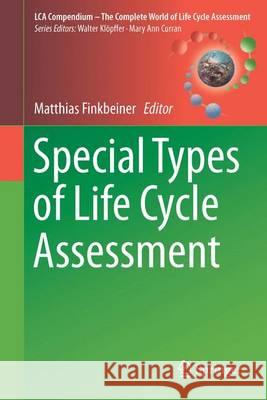
Special Types of Life Cycle Assessment Matthias Finkbeiner 9789401776080 Springer - książkaWidoczna okładka, to zdjęcie poglądowe, a rzeczywista szata graficzna może różnić się od prezentowanej.

Special Types of Life Cycle Assessment

ISBN-13: 9789401776080 / Angielski / Twarda / 2016 / 399 str.

Matthias Finkbeiner
cena 805,10
(netto: 766,76 VAT:  5%)

Najniższa cena z 30 dni: 771,08
Termin realizacji zamówienia:
ok. 16-18 dni roboczych.

Darmowa dostawa!

This book presents specialised methods and tools built on classical LCA. In the first book-length overview, their importance for the further growth and application of LCA is demonstrated for some of the most prominent species of this emerging trend: Carbon footprinting; Water footprinting; Eco-efficiency assessment; Resource efficiency assessment; Input-output and hybrid LCA; Material flow analysis; Organizational LCA.
Carbon footprinting was a huge driver for the market expansion of simplified LCA. The discussions led to an ample proliferation of different guidelines and standards including ISO/TS 14067 on Carbon Footprint of Product. Atsushi Inaba (Kogakuin University, Tokyo, Japan) and his eight co-authors provide an up-to-date status of Carbon Footprint of Products. The increasing relevance of Water Footprinting and the diverse methods were the drivers to develop the ISO 14046 as international water footprint standard. Markus Berger (Technische Universitat Berlin, Germany), Stephan Pfister (ETH Zurich, Switzerland) and Masaharu Motoshita (Agency of Industrial Science and Technology, Tsukuba, Japan) present a status of water resources and demands from a global and regional perspective. A core part is the discussion and comparison of the different water footprint methods, databases and tools. Peter Saling from BASF SE in Ludwigshafen, Germany, broadens the perspective towards Eco-efficiency Assessment. He describes the BASF-specific type of eco-efficiency analysis plus adaptions like the so-called SEEBALANCE and AgBalance applications. Laura Schneider, Vanessa Bach and Matthias Finkbeiner (Technische Universitat Berlin, Germany) address multi-dimensional LCA perspectives in the form of Resource Efficiency Assessment. Research needs and proposed methodological developments for abiotic resource efficiency assessment, and especially for the less developed area of biotic resources, are discussed.The fundamentals ofInput-output and Hybrid LCA are covered by Shinichiro Nakamura (Waseda University, Tokyo, Japan) and Keisuke Nansai (National Institute for Environmental Studies, Tsukuba, Japan). The concepts of environmentally extended IO, different types of hybrid IO-LCA and the waste model are introduced. David Laner and Helmut Rechberger (Vienna University of Technology, Austria) present the basic terms and procedures of Material Flow Analysismethodology. The combination of MFA and LCA is discussed as a promising approach for environmental decision support. Julia Martinez-Blanco (Technische Universitat Berlin, Germany; now at Inedit, Barcelona, Spain), Atsushi Inaba (Kogakuin University, Tokyo, Japan) and Matthias Finkbeiner (Technische Universitat Berlin, Germany) introduce a recent development which could develop a new trend, namely the LCA of Organizations.


Kategorie:
Nauka
Kategorie BISAC:
Science > Environmental Science (see also Chemistry - Environmental)
Technology & Engineering > Environmental - Pollution Control
Nature > Natural Resources
Wydawca:
Springer
Seria wydawnicza:
Lca Compendium the Complete World of Life Cycle Assessment
Język:
Angielski
ISBN-13:
9789401776080
Rok wydania:
2016
Wydanie:
2016
Numer serii:
000478158
Ilość stron:
399
Waga:
0.92 kg
Wymiary:
24.18 x 15.9 x 2.74
Oprawa:
Twarda
Wolumenów:
01

"The authors represent the historic development of LCA as well as the present application of the method, new trends, and perspectives. ... It has very good historic references and relevant current citations. The color graphics are of excellent quality. It is a book for those who wish to carry out LCA, either as a firm or as a government agency, and look for road maps, examples, and benchmarks." (David Hunkeler, The International Journal of Life Cycle Assessment, Vol. 22, 2017)

Introducing “Special Types of Life Cycle Assessment”.- Carbon Footprint of Products.- Water Footprinting in Life Cycle Assessment – How to Count the Drops and Assess the Impacts?.- Eco-Efficiency Assessment.- LCA Perspectives for Resource Efficiency Assessment .- Input-Output and Hybrid LCA.-Material Flow Analysis .- Life Cycle Assessment of Organizations.

This book presents specialised methods and tools built on classical LCA. In the first book-length overview, their importance for the further growth and application of LCA is demonstrated for some of the most prominent species of this emerging trend: Carbon footprinting; Water footprinting; Eco-efficiency assessment; Resource efficiency assessment; Input-output and hybrid LCA; Material flow analysis; Organizational LCA.

Carbon footprinting was a huge driver for the market expansion of simplified LCA. The discussions led to an ample proliferation of different guidelines and standards including ISO/TS 14067 on Carbon Footprint of Product. Atsushi Inaba (Kogakuin University, Tokyo, Japan) and his eight co-authors provide an up-to-date status of Carbon Footprint of Products. The increasing relevance of Water Footprinting and the diverse methods were the drivers to develop the ISO 14046 as international water footprint standard. Markus Berger (Technische Universität Berlin, Germany), Stephan Pfister (ETH Zurich, Switzerland) and Masaharu Motoshita (Agency of Industrial Science and Technology, Tsukuba, Japan) present a status of water resources and demands from a global and regional perspective. A core part is the discussion and comparison of the different water footprint methods, databases and tools. Peter Saling from BASF SE in Ludwigshafen, Germany, broadens the perspective towards Eco-efficiency Assessment. He describes the BASF-specific type of eco-efficiency analysis plus adaptions like the so-called SEEBALANCE and AgBalance applications. Laura Schneider, Vanessa Bach and Matthias Finkbeiner (Technische Universität Berlin, Germany) address multi-dimensional LCA perspectives in the form of Resource Efficiency Assessment. Research needs and proposed methodological developments for abiotic resource efficiency assessment, and especially for the less developed area of biotic resources, are discussed.The fundamentals of Input-output and Hybrid LCA are covered by Shinichiro Nakamura (Waseda University, Tokyo, Japan) and Keisuke Nansai (National Institute for Environmental Studies, Tsukuba, Japan). The concepts of environmentally extended IO, different types of hybrid IO-LCA and the waste model are introduced. David Laner and Helmut Rechberger (Vienna University of Technology, Austria) present the basic terms and procedures of Material Flow Analysis methodology. The combination of MFA and LCA is discussed as a promising approach for environmental decision support. Julia Martínez-Blanco (Technische Universität Berlin, Germany; now at Inèdit, Barcelona, Spain), Atsushi Inaba (Kogakuin University, Tokyo, Japan) and Matthias Finkbeiner (Technische Universität Berlin, Germany) introduce a recent development which could develop a new trend, namely the LCA of Organizations.




Udostępnij

Facebook - konto krainaksiazek.pl


Opinie o Krainaksiazek.pl na Opineo.pl

Partner Mybenefit

Krainaksiazek.pl w programie rzetelna firma Krainaksiaze.pl - płatności przez paypal

Czytaj nas na:

Facebook - krainaksiazek.pl
  • książki na zamówienie
  • granty
  • książka na prezent
  • kontakt
  • pomoc
  • opinie
  • regulamin
  • polityka prywatności

Zobacz:

  • Księgarnia czeska

  • Wydawnictwo Książkowe Klimaty

1997-2026 DolnySlask.com Agencja Internetowa

© 1997-2022 krainaksiazek.pl
     
KONTAKT | REGULAMIN | POLITYKA PRYWATNOŚCI | USTAWIENIA PRYWATNOŚCI
Zobacz: Księgarnia Czeska | Wydawnictwo Książkowe Klimaty | Mapa strony | Lista autorów
KrainaKsiazek.PL - Księgarnia Internetowa

Polityka prywatnosci - link
Krainaksiazek.pl - płatnośc Przelewy24
Przechowalnia Przechowalnia




