• Wyszukiwanie zaawansowane
  • Kategorie
  • Kategorie BISAC
  • Książki na zamówienie
  • Promocje
  • Granty
  • Książka na prezent
  • Opinie
  • Pomoc
  • Załóż konto
  • Zaloguj się

Spatial Ecology and Conservation Modeling: Applications with R » książka


zaloguj się | załóż konto
Logo Krainaksiazek.pl

koszyk

konto

szukaj
topmenu
Księgarnia internetowa
Szukaj
Książki na zamówienie
Promocje
Granty
Książka na prezent
Moje konto
Pomoc
 
 
Wyszukiwanie zaawansowane
Pusty koszyk
Bezpłatna dostawa dla zamówień powyżej 20 złBezpłatna dostawa dla zamówień powyżej 20 zł

Kategorie główne

• Nauka
 [2949965]
• Literatura piękna
 [1857847]

  więcej...
• Turystyka
 [70818]
• Informatyka
 [151303]
• Komiksy
 [35733]
• Encyklopedie
 [23180]
• Dziecięca
 [617748]
• Hobby
 [139972]
• AudioBooki
 [1650]
• Literatura faktu
 [228361]
• Muzyka CD
 [398]
• Słowniki
 [2862]
• Inne
 [444732]
• Kalendarze
 [1620]
• Podręczniki
 [167233]
• Poradniki
 [482388]
• Religia
 [509867]
• Czasopisma
 [533]
• Sport
 [61361]
• Sztuka
 [243125]
• CD, DVD, Video
 [3451]
• Technologie
 [219309]
• Zdrowie
 [101347]
• Książkowe Klimaty
 [123]
• Zabawki
 [2362]
• Puzzle, gry
 [3791]
• Literatura w języku ukraińskim
 [253]
• Art. papiernicze i szkolne
 [7933]
Kategorie szczegółowe BISAC

Spatial Ecology and Conservation Modeling: Applications with R

ISBN-13: 9783030019884 / Angielski / Twarda / 2019 / 523 str.
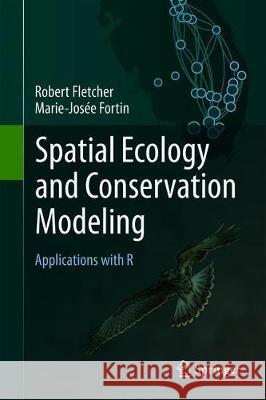
Robert Fletcher; Marie-Josee Fortin
Spatial Ecology and Conservation Modeling: Applications with R Fletcher, Robert 9783030019884 Springer - książkaWidoczna okładka, to zdjęcie poglądowe, a rzeczywista szata graficzna może różnić się od prezentowanej.

Spatial Ecology and Conservation Modeling: Applications with R

ISBN-13: 9783030019884 / Angielski / Twarda / 2019 / 523 str.

Robert Fletcher; Marie-Josee Fortin
cena 605,23
(netto: 576,41 VAT:  5%)

Najniższa cena z 30 dni: 578,30
Termin realizacji zamówienia:
ok. 22 dni roboczych
Bez gwarancji dostawy przed świętami

Darmowa dostawa!
Kategorie:
Nauka, Biologia i przyroda
Kategorie BISAC:
Science > Life Sciences - Ecology
Medical > Biostatistics
Nature > Environmental Conservation & Protection - General
Wydawca:
Springer
Język:
Angielski
ISBN-13:
9783030019884
Rok wydania:
2019
Wydanie:
2018
Ilość stron:
523
Oprawa:
Twarda
Wolumenów:
01


Chapter 1: Introduction to spatial ecology and its relevance for conservation
1.1 What is spatial ecology?
1.2 The importance of space in ecology
1.3 The importance of space in conservation
1.4 The growth of frameworks for spatial modeling
1.5 The path ahead
References

Part I: Quantifying spatial pattern in ecological data

Chapter 2: Scale
2.1 Introduction
2.2 Key concepts and approaches
2.2.1 Scale defined and clarified
2.2.2 Why is spatial scale important?
2.2.3 Multi-scale and multi-level quantitative problems
2.2.4 Spatial scale and study design
2.3 Examples in R
2.3.1 Packages in R
2.3.2 The data
2.3.3 A simple simulated example
2.3.4 Multi-scale species response to land cover
2.4 Next steps and advanced issues
2.4.1 Identifying characteristic scales beyond species-environment relationships
2.4.2 Sampling and scale
2.5 Conclusions
References

Chapter 3: Land-cover pattern and change
3.1 Introduction
3.2 Key concepts
3.2.1 Land use versus land cover
3.2.2 Conceptual models for land-cover and habitat change
3.2.3 Habitat loss and fragmentation
3.2.4 Quantifying land-cover pattern
3.3 Examples in R
3.3.1 Packages in R
3.3.2 The data
3.3.3 Quantifying land-cover variation at different scales
3.3.4 Simulating land-cover: neutral landscapes
3.4 Next steps and advanced issues
3.4.1 Testing for pattern differences between landscapes
3.4.2 Land-cover quantification via image processing
3.4.3 Categorical versus continuous metrics
3.5 Conclusions
References

Chapter 4: Spatial dispersion and point data
4.1 Introduction
4.2 Key concepts and approaches
4.2.1 Characteristics of point patterns
4.2.2 Summary statistics for point patterns
4.2.3 Common statistical models for point patterns
4.3 Examples in R
4.3.1 Packages in R
4.3.2 The data
4.3.3 Creating point pattern data and visualizing it
4.3.4 Univariate point patterns
4.3.5 Marked point patterns
4.3.6 Inhomogeneous point processes and point process models
4.3.7 Alternative null models
4.3.8 Simulating point processes
4.4 Next steps and advanced issues
4.4.1 Space-time analysis
4.4.2 Replicated point patterns
4.5 Conclusions
References

Chapter 5: Spatial dependence and autocorrelation
5.1 Introduction
5.2 Key concepts and approaches
5.2.1 The causes of spatial dependence
5.2.2 Why spatial dependence matters
5.2.3 Quantifying spatial dependence
5.3 Examples in R
5.3.1 Packages in R
5.3.2 The data
5.2.3 Correlograms
5.3.3 Variograms
5.3.4 Kriging
5.3.5 Simulating spatially autocorrelated data
5.3.6 Multiscale analysis
5.4 Next steps and advanced issues
5.4.1 Local spatial dependence
5.4.2 Multivariate spatial dependence
5.5 Conclusions
References


Chapter 6: Accounting for spatial dependence in ecological data
6.1 Introduction
6.2 Key concepts and approaches
6.2.1 The problem of spatial dependence in ecology and conservation
6.2.2 The generalized linear model and its extensions
6.2.3 General types of spatial models
6.2.4 Common models that account for spatial dependence
6.2.5 Inference versus prediction
6. 3 Examples in R
6.3.1 Packages in R
6.3.2 The data
6.3.3 Models that ignore spatial dependence
6.3.4 Models that account for spatial dependence
6.4 Next steps and advanced issues
6.4.1 General Bayesian models for spatial dependence
6.4.2 Detection errors and spatial dependence
6.5 Conclusions
References


Part II: Ecological responses to spatial pattern and conservation

Chapter 7: Species distributions
7.1 Introduction
7.2 Key Concepts and approaches
7.2.1 The niche concept
7.2.2 Predicting distributions or niches?
7.2.3 Mechanistic versus correlative distribution models
7.2.4 Data for correlative distribution models
7.2.5 Common types of distribution modeling techniques
7.2.6 Combining models: ensembles
7.2.7 Model evaluation
7.3 Examples in R
7.3.1 Packages in R
7.3.2 The data
7.3.3 Prepping the data for modeling
7.3.4 Contrasting models
7.3.5 Interpreting environmental relationships
7.3.6 Model evaluation
7.3.7 Combining models: ensembles
7.4 Next steps and advanced issues
7.4.1 Incorporating dispersal
7.4.2 Integrating multiple data sources
7.4.3 Dynamic models
7.4.4 Multi-species models
7.4.5 Sampling error and distribution models
7.5 Conclusions
References

Chapter 8: Space use and resource selection
8.1 Introduction
8.2 Key concepts and approaches
8.2.1 Distinguishing among the diversity of habitat-related concepts and terms
8.2.2 Habitat selection theory
8.2.3 General types of habitat use and selection data
8.2.4 Home range and space use approaches
8.2.5 Resource selection functions at different scales
8.3 Examples in R
8.3.1 Packages in R
8.3.1 The data
8.3.2 Prepping the data for modeling
8.3.3 Home range analysis
8.3.4 Resource selection functions
8.4 Next steps and advanced issues
8.4.1 Mechanistic models and the identification of hidden states
8.4.2 Biotic interactions
8.4.3 Sampling error and resource selection models
8.5 Conclusions
References

Chapter 9: Connectivity
9.1 Introduction
9.2 Key concepts and approaches
9.2.1 The multiple meanings of connectivity
9.2.2 The connectivity concept
9.2.3 Factors limiting connectivity
9.2.4 Three common perspectives on quantifying connectivity
9.3 Examples in R
9.3.1 Packages in R
9.3.2 The data
9.3.3 Functional connectivity among protected areas for Florida panthers
9.3.4 Patch-based networks and graph theory
9.3.5 Combining connectivity mapping with graph theory
9.4 Next steps and advanced issues
9.4.1 Connectivity in space and time
9.4.2 Individual-based models
9.4.3 Diffusion models
9.4.4 Spatial capture-recapture
9.5 Conclusions
References

Chapter 10: Population dynamics in space
10.1 Introduction
10.2 Key concepts and approaches
10.2.1 Foundational population concepts
10.2.2 Spatial population concepts
10.2.3 Population viability analysis
10.2.4 Common types of spatial population models
10.3 Examples in R
10.3.1 Packages in R
10.3.2 The data
10.3.3 Spatial correlation and synchrony
10.3.4 Metapopulation metrics
10.3.5 Estimating colonization-extinction dynamics
10.3.6 Projecting dynamics
10.3.7 Metapopulation viability and environmental change
10.4 Next steps and advanced issues
10.4.1 Spatial population matrix models
10.4.2 Diffusion and spatial dynamics
10.4.3 Agent-based models
10.4.4 Integrated population models
10.5 Conclusions
References

Chapter 11: Spatially structured communities
11.1 Introduction
11.2 Key concepts and approaches
11.2.1 Spatial community concepts
11.2.2 Common approaches to understanding community-environment relationships
11.2.3 Spatial models for communities
11.3 Examples in R
11.3.1 Packages in R
11.3.2 The data
11.3.3 Modeling communities and extrapolating in space
11.3.4 Spatial dependence in communities
11.3.5 Community models with explicit accounting for space
11.4 Next steps and advanced issues
11.4.1 Decomposition of space-environment effects
11.4.2 Accounting for dependence among species
11.4.3 Spatial networks
11.5 Conclusions
References

Chapter 12: What have we learned? Looking back and pressing forward
12.1 The impact of spatial ecology and conservation
12.2 Looking forward: frontiers for spatial ecology and conservation
12.3 Where to go from here for advanced spatial modeling?
12.4 Beyond R
12.5 Conclusions
References

Appendix: An introduction to R
A.1 Introduction
A.2 R beginnings: before any analysis
A.2.1 R packages
A.2.2 Editors for R
A.2.3 The R prompt, console, and editor
A.2.4 Getting help in R
A.2.5 R classes
A.2.6 Getting data into and out of R
A.2.7 Functions in R
A.3 Data access, management and manipulation in R
A.3.1 Accessing data
A.3.2 Merging, appending, and removing
A.3.3 Data subsetting and summaries
A.3.4 Reformatting data
A.4 Graphics in R
A.5 Spatial data in R
A.5.1 Using spatial classes
A.5.2 Projections and transformations
A.6 Next steps: where to for further R mastery?
References

Robert Fletcher is an associate professor of Landscape and Spatial Ecology at the University of Florida. His research interests include landscape and spatial ecology, conservation biology, animal behavior, population biology, and quantitative modeling.

Marie-Josée Fortin is professor of Spatial Ecology at the University of Toronto, fellow of the Royal Society of Canada, and Web of Science Highly Cited Researcher in Environment/Ecology. Her research interests are at the interface of ecology, conservation, and spatial statistics.


This book provides a foundation for modern applied ecology. Much of current ecology research and conservation addresses problems across landscapes and regions, focusing on spatial patterns and processes. This book is aimed at teaching fundamental concepts and focuses on learning-by-doing through the use of examples with the software R. It is intended to provide an entry-level, easily accessible foundation for students and practitioners interested in spatial ecology and conservation.   


Udostępnij

Facebook - konto krainaksiazek.pl


Opinie o Krainaksiazek.pl na Opineo.pl

Partner Mybenefit

Krainaksiazek.pl w programie rzetelna firma Krainaksiaze.pl - płatności przez paypal

Czytaj nas na:

Facebook - krainaksiazek.pl
  • książki na zamówienie
  • granty
  • książka na prezent
  • kontakt
  • pomoc
  • opinie
  • regulamin
  • polityka prywatności

Zobacz:

  • Księgarnia czeska

  • Wydawnictwo Książkowe Klimaty

1997-2025 DolnySlask.com Agencja Internetowa

© 1997-2022 krainaksiazek.pl
     
KONTAKT | REGULAMIN | POLITYKA PRYWATNOŚCI | USTAWIENIA PRYWATNOŚCI
Zobacz: Księgarnia Czeska | Wydawnictwo Książkowe Klimaty | Mapa strony | Lista autorów
KrainaKsiazek.PL - Księgarnia Internetowa

Polityka prywatnosci - link
Krainaksiazek.pl - płatnośc Przelewy24
Przechowalnia Przechowalnia






