• Wyszukiwanie zaawansowane
  • Kategorie
  • Kategorie BISAC
  • Książki na zamówienie
  • Promocje
  • Granty
  • Książka na prezent
  • Opinie
  • Pomoc
  • Załóż konto
  • Zaloguj się

Spatial Approaches in African Archaeology » książka


zaloguj się | załóż konto
Logo Krainaksiazek.pl

koszyk

konto

szukaj
topmenu
Księgarnia internetowa
Szukaj
Książki na zamówienie
Promocje
Granty
Książka na prezent
Moje konto
Pomoc
 
 
Wyszukiwanie zaawansowane
Pusty koszyk
Bezpłatna dostawa dla zamówień powyżej 20 złBezpłatna dostawa dla zamówień powyżej 20 zł

Kategorie główne

• Nauka
 [2952079]
• Literatura piękna
 [1850969]

  więcej...
• Turystyka
 [71058]
• Informatyka
 [151066]
• Komiksy
 [35579]
• Encyklopedie
 [23181]
• Dziecięca
 [620496]
• Hobby
 [139036]
• AudioBooki
 [1646]
• Literatura faktu
 [228729]
• Muzyka CD
 [379]
• Słowniki
 [2932]
• Inne
 [445708]
• Kalendarze
 [1409]
• Podręczniki
 [164793]
• Poradniki
 [480107]
• Religia
 [510956]
• Czasopisma
 [511]
• Sport
 [61267]
• Sztuka
 [243299]
• CD, DVD, Video
 [3411]
• Technologie
 [219640]
• Zdrowie
 [100984]
• Książkowe Klimaty
 [124]
• Zabawki
 [2281]
• Puzzle, gry
 [3363]
• Literatura w języku ukraińskim
 [258]
• Art. papiernicze i szkolne
 [8020]
Kategorie szczegółowe BISAC

Spatial Approaches in African Archaeology

ISBN-13: 9789811973796 / Angielski / Twarda / 2023 / 177 str.
Cameron Gokee; Carla Klehm
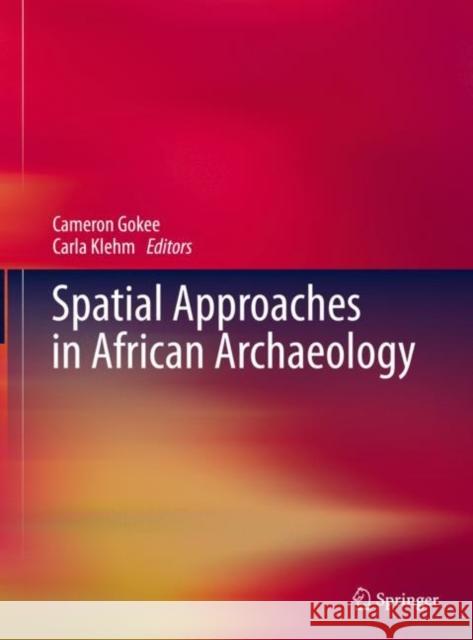
Spatial Approaches in African Archaeology Cameron Gokee Carla Klehm 9789811973796 Springer - książkaWidoczna okładka, to zdjęcie poglądowe, a rzeczywista szata graficzna może różnić się od prezentowanej.

Spatial Approaches in African Archaeology

ISBN-13: 9789811973796 / Angielski / Twarda / 2023 / 177 str.

Cameron Gokee; Carla Klehm
cena 442,79
(netto: 421,70 VAT:  5%)

Najniższa cena z 30 dni: 424,07
Termin realizacji zamówienia:
ok. 22 dni roboczych
Dostawa w 2026 r.

Darmowa dostawa!
inne wydania

This book explores the interplay between African archaeology and geospatial methods from three broad perspectives. First, several contributors examine the technical possibilities and limits of using satellite imagery to detect archaeological sites and model their physical environs. A second perspective is the integration of new geospatial data and methods into site- and landscape-scale analyses to better address questions about social organization and subjective experience in African pasts. A final perspective considers the interplay between geospatial technologies and community archaeology in Africa. Recognizing that GIS and RS supersede traditional divisions in African archaeology, such as different periods, geographic regions, and theoretical orientations, the chapters aim to be widely applicable. Arranged by methodological emphasis, the case studies move from technical discussions of specific geospatial tools to general applications for addressing specific sociohistorical topics. Each chapter clearly explains the links between their archaeological questions and analytical methods, as well as how their results advance our understanding of African pasts and heritage resources. Many of the chapters can serve as learning models for archaeologists who are new to GIS or curious about its applications to their work. Others represent recent advances in geospatial applications of greater interest to more seasoned GIS practitioners, demonstrating the potential for African scholarship to contribute to methodological innovations. This book is of interest to students and researchers of African and historical archaeology and anthropology.Previously published inAfrican Archaeological ReviewVolume 37, issue 1, March 2020

This book explores the interplay between African archaeology and geospatial methods from three broad perspectives. First, several contributors examine the technical possibilities and limits of using satellite imagery to detect archaeological sites and model their physical environs. A second perspective is the integration of new geospatial data and methods into site- and landscape-scale analyses to better address questions about social organization and subjective experience in African pasts. A final perspective considers the interplay between geospatial technologies and community archaeology in Africa. Recognizing that GIS and RS supersede traditional divisions in African archaeology, such as different periods, geographic regions, and theoretical orientations, the chapters aim to be widely applicable. Arranged by methodological emphasis, the case studies move from technical discussions of specific geospatial tools to general applications for addressing specific sociohistorical topics. Each chapter clearly explains the links between their archaeological questions and analytical methods, as well as how their results advance our understanding of African pasts and heritage resources. Many of the chapters can serve as learning models for archaeologists who are new to GIS or curious about its applications to their work. Others represent recent advances in geospatial applications of greater interest to more seasoned GIS practitioners, demonstrating the potential for African scholarship to contribute to methodological innovations. This book is of interest to students and researchers of African and historical archaeology and anthropology.Previously published in African Archaeological Review Volume 37, issue 1, March 2020


Kategorie:
Nauka, Historia
Kategorie BISAC:
Social Science > Archaeology
History > Africa - General
Social Science > Antropologia
Wydawca:
Springer
Język:
Angielski
ISBN-13:
9789811973796
Rok wydania:
2023
Dostępne języki:
Ilość stron:
177
Waga:
0.72 kg
Wymiary:
27.9 x 21.0
Oprawa:
Twarda

Geospatial Analysis in African Archaeology: Current Theories, Topics, and Methods.- Aerial and Spaceborne Remote Sensing in African Archaeology: A Review of Current Research and Potential Future Avenues.- From the Bottom Up: Assessing the Spectral Ability of Common Multispectral Sensors to Detect Surface Archaeological Deposits Using Field Spectrometry and Advanced Classifiers in the Shashi-Limpopo Confluence Area.- Water, Geography, and Aksumite Civilization: The Southern Red Sea Archaeological Histories (SRSAH) Project Survey (2009–2016).- Capturing People on the Move: Spatial Analysis and Remote Sensing in the Bantu Mobility Project, Basanga, Zambia.- Mapping the Villagescape: An Archaeological Approach to Political Ecology Along the Falemme River, AD 1000–1900.- Sensory Synaesthesia: Combined Analyses Based on Space Syntax in African Urban Contexts.- Collaborative Mapping of Sacred Forests in Southern Ethiopia: Canopies Harboring Conflict Landscapes?.- R. N. E. Barton, A. Bouzouggar, S. N. Collcutt, and L.T. Humphrey (Eds): Cemeteries and Sedentism in the Later Stone Age of NW Africa: Excavations at Grotte des Pigeons, Taforalt, Morocco.- Kathleen Bickford Berzock (Ed.): Caravans of Gold, Fragments in Time: Art, Culture, and Exchange Across Medieval Saharan Africa.- Scott MacEachern: Searching for Boko Haram: A History of Violence in Central Africa.

Dr. Cameron Gokee is an anthropological archaeologist who studies the interplay between community and landscape. Building on nearly two decades of collaborative research in francophone West Africa, Dr. Gokee currently directs the Bandafassi Regional Archaeological Project to map shifting relations of village life and ethnic identity in a “shatter zone” on the upper Gambia River over the past thousand years. Locally, he also co-directs two projects to explore the historical landscapes of Indigenous and Black communities in southern Appalachia—the Linville Gorge Archaeological Survey and the Junaluska Community Archaeology Project. Finally, Dr. Gokee collaborates with the Undocumented Migration Project to address structural violence against migrants moving across the US-Mexico borderlands. 

Dr. Carla Klehm is Research Assistant Professor in the Center for Advanced Spatial Technologies at the University of Arkansas. She is an anthropological archaeologist working at the intersection of inequality, long-distance trade, and human-environmental relationships. Funded by NSF, NEH, NGS, and Wenner-Gren, among others, she directs international, multidisciplinary projects that span from the outskirts of the earliest polities in southern Africa and the riverine fortress networks of Bronze Age Europe to mortuary assemblages at some of East Africa’s earliest megalithic monuments. Her projects have incorporated a range of geospatial techniques, including geophysics, UAV-based sensors, and predictive modeling using multispectral satellite imagery, derived from her long-standing relationship with CAST. Dr. Klehm also collaborates directly with local museums and communities and incorporates indigenous perspectives in the narratives she presents to both academic and popular audiences.

This book explores the interplay between African archaeology and geospatial methods from three broad perspectives. First, several contributors examine the technical possibilities and limits of using satellite imagery to detect archaeological sites and model their physical environs. A second perspective is the integration of new geospatial data and methods into site- and landscape-scale analyses to better address questions about social organization and subjective experience in African pasts. A final perspective considers the interplay between geospatial technologies and community archaeology in Africa. Recognizing that GIS and RS supersede traditional divisions in African archaeology, such as different periods, geographic regions, and theoretical orientations, the chapters aim to be widely applicable. Arranged by methodological emphasis, the case studies move from technical discussions of specific geospatial tools to general applications for addressing specific sociohistorical topics. Each chapter clearly explains the links between their archaeological questions and analytical methods, as well as how their results advance our understanding of African pasts and heritage resources. Many of the chapters can serve as learning models for archaeologists who are new to GIS or curious about its applications to their work. Others represent recent advances in geospatial applications of greater interest to more seasoned GIS practitioners, demonstrating the potential for African scholarship to contribute to methodological innovations. This book is of interest to students and researchers of African and historical archaeology and anthropology.

Previously published as a special issue in the journal: African Archaeological Review "Special Issue: Spatial Approaches in African Archaeology"


Udostępnij

Facebook - konto krainaksiazek.pl


Opinie o Krainaksiazek.pl na Opineo.pl

Partner Mybenefit

Krainaksiazek.pl w programie rzetelna firma Krainaksiaze.pl - płatności przez paypal

Czytaj nas na:

Facebook - krainaksiazek.pl
  • książki na zamówienie
  • granty
  • książka na prezent
  • kontakt
  • pomoc
  • opinie
  • regulamin
  • polityka prywatności

Zobacz:

  • Księgarnia czeska

  • Wydawnictwo Książkowe Klimaty

1997-2025 DolnySlask.com Agencja Internetowa

© 1997-2022 krainaksiazek.pl
     
KONTAKT | REGULAMIN | POLITYKA PRYWATNOŚCI | USTAWIENIA PRYWATNOŚCI
Zobacz: Księgarnia Czeska | Wydawnictwo Książkowe Klimaty | Mapa strony | Lista autorów
KrainaKsiazek.PL - Księgarnia Internetowa

Polityka prywatnosci - link
Krainaksiazek.pl - płatnośc Przelewy24
Przechowalnia Przechowalnia







