• Wyszukiwanie zaawansowane
  • Kategorie
  • Kategorie BISAC
  • Książki na zamówienie
  • Promocje
  • Granty
  • Książka na prezent
  • Opinie
  • Pomoc
  • Załóż konto
  • Zaloguj się

Soybean Improvement: Physiological, Molecular and Genetic Perspectives » książka


zaloguj się | załóż konto
Logo Krainaksiazek.pl

koszyk

konto

szukaj
topmenu
Księgarnia internetowa
Szukaj
Książki na zamówienie
Promocje
Granty
Książka na prezent
Moje konto
Pomoc
 
 
Wyszukiwanie zaawansowane
Pusty koszyk
Bezpłatna dostawa dla zamówień powyżej 20 złBezpłatna dostawa dla zamówień powyżej 20 zł

Kategorie główne

• Nauka
 [2949965]
• Literatura piękna
 [1857847]

  więcej...
• Turystyka
 [70818]
• Informatyka
 [151303]
• Komiksy
 [35733]
• Encyklopedie
 [23180]
• Dziecięca
 [617748]
• Hobby
 [139972]
• AudioBooki
 [1650]
• Literatura faktu
 [228361]
• Muzyka CD
 [398]
• Słowniki
 [2862]
• Inne
 [444732]
• Kalendarze
 [1620]
• Podręczniki
 [167233]
• Poradniki
 [482388]
• Religia
 [509867]
• Czasopisma
 [533]
• Sport
 [61361]
• Sztuka
 [243125]
• CD, DVD, Video
 [3451]
• Technologie
 [219309]
• Zdrowie
 [101347]
• Książkowe Klimaty
 [123]
• Zabawki
 [2362]
• Puzzle, gry
 [3791]
• Literatura w języku ukraińskim
 [253]
• Art. papiernicze i szkolne
 [7933]
Kategorie szczegółowe BISAC

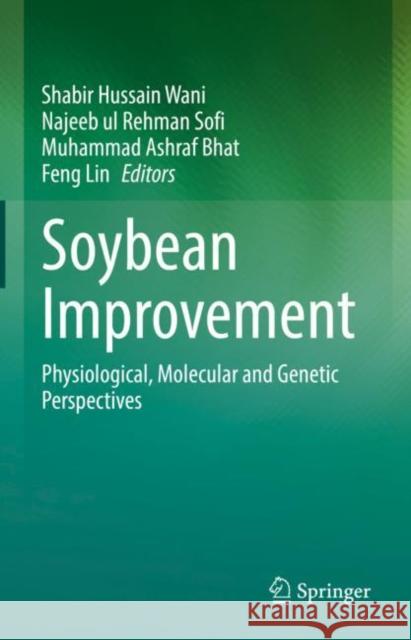
Soybean Improvement: Physiological, Molecular and Genetic Perspectives

ISBN-13: 9783031122316 / Angielski / Twarda / 2022 / 276 str.
Shabir Hussain Wani;Najeeb ul Rehman Sofi;Muhammad Ashraf Bhat
Soybean Improvement: Physiological, Molecular and Genetic Perspectives Shabir Hussain Wani Najeeb ul Rehman Sofi Muhammad Ashraf Bhat 9783031122316 Springer International Publishing AG - książkaWidoczna okładka, to zdjęcie poglądowe, a rzeczywista szata graficzna może różnić się od prezentowanej.

Soybean Improvement: Physiological, Molecular and Genetic Perspectives

ISBN-13: 9783031122316 / Angielski / Twarda / 2022 / 276 str.

Shabir Hussain Wani;Najeeb ul Rehman Sofi;Muhammad Ashraf Bhat
cena 806,99 zł
(netto: 768,56 VAT:  5%)

Najniższa cena z 30 dni: 771,08 zł
Termin realizacji zamówienia:
ok. 22 dni roboczych
Bez gwarancji dostawy przed świętami

Darmowa dostawa!
inne wydania

Soybean (Glycine max L. (Merr)) is one of the most important crops worldwide. Soybean seeds are vital for both protein meal and vegetable oil. Soybean was domesticated in China, and since last 4-5 decades it has become one of the most widely grown crops around the globe. The crop is grown on an anticipated 6% of the world's arable land, and since the 1970s, the area in soybean production has the highest percentage increase compared to any other major crop. It is a major crop in the United States, Brazil, China and Argentina and important in many other countries. The cultivated soybean has one wild annual relative, G. soja, and 23 wild perennial relatives. Soybean has spread to many Asian countries two to three thousand years ago, but was not known in the West until the 18th century. Among the various constraints responsible for decrease in soybean yields are the biotic and abiotic stresses which have recently increased as a result of changing climatic scenarios at global level. A lot of work has been done for cultivar development and germplasm enhancement through conventional plant breeding. This has resulted in development of numerous high yielding and climate resilient soybean varieties. Despite of this development, plant breeding is long-term by nature, resource dependent and climate dependent. Due to the advancement in genomics and phenomics, significant insights have been gained in the identification of genes for yield improvement, tolerance to biotic and abiotic stress and increased quality parameters in soybean. Molecular breeding has become routine and with the advent of next generation sequencing technologies resulting in SNP based molecular markers, soybean improvement has taken a new dimension and resulted in mapping of genes for various traits that include disease resistance, insect resistance, high oil content and improved yield. This book includes chapters from renowned potential soybean scientists to discuss the latest updates on soybean molecular and genetic perspectives to elucidate the complex mechanisms to develop biotic and abiotic stress resilience in soybean. Recent studies on the improvement of oil quality and yield in soybean have also been incorporated.


Kategorie:
Nauka, Biologia i przyroda
Kategorie BISAC:
Technology & Engineering > Agriculture - General
Science > Biotechnology
Science > Botanika
Wydawca:
Springer International Publishing AG
Język:
Angielski
ISBN-13:
9783031122316
Rok wydania:
2022
Dostępne języki:
Ilość stron:
276
Waga:
0.57 kg
Wymiary:
23.39 x 15.6 x 1.75
Oprawa:
Twarda
Dodatkowe informacje:
Wydanie ilustrowane

1 Soybean: A Key player for global food security  
2 Dissection of Physiological and Biochemical Bases of Drought tolerance in Soybean (Glycine max) Using recent Phenomics approach
3 Soybean Improvement for Water-logging Tolerance
4 Salinity tolerance in Soybeans: Physiological, molecular and genetic perspectives
5 Utility of Network Biology Approaches to Understand the Aluminium Stress Responses in Soybean
6 Advances in Molecular markers to develop Soybean cultivars with increased protein and oil content
7 Soybean Breeding for Rust Resistance
8 Molecular breeding for resistance against pythium root rot (PRR) in soybean
9 Molecular Breeding for Resistance against Phytophthora in Soybean
10 Mitigation of Soybean Mosaic Virus Using an Efficient Molecular Approach
11 Transgenic Approach: A Key to Enrich Soybean Oil Quality
12 miRNAs in soybean improvement
13 Genome Editing Advances in Soybean Improvement against Biotic and Abiotic stresses

Dr. Shabir Hussain Wani is Assistant professor (Senior Scale) at Mountain Research Centre for Field Crops, Khudwani –192101, Sher-e-Kashmir University of Agricultural Sciences and Technology of Kashmir, J&K, India. He received Ph.D. degree in plant breeding and genetics from the Punjab Agricultural University Ludhiana, India. He teaches courses related to plant breeding, seed science and technology, and stress breeding and has published more than 100 papers/chapters in journals and books of international repute. He has also edited several books on current topics in crop improvement for abiotic stress tolerance published by Springer Nature and CRC press USA. Recently he was selected as Member National Academy of Sciences, India. He also served as visiting Scientist at Department of Plant Soil and Microbial Sciences, Michigan State University, USA under the UGC Raman Post-Doctoral Fellowship programme. Currently, he is leading the  Wheat improvement programme at MRCFC Khudwani SKAUST Kashmir.

Dr. Najeeb ul Rehman Sofi is Professor cum Chief Scientist and Associate Director Research, Mountain Research Centre for Field Crops, Khudwani, Sher-e-Kashmir University of Agricultural Sciences and Technology of Kashmir, Srinagar J&K, India.  He has been instrumental in breeding rice varieties for temperate ecologies of Kashmir region. He teaches courses related to plant breeding, seed science and technology. He has guided many postgraduate students and has attended numerous international and national conferences presenting his work on rice improvement. Currently he is leading the Rice improvement programme at SKUAST Kashmir.

Dr. M. Ashraf Bhat is Professor cum Chief Scientist and Head Division of Plant Biotechnology, Sher-e-Kashmir University of Agricultural Sciences and Technology of Kashmir, Srinagar J&K, India. He received Ph.D. degree in Plant breeding and Genetics from the Punjab Agricultural University Ludhiana, India. He teaches courses related to plant breeding, seed science and technology, and Plant biotechnology. He has published more that 80 papers in journals of International and national repute. Recently he released Shalimar Soybean 2 and high yielding variety for release in Jammu and Kashmir State. He has attended many International and national conferences to present his research on improvement of field crops for biotic and abiotic stress tolerance using molecular breeding approaches. 

Dr Feng Lin is a Post-Doctoral Associate at Department of Plant Soil and Microbial Sciences at Michigan State University, East Lansing USA. He has been working in a field of Soybean molecular breeding for biotic stress tolerance since more than a decade. He has published more than 30 papers in journals of international repute. He has attended many international conferences to present his work on Soybean breeding and genetics. 

Soybean (Glycine max L. (Merr)) is one of the most important crops worldwide. Soybean seeds are vital for both protein meal and vegetable oil. Soybean was domesticated in China, and since last 4-5 decades it has become one of the most widely grown crops around the globe. The crop is grown on an anticipated 6% of the world’s arable land, and since the 1970s, the area in soybean production has the highest percentage increase compared to any other major crop. It is a major crop in the United States, Brazil, China and Argentina and important in many other countries. The cultivated soybean has one wild annual relative, G. soja, and 23 wild perennial relatives. Soybean has spread to many Asian countries two to three thousand years ago, but was not known in the West until the 18th century. Among the various constraints responsible for decrease in soybean yields are the biotic and abiotic stresses which have recently increased as a result of changing climatic scenarios at global level. A lot of work has been done for cultivar development and germplasm enhancement through conventional plant breeding. This has resulted in development of numerous high yielding and climate resilient soybean varieties. Despite of this development, plant breeding is long-term by nature, resource dependent and climate dependent. Due to the advancement in genomics and phenomics, significant insights have been gained in the identification of genes for yield improvement, tolerance to biotic and abiotic stress and increased quality parameters in soybean. Molecular breeding has become routine and with the advent of next generation sequencing technologies resulting in SNP based molecular markers, soybean improvement has taken a new dimension and resulted in mapping of genes for various traits that include disease resistance, insect resistance, high oil content and improved yield.

This book includes chapters from renowned potential soybean scientists to discuss the latest updates on soybean molecular and genetic perspectives to elucidate the complex mechanisms to develop biotic and abiotic stress resilience in soybean. Recent studies on the improvement of oil quality and yield in soybean have also been incorporated.




Udostępnij

Facebook - konto krainaksiazek.pl


Opinie o Krainaksiazek.pl na Opineo.pl

Partner Mybenefit

Krainaksiazek.pl w programie rzetelna firma Krainaksiaze.pl - płatności przez paypal

Czytaj nas na:

Facebook - krainaksiazek.pl
  • książki na zamówienie
  • granty
  • książka na prezent
  • kontakt
  • pomoc
  • opinie
  • regulamin
  • polityka prywatności

Zobacz:

  • Księgarnia czeska

  • Wydawnictwo Książkowe Klimaty

1997-2025 DolnySlask.com Agencja Internetowa

© 1997-2022 krainaksiazek.pl
     
KONTAKT | REGULAMIN | POLITYKA PRYWATNOŚCI | USTAWIENIA PRYWATNOŚCI
Zobacz: Księgarnia Czeska | Wydawnictwo Książkowe Klimaty | Mapa strony | Lista autorów
KrainaKsiazek.PL - Księgarnia Internetowa

Polityka prywatnosci - link
Krainaksiazek.pl - płatnośc Przelewy24
Przechowalnia Przechowalnia



