Solving Enterprise Application » książka





Solving Enterprise Application
ISBN-13: 9781118061572 / Angielski / Miękka / 2012 / 256 str.
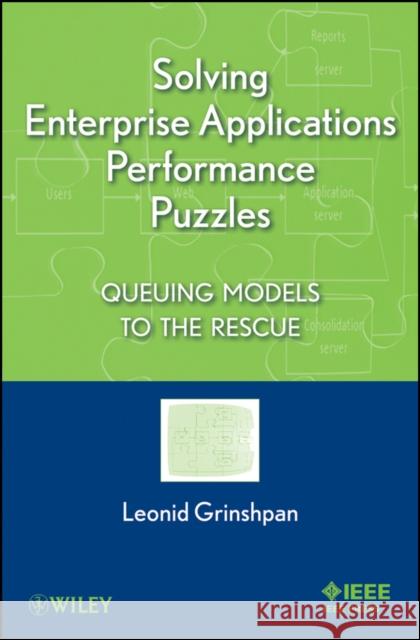
Solving Enterprise Application
ISBN-13: 9781118061572 / Angielski / Miękka / 2012 / 256 str.
(netto: 338,54 VAT: 5%)
Najniższa cena z 30 dni: 351,13
ok. 30 dni roboczych.
Darmowa dostawa!
"This proposed book is the first on the market that frames enterprise application performance engineering not as an art but as applied science built on model-based methodological foundation. The book introduces queuing models of enterprise application that visualize, demystify, explain, and solve system performance issues. Analysis of the models discovers and clarifies not obvious connections and correlations among workloads, hardware architecture, and software parameters"--
Glosariusz/słownik
Acknowledgments ix
Preface xi
1. Queuing Networks as Applications Models 1
1.1. Enterprise Applications What Do They Have in Common?, 1
1.2. Key Performance Indicator Transaction Time, 6
1.3. What Is Application Tuning and Sizing?, 8
1.4. Queuing Models of Enterprise Application, 9
1.5. Transaction Response Time and Transaction Profi le, 19
1.6. Network of Highways as an Analogy of the Queuing Model, 22
Take Away from the Chapter, 24
2. Building and Solving Application Models 25
2.1. Building Models, 25
Hardware Specification, 26
Model Topology, 28
A Model s Input Data, 29
Model Calibration, 31
2.2. Essentials of Queuing Networks Theory, 34
2.3. Solving Models, 39
2.4. Interpretation of Modeling Results, 47
Hardware Utilization, 47
Server Queue Length, Transaction Time, System Throughput, 51
Take Away from the Chapter, 54
3. Workload Characterization and Transaction Profiling 57
3.1. What Is Application Workload?, 57
3.2. Workload Characterization, 60
Transaction Rate and User Think Time, 61
Think Time Model, 65
Take Away from the Think Time Model, 68
Workload Deviations, 68
Garbage in, Garbage out Models, 68
Realistic Workload, 69
Users Redistribution, 72
Changing Number of Users, 72
Transaction Rate Variation, 75
Take Away from Garbage in, Garbage out Models, 78
Number of Application Users, 78
User Concurrency Model, 80
Take Away from User Concurrency Model, 81
3.3. Business Process Analysis, 81
3.4. Mining Transactional Data from Production Applications, 88
Profi ling Transactions Using Operating System Monitors and Utilities, 88
Application Log Files, 90
Transaction Monitors, 91
Take Away from the Chapter, 93
4. Servers, CPUs, and Other Building Blocks of Application Scalability 94
4.1. Application Scalability, 94
4.2. Bottleneck Identification, 95
CPU Bottleneck, 97
CPU Bottleneck Models, 97
CPU Bottleneck Identification, 97
Additional CPUs, 100
Additional Servers, 100
Faster CPUs, 100
Take Away from the CPU Bottleneck Model, 104
I/O Bottleneck, 105
I/O Bottleneck Models, 106
I/O Bottleneck Identification, 106
Additional Disks, 107
Faster Disks, 108
Take Away from the I/O Bottleneck Model, 111
Take Away from the Chapter, 113
5. Operating System Overhead 114
5.1. Components of an Operating System, 114
5.2. Operating System Overhead, 118
System Time Models, 122
Impact of System Overhead on Transaction Time, 123
Impact of System Overhead on Hardware Utilization, 124
Take Away from the Chapter, 125
6. Software Bottlenecks 127
6.1. What Is a Software Bottleneck?, 127
6.2. Memory Bottleneck, 131
Memory Bottleneck Models, 133
Preset Upper Memory Limit, 133
Paging Effect, 138
Take Away from the Memory Bottleneck Model, 143
6.3. Thread Optimization, 144
Thread Optimization Models, 145
Thread Bottleneck Identification, 145
Correlation Among Transaction Time, CPU
Utilization, and the Number of Threads, 148
Optimal Number of Threads, 150
Take Away from Thread Optimization Model, 151
6.4. Other Causes of Software Bottlenecks, 152
Transaction Affinity, 152
Connections to Database; User Sessions, 152
Limited Wait Time and Limited Wait Space, 154
Software Locks, 155
Take Away from the Chapter, 155
7. Performance and Capacity of Virtual Systems 157
7.1. What Is Virtualization?, 157
7.2. Hardware Virtualization, 160
Non–Virtualized Hosts, 161
Virtualized Hosts, 165
Queuing Theory Explains It All, 167
Virtualized Hosts Sizing After Lesson Learned, 169
7.3. Methodology of Virtual Machines Sizing, 171
Take Away from the Chapter, 172
8. Model–Based Application Sizing: Say Good–Bye to Guessing 173
8.1. Why Model–Based Sizing?, 173
8.2. A Model s Input Data, 177
Workload and Expected Transaction Time, 177
How to Obtain a Transaction Profile, 179
Hardware Platform, 182
8.3. Mapping a System into a Model, 186
8.4. Model Deliverables and What–If Scenarios, 188
Take Away from the Chapter, 193
9. Modeling Different Application Configurations 194
9.1. Geographical Distribution of Users, 194
Remote Office Models, 196
Users Locations, 196
Network Latency, 197
Take Away from Remote Offi ce Models, 198
9.2. Accounting for the Time on End–User Computers, 198
9.3. Remote Terminal Services, 200
9.4. Cross–Platform Modeling, 201
9.5. Load Balancing and Server Farms, 203
9.6. Transaction Parallel Processing Models, 205
Concurrent Transaction Processing by a Few Servers, 205
Concurrent Transaction Processing by the Same Server, 209
Take Away from Transaction Parallel Processing Models, 213
Take Away from the Chapter, 214
Glossary 215
References 220
Index 223
A groundbreaking scientific approach to solving enterprise applications performance problems
Enterprise applications are the information backbone of today′s corporations, supporting vital business functions such as operational management, supply chain maintenance, customer relationship administration, business intelligence, accounting, procurement logistics, and more. Acceptable performance of enterprise applications is critical for a company′s day–to–day operations as well as for its profitability.
Unfortunately, troubleshooting poorly performing enterprise applications has traditionally relied upon a trial–and–error series of actions rather than a systematic, scientific methodology.
Written by the Consulting Technical Director of Oracle Corporation, one of the largest enterprise software providers in the world, this groundbreaking book frames enterprise applications performance engineering as an applied science built on a model–based foundation. Readers will discover how queuing models of enterprise applications can be used to visualize, demystify, explain, and help to solve the performance issues of many applications. The author demonstrates how these queuing models help discover the critical connections among users′ workloads, hardware architecture, and software parameters.
Without resorting to complex mathematics, Solving Enterprise Applications Performance Puzzles covers such important topics as:
-
Queuing networks as application models
-
Building and solving application models
-
User′s workload characterization
-
Servers, CPUs, and other building blocks of application scalability
-
Software bottlenecks
-
Performance and capacity of virtual systems
-
Model–based application sizing
Throughout the book, readers will find tables and charts summarizing and visualizing important data. In addition, readers will find plenty of illustrations to help them better understand the core drivers of application performance.
Solving Enterprise Applications Performance Puzzles offers performance engineers, programmers, and systems analysts a new perspective on why enterprise applications can underperform and fail to support businesses. It puts forward a scientific approach for discovering the underlying problems and correcting them.




Czytaj nas na:
1997-2026 DolnySlask.com Agencja Internetowa
KrainaKsiazek.PL - Księgarnia Internetowa


