Solar Cells: From Materials to Device Technology » książka





Solar Cells: From Materials to Device Technology
ISBN-13: 9783030363567 / Angielski / Miękka / 2021 / 350 str.
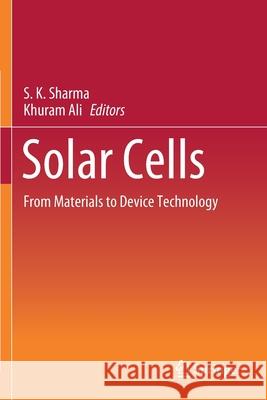
Solar Cells: From Materials to Device Technology
ISBN-13: 9783030363567 / Angielski / Miękka / 2021 / 350 str.
(netto: 958,46 VAT: 5%)
Najniższa cena z 30 dni: 963,86
ok. 22 dni roboczych.
Darmowa dostawa!
Fundamental Background
CH01. Engineering of nanomaterials
This chapter introduces the basic background required to understand the behavior of materials at the nanometer scale and the various classes of nanomaterials with wide variety of applications. The important topics to be included: introduction to various classes of nanomaterials, including both inorganic and organic constituents; synthesis/fabrication of nanomaterials , including both chemical and physical process; characterization of nanomaterials, including x-ray diffraction techniques, scanning probe microscopy and electron microscopy; and the electronic, magnetic, optical and mechanical properties of nanomaterials. Along with this, the chapter includes the discussion about the origin the finite size effects in controlling the physical and chemical properties of these important materials. Finally the environmental, health and ethical concerns that must be confronted in modern and future engineering applications of nanomaterials will be discussed.
1.1 History and definition of nanomaterials
1.2 Formation of nanomaterials
1.3 Properties of nanomaterials1.4 Applications of nanomaterials
1.5. Classification of Nanomaterials
1.6 Synthesis/fabrication of nanomaterials
1.6.1 Physical methods
1.6.2 Chemical methods
1.7 Characterization of nanomaterials1.7.1 X-ray diffraction technique
1.7.2 Electron Microscopy
1.7.3 Electronic Properties1.7.4 Magnetic Properties
1.7.5 Optical Properties
1.7.6 Mechanical Properties
1.6. Summary
CH02. Nanomaterials Processing and Manufacturing
Materials with particle size in the range 1-10 nm are called quasi 0-D mesoscopic system or quantum dots. The distinctive characteristic of nanomaterial which attracts attention towards itself is the size restrictions often produce qualitatively new properties and behavior. The success of nano manufacturing and processing depends on the strong cooperation between academia and industry in order to be informed about current needs and future challenges, to design products directly transferred into the commercial sector. In this chapter, we discuss nanomaterials processing and manufacturing on industrial scale using different physical and chemical approaches along with application in the area of fuel cell electrodes and catalysis.
2.1 Introduction
2.2 Nanomaterials and Processes
2.2.1 Bottom-up and top-down approaches
2.2.2 Dendrimers and processes
2.2.3 Nanomaterials clusters and arrays in zeolites
2.2.4 Synthesis of nanomaterials through arrested precipitation .
2.2.5 Self-assembled nanoscale materials and structures
2.3 Nanoscale Device and System Concept
2.4 Nanomaterials Processing and Manufacturing Techniques
2.4.1 Chemical approaches
2.4.2 Laser-assisted catalytic growth
2.4.3 Electrochemical approaches
2.4.4 Template approach
2.4.5 Lithography
2.4.6 Electrospinning
2.5 Applications
2.5.1 Fuel cell electrodes
2.5.2 Advanced catalysts and nanoreactors
2.6 Concluding Remarks
CH03. Physics of solar cell: basic concept and properties
The chapter begins with the basic concepts such as the source of energy, the role of photovoltaic conversion the development of photovoltaic cells, and sequence of phenomena involved in solar power generation. The photovoltaic cell or solar cell absorbs light and produces charge carriers of electrical current (electrons and holes). Its behavior is quite similar to a semiconductor diode that conducts the charge carriers in a specific direction after separation and collection process. For a fundamental understanding of the function of solar cell the central semiconductor parameters and properties will be discussed in this chapter. It is essential reading for material scientists, engineers, installers, designers, and policy-makers who need to understand the science behind the solar cells of today, and tomorrow, in order to take solar energy to the next level.
3.1 Introduction
3.2 The photoelectric effect3.2.1 Semiconductor, bands and band gaps
3.2.2 Concept of doping3.3 Fundamental properties of semiconductors
3.3.1 Crystal structure3.3.2 Energy band structure
3.3.3 Conduction band and valence band Densities of state
3.3.4 Equilibrium carrier concentration
3.3.5 Formation of electron-hole pairs: Light Absorption
3.3.6 Recombination3.3.7 Carrier Transport
3.3.8 Semiconductor Equations
3.3.9 Minority Carrier Diffusion Equation
3.4 PN-Junction Diode Electrostatics
3.5 Solar cell fundamentals
3.6.1 Solar Cell Boundary Conditions
3.6.2Generation rate
3.6.3 Solution of the Minority carrier Diffusion Equation
3.6.4 Terminal Characteristics
3.6.5 Solar cell I-V Characteristics
3.6.6 Properties of Efficient Solar Cells3.6.7 Lifetime and Surface Recombination Effects
3.6 Summary
CH04. Nanotechnology in Solar Power
In this modern era of 21st century, a key technological task for human being is the shift from fossil-fuel-based energy to renewable or sustainable one. Three generations of solar cell comprises silicon solar cells, thin film solar cells and quantum dot sensitized solar cells respectively. Cost is a significant problem in the accomplishment of any solar power technology. Nanotechnology provides the advantage to produce inexpensive and efficient solar cell. Solar cells based on nanotechnology have low cost, better stability and long lifetime. Current solar power technology has less possibility to compete with fossil fuels. Today’s solar cells are merely not efficient enough and are presently too expensive to manufacture for large-scale power generation. In this chapter, we provide an overview of the current solar cell technologies and their shortcomings related to cost. At the end the reader will be able to reduce the trade price and to increase the efficiency of solar cells with the use of nanotechnology. Then, it explores the research field of nano solar cells and the knowledge behind them.
4.1 Introduction
4.2 Three Generations of Solar Panels4.3 The Role of Nanotechnology
4.3.1 Reduction of the Cost of Solar Cells by Nanotechnology
4.3.2 Nanotechnology Improves the Solar Cell
4.3.3 Improving the Efficiency of Solar Cells by Using Semiconductor Quantum Dots (QD)
4.4 Recent Advances in Solar Panel Nanotechnology
4.5 Efficiency and Band Gap4.6 Spectral Response
4.7 Temperature Effects
4.8 Summary
CH05. Nanomaterial-Based Solar Cell Performance
Their overall power conversion efficiency (PCE) has recently exceeded 20% because of high charge carrier mobility, efficient light harvesting, and long carrier lifetime. The emerging use of nanomaterials by newly developed nanotechnology provides opportunities to significantly enhance the efficiency of solar cells by plasmonic enhancement, reflection enhancement, light scattering and enhanced charge collection efficiency. This chapter focuses on nano-morphology, controlled organic and inorganic solar cells for high power-conversion efficiencies (PCEs). All aspects are discussed to advance the use of nanotechnology to improve the performance of solar cells. Different forms of nanomaterials will be discussed for light absorption enhancement in solar cells. Implementation of these nanomaterials can pave the way for large-area, inexpensive light trapping nanostructured solar cells. This chapter discusses some of the current initiatives and critical issues on the improvement of solar cells based on nanostructures.
5.1Introduction
5.2 Different forms of nanomaterials
5.2.1Nanowires
5.2.2 Nanotubes
5.2.3 Nanocones
5.2.4 Nanopillars
5.2.5 Nanobelts
5.2.6 Nanopagodas
5.2.7 Nanocombs
5.2.8 Nanorods
5.2 Nanomaterials in Inorganic Solar Cells
5.2.1 Silicon
CuInSe
2
Copperindiumdiselenide (CIS)
CuInSe
2
Copperindiumdiselenide (CIS)
CuInSe
2Copperindiumdiselenide (CIS)
CuInSe
2
Copperindiumdiselenide (CIS)CuInSe
2
Copperindiumdiselenide (CIS)
CuInSe
2
CuInSe
2
CuInSe
2
CuInSe
2
CuInSe
2
Copperindiumdiselenide (CIS)
CuInSe
2
Copperindiumdiselenide (CIS)
CuInSe
2Copperindiumdiselenide (CIS)
CuInSe
2
Copperindiumdiselenide (CIS)CuInSe
2
Copperindiumdiselenide (CIS)
CuInSe
2
Copperindiumdiselenide (CIS)
CuInSe
2
Copperindiumdiselenide (CIS)
5.2.2 Cadmiumsulfide (CdS)
5.2.3 CdTeCadmiumtelluride (CdTe)
CuInSe
2
Copperindiumdiselenide (CIS)
CuInSe
2
Copperindiumdiselenide (CIS)
CuInSe
2Copperindiumdiselenide (CIS)
CuInSe
2
Copperindiumdiselenide (CIS)CuInSe
2
Copperindiumdiselenide (CIS)
5.2.3 CdSe
5.2.4 Copperindiumdiselenide (CIS)
5.3 Nanomaterials in Organic Solar Cells5.3.1Titanium dioxide
5.3.2 Indiumtin oxide
5.3.3 Zinc oxide
5.4 Materials with Active Layer for Organic Solar Cells
5.4.1 Molecular energy level control
5.4.2 Electron Acceptors
5.4.3 Electron Donors
5.5 ConclusionReferences
CH06. The semiconducting single-walled carbon nanotubes for efficient charge extractors in organic solar cell
Together with fullerenes carbon nanotubes helped to emerge a new research field on nano scale materials. Nanotubes are divided into single-walled nanotubes (SWNTs) and multi-walled nanotubes (MWNTs). This chapter focuses on the charge extraction techniques for their efficient use in photovoltaic research and technology. It can be accomplished by thorough understanding of thermal conductivity, electrical, optical and mechanical properties of carbon nano tubes. Carbon nanotubes or cylinderical carbon molecules have occupied a unique space in the world of semiconductors based solar cells and the aim of present chapter is to advance the knowledge in this area, and so provide a convenient reference tool for all researchers in this field. Thus, this chapter will be also highlighting the CNTs materials suggested for further research and improvement of organic solar cells.
6.1 History
6.2 Physics of carbon nanotubes
6.2.1 Fundamental parameters
6.2.2 Single and Multiwall nanotubes
6.2.3 Crystallography and electronic structure
6.3 Synthesis of semiconductors SWCNTs
6.3.1Growth of SWCNTs
6.3.2Electronic structure
6.3.3 The Metal Particles of SWCNTs
6.4 Optical properties
6.4.1 Optical absorption
6.4.2 Photoluminescence
6.4.3 Raman spectroscopy
6.5 Electrical properties of CNTs
6.5.1 Scanning tunneling microscopy studies
6.5.2 Electrical resistivity
6.5.3 Magnetic susceptibility
6.6 Thermal and mechanical properties
6.7Structure of carbon nanotubes
6.7.1 Topological and defect structures
6.7.2 Helically coiled and toroidal cage
6.7.3 Perfectly graphitizable coiled carbon nanotubes
6.8 Effect of carbon nanotubes on energy conversion
6.8.1Photocatalytic splitting6.8.2Carbon nanotubes in solar cells
6.8.3Carbon nanotubes in bulk heterojunction
6.8.4 Carbon nanotubes in electrodes
7. Conclusion
Thin films
CH07. Thin film Silicon Solar Cell
Thin film technology has been significantly improved since last few years. For sufficient absorption of the solar spectrum it is required tha^700 µm. It is not desirable for commercial or large scale production of solar cells because it is a quite large thickness for a Si wafer in terms of cost and effective collection of photo generated carriers. This chapter overlooks this fundamental issue by a general understanding of the problems that arises with the decrease in the thickness of a silicon wafer. At the end reader will be able to understand as well as to fabricate lower weight and flexible thin film solar cells. However, a concise and thorough survey of the literature and operation of thin film Si solar cells will be embedded at the beginning of the chapter. Further, future consideration for developing most advanced thin-film Si solar cells, with optimized processing considerations will be discussed in detail.
7.1Introduction
7.2 Background of current Thin film Si Cells7.2.1Single crystal films using single crystal Si substrates
7.2.2 Multicrystal Si substrates
7.2.4 Non –Si substrate
7.3. Design concepts of TF-Si solar cells
7. 3.1 Light trapping in the Thin Si solar cell7. 3.2 Description of PV optics
7. 3.3 Electronic modeling
7. 3.4 Methods of making thin film for solar cells
7.4 Methods of grain enhancement
7.4.1 Controlling process conditions
7.4.2 Annealing mechanism
7.4.3Metal induced crystallization7.5 Processing considerations for TF- Si solar cell
7.6 Conclusion
CH08.Cu(In, Ga)Se2 thin film solar cells
Cu(In, Ga)Se2 thin film solar cells or CIGS solar cells have been promoted as the promising and cost-effective power generation technologies. Thin films of these materials can be deposited with low-cost and high deposition rate on large scale. This chapter aims to cover different deposition techniques in view of the optoelectronic properties of the layers and interfaces. The reader will be be able to use different transparent metal contacts for effecient charge transfer as well as photon absorption from light, at the same time. Use of alternative buffer layers will be considered in view that CIGS solar cells remain lightweight, flexible and stable under outdoor conditions. This chapter will be an important tool for graduate students and researchers with an aim to help and frame a number of important outstanding questions that can guide future studies.
8.1 Introduction
8.2 Material properties
8.2 .1 Structure and composition
8.2 .2 The surface and grain boundaries
8.2 .3 Substrate effects
8.3 Deposition method
8.3 .1 Substrates
8.3 .2 Back contact
8.3 .3 Co-evaporation of Cu(In, Ga)Se2
8.3 .4Two-step process
8.4 Junction and device formation8.4.1Chemical bath deposition
8.4.2 Interface effects
8.4.3 Alternative buffer layers
8.4.4Transparent contacts
8.4.5Buffer layers8.4.6 Device completion
8.5 Device operation
8.5 .1 Light generated current
8.5 .2 Recombination
8.5 .3 The Cu(In, Ga)Se2 / CdS interface8.5 .4 Wide and graded band gap devices
8.6 Techniques used in advanced Cu(In, Ga)Se2 Cells8.7 Conclusion
CH9.Cadmium Telluride solar cell
Cadmium telluride is one of the leading contenders for thin film terrestrial solar energy conversion. This chapter demonstrates how the CdTe solar cells technology is acceptable in terms of the lowest water use and lowest energy payback as well as smallest carbon footprint compared to other solar cell technologies. It will enabled the reader to overcome problems related to large scale production in terms of competitive performance, long-term stability, and cell design rather than processing specific techniques. This chapter overview the properties of CdTe as a thin film solar cell material, modelling and methodologies linked with present and future development of CdTe based solar cells. However, modelling of Thin Film Cadmium Telluride Solar Cells will provide additional physical insight for improving the efficiency and stability of cell. So, Study of CdTe will opened up new realms for the applications in solar cells.
9.1 Introduction
9.2 CdTe properties and thin film fabrication methods
9.2.2 Condensation/reaction of Cd and Te2 vapors on a surface9.2.3 Galvanic reduction of Cd and Te ions at a surface
9.2.4 Precursor reaction at a surface9.3 CdTe thin film solar cells
9.3 .1Window layers9.3 .2 CdTe absorber layer and CdCl2 treatment
9.3 .3 CdS/Cd intermixing9.4 Fabrication of Cadmium Telluride Cells and Modules
9.4.1 Deposition Methods for Cadmium Telluride Based Solar Cells9.4.2 Production of Cadmium Telluride Solar Modules
9.4.3 The future of CdTe based solar cell9.5 Modelling of Thin Film Cadmium Telluride Solar Cells
9.6 Conclusion
CH10. Amorphous silicon based solar cell
For a long time, the low power output of amorphous silicon solar cells limit their use to small applications only. This chapter aims to provide clear view to overcome this problem by describing different techniques. For example, stacking of several amorphous solar cells on top of each other can partially resolve this issue by increasing their performance and makes them more space-efficient. At the same time the chapter focus on the sensitivity of open circuit voltage to material quality and try to assess the possibilities of improving this quantity in amorphous silicon solar cell. Photoluminescence and electroluminescence characteristics of amorphous silicon will be studied in view of the radiative band-to-band recombinations. Finally, the advance cells with different band-gaps, module manufacturing of a-Si cells will be discussed.10.1 Introduction
10.2 Amorphous silicon the first bipolar amorphous semiconductor
10.2.1 Design for amorphous silicon solar cells
10.2.2 Steabler Wronski effect
10.3 Deposition amorphous silicon10.3.1 Survey of deposition techniques
10.3.2 FR Glow discharge deposition
10.3.3Glow discharge deposition at different frequencies
10.3.4 Hot wire chemical vapor deposition
10.3.5 Hydrogen dilution
10.3.6 Alloys and doping
10.4 Understanding a-Si pin Cell10.4.1 Electronic structure of a pin device
10.4.2 Photo carrier drift in absorber layer
10.4.3 The open circuit voltage10.4.5 Optical design of a Si:H solar cell
10.4.6 Cells under solar illumination
10.5 Multijunction crystalline Solar Cells10.5.1 Advantages of multiple junction solar cell
10.5.2 Photoluminescence and Electroluminescence in Amorphous Silicon Cells
10.5.3 Using alloys for cells with different band gap
10.5.4 Microcrystalline silicon solar cell10.6 Module Manufacturing
10.7 Conclusion
Advanced Solar Cell (Technology Prospective)
CH11. Quantum dot solar cells
A promising alternative to existing silicon solar cells, quantum dot (QD) solar cells are among the candidates for next generation photovoltaic devices. QD solar cells facing problems like stability and bandgap tunebility in chemical based and solid-state solar cells, respectively. The chapter enables a reader to overview these problems in both research and technology perspective. The use of hybrid devices based on QD techniques has potential to overcome tunebility issues. Use of different materials in combination with colloidal quantum dots (CQD) can enhance optical properties even on far infrared frequencies. Further, the possibility of the use of QD in the active region of long wavelength part of the light spectrum will be discussed. This technique can lead towards increase efficiency of solar cell. At the end, different efficient and flexible structures of organic solar cells and novel nanostructured photoelectrodes will be disscussed for efficient QD sensitized solar cells.
11.1 Introduction
11.2 Liquid Phase Solar Cells with QD-Sensitized Photoanodes11.2.1 Materials Used as Electron Transporting Phase
11.2.2 QDs Employed as Sensitizers: Synthesis and Attachment Methods
11.2.3 Electrolytes and Counter Electrodes
11.3 Solid-State Solar Cells with QD-Sensitized Photoanodes
11.4 Solar Cells with QD-Sensitized Photocathodes
11.5 Quantum dot sensitized solar cells in terms of efficiency
11.5.1 The Use of Time-Resolved Techniques and Theoretical Methods
11.5.2 The Role of Capping Agents
11.5.3 The Role of the Linker and Direct Adsorption
11.5.4 Adsorbed Dipoles
11.5.5 Treatments with ZnS and Al2O3
11.6 Hybrid Optoelectronic Devices with Colloidal Quantum Dots
11.6.1 CdS Sensitized Silicon Nanopillar Solar Cells
11.6.2 CdS Sensitized GaAs Solar Cell11.7 NiOx-Based heterojunction Perovskite Solar Cells
11.7.1Pulse laser deposition method
11.7.2Combustion method
11.7.3 Thermally evaporated lead iodide perovskite11.7.4 Low-temperature processed NiOxfilms
11.8 Novel Nanostructured Photoelectrodes for Efficient QDSSCs
11.9 Quantum dots applications in LEDs
11.10 Conclusion
CH12. Multijunction (III-V) Solar Cells
High-efficiency multijunction devices with multiple bandgaps, or junctions have achieved great intention in photovoltaic industry due to broad choice of materials with direct band gaps and high absorption coefficients. This chapter overview the active research efforts to develop new substrate materials, absorber materials, and fabrication techniques. It will emphasis on understanding to increase the efficiency; and extending the multijunction concept to other PV technologies. This chapter also overview the fundamental issues related to the manufacturing price and process complexities involved with the high efficiencies gained in III-V multijuntion solar cells. Further, their performance based on different parameters will be discussed along with the description of multiple avenues for further growth of III-V multijunction solar cell efficiency.
12.1 Introduction
12.2 Physics behind Multijunction (III-V) Solar Cells
12.2.1 Wavelength and spectrum dependence of photon conversion efficiency
12.2.2 Limiting factors involved in multijunction solar cells
12.3 Multijunction Solar Cells Design
12.3.1 Overview
12.3.2 GaAs/Si tandem solar cell
12.3.3 Two terminal tandem solar cell
12.3.4 Three terminal tandem solar cell
12.3.5 Four terminal tandem solar cell
12.4 Multijunction Solar Cell Performance
12.4.1 Current density-voltage curves
12.4.2 Band gap-conversion efficiency
12.5.3 Response of fill factor and open circuit voltage
12.5.4 Spectral distribution effects
12.5.5 Antireflection coating
12.5.6 Concentration effects
12.5.7 Thermal effects
12.5 Materials choices and Growth
12.5.1 Overview
12.5.2 Metal organic chemical vapor deposition
12.5.3 Gallium arsenide solar cells
12.5.4 Gallium indium phosphide solar cells
12.5.5 Germanium solar cells
12.5.6 Tunnel junctions
12.5.7 Metal contacts
12.6 Future considerations for developing advanced multijunctionsolar cells
12.7 Conclusion
CH13.High-Efficiency Space Solar Cells
Increased end of life (EOL) in connection with radiation-resistant properties, improved conversion efficiency, and reduced cost are the basic objectives that will be discussed in this chapter for research and development of space solar cells. The reader will be able to understand and overcome the damage caused by harsh radiation environment to solar cells, especially due to high-energy proton and electron irradiations. This chapter overview basic principles and theories behind the damage to different types of solar cells caused by harsh radiation environment. In addition, this chapter deals with the understanding of radiation effects on different parameters of solar cells, such as, open circuit voltage, short circuit current, depletion region width and parasitic resistance etc. Ionization and displacement damage theories in combination with stopping power/ranges will also be covered for single-as well as multijuntion space solar cells. Finally, this chapter lays out a systematic approach for understanding the different techniques involved to improve the radiation resistant properties of solar cells.
13.1 Introduction
13.2 Physics of radiation damages to space solar cells
13.2.1 Ionization and atomic displacement13.2.2 Theory of the Stopping of Charged Particles
13.3 Radiation resistance of direct bandgap materials and solar cells
13.4 Single-Junction Space Solar Cells
13.4.1 Solar Cells Based on A1GaAs/GaAs Structures
13.4.2 GaAs-Based Cells on Ge Substrates
13.4.3 Radiation resistant Si based solar cells
13.4.4 Radiation-resistant properties of InP-related materials and solar cells
13.4.5 Solar cells made with InP-related materials
13.5 Multi-junction space solar cells
13.5.1 Mechanically Stacked Cells13.5.2 Monolithic multi-junction solar Cells
13.5.3 High-efficiency InGaP/GaAs 2-junction cell
13.5.4 Damage annealing of multi-junction solar cells
13.6 Techniques used to enhance radiation resistant properties of solar cells
13.7 Conclusion
Dr. Sharma is a faculty in Materials Science at Department of Physics, Faculty of Science & Technology, The University of the West Indies (UWI), Trinidad & Tobago. Before joining UWI, he worked as a Professor Adjunto (IV) at Department of Physics, Federal University of Maranhao, Brazil (2014–2019). He has received his Ph.D. in Physics from Himachal Pradesh University, Shimla, India. He worked on different research/academic positions in Brazil, France, Czech Republic, India and Mexico from 2007-2014. His research interests include magnetic nanohybrids, their synthesis, characterization and utilization in magnetic and biomedical applications.
Dr. Khuram Ali obtained his Ph.D. in June 2015 from School of Physics, Universiti Sains Malaysia, focusing on the solar cells development for terrestrial as well as space applications. After returning to his home country, he has joined Department of Physics, University of Agriculture Faisalabad as an assistant professor. Dr. Ali has more than ten years of research experience in areas of materials science, semiconductor device physics, photovoltaics, and modelling of solar cells. His research interest includes the area of magnetic nanoparticles, thin films, antireflections coatings for solar cells, photolithography, electrical and optical studies of opto-electronic devices. He has published 17 research articles in international referred journals along with 7 book chapters. He was awarded with three excellence awards and three competitive research grants and currently supervising 3 PhD and 5 Master students. He is also associate member of Abdus Salam Centre for Physics/National Centre of Physics (NCP), Islamabad, Pakistan.
This book addresses the rapidly developing class of solar cell materials and designed to provide much needed information on the fundamental principles of these materials, together with how these are employed in photovoltaic applications.
A special emphasize have been given for the space applications through study of radiation tolerant solar cells. This book present a comprehensive research outlining progress on the synthesis, fabrication and application of solar cells from fundamental to device technology and is helpful for graduate students, researchers, and technologists engaged in research and development of materials.



Czytaj nas na:
1997-2026 DolnySlask.com Agencja Internetowa
KrainaKsiazek.PL - Księgarnia Internetowa


