• Wyszukiwanie zaawansowane
  • Kategorie
  • Kategorie BISAC
  • Książki na zamówienie
  • Promocje
  • Granty
  • Książka na prezent
  • Opinie
  • Pomoc
  • Załóż konto
  • Zaloguj się

Socialism with a Human Face: Using Behavioural Economics to Understand East German Economic History » książka


zaloguj się | załóż konto
Logo Krainaksiazek.pl

koszyk

konto

szukaj
topmenu
Księgarnia internetowa
Szukaj
Książki na zamówienie
Promocje
Granty
Książka na prezent
Moje konto
Pomoc
 
 
Wyszukiwanie zaawansowane
Pusty koszyk
Bezpłatna dostawa dla zamówień powyżej 20 złBezpłatna dostawa dla zamówień powyżej 20 zł

Kategorie główne

• Nauka
 [2948695]
• Literatura piękna
 [1824038]

  więcej...
• Turystyka
 [70868]
• Informatyka
 [151073]
• Komiksy
 [35227]
• Encyklopedie
 [23181]
• Dziecięca
 [621575]
• Hobby
 [138961]
• AudioBooki
 [1642]
• Literatura faktu
 [228651]
• Muzyka CD
 [371]
• Słowniki
 [2933]
• Inne
 [445341]
• Kalendarze
 [1243]
• Podręczniki
 [164416]
• Poradniki
 [479493]
• Religia
 [510449]
• Czasopisma
 [502]
• Sport
 [61384]
• Sztuka
 [243086]
• CD, DVD, Video
 [3417]
• Technologie
 [219673]
• Zdrowie
 [100865]
• Książkowe Klimaty
 [124]
• Zabawki
 [2168]
• Puzzle, gry
 [3372]
• Literatura w języku ukraińskim
 [260]
• Art. papiernicze i szkolne
 [7838]
Kategorie szczegółowe BISAC

Socialism with a Human Face: Using Behavioural Economics to Understand East German Economic History

ISBN-13: 9789811906633 / Angielski / Twarda / 2022 / 378 str.
Gary B. Magee; Wayne Geerling
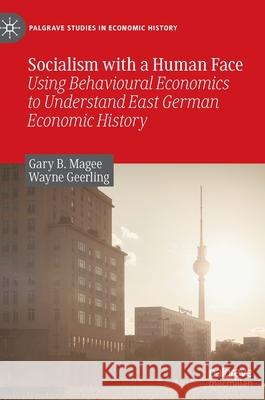
Socialism with a Human Face: Using Behavioural Economics to Understand East German Economic History Magee, Gary B. 9789811906633 Springer Singapore - książkaWidoczna okładka, to zdjęcie poglądowe, a rzeczywista szata graficzna może różnić się od prezentowanej.

Socialism with a Human Face: Using Behavioural Economics to Understand East German Economic History

ISBN-13: 9789811906633 / Angielski / Twarda / 2022 / 378 str.

Gary B. Magee; Wayne Geerling
cena 442,79
(netto: 421,70 VAT:  5%)

Najniższa cena z 30 dni: 424,07
Termin realizacji zamówienia:
ok. 22 dni roboczych.

Darmowa dostawa!
inne wydania

East Germany’s economic history is typically told as a story of the unravelling of an inherently flawed system. Yet, while the system’s inefficiency is undeniable, its economic history was much richer than its comparatively poor economic performance suggests. For many who lived there, it was a system that, over its forty years, was capable of achievements and generally functioned at bearable levels. This book combines the insights of behavioural economics with archival research to peel away layers of rhetoric and assumptions about the East German economy and explore aspects of that underlying functionality. Through a series of cases studies that examine the establishment of socialist workplaces, the searches for productivity growth and efficiency, and the emergence of financial crisis, the book considers the system from the perspective of the humans who operated it and made the decisions that made it work. Unencumbered by political preconceptions, it offers a more realistic understanding of East German economic history than that derived from stagnant debates about the clash of systems. The new perspectives and approaches presented demonstrate that, extracted from its Cold War context, East Germany’s economic history can be analysed for what it was, rather than for what it symbolised.  

Kategorie:
Nauka, Ekonomia i biznes
Kategorie BISAC:
Business & Economics > Historia ekonomii
Business & Economics > Organizational Behavior
History > Europe - General
Wydawca:
Springer Singapore
Seria wydawnicza:
Palgrave Studies in Economic History
Język:
Angielski
ISBN-13:
9789811906633
Rok wydania:
2022
Ilość stron:
378
Waga:
0.59 kg
Wymiary:
21.01 x 14.81 x 2.24
Oprawa:
Twarda
Wolumenów:
01
Dodatkowe informacje:
Wydanie ilustrowane

Chapter 1: Perceptions.- Chapter 2: Making Decisions: Lessons from Behavioural Economics.- Chapter 3: Establishing the Socialist Workplace: Labour, Norms and the Introduction of Piecework.- Chapter 4: Learning from the Soviet Union Means Learning to Win: Group Technology and the Mitrofanov method.- Chapter 5: Searching for Socialist Efficiency: The Case of the Schwedt Initiative.- Chapter 6: Choosing Bankruptcy: The Onset of Debt and Financial Crisis.- Chapter 7: Conclusion.

Gary B. Magee is a Professor of Economics at Monash University, a Fellow of the Academy of Social Sciences in Australia, and a Fellow of the Royal Historical Society. He has published widely in the fields of economic history, history and historical political economics.

Wayne Geerling is an Associate Professor at Monash University. His expertise lies in European economic history. He has published widely in leading peer-reviewed journals in the fields of economics, economic history and history. He is the author (with Gary B. Magee) of Quantifying Resistance: Political Crime and the People’s Court in Nazi Germany (2018).

East Germany’s economic history is typically told as a story of the unravelling of an inherently flawed system. Yet, while the system’s inefficiency is undeniable, its economic history was much richer than its comparatively poor economic performance suggests. For many who lived there, it was a system that, over its forty years, was capable of achievements and generally functioned at bearable levels. This book combines the insights of behavioural economics with archival research to peel away layers of rhetoric and assumptions about the East German economy and explore aspects of that underlying functionality.

Through a series of cases studies that examine the establishment of socialist workplaces, the searches for productivity growth and efficiency, and the emergence of financial crisis, the book considers the system from the perspective of the humans who operated it and made the decisions that made it work. Unencumbered by political preconceptions, it offers a more realistic understanding of East German economic history than that derived from stagnant debates about the clash of systems. The new perspectives and approaches presented demonstrate that, extracted from its Cold War context, East Germany’s economic history can be analysed for what it was, rather than for what it symbolised.  

Gary B. Magee is a Professor of Economics at Monash University, a Fellow of the Academy of Social Sciences in Australia, and a Fellow of the Royal Historical Society. He has published widely in the fields of economic history, history and historical political economics.

Wayne Geerling is an Associate Professor at Monash University. His expertise lies in European economic history. He has published widely in leading peer-reviewed journals in the fields of economics, economic history and history. He is the author (with Gary B. Magee) of Quantifying Resistance: Political Crime and the People’s Court in Nazi Germany (2018).


Udostępnij

Facebook - konto krainaksiazek.pl


Opinie o Krainaksiazek.pl na Opineo.pl

Partner Mybenefit

Krainaksiazek.pl w programie rzetelna firma Krainaksiaze.pl - płatności przez paypal

Czytaj nas na:

Facebook - krainaksiazek.pl
  • książki na zamówienie
  • granty
  • książka na prezent
  • kontakt
  • pomoc
  • opinie
  • regulamin
  • polityka prywatności

Zobacz:

  • Księgarnia czeska

  • Wydawnictwo Książkowe Klimaty

1997-2026 DolnySlask.com Agencja Internetowa

© 1997-2022 krainaksiazek.pl
     
KONTAKT | REGULAMIN | POLITYKA PRYWATNOŚCI | USTAWIENIA PRYWATNOŚCI
Zobacz: Księgarnia Czeska | Wydawnictwo Książkowe Klimaty | Mapa strony | Lista autorów
KrainaKsiazek.PL - Księgarnia Internetowa

Polityka prywatnosci - link
Krainaksiazek.pl - płatnośc Przelewy24
Przechowalnia Przechowalnia






