• Wyszukiwanie zaawansowane
  • Kategorie
  • Kategorie BISAC
  • Książki na zamówienie
  • Promocje
  • Granty
  • Książka na prezent
  • Opinie
  • Pomoc
  • Załóż konto
  • Zaloguj się

Social Exclusion: Psychological Approaches to Understanding and Reducing Its Impact » książka


zaloguj się | załóż konto
Logo Krainaksiazek.pl

koszyk

konto

szukaj
topmenu
Księgarnia internetowa
Szukaj
Książki na zamówienie
Promocje
Granty
Książka na prezent
Moje konto
Pomoc
 
 
Wyszukiwanie zaawansowane
Pusty koszyk
Bezpłatna dostawa dla zamówień powyżej 20 złBezpłatna dostawa dla zamówień powyżej 20 zł

Kategorie główne

• Nauka
 [2950560]
• Literatura piękna
 [1849509]

  więcej...
• Turystyka
 [71097]
• Informatyka
 [151150]
• Komiksy
 [35848]
• Encyklopedie
 [23178]
• Dziecięca
 [617388]
• Hobby
 [139064]
• AudioBooki
 [1657]
• Literatura faktu
 [228597]
• Muzyka CD
 [383]
• Słowniki
 [2855]
• Inne
 [445295]
• Kalendarze
 [1464]
• Podręczniki
 [167547]
• Poradniki
 [480102]
• Religia
 [510749]
• Czasopisma
 [516]
• Sport
 [61293]
• Sztuka
 [243352]
• CD, DVD, Video
 [3414]
• Technologie
 [219456]
• Zdrowie
 [101002]
• Książkowe Klimaty
 [124]
• Zabawki
 [2311]
• Puzzle, gry
 [3459]
• Literatura w języku ukraińskim
 [254]
• Art. papiernicze i szkolne
 [8079]
Kategorie szczegółowe BISAC

Social Exclusion: Psychological Approaches to Understanding and Reducing Its Impact

ISBN-13: 9783319330310 / Angielski / Twarda / 2016 / 295 str.
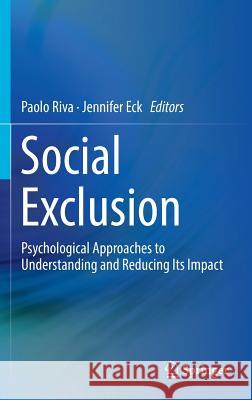
Paolo Riva; Jennifer Eck
Social Exclusion: Psychological Approaches to Understanding and Reducing Its Impact Riva, Paolo 9783319330310 Springer - książkaWidoczna okładka, to zdjęcie poglądowe, a rzeczywista szata graficzna może różnić się od prezentowanej.

Social Exclusion: Psychological Approaches to Understanding and Reducing Its Impact

ISBN-13: 9783319330310 / Angielski / Twarda / 2016 / 295 str.

Paolo Riva; Jennifer Eck
cena 603,81
(netto: 575,06 VAT:  5%)

Najniższa cena z 30 dni: 578,30
Termin realizacji zamówienia:
ok. 22 dni roboczych
Dostawa w 2026 r.

Darmowa dostawa!
inne wydania

From ostracism on the playground to romantic rejection, bullying at work, and social disregard for the aged, individuals are at constant risk of experiencing instances of social exclusion, including ostracism, rejection, dehumanization, and discrimination. These phenomena have a powerful impact as testified by their immediate influence on people s thoughts, emotions, and behaviors. Social Exclusion: Psychological Approaches to Understanding and Reducing Its Impact investigates different psychological approaches, across multiple psychological subdisciplines, to understanding the causes and consequences of social exclusion and possible ways to reduce or buffer against its negative effects. The purpose of this volume is threefold. First, it lays the groundwork for the understanding of social exclusion research; reviewing the different instances of social exclusion in everyday life and methods to experimentally investigate them. Second, this volume brings together different psychological approaches to the topic of social exclusion. Leading scholars from around the world contribute perspectives from social psychology, social neuroscience, developmental psychology, educational psychology, work and organizational psychology, clinical psychology, and social gerontology to provide a comprehensive overview of social exclusion research in different psychological subdisciplines. Taken together, these chapters are conducive to the important development of new and more integrative research models on social exclusion. Finally, this volume discusses psychological strategies such as emotion regulation, psychological resources, and brain mechanisms that can reduce or buffer against the negative consequences of social exclusion. From school shootings to domestic violence, from cognitive impairment to suicide attempts, the negative impact of social exclusion has been widely documented. Thus, from an applied perspective, knowing potential ways to mitigate the negative effects of social exclusion can have a significant positive influence on people s and society s well-being. Overall, this book provides the reader with the knowledge to understand the impact of social exclusion and with tools to address it across many different contexts. Importantly, Social Exclusion: Psychological Approaches to Understanding and Reducing Its Impact aims to bridge the gap between the approaches of different psychological subdisciplines to this topic, working towards a comprehensive, integrative model of social exclusion."


Kategorie:
Nauka, Psychologia
Kategorie BISAC:
Psychology > Personality
Psychology > Developmental - Child
Psychology > Emotions
Wydawca:
Springer
Język:
Angielski
ISBN-13:
9783319330310
Rok wydania:
2016
Wydanie:
2016
Ilość stron:
295
Waga:
0.61 kg
Wymiary:
23.39 x 15.6 x 1.91
Oprawa:
Twarda
Wolumenów:
01
Dodatkowe informacje:
Wydanie ilustrowane

"As this volume presents research, its primary readership will be those within the research community. But given the vast array of knowledge presented, the work is of paramount importance to any individual with managerial responsibilities related to the design and implementation of meaningful programs to increase inclusion and decrease exclusion in the world. Summing Up: Recommended. Graduate students, faculty, and professionals." (D. Sydiaha, Choice, Vol. 54 (9), May, 2017)

CONTENTS

About the Editors

Contributors

Introduction: The Many Faces of Social Exclusion

Paolo Riva and Jennifer Eck

I. Social Exclusion as a Field of Research

Chapter 1. Social Exclusion in Everyday Life

Eric D. Wesselmann, Michelle R. Grzybowski, Diana M. Steakley-Freeman,

Eros R. DeSouza, John B. Nezlek, and Kipling D. Williams

Chapter 2. Methods for Investigating Social Exclusion

James H. Wirth

II. Psychological Approaches to Social Exclusion

Chapter 3. Research in Social Psychology: Consequences of Short- and Long-Term Social Exclusion

Michael J. Bernstein

Chapter 4. Research in Social Neuroscience: How Perceived Social Isolation, Ostracism, and Romantic Rejection Affect our Brain

Stephanie Cacioppo and John T. Cacioppo

Chapter 5. Research in Developmental Psychology: Social Exclusion among Children and Adolescents

Laura Elenbaas and Melanie Killen

Chapter 6. Research in Educational Psychology: Social Exclusion in School

Gary W. Ladd and Becky Kochenderfer-Ladd

Chapter 7. Research in Work and Organizational Psychology: Social Exclusion in the Workplace

Jane O’Reilly and Sara Banki

Chapter 8. Research in Clinical Psychology: Social Exclusion and Psychological Disorders

Klint Fung, Colin Xu, Brianne L. Glazier, Carly A. Parsons, and Lynn E. Alden

Chapter 9. Research in Social Gerontology: Social Exclusion of Aging Adults

Elaine Wethington, Karl Pillemer, and Andrea Principi

III. Psychological Strategies and Brain Mechanisms to Reduce the Negative Consequences of Social Exclusion

Chapter 10. Emotion Regulation following Social Exclusion: Psychological and Behavioral Strategies

Paolo Riva

Chapter 11. Coping with or Buffering against the Negative Impact of Social Exclusion on Basic Needs: A Review of Strategies

Jennifer Eck, Christiane Schoel, and Rainer Greifeneder

Chapter 12. Brain Mechanisms to Regulate Negative Reactions to Social Exclusion

David Chester and Paolo Riva

IV. Final Assessment

Chapter 13. Bridging the Gap between Different Psychological Approaches to Understanding and Reducing the Impact of Social Exclusion

Jennifer Eck and Paolo Riva

Index

Paolo Riva is a post-doctoral research fellow at University of Milano-Bicocca. His research interests lie broadly in social influence processes with a specific focus on social exclusion. Specifically, he examines the consequences of exclusion and the possible strategies that can buffer against and reduce its effects. In a related vein, he is also interested in the neuromodulation of emotion regulation processes.  

Jennifer Eck is a post-doctoral research fellow at the University of Mannheim. Her main line of research focuses on social exclusion, with a specific emphasis on psychological strategies that help buffer against the negative impact of social exclusion. Her research interests further include lie detection, the self, and assimilation and contrast.

From ostracism on the playground to romantic rejection, bullying at work, and social disregard for the aged, individuals are at constant risk of experiencing instances of social exclusion, including ostracism, rejection, dehumanization, and discrimination. These phenomena have a powerful impact as testified by their immediate influence on people’s thoughts, emotions, and behaviors. Social Exclusion: Psychological Approaches to Understanding and Reducing Its Impact investigates different psychological approaches, across multiple psychological subdisciplines, to understanding the causes and consequences of social exclusion and possible ways to reduce or buffer against its negative effects.

The purpose of this volume is threefold. First, it lays the groundwork for the understanding of social exclusion research; reviewing the different instances of social exclusion in everyday life and methods to experimentally investigate them. Second, this volume brings together different psychological approaches to the topic of social exclusion. Leading scholars from around the world contribute perspectives from social psychology, social neuroscience, developmental psychology, educational psychology, work and organizational psychology, clinical psychology, and social gerontology to provide a comprehensive overview of social exclusion research in different psychological subdisciplines. Taken together, these chapters are conducive to the important development of new and more integrative research models on social exclusion. 

Finally, this volume discusses psychological strategies such as emotion regulation, psychological resources, and brain mechanisms that can reduce or buffer against the negative consequences of social exclusion. From school shootings to domestic violence, from cognitive impairment to suicide attempts, the negative impact of social exclusion has been widely documented. Thus, from an applied perspective, knowing potential ways to mitigate the negative effects of social exclusion can have a significant positive influence on people’s—and society’s—well-being. Overall, this book provides the reader with the knowledge to understand the impact of social exclusion and with tools to address it across many different contexts. Importantly, Social Exclusion: Psychological Approaches to Understanding and Reducing Its Impact aims to bridge the gap between the approaches of different psychological subdisciplines to this topic, working towards a comprehensive, integrative model of social exclusion.


Udostępnij

Facebook - konto krainaksiazek.pl


Opinie o Krainaksiazek.pl na Opineo.pl

Partner Mybenefit

Krainaksiazek.pl w programie rzetelna firma Krainaksiaze.pl - płatności przez paypal

Czytaj nas na:

Facebook - krainaksiazek.pl
  • książki na zamówienie
  • granty
  • książka na prezent
  • kontakt
  • pomoc
  • opinie
  • regulamin
  • polityka prywatności

Zobacz:

  • Księgarnia czeska

  • Wydawnictwo Książkowe Klimaty

1997-2025 DolnySlask.com Agencja Internetowa

© 1997-2022 krainaksiazek.pl
     
KONTAKT | REGULAMIN | POLITYKA PRYWATNOŚCI | USTAWIENIA PRYWATNOŚCI
Zobacz: Księgarnia Czeska | Wydawnictwo Książkowe Klimaty | Mapa strony | Lista autorów
KrainaKsiazek.PL - Księgarnia Internetowa

Polityka prywatnosci - link
Krainaksiazek.pl - płatnośc Przelewy24
Przechowalnia Przechowalnia





