• Wyszukiwanie zaawansowane
  • Kategorie
  • Kategorie BISAC
  • Książki na zamówienie
  • Promocje
  • Granty
  • Książka na prezent
  • Opinie
  • Pomoc
  • Załóż konto
  • Zaloguj się

Smart Sensor Systems » książka


zaloguj się | załóż konto
Logo Krainaksiazek.pl

koszyk

konto

szukaj
topmenu
Księgarnia internetowa
Szukaj
Książki na zamówienie
Promocje
Granty
Książka na prezent
Moje konto
Pomoc
 
 
Wyszukiwanie zaawansowane
Pusty koszyk
Bezpłatna dostawa dla zamówień powyżej 20 złBezpłatna dostawa dla zamówień powyżej 20 zł

Kategorie główne

• Nauka
 [2946600]
• Literatura piękna
 [1856966]

  więcej...
• Turystyka
 [72221]
• Informatyka
 [151456]
• Komiksy
 [35826]
• Encyklopedie
 [23190]
• Dziecięca
 [619653]
• Hobby
 [140543]
• AudioBooki
 [1577]
• Literatura faktu
 [228355]
• Muzyka CD
 [410]
• Słowniki
 [2874]
• Inne
 [445822]
• Kalendarze
 [1744]
• Podręczniki
 [167141]
• Poradniki
 [482898]
• Religia
 [510455]
• Czasopisma
 [526]
• Sport
 [61590]
• Sztuka
 [243598]
• CD, DVD, Video
 [3423]
• Technologie
 [219201]
• Zdrowie
 [101638]
• Książkowe Klimaty
 [124]
• Zabawki
 [2473]
• Puzzle, gry
 [3898]
• Literatura w języku ukraińskim
 [254]
• Art. papiernicze i szkolne
 [8170]
Kategorie szczegółowe BISAC

Smart Sensor Systems

ISBN-13: 9780470866917 / Angielski / Twarda / 2007 / 404 str.
Gerard Meijer
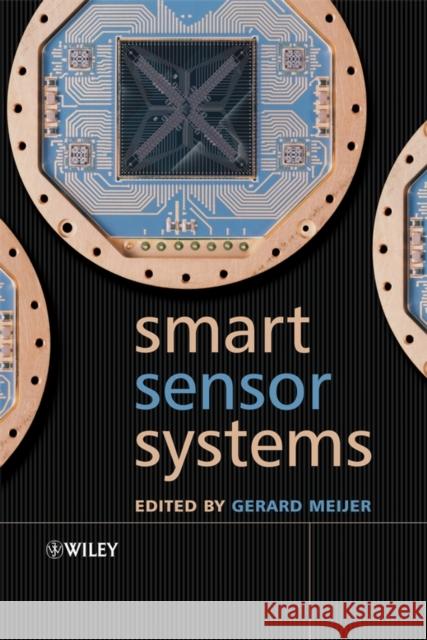
Smart Sensor Systems Gerard Meijer 9780470866917 John Wiley & Sons - książkaWidoczna okładka, to zdjęcie poglądowe, a rzeczywista szata graficzna może różnić się od prezentowanej.

Smart Sensor Systems

ISBN-13: 9780470866917 / Angielski / Twarda / 2007 / 404 str.

Gerard Meijer
cena 440,41 zł
(netto: 419,44 VAT:  5%)

Najniższa cena z 30 dni: 436,80 zł
Termin realizacji zamówienia:
ok. 30 dni roboczych
Bez gwarancji dostawy przed świętami

Darmowa dostawa!

With contributions from an internationally-renowned group of experts, this book uses a multidisciplinary approach to review recent developments in the field of smart sensor systems, providing complete coverage of all important system and design aspects, their building blocks and methods of signal processing. It examines topics over the whole range of sensor technology from the theory and constraints of basic elements, the applied techniques and electronic, up to the level of application-orientated issues. Developed as a complementary volume to 'Smart Sensor Systems' (Wiley 2008), which introduces the theoretical foundations, this volume focuses on practical applications, including:

  • State-of-the-art techniques for designing smart sensors and smart sensor systems, with measurement techniques at system level, such as collaboration and trimming, and impedance-measurement techniques.
  • Sensing elements and sensor systems for the measurement of mechanical quantities, and microarrays for DNA detection.
  • Circuitdesign for sensor systems, such as the design of low-noise amplifiers, and measurement techniques at device level, such as dynamic offset cancellation and optical imagers.
  • Implantable smart sensors for bio-medical applications and automotive sensors.
  • A supplementary website hosts case studies and a solutions manual to the problems
Smart Sensor Systems: Emerging Technologies and Applications will greatly benefit final year undergraduate and postgraduate students in the areas of electrical, mechanical and chemical engineering, and physics. Professional engineers and researchers in the microelectronics industry, including microsystem developers, will also find this a thorough and useful volume.

Kategorie:
Technologie
Kategorie BISAC:
Technology & Engineering > Electronics - Microelectronics
Technology & Engineering > Technical & Manufacturing Industries & Trades
Wydawca:
John Wiley & Sons
Język:
Angielski
ISBN-13:
9780470866917
Rok wydania:
2007
Ilość stron:
404
Waga:
0.81 kg
Wymiary:
24.89 x 17.27 x 2.79
Oprawa:
Twarda
Wolumenów:
01
Dodatkowe informacje:
Bibliografia

"Writing by really stellar internationally–recognized team of experts .[This book] provides the reader with a deep understanding of the basic principles and concepts of advanced sensor systems." ( Sensors and Transducers, March 2009)

Preface.

About the Authors.

1 Smart Sensor Systems: Why? Where? How? (Johan H. Huijsing).

1.1 Third Industrial Revolution.

1.2 Definitions for Several Kinds of Sensors.

1.3 Automated Production Machines.

1.4 Automated Consumer Products.

1.5 Conclusion.

References.

2 Interface Electronics and Measurement Techniques for Smart Sensor Systems (Gerard C.M. Meijer).

2.1 Introduction.

2.2 Object–oriented Design of Sensor Systems.

2.3 Sensing Elements and Their Parasitic Effects.

2.4 Analog–to–digital Conversion.

2.5 High Accuracy Over a Wide Dynamic Range.

2.6 A Universal Transducer Interface.

2.7 Summary and Future Trends.

Problems.

References.

3 Silicon Sensors: An Introduction (Paddy J. French).

3.1 Introduction.

3.2 Measurement and Control Systems.

3.3 Transducers.

3.4 Transducer Technologies.

3.5 Examples of Silicon Sensors.

3.6 Summary and Future Trends.

References.

4 Optical Sensors Based on Photon Detection (Reinoud F. Wolffenbuttel).

4.1 Introduction.

4.2 Photon Absorption in Silicon.

4.3 The Interface: Photon Transmission Into Silicon.

4.4 Photon Detection in Silicon Photoconductors.

4.5 Photon Detection in Silicon pn Junctions.

4.6 Detection Limit.

4.7 Photon Detectors with Gain.

4.8 Application Examples.

4.9 Summary and Future Trends.

Problems.

References.

5 Physical Chemosensors (Michael J. Vellekoop).

5.1 Introduction.

5.2 Physical Chemosensing.

5.3 Energy Domains.

5.4 Examples and Applications.

5.5 Examples of in situ Applications.

5.6 Microfluidics Devices.

5.7 Conclusions.

Problems.

References.

6 Thermal Sensors (Sander (A.W.) van Herwaarden).

6.1 The Functional Principle of Thermal Sensors.

6.2 Heat Transfer Mechanisms.

6.3 Thermal Structures.

6.4 Temperature–Difference Sensing Elements.

6.5 Sensors Based on Thermal Measurements.

6.6 Summary and Future Trends.

Problems.

References.

7 Smart Temperature Sensors and Temperature–Sensor Systems (Gerard C.M. Meijer).

7.1 Introduction.

7.2 Application–related Requirements and Problems of Temperature Sensors.

7.3 Resistive Temperature–sensing Elements.

7.4 Temperature–sensor Features of Transistors.

7.5 Smart Temperature Sensors and Systems.

7.6 Case Studies of Smart–sensor Applications.

7.7 Summary and Future Trends.

Problems.

References.

8 Capacitive Sensors (Xiujun Li and Gerard C.M. Meijer).

8.1 Introduction.

8.2 Basics of Capacitive Sensors.

8.3 Examples of Capacitive Sensors.

8.4 The Design of Electrode Configurations.

8.5 Reduction of Field–bending Effects: Segmentation.

8.6 Selectivity for Electrical Signals and Electrical Parameters.

8.7 Summary and Future Trends.

Problems.

References.

9 Integrated Hall Magnetic Sensors (Radivoje S. Popovi´c and Pavel Kejik).

9.1 Introduction.

9.2 Hall Effect and Hall Elements.

9.3 Integrated Hall Sensor Systems.

9.4 Examples of Integrated Hall Magnetic Sensors.

Problems.

References.

10 Universal Asynchronous Sensor Interfaces (Gerard C.M. Meijer and Xiujun Li).

10.1 Introduction.

10.2 Universal Sensor Interfaces.

10.3 Asynchronous Converters.

10.4 Dealing with Problems of Low–cost Design of Universal Interface ICs.

10.5 Front–end Circuits.

10.6 Case Studies.

10.7 Summary and Future Trends.

Problems.

References.

11 Data Acquisition for Frequency– and Time–domain Sensors (Sergey Y. Yurish).

11.1 Introduction.

11.2 DAQ Boards: State of the Art.

11.3 DAQ Board Design for Quasi–digital Sensors.

11.4 Universal Frequency–to–digital Converters (UFDC).

11.5 Applications and Examples.

11.6 Summary and Future Trends.

Problems.

References.

12 Microcontrollers and Digital Signal Processors for Smart Sensor Systems (Ratcho M. Ivanov).

12.1 Introduction.

12.2 MCU and DSP Architectures, Organization, Structures, and Peripherals.

12.3 Choosing a Low–Power MCU or DSP.

12.4 Timer Modules.

12.5 Analog Comparators, ADCs, and DACs as Modules of Microcontrollers.

12.6 Embedded Networks and LCD Interfacing.

12.7 Development Tools and Support.

12.8 Conclusions.

References Sites.

Appendix A Material Data.

Appendix B Conversion for non–SI Units.

Index.

Information processing systems need sensors to acquire the physical, mechanical and chemical information to be able to function. For extended use of sensors in industrial production tools and consumer components, such as smart cars and smart homes, the reliability of the sensors should be improved and the cost dramatically reduced. The improvement of reliability, together with a reduction of cost, can only be achieved with smart sensor systems.

These systems combine the functions of sensors and interfaces, including sensors, signal conditioning A–D (analog to digital) conversion, and bus interfacing. Also, applications at a higher hierarchical level are included, such as self–testing, auto–calibration, data evaluation and identification. Developments into the integration of sensors with electronic circuitry to produce smart sensors and smart sensor systems are increasing as research in this field continues to expand.

Written by an internationally–recognized team of experts, this book reviews recent developments in the field of smart sensor systems, providing complete coverage of all important system aspects. It takes a multidisciplinary approach to the understanding, design and use of smart sensor systems, their building blocks and methods of signal processing. This book also contains:

  • a review of powerful measurement techniques, and basic principles and typical problems of sensor elements, smart analog interfaces and A–D converters;
  • a discussion about how to use microcontrollers and DSPs (digital signal processors) for sensor applications;
  • detailed up–to–date reviews of the features of optical, integrated hall magnetic, capacitive, thermal sensors, and temperature sensors and physical chemosensors;
  • numerous case studies and problems set at the end of each chapter to test and develop your knowledge on the theory. Solutions for all can be found on the accompanying website.

Smart Sensor Systems will greatly benefit final year undergraduate and postgraduate students and professors in the areas of electrical, mechanical and chemical engineering, and physics. Professional engineers and researchers in the microelectronics industry, including microsystem developers, will also find this a thorough and useful volume.

www.wiley.com/go/meijer—smart


Udostępnij

Facebook - konto krainaksiazek.pl


Opinie o Krainaksiazek.pl na Opineo.pl

Partner Mybenefit

Krainaksiazek.pl w programie rzetelna firma Krainaksiaze.pl - płatności przez paypal

Czytaj nas na:

Facebook - krainaksiazek.pl
  • książki na zamówienie
  • granty
  • książka na prezent
  • kontakt
  • pomoc
  • opinie
  • regulamin
  • polityka prywatności

Zobacz:

  • Księgarnia czeska

  • Wydawnictwo Książkowe Klimaty

1997-2025 DolnySlask.com Agencja Internetowa

© 1997-2022 krainaksiazek.pl
     
KONTAKT | REGULAMIN | POLITYKA PRYWATNOŚCI | USTAWIENIA PRYWATNOŚCI
Zobacz: Księgarnia Czeska | Wydawnictwo Książkowe Klimaty | Mapa strony | Lista autorów
KrainaKsiazek.PL - Księgarnia Internetowa

Polityka prywatnosci - link
Krainaksiazek.pl - płatnośc Przelewy24
Przechowalnia Przechowalnia






