• Wyszukiwanie zaawansowane
  • Kategorie
  • Kategorie BISAC
  • Książki na zamówienie
  • Promocje
  • Granty
  • Książka na prezent
  • Opinie
  • Pomoc
  • Załóż konto
  • Zaloguj się

Smart Nanomaterials in Biomedical Applications » książka


zaloguj się | załóż konto
Logo Krainaksiazek.pl

koszyk

konto

szukaj
topmenu
Księgarnia internetowa
Szukaj
Książki na zamówienie
Promocje
Granty
Książka na prezent
Moje konto
Pomoc
 
 
Wyszukiwanie zaawansowane
Pusty koszyk
Bezpłatna dostawa dla zamówień powyżej 20 złBezpłatna dostawa dla zamówień powyżej 20 zł

Kategorie główne

• Nauka
 [2949965]
• Literatura piękna
 [1857847]

  więcej...
• Turystyka
 [70818]
• Informatyka
 [151303]
• Komiksy
 [35733]
• Encyklopedie
 [23180]
• Dziecięca
 [617748]
• Hobby
 [139972]
• AudioBooki
 [1650]
• Literatura faktu
 [228361]
• Muzyka CD
 [398]
• Słowniki
 [2862]
• Inne
 [444732]
• Kalendarze
 [1620]
• Podręczniki
 [167233]
• Poradniki
 [482388]
• Religia
 [509867]
• Czasopisma
 [533]
• Sport
 [61361]
• Sztuka
 [243125]
• CD, DVD, Video
 [3451]
• Technologie
 [219309]
• Zdrowie
 [101347]
• Książkowe Klimaty
 [123]
• Zabawki
 [2362]
• Puzzle, gry
 [3791]
• Literatura w języku ukraińskim
 [253]
• Art. papiernicze i szkolne
 [7933]
Kategorie szczegółowe BISAC

Smart Nanomaterials in Biomedical Applications

ISBN-13: 9783030842642 / Angielski / Miękka / 2023 / 600 str.
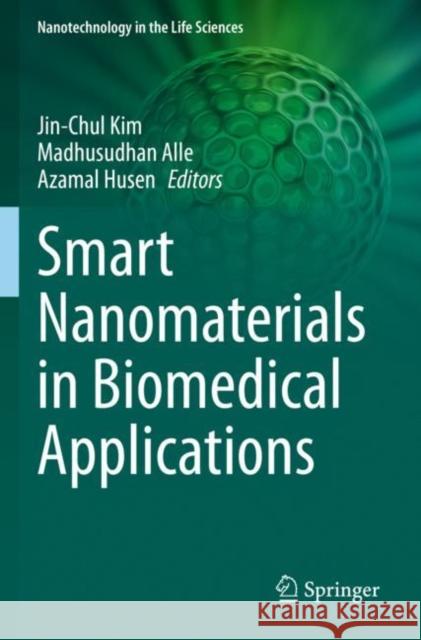
Jin-Chul Kim; Madhusudhan Alle; Azamal Husen
Smart Nanomaterials in Biomedical Applications Jin-Chul Kim Madhusudhan Alle Azamal Husen 9783030842642 Springer - książkaWidoczna okładka, to zdjęcie poglądowe, a rzeczywista szata graficzna może różnić się od prezentowanej.

Smart Nanomaterials in Biomedical Applications

ISBN-13: 9783030842642 / Angielski / Miękka / 2023 / 600 str.

Jin-Chul Kim; Madhusudhan Alle; Azamal Husen
cena 564,88 zł
(netto: 537,98 VAT:  5%)

Najniższa cena z 30 dni: 539,74 zł
Termin realizacji zamówienia:
ok. 22 dni roboczych
Bez gwarancji dostawy przed świętami

Darmowa dostawa!
inne wydania

With the start of 2020, the wrath of pandemic challenged the scientific community to develop more advanced drug delivery approaches for biomedical applications, endowing conventional drugs with additional therapeutic benefits and minimum side effects. Although significant advancements have been done in the field of drug delivery, there is a need to focus towards strategizing novel and improved drug delivery systems that should be convenient and cost-effective to the patients, and simultaneously they should also provide financial benefits to pharmaceutical companies. Controlled drug delivery technology offers ample opportunities and scope for improvising the therapeutic efficacy of drugs via optimizing the drug release rate and time. For this endeavour, smart nanomaterials have served as remarkable candidates for biomedical applications, owing to their ground-breaking properties and design. The development of such nanomaterials requires a broad knowledge related to their physio-chemical properties, molecular structure, mechanisms by which the nanomaterials interact with the cells, and methods by which drugs are released at the site of action. This knowledge must also be allied with the knowledge of signaling crosstalk mechanisms that are modulated by the nanomaterial-drugs composite. It can be anticipated that these emerging drug delivery technologies can facilitate the world to successfully encounter such pandemic outbursts in the future in a cost-effective and time-effective manner. The chapters in this book deal with the advanced technologies and approaches that can benefit advanced students, researchers, and industry experts in developing smart and intelligent nanomaterials for future biomedical applications, and development, manufacturing, and commercialization for controlled and targeted drug delivery.


With the start of 2020, the wrath of pandemic challenged the scientific community to develop more advanced drug delivery approaches for biomedical applications, endowing conventional drugs with additional therapeutic benefits and minimum side effects. Although significant advancements have been done in the field of drug delivery, there is a need to focus towards strategizing novel and improved drug delivery systems that should be convenient and cost-effective to the patients, and simultaneously they should also provide financial benefits to pharmaceutical companies. Controlled drug delivery technology offers ample opportunities and scope for improvising the therapeutic efficacy of drugs via optimizing the drug release rate and time. For this endeavour, smart nanomaterials have served as remarkable candidates for biomedical applications, owing to their ground-breaking properties and design. The development of such nanomaterials requires a broad knowledge related to their physio-chemical properties, molecular structure, mechanisms by which the nanomaterials interact with the cells, and methods by which drugs are released at the site of action. This knowledge must also be allied with the knowledge of signaling crosstalk mechanisms that are modulated by the nanomaterial-drugs composite. It can be anticipated that these emerging drug delivery technologies can facilitate the world to successfully encounter such pandemic outbursts in the future in a cost-effective and time-effective manner. The chapters in this book deal with the advanced technologies and approaches that can benefit advanced students, researchers, and industry experts in developing smart and intelligent nanomaterials for future biomedical applications, and development, manufacturing, and commercialization for controlled and targeted drug delivery.

Kategorie:
Nauka, Medycyna
Kategorie BISAC:
Medical > Oncology - General
Science > Biotechnology
Technology & Engineering > Nanotechnology & MEMS
Wydawca:
Springer
Seria wydawnicza:
Nanotechnology in the Life Sciences
Język:
Angielski
ISBN-13:
9783030842642
Rok wydania:
2023
Wydanie:
2021
Numer serii:
000835759
Ilość stron:
600
Waga:
0.84 kg
Wymiary:
23.39 x 15.6 x 3.15
Oprawa:
Miękka
Wolumenów:
01
Dodatkowe informacje:
Glosariusz/słownik
Wydanie ilustrowane

FOREWORD
Prof. G. Veerabhadram

PREFACE

Chapter 1: Introduction to active smart nanomaterials for biomedical applications
Jin-Chul Kim
Kangwon National University, Chuncheon, South Korea  

Chapter 2: Cancer cell sensing and therapy using affinity tag-conjugated gold nanoparticles
Alle Madhusudhan
Kangwon National University, Chuncheon, South Korea  

Chapter 3: Gold nanoparticles enlighten the future of cancer theranostics
Jianfeng Guo
School of Pharmaceutical Sciences, Jilin University, 1266, Fujin Road, Changchun 130021, China

Chapter 4: Recent advances in hydrogels smart drug delivery systems 
Sharif Ahmad
Department of Pharmacology, All India Institute of Medical Sciences, India
 
Chapter 5: Carbon-based nanomaterials for biomedical applications
Kai Yang
State Key Laboratory of Radiation Medicine and Protection, School of Radiation Medicine and Protection, School for Radiological and Interdisciplinary Sciences (RAD-X), Collaborative Innovation Center of Radiation Medicine of Jiangsu Higher Education Institutions, Soochow University, Suzhou, China
  
Chapter 6: A new era of cancer treatment: carbon nanotubes as drug delivery tools
Alexander M Seifalian
Centre for Nanotechnology and Regenerative Medicine, University, College London, London, UK 

Chapter 7: pH- and ion-sensitive materials for control drug delivery 
Takayuki Yoshida
Drug Delivery, Pharmaceutical Research and Technology Labs, Astellas Pharma, Inc., 180 Ozumi, Yaizu, Shizuoka 425-0072, Japan

Chapter 8: Thermo-responsive polymers and their application as smart biomaterials
Yukiko T. Matsunaga
Center for International Research on Integrative Biomedical Systems (CIBiS), The University of Tokyo, 4-6-1 Komaba, Meguro-ku, Tokyo 153-8505, Japan

Chapter 9: Redox-responsive polymers and their application in drug delivery systems
John F. Quinn
ARC Centre of Excellence in Convergent Bio-Nano Science & Technology, Monash Institute of Pharmaceutical Sciences, Monash University, Parkville, Melbourne, Victoria 3052, Australia

Chapter 10: Recent strategies to explore the biomedical applications of nanocellulose
Dinesh Kumar
Kangwon National University, Chuncheon, South Korea 

Chapter 11: Tissue engineering using cellulose nanofibrils as Scaffold Material
Andrew E. Pelling
SymbioticA, School of Human Sciences, University of Western Australia, Perth, WA, Australia

Chapter 12: Use of solid lipid nanoparticles to improve the oral bioavailability of poor soluble drugs
Deepti Pandita
Department of Pharmaceutics, Jan Nayak Ch. Devi Lal Memorial College of Pharmacy, Sirsa 125055, Haryana, India

Chapter 13: Applications of dendrimers in drug delivery systems
E. Bustos
Centro de Investigacion y Desarrollo Tecnol ´ ogico en Electroqu ´ ´ımica S.C., Parque Tecnologico Quer ´ etaro s/n, Sanfandila, 76703 Pedro Escobedo, QRO, Mexico

Chapter 14: Liposomes for drug delivery: progress and problems
Jin-Chul Kim
Kangwon national University, Chuncheon, South Korea

Chapter 15: Cubosome nanoparticles for enhanced delivery of anticancer drug
Jana B. Nieder
Department of Nanophotonics, Ultrafast Bio- and Nanophotonics Group, INL - International Iberian Nanotechnology Laboratory, Av. Mestre José Veiga s/n, 4715-330, Braga, Portugal

Chapter 16: Layer‐by‐Layer assemblies for cancer diagnosis and treatment 
UMR CNRS/INPG 5628 (LMGP), 3 parvis Louis Néel, 38016 Grenoble, France

Chapter 17: Polymeric micelles for drug delivery
Afsanesh Lavasanifar 
University of Albert, Edmonton, Alberta T6G2N8, Canada

Chapter 18: Role of plant-based materials/gums in developing drug delivery systems 
B. Sashidhar Rao 
Department of Biochemistry, Osmania University, Hyderabad, India

Chapter 19: Ethosomes: A novel tool for drug delivery through the skin
Amarachinta Padmanabha Rao

Chapter 20: Niosomes as nanoparticular drug carriers: fundamentals and recent applications
Noufel Samed

Chapter 21: Graphene oxide nanosheets used in photothermal therapy
Hongjie Dai 
Department of Chemistry, Stanford University, Stanford, California 94305, United States
 
Chapter 22: Metal doped carbon dots used in bio-imaging and cancer therapy
Joydeep Das
School of Chemistry, Shoolini University of Biotechnology and Management Sciences, Bajhol, PO Sultanpur, Solan, HP, 173229, India

BIBLIOGRAPHY

GLOSSARY

INDEX

Professor Jin-Chul Kim is currently working as a Professor at Department of Biomedical Science & Institute of Bioscience and Biotechnology, Kangwon National University, South Korea, since 2003. Earlier he worked as a senior researcher at LG Household & healthcare, Republic of Korea (1999 – 2003). He completed his Post-doctoral research at Department of Industrial and Physical Pharmacy (IPPH), Purdue University, USA (1997 – 1998). He received his Master’s and Doctorate degree from Department of Chemical Engineering, Korea Advanced Institute of Science and Technology (KAIST), Republic of Korea (1991 – 1997) and his Bachelor’s degree from Department of Chemical Engineering, Yonsei University, Republic of Korea (1987-1991). He has more than 25 years of experience in teaching and research in both academia and industry. He has published more than 300 scientific papers in SCI/SCIE-grade journals as a lead author/corresponding author. He has many awards to his credit, to name a few, Outstanding Teacher Award (Kangwon National University, 2014), Teaching Award (Kangwon National University, 2008), Outstanding Researcher Award (LG household & healthcare, 2001), Patent Award (LG household & healthcare, 2001), Patent Award (LG Chem., 2000), and Award in championship Transport Phenomenon Competition for University Student (Korean Chemical Engineering Society, 1990). He was the leader of a team, named “Education and research team for cultivation of graduate students talented with development of drug carriers for biopharmaceuticals delivery”, under BK21 PLUS (2016-2020). He is leading a research part “Development of biomedical materials based on nanocellulose” of the Priority Research Centers Program of the National Research Foundation of Korea (NRF) funded by the Ministry of Education (2018-2027). He is the leader of a team, named “Education and research team for cultivation of graduate students globally and convergently talented with development of drug carriers for biopharmaceuticals delivery”, under BK21 FOUR (2020-2027). His current research interests include drug delivery systems, colloid & interfaces science, and polymer science.

Dr. Madhusudhan Alle is currently working as a Research Professor at Department of Biomedical Science & Institute of Bioscience and Biotechnology, Kangwon National University, South Korea (since 2018). Earlier he has worked as an Associate Professor at Department of Chemistry, Gondar University, Gondar, Ethiopia (2014-2018). During this period he also served as a Coordinator of MSc (Chemistry) Programs and as the Head of the Chemistry Department. Four students submitted their master’s thesis under his supervision. He received his doctorate from Department of Chemistry, Osmania University, India (2013), where he worked on the research projects sponsored by University Grants Commission, India. He has more than 18 years of experience in teaching and research in both academia and industry. He has published more than 50 scientific papers in SCI/SCIE-grade journals as a first and corresponding author and also published 4 book chapters (Springer and Elsevier). He is also listed as a potential reviewer for many reputed international journals. He is also a member of Ethiopian chemical society and Indian chemical society. He has presented his work in several national and international conferences in India, Ethiopia, and South Korea. He has conducted two research projects sponsored by University Grants Commission (UGC), New Delhi, India. His current research interests include biosciences, polymeric nano-drug delivery systems, cancer biology, biomaterials for sustainability and catalysis. Extraction and chemical modification of nanocellulose from lignocellulosic biomass, green synthesis of metal and metal oxide nanoparticles on nanocellulose support and their novel applications in biomedicine, biosensors and catalysis.

Professor Azamal Husen (BSc from Shri Murli Manohar Town Post Graduate College, Ballia, UP, MSc from Hamdard University, New Delhi, and PhD from Forest Research Institute, Dehra Dun, India) is a Foreign Delegate at Wolaita Sodo University, Wolaita, Ethiopia. He has served the University of Gondar, Ethiopia, as a Full Professor of Biology, and also worked as the Coordinator of the MSc Program and as the Head, Department of Biology. He was a Visiting Faculty of the Forest Research Institute, and the Doon College of Agriculture and Forest at Dehra Dun, India. He has more than 20 years’ experience of teaching, research, and administration. Dr Husen specializes in biogenic nanomaterial fabrication and their application, plant responses to nanomaterials, plant production and adaptation to harsh environments at the physiological, biochemical, and molecular levels, herbal medicine, and clonal propagation and improvement of tree species. He has conducted several research projects sponsored by various funding agencies, including the World Bank, the Indian Council of Agriculture Research (ICAR), the Indian Council of Forest Research Education (ICFRE); and the Japan Bank for International Cooperation (JBIC). He has published over 100 research papers, review articles and book chapters, edited books of international repute, presented papers in several conferences, and produced over a dozen manuals and monographs. Dr Husen received four fellowships from India and a recognition award from the University of Gondar, Ethiopia, for excellent teaching, research, and community service. An active organizer of seminars/conferences and an efficient evaluator of research projects and book proposals, Dr Husen has been on the Editorial board and the panel of reviewers of several reputed journals published by Elsevier, Frontiers Media SA, Taylor & Francis, Springer Nature, RSC, Oxford University Press, Sciendo, The Royal Society, CSIRO, PLOS, and John Wiley & Sons. He is on the advisory board of Cambridge Scholars Publishing, UK. He is a Fellow of the Plantae group of the American Society of Plant Biologists, and a Member of the International Society of Root Research, Asian Council of Science Editors, ISDS, and INPST. In addition, he is Editor-in-Chief of the American Journal of Plant Physiology; and a Series Editor of ‘Exploring Medicinal Plants’, published by Taylor & Francis Group, USA.

With the start of 2020, the wrath of pandemic challenged the scientific community to develop more advanced drug delivery approaches for biomedical applications, endowing conventional drugs with additional therapeutic benefits and minimum side effects. Although significant advancements have been done in the field of drug delivery, there is a need to focus towards strategizing novel and improved drug delivery systems that should be convenient and cost-effective to the patients, and simultaneously they should also provide financial benefits to pharmaceutical companies. Controlled drug delivery technology offers ample opportunities and scope for improvising the therapeutic efficacy of drugs via optimizing the drug release rate and time. For this endeavour, smart nanomaterials have served as remarkable candidates for biomedical applications, owing to their ground-breaking properties and design. The development of such nanomaterials requires a broad knowledge related to their physio-chemical properties, molecular structure, mechanisms by which the nanomaterials interact with the cells, and methods by which drugs are released at the site of action. This knowledge must also be allied with the knowledge of signaling crosstalk mechanisms that are modulated by the nanomaterial-drugs composite. It can be anticipated that these emerging drug delivery technologies can facilitate the world to successfully encounter such pandemic outbursts in the future in a cost-effective and time-effective manner. The chapters in this book deal with the advanced technologies and approaches that can benefit advanced students, researchers, and industry experts in developing smart and intelligent nanomaterials for future biomedical applications, and development, manufacturing, and commercialization for controlled and targeted drug delivery.




Udostępnij

Facebook - konto krainaksiazek.pl


Opinie o Krainaksiazek.pl na Opineo.pl

Partner Mybenefit

Krainaksiazek.pl w programie rzetelna firma Krainaksiaze.pl - płatności przez paypal

Czytaj nas na:

Facebook - krainaksiazek.pl
  • książki na zamówienie
  • granty
  • książka na prezent
  • kontakt
  • pomoc
  • opinie
  • regulamin
  • polityka prywatności

Zobacz:

  • Księgarnia czeska

  • Wydawnictwo Książkowe Klimaty

1997-2025 DolnySlask.com Agencja Internetowa

© 1997-2022 krainaksiazek.pl
     
KONTAKT | REGULAMIN | POLITYKA PRYWATNOŚCI | USTAWIENIA PRYWATNOŚCI
Zobacz: Księgarnia Czeska | Wydawnictwo Książkowe Klimaty | Mapa strony | Lista autorów
KrainaKsiazek.PL - Księgarnia Internetowa

Polityka prywatnosci - link
Krainaksiazek.pl - płatnośc Przelewy24
Przechowalnia Przechowalnia




