• Wyszukiwanie zaawansowane
  • Kategorie
  • Kategorie BISAC
  • Książki na zamówienie
  • Promocje
  • Granty
  • Książka na prezent
  • Opinie
  • Pomoc
  • Załóż konto
  • Zaloguj się

Small Scale Soil-less Urban Agriculture in Europe » książka


zaloguj się | załóż konto
Logo Krainaksiazek.pl

koszyk

konto

szukaj
topmenu
Księgarnia internetowa
Szukaj
Książki na zamówienie
Promocje
Granty
Książka na prezent
Moje konto
Pomoc
 
 
Wyszukiwanie zaawansowane
Pusty koszyk
Bezpłatna dostawa dla zamówień powyżej 20 złBezpłatna dostawa dla zamówień powyżej 20 zł

Kategorie główne

• Nauka
 [2946912]
• Literatura piękna
 [1852311]

  więcej...
• Turystyka
 [71421]
• Informatyka
 [150889]
• Komiksy
 [35717]
• Encyklopedie
 [23177]
• Dziecięca
 [617324]
• Hobby
 [138808]
• AudioBooki
 [1671]
• Literatura faktu
 [228371]
• Muzyka CD
 [400]
• Słowniki
 [2841]
• Inne
 [445428]
• Kalendarze
 [1545]
• Podręczniki
 [166819]
• Poradniki
 [480180]
• Religia
 [510412]
• Czasopisma
 [525]
• Sport
 [61271]
• Sztuka
 [242929]
• CD, DVD, Video
 [3371]
• Technologie
 [219258]
• Zdrowie
 [100961]
• Książkowe Klimaty
 [124]
• Zabawki
 [2341]
• Puzzle, gry
 [3766]
• Literatura w języku ukraińskim
 [255]
• Art. papiernicze i szkolne
 [7810]
Kategorie szczegółowe BISAC

Small Scale Soil-less Urban Agriculture in Europe

ISBN-13: 9783030999643 / Angielski / Miękka / 2023
Silvio Caputo
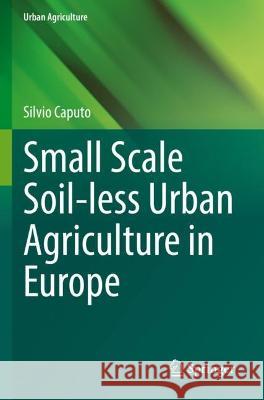
Small Scale Soil-less Urban Agriculture in Europe Silvio Caputo 9783030999643 Springer International Publishing - książkaWidoczna okładka, to zdjęcie poglądowe, a rzeczywista szata graficzna może różnić się od prezentowanej.

Small Scale Soil-less Urban Agriculture in Europe

ISBN-13: 9783030999643 / Angielski / Miękka / 2023

Silvio Caputo
cena 523,30
(netto: 498,38 VAT:  5%)

Najniższa cena z 30 dni: 501,19
Termin realizacji zamówienia:
ok. 22 dni roboczych
Bez gwarancji dostawy przed świętami

Darmowa dostawa!
inne wydania

This Monograph focuses on the new approaches that urban agriculture offers to grow food in cities. The author paints a dynamic picture of soil-less and indoor techniques that are currently emerging. A growing number of small scale community-led and entrepreneurial initiatives are using such techniques for diverse objectives: to increase resource efficiency; to strengthen food security; to educate and inform or to exploit new market opportunities. The described studies demonstrate how technologies that are typically used in high-tech food production can also be harnessed in small projects to generate social and economic benefits at a local level.  The author puts a focus on three aspects: to outline the context within which small scale soil-less urban agriculture is developing in Europe; to give an overview of the state-of-the-art of projects focusing on this area through case study analysis and to elaborate on emerging questions. Such questions include: is the use of soil-less urban agriculture changing the relationship with, and perception of, what is natural and sustainable for urban farmers and small enterprises working in this sector? What is the perceived potential of these soil-less and indoor forms of urban agriculture to meet environmental, social and economic goals? By answering these and other questions, the volume is a valuable resource for researchers in agriculture and sustainability, as well as urban farmers.


Kategorie:
Nauka, Geografia
Kategorie BISAC:
Technology & Engineering > Agriculture - General
Science > Earth Sciences - Geography
Wydawca:
Springer International Publishing
Seria wydawnicza:
Urban Agriculture
Język:
Angielski
ISBN-13:
9783030999643
Rok wydania:
2023
Waga:
0.40 kg
Wymiary:
23.5 x 15.5
Oprawa:
Miękka
Dodatkowe informacje:
Wydanie ilustrowane

Chapter 1. Introduction.

Chapter 2. Recent developments in urban agriculture.

2.1 - Community-based urban agriculture

2.2. - Metabolic urban agriculture

2.3 - Experimental urban agriculture

2.4 - Profiles of gardeners

Chapter 3. The broader debate on Science, Technology, Society and Food.

3.1. Overview

3.2. Policy and the promotion of Science and Technology

3.3. New approaches to the production of technology

3.4. Technology and food production

Chapter 4. Histories, techniques and technologies of soul-less cultivation.

4.1. Hydroponics.

4.1.1. Introduction

4.1.2. Modern hydroponics

4.1.3. Hydroponic systems: functioning and technologies

4.1.3.1. Nutrient solution

4.1.3.2. Ph

4.1.3.3. Oxygen and temperature

4.1.4. Types of hydroponic systems

4.1.4.1. Deep Water Culture

4.1.4.2. Nutrient Film Technique

4.1.4.3. Aeroponics

4.1.4.4. Vertical farming

4.1.4.5. Flood and Ebb

4.1.5. Types of simplified hydroponics

4.1.6. Productivity

4.1.7. Policy context

4.1.8. Market context

4.2. Aquaponics.

4.2.1. Introduction

4.2.2. History

4.2.3. Aquaponic systems: functioning and technologies

4.2.3.1. Filters

4.2.3.2. Biofilters

4.2.3.3. Temperature and other factors

4.2.3.4. Animal wellbeing

4.2.4. Coupled aquaponic systems

4.2.5. Decoupled aquaponic systems

4.2.6. Productivity

4.2.7. Policy context

4.2.8. Market context

4.3. Mushroom Farming.

4.3.1. Background and history

4.3.2. Mushroom farming: functioning and technologies

4.3.2.1. Spawning

4.3.2.2. Substrate sterilisation

4.3.2.3. Climate control

4.3.3. Environmental efficiency, productivity and market context

Chapter 5. Methodology of the study: how success is measured.

5.1. General methodology

5.2. Scope of evaluation

Chapter 6. Case studies.

6.1.  El Milagro de los peces

6.2. Asociacion Huerto Lazo

6.3. Real Food Wythenshawe / Geodome

6.4. UGH / Die Urbanisten

6.5. Mangrovia Scicli

6.6. Bioaqua Farm

6.7. Smart Farmers

6.8. GROWx

6.9. Farms that closed.

6.9.1. Unit 84 / GrowUp Urban Farms

6.9.2. Bristol Fish Project

6.10. RotterZwam

6.11. Small mushroom farms

6.11.1 Trueffelwerk

6.11.2 Containing mushrooms

6.12. Educational organisations

6.12.1. Sow the City

6.12.2. Hemmaodlat

Chapter 7. The web community of soil-less farmers: a case study (authors: Valentina Manente and Silvio Caputo).

7.1. Introduction

7.2. Methodology and results

7.3. Discussion

7.3.1. Practical motivations

7.3.2. Quality of food produced

7.3.3. Relationship with technology

7.3.4. Commercial reasons and other observations

Chapter 8. Discussion: analysing the case studies and the wider phenomenon of small scale soil-less urban agriculture.

8.1. Introduction

8.2. Motivations

8.2.1. Education

8.2.2. Self-supply

8.2.3. Commercial motivations

8.2.4. Sustainable food production

8.2.5. Environment

8.2.6. Technology

8.3. Outcomes

8.3.1. Small enterprises

8.3.2. Community-led projects

8.4. Productivity

8.5. Environmental performance

Chapter 9 – Conclusions and future steps.

9.1. Context

9.2. Technology

9.3. Agricultural industry

9.4. Urban agriculture and soil-less technologies

9.5. Urban soil-less future scenarios

9.6. Unnatural

9.7. Small and big, urban waste and final remarks.

Silvio Caputo is a UK-based architect and academic investigating urban resilience, urban green infrastructure and sustainable food planning. He is interested in the dynamics through which urban food growing modifies the urban landscape and the functionality of urban spaces, influences patterns of land use, utilises urban waste as an input and technology, and catalyses social innovation. He has published articles in high-impact journals, and co-edited and co-authored books.


This Monograph focuses on the new approaches that urban agriculture offers to grow food in cities. The author paints a dynamic picture of soil-less and indoor techniques that are currently emerging. A growing number of small scale community-led and entrepreneurial initiatives are using such techniques for diverse objectives: to increase resource efficiency; to strengthen food security; to educate and inform or to exploit new market opportunities. The described studies demonstrate how technologies that are typically used in high-tech food production can also be harnessed in small projects to generate social and economic benefits at a local level.


The author puts a focus on three aspects: to outline the context within which small scale soil-less urban agriculture is developing in Europe; to give an overview of the state-of-the-art of projects focusing on this area through case study analysis and to elaborate on emerging questions. Such questions include: is the use of soil-less urban agriculture changing the relationship with, and perception of, what is natural and sustainable for urban farmers and small enterprises working in this sector? What is the perceived potential of these soil-less and indoor forms of urban agriculture to meet environmental, social and economic goals?

By answering these and other questions, the volume is a valuable resource for researchers in agriculture and sustainability, as well as urban farmers.




Udostępnij

Facebook - konto krainaksiazek.pl


Opinie o Krainaksiazek.pl na Opineo.pl

Partner Mybenefit

Krainaksiazek.pl w programie rzetelna firma Krainaksiaze.pl - płatności przez paypal

Czytaj nas na:

Facebook - krainaksiazek.pl
  • książki na zamówienie
  • granty
  • książka na prezent
  • kontakt
  • pomoc
  • opinie
  • regulamin
  • polityka prywatności

Zobacz:

  • Księgarnia czeska

  • Wydawnictwo Książkowe Klimaty

1997-2025 DolnySlask.com Agencja Internetowa

© 1997-2022 krainaksiazek.pl
     
KONTAKT | REGULAMIN | POLITYKA PRYWATNOŚCI | USTAWIENIA PRYWATNOŚCI
Zobacz: Księgarnia Czeska | Wydawnictwo Książkowe Klimaty | Mapa strony | Lista autorów
KrainaKsiazek.PL - Księgarnia Internetowa

Polityka prywatnosci - link
Krainaksiazek.pl - płatnośc Przelewy24
Przechowalnia Przechowalnia




