• Wyszukiwanie zaawansowane
  • Kategorie
  • Kategorie BISAC
  • Książki na zamówienie
  • Promocje
  • Granty
  • Książka na prezent
  • Opinie
  • Pomoc
  • Załóż konto
  • Zaloguj się

Simulating the Mind: A Technical Neuropsychoanalytical Approach » książka


zaloguj się | załóż konto
Logo Krainaksiazek.pl

koszyk

konto

szukaj
topmenu
Księgarnia internetowa
Szukaj
Książki na zamówienie
Promocje
Granty
Książka na prezent
Moje konto
Pomoc
 
 
Wyszukiwanie zaawansowane
Pusty koszyk
Bezpłatna dostawa dla zamówień powyżej 20 złBezpłatna dostawa dla zamówień powyżej 20 zł

Kategorie główne

• Nauka
 [2946912]
• Literatura piękna
 [1852311]

  więcej...
• Turystyka
 [71421]
• Informatyka
 [150889]
• Komiksy
 [35717]
• Encyklopedie
 [23177]
• Dziecięca
 [617324]
• Hobby
 [138808]
• AudioBooki
 [1671]
• Literatura faktu
 [228371]
• Muzyka CD
 [400]
• Słowniki
 [2841]
• Inne
 [445428]
• Kalendarze
 [1545]
• Podręczniki
 [166819]
• Poradniki
 [480180]
• Religia
 [510412]
• Czasopisma
 [525]
• Sport
 [61271]
• Sztuka
 [242929]
• CD, DVD, Video
 [3371]
• Technologie
 [219258]
• Zdrowie
 [100961]
• Książkowe Klimaty
 [124]
• Zabawki
 [2341]
• Puzzle, gry
 [3766]
• Literatura w języku ukraińskim
 [255]
• Art. papiernicze i szkolne
 [7810]
Kategorie szczegółowe BISAC

Simulating the Mind: A Technical Neuropsychoanalytical Approach

ISBN-13: 9783211094501 / Angielski / Twarda / 2008 / 436 str.
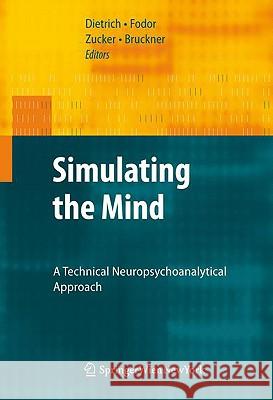
Dietmar Dietrich; Georg Fodor; Gerhard Zucker
Simulating the Mind: A Technical Neuropsychoanalytical Approach Dietrich, Dietmar 9783211094501 Springer - książkaWidoczna okładka, to zdjęcie poglądowe, a rzeczywista szata graficzna może różnić się od prezentowanej.

Simulating the Mind: A Technical Neuropsychoanalytical Approach

ISBN-13: 9783211094501 / Angielski / Twarda / 2008 / 436 str.

Dietmar Dietrich; Georg Fodor; Gerhard Zucker
cena 605,23
(netto: 576,41 VAT:  5%)

Najniższa cena z 30 dni: 578,30
Termin realizacji zamówienia:
ok. 22 dni roboczych
Bez gwarancji dostawy przed świętami

Darmowa dostawa!

Can psychoanalysis offer a new computer model? Can computer designers help psychoanalysts to understand their theory better?In contemporary publications human psyche is often related to neural networks. Why? The wiring in computers can also be related to application software. But does this really make sense? Artificial Intelligence has tried to implement functions of human psyche. The reached achievements are remarkable; however, the goal to get a functional model of the mental apparatus was not reached. Was the selected direction incorrect?The editors are convinced: yes, and they try to give answers here. If one accepts that the brain is an information processing system, then one also has to accept that computer theories can be applied to the brain s functions, the human mental apparatus. The contributors of this book - Solms, Panksepp, Sloman and many others who are all experts in computer design, psychoanalysis and neurology are united in one goal: finding synergy in their interdisciplinary fields."


Kategorie:
Informatyka, Bazy danych
Kategorie BISAC:
Psychology > Movements - Psychoanalysis
Computers > User Interfaces
Computers > Artificial Intelligence - General
Wydawca:
Springer
Język:
Angielski
ISBN-13:
9783211094501
Rok wydania:
2008
Wydanie:
2009
Ilość stron:
436
Waga:
0.85 kg
Wymiary:
23.5 x 15.5
Oprawa:
Twarda
Wolumenów:
01
Dodatkowe informacje:
Bibliografia
Wydanie ilustrowane

-Theory; Vision.-Basics; Short introduction to Automation; Challenges in Modern Automation; Psychoanalysis; Neuropyschoanalysis; Psychonalysis as the Reference System for Realizing Pyschic Function in a Machine; Science-theoretical Positioning of Psychonalysis: Sciences vs. Humanities; Automation as the challenge for Psychoanalysis; Two different sciences-two different languages. - Model; Modeling a Decision Unit for Autonomous Agents; Perception in Automation; The Current Model: ARS-PA; Functional Description (graphical + textual description); Verbindung des Modells zur psychoanalytischen Theoriebildung und Begrifflichkeit; The New Model and its Description: Top-Down-Design; Basisebene zur Modellbildung: Zweites topisches Modell von Freud (Ich-Es-ÜberIch); Functional description of the modules for the two topmost level Functions of the ES, Functions of the ICH and Functions of the ÜberIch.-Implementation; Differentiation between modeling and implementation-the reason for creating a world for bubbles; Multi-Agent systems, Agent-Based Social Systems; The Bubble-World; Applying the Model; Vision: Measurement technique, comparison of the Bubble Varieties. -II. -Publications Presented at the ENF. -A brief overview of artificial intelligence focussing on computational models of emotions. -Considering a technical realization of a neuro-psychoanalytical model of the mind. -What is the 'mind'? A neuro-psychoanalytical approach. -Machines in the Ghost. -Simulating the primal emotions of the mammalian brain: The aeactive feelings of mental life and implications for AI-robotics.-Cognitive and affective automation: Machines using the psychoanalytic model of the human mind. -Response to Palensky, Lorenz and Clarici: Issues at the interface of artificial intelligence and psychoanalysis.- The prometheus phantasy-Functions of the human psyche for technical systems.-Return of the zombie-Neuro-pyschoanalysis, consciousness, and the engineering of pyschicfunctions.-ENF-summary. -III. -Publications after the ENF. -IV. Glossary.

Can psychoanalysis offer a new computer model? Can computer designers help psychoanalysts to understand their theory better?In contemporary publications human psyche is often related to neural networks. Why? The wiring in computers can also be related to application software. But does this really make sense?

Artificial Intelligence has tried to implement functions of human psyche. The reached achievements are remarkable; however, the goal to get a functional model of the mental apparatus was not reached. Was the selected direction incorrect?The editors are convinced: yes, and they try to give answers here. If one accepts that the brain is an information processing system, then one also has to accept that computer theories can be applied to the brain’s functions, the human mental apparatus.

The contributors of this book - Solms, Panksepp, Sloman and many others who are all experts in computer design, psychoanalysis and neurology are united in one goal: finding synergy in their interdisciplinary fields.


Udostępnij

Facebook - konto krainaksiazek.pl


Opinie o Krainaksiazek.pl na Opineo.pl

Partner Mybenefit

Krainaksiazek.pl w programie rzetelna firma Krainaksiaze.pl - płatności przez paypal

Czytaj nas na:

Facebook - krainaksiazek.pl
  • książki na zamówienie
  • granty
  • książka na prezent
  • kontakt
  • pomoc
  • opinie
  • regulamin
  • polityka prywatności

Zobacz:

  • Księgarnia czeska

  • Wydawnictwo Książkowe Klimaty

1997-2025 DolnySlask.com Agencja Internetowa

© 1997-2022 krainaksiazek.pl
     
KONTAKT | REGULAMIN | POLITYKA PRYWATNOŚCI | USTAWIENIA PRYWATNOŚCI
Zobacz: Księgarnia Czeska | Wydawnictwo Książkowe Klimaty | Mapa strony | Lista autorów
KrainaKsiazek.PL - Księgarnia Internetowa

Polityka prywatnosci - link
Krainaksiazek.pl - płatnośc Przelewy24
Przechowalnia Przechowalnia





