• Wyszukiwanie zaawansowane
  • Kategorie
  • Kategorie BISAC
  • Książki na zamówienie
  • Promocje
  • Granty
  • Książka na prezent
  • Opinie
  • Pomoc
  • Załóż konto
  • Zaloguj się

Shrimps: Their Diversity, Intriguing Adaptations and Varied Lifestyles » książka


zaloguj się | załóż konto
Logo Krainaksiazek.pl

koszyk

konto

szukaj
topmenu
Księgarnia internetowa
Szukaj
Książki na zamówienie
Promocje
Granty
Książka na prezent
Moje konto
Pomoc
 
 
Wyszukiwanie zaawansowane
Pusty koszyk
Bezpłatna dostawa dla zamówień powyżej 20 złBezpłatna dostawa dla zamówień powyżej 20 zł

Kategorie główne

• Nauka
 [2949965]
• Literatura piękna
 [1857847]

  więcej...
• Turystyka
 [70818]
• Informatyka
 [151303]
• Komiksy
 [35733]
• Encyklopedie
 [23180]
• Dziecięca
 [617748]
• Hobby
 [139972]
• AudioBooki
 [1650]
• Literatura faktu
 [228361]
• Muzyka CD
 [398]
• Słowniki
 [2862]
• Inne
 [444732]
• Kalendarze
 [1620]
• Podręczniki
 [167233]
• Poradniki
 [482388]
• Religia
 [509867]
• Czasopisma
 [533]
• Sport
 [61361]
• Sztuka
 [243125]
• CD, DVD, Video
 [3451]
• Technologie
 [219309]
• Zdrowie
 [101347]
• Książkowe Klimaty
 [123]
• Zabawki
 [2362]
• Puzzle, gry
 [3791]
• Literatura w języku ukraińskim
 [253]
• Art. papiernicze i szkolne
 [7933]
Kategorie szczegółowe BISAC

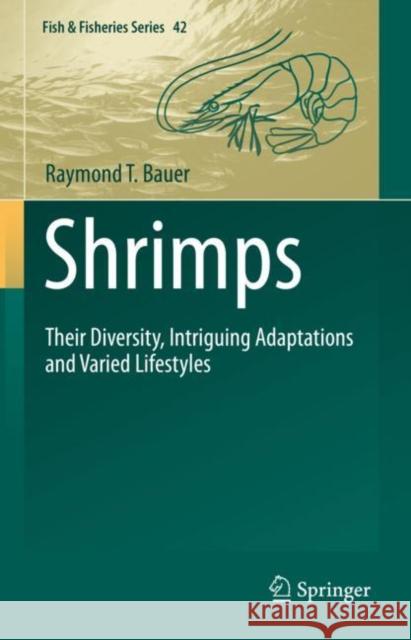
Shrimps: Their Diversity, Intriguing Adaptations and Varied Lifestyles

ISBN-13: 9783031209659 / Angielski / Twarda / 2023 / 666 str.
Raymond T. Bauer
Shrimps: Their Diversity, Intriguing Adaptations and Varied Lifestyles Raymond T. Bauer 9783031209659 Springer - książkaWidoczna okładka, to zdjęcie poglądowe, a rzeczywista szata graficzna może różnić się od prezentowanej.

Shrimps: Their Diversity, Intriguing Adaptations and Varied Lifestyles

ISBN-13: 9783031209659 / Angielski / Twarda / 2023 / 666 str.

Raymond T. Bauer
cena 645,58
(netto: 614,84 VAT:  5%)

Najniższa cena z 30 dni: 578,30
Termin realizacji zamówienia:
ok. 22 dni roboczych
Bez gwarancji dostawy przed świętami

Darmowa dostawa!
inne wydania

This book explores the biology of decapod shrimps, a group of animals known to most people as a nutritious and tasty food item. Shrimps are amazingly diverse in size, shape, coloration, behavior and natural history. Shrimp fisheries and aquaculture are a vital part of the USA and world economies. These crustaceans are key ecological and food-web components of marine and freshwater habitats. The book synthesizes information on the taxonomic and ecological diversity of shrimps, the structure and function of shrimp anatomy, antifouling adaptations, coloration and camouflage, reproductive biology, sexual systems, mating systems and behavior, life history strategies, symbioses between shrimps and other organisms, shrimp fisheries and aquaculture, as well as the evolution and phylogeny of shrimps. All chapters are written within an adaptational and evolutionary perspective. Important questions about shrimp biology are asked, and hypotheses for testing in future research are proposed. The book is spiced up with personal anecdotes and observations from the author’s research experiences.This book is intended as a comprehensive reference, a “go to” book about the biology of shrimps. The text is scientifically rigorous but written in a style intended for a varied readership. Thus, the book is a valuable resource for budding or working research scientists such as zoologists, aquatic biologists, fisheries and aquaculture professionals, as well as amateur naturalists, aquarium hobbyists and interested laypersons. As the saying goes, “a picture is worth a thousand words,” so that the book is amply illustrated with figures and diagrams.The numerous color plates, composed of photos contributed by expert colleagues, make the world of shrimps come alive.


This book explores the biology of decapod shrimps, a group of animals known to most people as a nutritious and tasty food item. Shrimps are amazingly diverse in size, shape, coloration, behavior and natural history. Shrimp fisheries and aquaculture are a vital part of the USA and world economies. These crustaceans are key ecological and food-web components of marine and freshwater habitats. The book synthesizes information on the taxonomic and ecological diversity of shrimps, the structure and function of shrimp anatomy, antifouling adaptations, coloration and camouflage, reproductive biology, sexual systems, mating systems and behavior, life history strategies, symbioses between shrimps and other organisms, shrimp fisheries and aquaculture, as well as the evolution and phylogeny of shrimps. All chapters are written within an adaptational and evolutionary perspective. Important questions about shrimp biology are asked, and hypotheses for testing in future research are proposed. The book is spiced up with personal anecdotes and observations from the author’s research experiences. This book is intended as a comprehensive reference, a “go to” book about the biology of shrimps. The text is scientifically rigorous but written in a style intended for a varied readership. Thus, the book is a valuable resource for budding or working research scientists such as zoologists, aquatic biologists, fisheries and aquaculture professionals, as well as amateur naturalists, aquarium hobbyists and interested laypersons. As the saying goes, “a picture is worth a thousand words,” so that the book is amply illustrated with figures and diagrams.The numerous color plates, composed of photos contributed by expert colleagues, make the world of shrimps come alive.

Kategorie:
Nauka, Biologia i przyroda
Kategorie BISAC:
Science > Life Sciences - Ecology
Science > Bezkręgowce
Wydawca:
Springer
Seria wydawnicza:
Fish & Fisheries
Język:
Angielski
ISBN-13:
9783031209659
Rok wydania:
2023
Dostępne języki:
Numer serii:
000094610
Ilość stron:
666
Oprawa:
Twarda

Chapter Outline and brief synopses


Chapter 1. “The Shrimps: an Overview”: Sections: Definition of a shrimp; the “cardioid facies” (shrimp-like body form);The shrimp as a swimming organism; Systematic position of major shrimp groups within the Crustacea; Biological success of shrimp groups: an overall comparison of species diversity, ecological niches, and fisheries/aquaculture productivity among the major shrimp taxa; 

Chapter 2. “Structure and Function”: An anterior to posterior description and comparison of appendage and basic body morphology, with emphasis on function. Sections: Cephalothorax and carapace; Gills; Eyes; Appendages [antennae, mouthparts, maxillipeds, chelae (pincers) and walking legs, pleopods (swimmerets), tail fan and tail flipping (backward escape response)]. 

Chapter 3. “The Families of Shrimps”: Family by family for each major taxon, a summary of species diversity, unique morphology, ecological niche, and behavioral characteristics. Dendrobranchiata: 7 families, Aristeidae to Sergestidae; Caridea: 16 Superfamilies (Alpheoidea to Stylodactyloidea) with a total of 37 families; Stenopodidea (3 families, esp. Stenopodidae and Spongicolidae); Procarididea (1 family). 

 Chapter 4. “Shrimp Hygiene: Antifouling Adaptations”: Shrimps have an array of morphological characters and behaviors for keeping the body, appendages, and gills free from environmental debris and micro-and macro fouling organisms. The consequences of this fouling and the adaptive value of grooming are presented. 

Chapter 5. “Coloration and Camouflage”: Many shrimps display a variety of coloration which is usually a camouflage adaptation. The cellular and pigmentary basis of different colors, morphological (slow) and physiological (rapid) color change, and experiments testing hypothesized function are described and interpreted. 

Chapter 6. “Reproduction”: The reproductive biology of shrimps. Sections: Primary reproductive characters (gonads, spermatophores, sperm storage); Secondary sexual characters (male and female genitalia); Eggs, sperm and fertilization; Mechanics of insemination; Temporal cycles of molting, mating, spawning and incubation; Spawning, parental care and breeding dress. 

Chapter 7. “Sexual Systems”: the various shrimp groups display a variety of sexual systems ranging from separate sexes to hermaphroditism, in which exciting new discoveries have been made in the last 20 years. Evolutionary hypotheses about the origin of different sexual systems are analyzed with evidence from the literature. includes gonochory;Protandry; Simultaneous Hermaphroditism; Taxonomic distribution of sexual systems among shrimp families; The “Dendrobranchiate-Palaemonid Paradox.” 

Chapter 8. “Mating Systems”: The behavioral strategies by which male and females find each other and pair successfully to reproduce are always interesting and important for any group of organisms. Comparisons and contrasts in mating systems among shrimp groups are analyzed in the context of their evolutionary history and socioecological situations. 

Chapter 9. “Life Histories.” Here I present the evolutionary and ecological tactics, strategies and adaptations that contribute to successful survival and reproduction of shrimps from birth to death, i.e., their life histories (Embryonic and larval development freshwater species and amphidromy; Reproductive investment and fecundity; Brood loss and parasitic castration; Effects of global warming and climate change on life-history patterns. 

Chapter 10. “Symbioses: Life Together.” Many species of shrimps establish long-term associations (symbioses) with both invertebrate and fish hosts. Taxonomic variation in symbioses, and the costs and benefits of these associations to both the shrimp and the host are analyzed. Sections: Taxonomic and geographic distribution of shrimp symbioses; Common adaptations of symbiotic shrimps; Sponge dwellers; Anemone-shrimp associates; Sea urchin shrimps; Molluscan hostels; Ascidian homes; evolution of shrimp symbioses. 

Chapter 11. “Fisheries and Aquaculture.” Numerous species of shrimps are the focus of globally and regionally important fisheries and aquaculture operations; the difference in capture and aquaculture production among shrimp taxa are explained in terms of their basic life history adaptations; globally important fishery and aquaculture species, countries; fishery and aquaculture tecnniques. Environmental impacts and effects of climate change on fisheries and aquaculture; Future of shrimp fisheries and aquaculture. 

Chapter 12. “Shrimp Evolution.” The key characters of the evolutionary history of shrimps are presented, as are the morphological and molecular methods of phylogenetic analyses of shrimps. The Fossil record; Classification and systematics; Molecular and morphological phylogenies; Decapod ancestors of shrimps; Placement of shrimp taxa among the Decapoda; Chronology of shrimp taxa; Sergestoid, penaeoid, and caridean phylogenies.

Growing up in the Midwest, Dr. Bauer was always interested in the natural history of plants and animals. His science courses at the University of Missouri, Kansas City, where he received a Bachelor of Science degree, convinced him of a career in biology. He was greatly influenced by the 1960's television specials on marine biology produced by the pioneering oceanographer and co-inventor of SCUBA, Jacques Cousteau. These led him to apply for and be accepted into the graduate program at the Scripps Institution of Oceanography (University of California, San Diego), where he received a doctorate in Marine Biology in 1976. After teaching marine and invertebrate zoology courses at Cal Poly State University (San Luis Obispo), he was awarded a Postdoctoral Fellowship at the National Museum of Natural History (Smithsonian Institution). As working in tropical seas was always a dream, when he was offered a tenure-track position at the University of Puerto Rico, Río Piedras, he eagerly accepted. There he taught courses in marine science and invertebrate zoology (in Spanish) for five years (Assistant, then Associate Professor). While there, he conducted research in marine ecology and crustacean biology. He was offered and accepted a position at the University of Louisiana, Lafayette (ULL) in 1986, rising to Full Professor in 1994. He has received various awards, e.g., Fellow of the American Association for the Advancement of Science, ULL Distinguished Professor and The Crustacean Society Excellence in Research Award. He retired from ULL in 2011 with Emeritus Professor status. Since “retirement,” Dr. Bauer has continued with research, publication and teaching short courses in shrimp biology. 


This book explores the biology of decapod shrimps, a group of animals known to most people as a nutritious and tasty food item. Shrimps are amazingly diverse in size, shape, coloration, behavior and natural history. Shrimp fisheries and aquaculture are a vital part of the USA and world economies. These crustaceans are key ecological and food-web components of marine and freshwater habitats. The book synthesizes information on the taxonomic and ecological diversity of shrimps, the structure and function of shrimp anatomy, antifouling adaptations, coloration and camouflage, reproductive biology, sexual systems, mating systems and behavior, life history strategies, symbioses between shrimps and other organisms, shrimp fisheries and aquaculture, as well as the evolution and phylogeny of shrimps. All chapters are written within an adaptational and evolutionary perspective. Important questions about shrimp biology are asked, and hypotheses for testing in future research are proposed. The book is spiced up with personal anecdotes and observations from the author’s research experiences.

This book is intended as a comprehensive reference, a “go to” book about the biology of shrimps. The text is scientifically rigorous but written in a style intended for a varied readership. Thus, the book is a valuable resource for budding or working research scientists such as zoologists, aquatic biologists, fisheries and aquaculture professionals, as well as amateur naturalists, aquarium hobbyists and interested laypersons. As the saying goes, “a picture is worth a thousand words,” so that the book is amply illustrated with figures and diagrams.The numerous color plates, composed of photos contributed by expert colleagues, make the world of shrimps come alive.




Udostępnij

Facebook - konto krainaksiazek.pl


Opinie o Krainaksiazek.pl na Opineo.pl

Partner Mybenefit

Krainaksiazek.pl w programie rzetelna firma Krainaksiaze.pl - płatności przez paypal

Czytaj nas na:

Facebook - krainaksiazek.pl
  • książki na zamówienie
  • granty
  • książka na prezent
  • kontakt
  • pomoc
  • opinie
  • regulamin
  • polityka prywatności

Zobacz:

  • Księgarnia czeska

  • Wydawnictwo Książkowe Klimaty

1997-2025 DolnySlask.com Agencja Internetowa

© 1997-2022 krainaksiazek.pl
     
KONTAKT | REGULAMIN | POLITYKA PRYWATNOŚCI | USTAWIENIA PRYWATNOŚCI
Zobacz: Księgarnia Czeska | Wydawnictwo Książkowe Klimaty | Mapa strony | Lista autorów
KrainaKsiazek.PL - Księgarnia Internetowa

Polityka prywatnosci - link
Krainaksiazek.pl - płatnośc Przelewy24
Przechowalnia Przechowalnia



