• Wyszukiwanie zaawansowane
  • Kategorie
  • Kategorie BISAC
  • Książki na zamówienie
  • Promocje
  • Granty
  • Książka na prezent
  • Opinie
  • Pomoc
  • Załóż konto
  • Zaloguj się

Ship Repairing: Analyses and Estimates » książka


zaloguj się | załóż konto
Logo Krainaksiazek.pl

koszyk

konto

szukaj
topmenu
Księgarnia internetowa
Szukaj
Książki na zamówienie
Promocje
Granty
Książka na prezent
Moje konto
Pomoc
 
 
Wyszukiwanie zaawansowane
Pusty koszyk
Bezpłatna dostawa dla zamówień powyżej 20 złBezpłatna dostawa dla zamówień powyżej 20 zł

Kategorie główne

• Nauka
 [2946600]
• Literatura piękna
 [1856966]

  więcej...
• Turystyka
 [72221]
• Informatyka
 [151456]
• Komiksy
 [35826]
• Encyklopedie
 [23190]
• Dziecięca
 [619653]
• Hobby
 [140543]
• AudioBooki
 [1577]
• Literatura faktu
 [228355]
• Muzyka CD
 [410]
• Słowniki
 [2874]
• Inne
 [445822]
• Kalendarze
 [1744]
• Podręczniki
 [167141]
• Poradniki
 [482898]
• Religia
 [510455]
• Czasopisma
 [526]
• Sport
 [61590]
• Sztuka
 [243598]
• CD, DVD, Video
 [3423]
• Technologie
 [219201]
• Zdrowie
 [101638]
• Książkowe Klimaty
 [124]
• Zabawki
 [2473]
• Puzzle, gry
 [3898]
• Literatura w języku ukraińskim
 [254]
• Art. papiernicze i szkolne
 [8170]
Kategorie szczegółowe BISAC

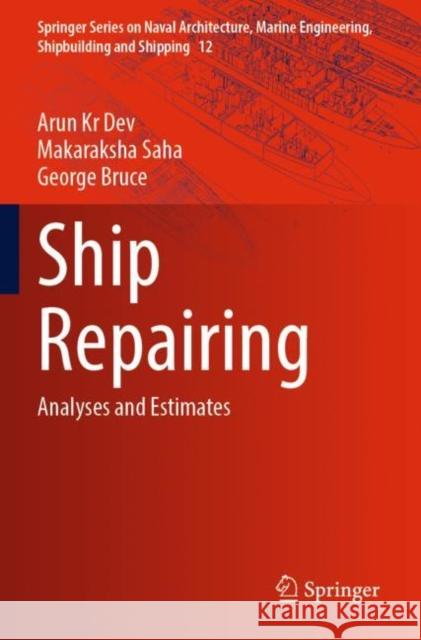
Ship Repairing: Analyses and Estimates

ISBN-13: 9789811694707 / Angielski / Miękka / 2023 / 272 str.
Arun Kr Dev; Makaraksha Saha; George Bruce
Ship Repairing: Analyses and Estimates Arun Kr Dev Makaraksha Saha George Bruce 9789811694707 Springer - książkaWidoczna okładka, to zdjęcie poglądowe, a rzeczywista szata graficzna może różnić się od prezentowanej.

Ship Repairing: Analyses and Estimates

ISBN-13: 9789811694707 / Angielski / Miękka / 2023 / 272 str.

Arun Kr Dev; Makaraksha Saha; George Bruce
cena 403,47 zł
(netto: 384,26 VAT:  5%)

Najniższa cena z 30 dni: 346,96 zł
Termin realizacji zamówienia:
ok. 22 dni roboczych
Bez gwarancji dostawy przed świętami

Darmowa dostawa!
inne wydania

This book highlights the relationship between independent and dependent ship repairing variables of various combinations under linear and nonlinear form using actual data collected from shipyards. Independent variables refer to age, deadweight, cubic number, principal dimensions, and type of ships. Dependent variables refer to repairing time, docking time, repairing labor, docking labor, hull blasting renewal area, hull painting renewal area, pipe renewal length, structural steel renewal weight, and structural steel renewal locations. Mathematical models are developed involving appropriate variables using multiple linear regression analysis technique for different combinations of variables of ship repair. Adequacy of models is tested using statistical parameters like coefficients of multiple determination and F statistic (calculated and tabulated). Also, validation is presented to determine the deviation of model value from the observed value and their statistical parameters to justify the adequacy of the respective estimate models. The book also emphasises the importance of managing the labor force, reliable data collection and an effective management information system to manage this as well as keeping control of on-going repair contracts.


This book highlights the relationship between independent and dependent ship repairing variables of various combinations under linear and nonlinear form using actual data collected from shipyards. Independent variables refer to age, deadweight, cubic number, principal dimensions, and type of ships. Dependent variables refer to repairing time, docking time, repairing labor, docking labor, hull blasting renewal area, hull painting renewal area, pipe renewal length, structural steel renewal weight, and structural steel renewal locations. Mathematical models are developed involving appropriate variables using multiple linear regression analysis technique for different combinations of variables of ship repair. Adequacy of models is tested using statistical parameters like coefficients of multiple determination and F statistic (calculated and tabulated). Also, validation is presented to determine the deviation of model value from the observed value and their statistical parameters to justify the adequacy of the respective estimate models. The book also emphasises the importance of managing the labor force, reliable data collection and an effective management information system to manage this as well as keeping control of on-going repair contracts.

Kategorie:
Technologie
Kategorie BISAC:
Technology & Engineering > Mechanical
Business & Economics > Zarządzenie i techniki zarządzania
Technology & Engineering > Civil - Highway & Traffic
Wydawca:
Springer
Seria wydawnicza:
Springer Naval Architecture, Marine Engineering, Shipbuildin
Język:
Angielski
ISBN-13:
9789811694707
Rok wydania:
2023
Dostępne języki:
Ilość stron:
272
Waga:
0.46 kg
Wymiary:
23.5 x 15.5
Oprawa:
Miękka
Dodatkowe informacje:
Wydanie ilustrowane

Chapter – 1: Introduction

1.1 Introduction.

1.1.1 Ship Repairing

1.1.2 Background knowledge of users

1.1.3 Experience sharing


Chapter – 2: Data Collection and Illustrations

2.1 Presentation of collected data in tabular form.

2.2 Illustrations of collected data in graphical form in terms of distribution of various variables like 2.2.1 Age

2.2.2 Deadweight

2.2.3 Type

2.2.4 Repairing Time

2.2.5 Docking Time

2.2.6 Repairing Labor

2.2.7 Docking Labor

2.2.8 Hull Blasting and Painting Renewal Area

2.2.9 Structural Steel Renewal Weight

2.2.10 Structural Member Renewal Frequency


Chapter – 3: Analysis of Repairing Time

3.1 Repairing Time vs Age

3.2 Repairing Time vs Deadweight

3.3 Repairing Time vs Type

3.4 Repairing Time vs Hull Blasting and Painting Area

3.5 Repairing Time vs Structural Steel Renewal Weight

3.6 Repairing Time vs Piping Renewal Length.

3.7 Regression and Validation Results.

3.8 Discussions.


Chapter – 4: Analysis of Docking Time

4.1 Docking Time vs Age

4.2 Docking Time vs Deadweight

4.3 Docking Time vs Type

4.4 Docking Time vs Hull Blasting and Painting Area.

4.5 Regression and Validation Results.

4.6 Discussions.


Chapter – 5: Analysis of Repairing Labor

5.1 Repairing Labor vs Age

5.2 Repairing Labor vs Deadweight

5.3 Repairing Labor vs Type

5.4 Repairing Labor vs Hull Blasting and Painting Area

5.5 Repairing Labor vs Structural Steel Renewal Weight

5.6 Repairing Labor vs Piping Renewal Length.

5.7 Regression and Validation Results.

5.8 Discussions.


Chapter – 6: Analysis of Docking Labor

6.1 Docking Labor vs Age

6.2 Docking Labor vs Deadweight

6.3 Docking Labor vs Type

6.4 Docking Labor vs Hull Blasting and Painting Area.

6.5 Regression and Validation Results.

6.6 Discussions.


Chapter – 7: Hull Coating Renewal Area

7.1 Hull Blasting and Painting Renewal Area vs Age

7.2 Hull Blasting and Painting Renewal Area vs Deadweight

7.3 Hull Blasting and Painting Renewal Area vs type

7.4 Hull Blasting and Painting Renewal Area vs Hull Total Area

7.5 Hull Blasting and Painting Renewal Area vs Hull Dimensions.

7.6 Regression and Validation Results.

7.7 Discussions.


Chapter – 8: Structural Steel Renewal Weight

8.1 Structural Steel Renewal Weight vs Age

8.2 Structural Steel Renewal Weight vs Deadweight

8.3 Structural Steel Renewal Weight and Type.

8.4 Regression and Validation Results.

8.5 Discussions.


Chapter - 9: Structural Steel Renewal Location

9.1 Structural Steel Renewal Locations vs Principal dimensions

9.2 Structural Steel Renewal Locations vs Age

9.3 Structural Steel Renewal Locations vs Length.

9.4 Discussions

Dr. Arun Kr Dev, a Naval Architect, Marine and Offshore Engineer, holds the current position of Associate Professor and Director of Postgraduate Studies at Newcastle University in Singapore (NUiS).  He is responsible for teaching and research in the field of Naval Architecture, Marine and Offshore Technology. His previous experiences include working in the Keppel Group in marine technology development. He also worked at Singapore Maritime Academy (SMA), Singapore Polytechnic (SP) and University Technology Malaysia (UTM). Dr Dev is a Fellow of SNAME, RINA, IMarEST, EI, SNAMES and IEB. He has published more than 100 technical articles and papers in international journals, seminars and conferences respectively.

Makaraksha Saha is a graduate in Naval Architecture & Marine Engineering (1977) and post-graduate in Industrial and Production Engineering (1987) from Bangladesh University of Engineering and Technology (BUET), Dhaka, Bangladesh. From 1977-2012, he worked in shipyards in various positions involving Shipbuilding and Ship Repairing. Since 2014, he is working as a Owner’s Representative (Technical Advisor) overseeing the design and construction of Platform Supply Vessels (PSVs) and Anchor Handling Tug and Towing Supply Vessels (AHTSVs). Mr. Saha is a Fellow of IEB, RINA and SNAMES, Member of IMarEST, SNAME, ASNE, IISE, IEI, IES, ORSS. 

George began his career as a shipyard apprentice, gaining a BSc in Naval Architecture during this time. His early career was project managing shipyard developments mainly in North East England. He spent three years managing shipbuilding research and development at British shipbuilders, followed by work in a major international consultancy, advising private and public shipbuilders and governments. He became Technical Director and also completed an MBA. George ran his own shipyard consulting company, also developing management information software for shipbuilding and shiprepair. He joined Newcastle University, where he was awarded a chair as Professor of Shiprepair and Conversion, retiring in 2012. George remains active in teaching and consultancy in shipbuilding and repairing.


This book highlights the relationship between independent and dependent ship repairing variables of various combinations under linear and nonlinear form using actual data collected from shipyards. Independent variables refer to age, deadweight, cubic number, principal dimensions, and type of ships. Dependent variables refer to repairing time, docking time, repairing labor, docking labor, hull blasting renewal area, hull painting renewal area, pipe renewal length, structural steel renewal weight, and structural steel renewal locations. Mathematical models are developed involving appropriate variables using multiple linear regression analysis technique for different combinations of variables of ship repair. Adequacy of models is tested using statistical parameters like coefficients of multiple determination and F statistic (calculated and tabulated). Also, validation is presented to determine the deviation of model value from the observed value and their statistical parameters to justify the adequacy of the respective estimate models. The book also emphasises the importance of managing the labor force, reliable data collection and an effective management information system to manage this as well as keeping control of on-going repair contracts.




Udostępnij

Facebook - konto krainaksiazek.pl


Opinie o Krainaksiazek.pl na Opineo.pl

Partner Mybenefit

Krainaksiazek.pl w programie rzetelna firma Krainaksiaze.pl - płatności przez paypal

Czytaj nas na:

Facebook - krainaksiazek.pl
  • książki na zamówienie
  • granty
  • książka na prezent
  • kontakt
  • pomoc
  • opinie
  • regulamin
  • polityka prywatności

Zobacz:

  • Księgarnia czeska

  • Wydawnictwo Książkowe Klimaty

1997-2025 DolnySlask.com Agencja Internetowa

© 1997-2022 krainaksiazek.pl
     
KONTAKT | REGULAMIN | POLITYKA PRYWATNOŚCI | USTAWIENIA PRYWATNOŚCI
Zobacz: Księgarnia Czeska | Wydawnictwo Książkowe Klimaty | Mapa strony | Lista autorów
KrainaKsiazek.PL - Księgarnia Internetowa

Polityka prywatnosci - link
Krainaksiazek.pl - płatnośc Przelewy24
Przechowalnia Przechowalnia



