Shell Structures: Theory and Application » książka





Shell Structures: Theory and Application
ISBN-13: 9783030848064 / Angielski / Twarda / 2022 / 275 str.
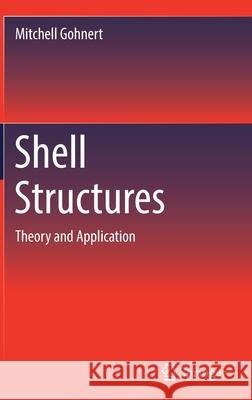
Shell Structures: Theory and Application
ISBN-13: 9783030848064 / Angielski / Twarda / 2022 / 275 str.
(netto: 306,68 VAT: 5%)
Najniższa cena z 30 dni: 308,41
ok. 16-18 dni roboczych.
Darmowa dostawa!
Chapter 1 Introduction
Chapter 2 Construction Materials and Stress Flow2.1 Introduction
2.2 The basic characteristics of stresses and strains
2.3 Economy of stresses
2.4 The flawed nature of construction materials
2.5 The flow of stress in flat and curved walls
2.6 The flow of stress around openings
2.7 Exercises
Chapter 3 Cylindrical Shells
3.1 Introduction
3.2 The membrane theory of cylindrical shells
3.3 Displacement theory for membrane stresses3.4 Boundary effects
3.5 Displacement theory for the boundary effects
3.6 Compatibility equations
3.7 Steps in solving for the deformations and stresses in the shell
3.8 Worked example 3.9 ExercisesChapter 4 Circular Domes
4.1 Introduction
4.2 The membrane theory of the circular dome
4.3 Displacement theory
4.4 Boundary effects
4.5 Displacement theory of the boundary effects
4.6 Compatibility equations
4.7 Steps in solving the deformations and stresses in the shell
4.8 Worked example
4.9 Exercises
Chapter 5 Derivatives of Dome Theory: The Conoidal, Elliptical, Conical and Hyperbolic shells
5.1 Introduction
5.2 Conical shells
5.3 Elliptical dome
5.4 Conoidal dome
5.5 Hyperbolic shell
5.6 Example solutions and a comparison of the circular, concoidal, elliptical and conical domes
5.7 ExercisesChapter 6 The Circular Barrel Vault
6.1 Introduction
6.2 Membrane theory of the barrel vault
6.3 Deformation theory
6.4 Shallow shell theory to solve for the boundary effects
6.5 Edge beams
6.6 Steps in solving the deformations and stresses in the shell
6.7 Worked examples 6.8 ExercisesChapter 7 Catenary Arches and Domes
7.1 Introduction
7.2 The catenary arch
7.3 The funicular arch
7.4 Membrane theory of catenary domes7.5 Worked examples
7.6 Exercises
Appendix A and B
Dr. Mitchell Gohnert is Professor of Structural Engineering, School of Civil and Environmental Engineering, University of the Witwatersrand, South Africa.
This text provides a complete and thorough derivation of the mathematical theory of shell structures. Many books on shells only give the key equations or snippets of theory, skipping all of the mathematical steps required to solve for the key equations. This is understandable, because of the mathematical complexity of shell structures. Thus, the reader must just accept the design equations blindly, without achieving a complete understanding of shell theory. This book, therefore, fills this gap by providing a complete picture of shell theory. Class tested over three university post-graduate courses and one public course on shell structures, the book is mathematically intensive, but it written in an accessible ideal for students of engineering mechanics in civil and mechanical engineers concentrations as well as practicing structural engineers looking for a reference on shells.




Czytaj nas na:
1997-2026 DolnySlask.com Agencja Internetowa
KrainaKsiazek.PL - Księgarnia Internetowa


