• Wyszukiwanie zaawansowane
  • Kategorie
  • Kategorie BISAC
  • Książki na zamówienie
  • Promocje
  • Granty
  • Książka na prezent
  • Opinie
  • Pomoc
  • Załóż konto
  • Zaloguj się

Sensor Technology for Water Quality Monitoring: Fiber Optic Sensor » książka


zaloguj się | załóż konto
Logo Krainaksiazek.pl

koszyk

konto

szukaj
topmenu
Księgarnia internetowa
Szukaj
Książki na zamówienie
Promocje
Granty
Książka na prezent
Moje konto
Pomoc
 
 
Wyszukiwanie zaawansowane
Pusty koszyk
Bezpłatna dostawa dla zamówień powyżej 20 złBezpłatna dostawa dla zamówień powyżej 20 zł

Kategorie główne

• Nauka
 [2946600]
• Literatura piękna
 [1856966]

  więcej...
• Turystyka
 [72221]
• Informatyka
 [151456]
• Komiksy
 [35826]
• Encyklopedie
 [23190]
• Dziecięca
 [619653]
• Hobby
 [140543]
• AudioBooki
 [1577]
• Literatura faktu
 [228355]
• Muzyka CD
 [410]
• Słowniki
 [2874]
• Inne
 [445822]
• Kalendarze
 [1744]
• Podręczniki
 [167141]
• Poradniki
 [482898]
• Religia
 [510455]
• Czasopisma
 [526]
• Sport
 [61590]
• Sztuka
 [243598]
• CD, DVD, Video
 [3423]
• Technologie
 [219201]
• Zdrowie
 [101638]
• Książkowe Klimaty
 [124]
• Zabawki
 [2473]
• Puzzle, gry
 [3898]
• Literatura w języku ukraińskim
 [254]
• Art. papiernicze i szkolne
 [8170]
Kategorie szczegółowe BISAC

Sensor Technology for Water Quality Monitoring: Fiber Optic Sensor

ISBN-13: 9781843396772 / Angielski / Miękka / 2004 / 72 str.
A. C. Cannons
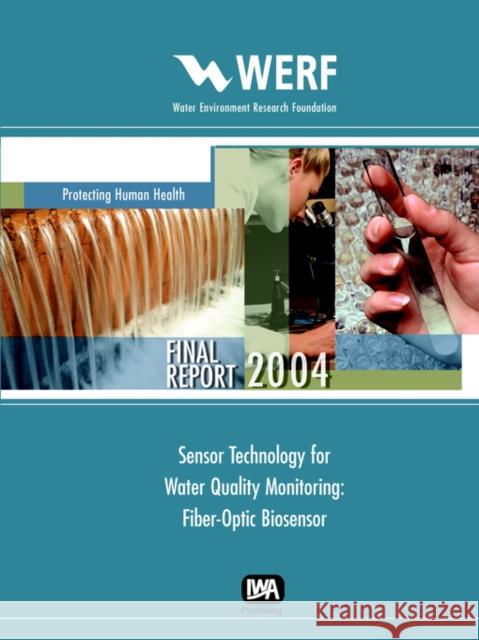
Sensor Technology for Water Quality Monitoring: Fiber Optic Sensor A. C. Cannons 9781843396772 IWA Publishing - książkaWidoczna okładka, to zdjęcie poglądowe, a rzeczywista szata graficzna może różnić się od prezentowanej.

Sensor Technology for Water Quality Monitoring: Fiber Optic Sensor

ISBN-13: 9781843396772 / Angielski / Miękka / 2004 / 72 str.

A. C. Cannons
cena 644,07 zł
(netto: 613,40 VAT:  5%)

Najniższa cena z 30 dni: 637,49 zł
Termin realizacji zamówienia:
ok. 30 dni roboczych
Bez gwarancji dostawy przed świętami

Darmowa dostawa!

Two methods for the detection of important human pathogens, Cryptosporidium parvum and Helicobacter pylori, were investigated: a fiber optic biosensor, and real time PCR. The mechanism for specific detection in both methods is recognition of specific DNA sequences in the target organisms. The biosensor that was used, the Analyte 2000, was originally developed for the detection of chemicals. It utilizes a fiber optic wave guide that propagates an evanescent light wave of very specific wavelength. The light excites fluorescent molecules bound to the waveguide, but not in the bulk solution, which theoretically enhances signal while reducing background interference. Attempts to develop this system for the detection of DNA were not successful due to poor detection of the target molecules. An assay analogous to a sandwich immunoassay was designed for use on the Analyte 2000. Specific oligonucleotide probes were designed to bind to the waveguides via biotin-streptavidin interaction, and were used to capture the target DNA. Pure target DNA representing unique genes in the organisms were synthesized by PCR. Detection of captured DNA was then attempted using an oligonucleotide detection probe designed to bind to the target. Two detection systems were employed: an indirect signal amplification system based on biotin-tyramide deposition, or direct detection of fluorescent signal from Cy-5 molecules. In all experiments performed there was very little difference between the signal generated with or without the target molecules. Many experiments were conducted to attempt to identify reasons for the poor signal. Signal was only of any significance when target amplicons were internally labeled with Cy-5 by PCR. Real time PCR as a method to detect the pathogens was also investigated. Though the PCR technique itself is very rapid, DNA extraction and purification requires preparation time. Filtration of up to one liter of well water, followed by concentration and "cleaning" Helicobacter pylori cells by immunomagnetic separation, was used to detect H. pylori seeded in a water source. Following cell lysis, the extracted DNA could be used directly in conventional PCR targeting the 16S rRNA gene to detect less than 265 cells per liter of water. DNA purification was not required for this level of detection. Initial studies to amplify lysed cells by real time PCR indicated that an incorrect product was made. When purified DNA was used for real time PCR, the correct product was produced from DNA representing as few as 100 cells. This publication can be purchased and downloaded via Pay Per View on Water Intelligence Online - click on the Pay Per View icon below


Kategorie:
Nauka, Biologia i przyroda
Kategorie BISAC:
Science > Applied Sciences
Science > Environmental Science (see also Chemistry - Environmental)
Technology & Engineering > Environmental - General
Wydawca:
IWA Publishing
Seria wydawnicza:
WERF Research Report Series
Język:
Angielski
ISBN-13:
9781843396772
Rok wydania:
2004
Dostępne języki:
Angielski
Ilość stron:
72
Wymiary:
23.423.4 x 15.623.4 x 15.6 x 1
Oprawa:
Miękka
Wolumenów:
01
Dodatkowe informacje:
Bibliografia
Wydanie ilustrowane


Udostępnij

Facebook - konto krainaksiazek.pl


Opinie o Krainaksiazek.pl na Opineo.pl

Partner Mybenefit

Krainaksiazek.pl w programie rzetelna firma Krainaksiaze.pl - płatności przez paypal

Czytaj nas na:

Facebook - krainaksiazek.pl
  • książki na zamówienie
  • granty
  • książka na prezent
  • kontakt
  • pomoc
  • opinie
  • regulamin
  • polityka prywatności

Zobacz:

  • Księgarnia czeska

  • Wydawnictwo Książkowe Klimaty

1997-2025 DolnySlask.com Agencja Internetowa

© 1997-2022 krainaksiazek.pl
     
KONTAKT | REGULAMIN | POLITYKA PRYWATNOŚCI | USTAWIENIA PRYWATNOŚCI
Zobacz: Księgarnia Czeska | Wydawnictwo Książkowe Klimaty | Mapa strony | Lista autorów
KrainaKsiazek.PL - Księgarnia Internetowa

Polityka prywatnosci - link
Krainaksiazek.pl - płatnośc Przelewy24
Przechowalnia Przechowalnia





