• Wyszukiwanie zaawansowane
  • Kategorie
  • Kategorie BISAC
  • Książki na zamówienie
  • Promocje
  • Granty
  • Książka na prezent
  • Opinie
  • Pomoc
  • Załóż konto
  • Zaloguj się

Semantics of Genitive Objects in Russian: A Study of Genitive of Negation and Intensional Genitive Case » książka


zaloguj się | załóż konto
Logo Krainaksiazek.pl

koszyk

konto

szukaj
topmenu
Księgarnia internetowa
Szukaj
Książki na zamówienie
Promocje
Granty
Książka na prezent
Moje konto
Pomoc
 
 
Wyszukiwanie zaawansowane
Pusty koszyk
Bezpłatna dostawa dla zamówień powyżej 20 złBezpłatna dostawa dla zamówień powyżej 20 zł

Kategorie główne

• Nauka
 [2946600]
• Literatura piękna
 [1856966]

  więcej...
• Turystyka
 [72221]
• Informatyka
 [151456]
• Komiksy
 [35826]
• Encyklopedie
 [23190]
• Dziecięca
 [619653]
• Hobby
 [140543]
• AudioBooki
 [1577]
• Literatura faktu
 [228355]
• Muzyka CD
 [410]
• Słowniki
 [2874]
• Inne
 [445822]
• Kalendarze
 [1744]
• Podręczniki
 [167141]
• Poradniki
 [482898]
• Religia
 [510455]
• Czasopisma
 [526]
• Sport
 [61590]
• Sztuka
 [243598]
• CD, DVD, Video
 [3423]
• Technologie
 [219201]
• Zdrowie
 [101638]
• Książkowe Klimaty
 [124]
• Zabawki
 [2473]
• Puzzle, gry
 [3898]
• Literatura w języku ukraińskim
 [254]
• Art. papiernicze i szkolne
 [8170]
Kategorie szczegółowe BISAC

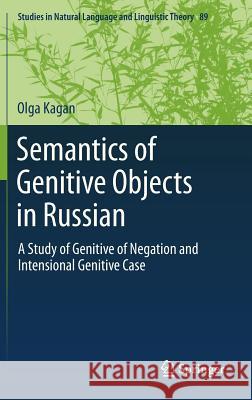
Semantics of Genitive Objects in Russian: A Study of Genitive of Negation and Intensional Genitive Case

ISBN-13: 9789400752245 / Angielski / Twarda / 2012 / 186 str.
Olga Kagan
Semantics of Genitive Objects in Russian: A Study of Genitive of Negation and Intensional Genitive Case Olga Kagan 9789400752245 Springer - książkaWidoczna okładka, to zdjęcie poglądowe, a rzeczywista szata graficzna może różnić się od prezentowanej.

Semantics of Genitive Objects in Russian: A Study of Genitive of Negation and Intensional Genitive Case

ISBN-13: 9789400752245 / Angielski / Twarda / 2012 / 186 str.

Olga Kagan
cena 484,18 zł
(netto: 461,12 VAT:  5%)

Najniższa cena z 30 dni: 462,63 zł
Termin realizacji zamówienia:
ok. 22 dni roboczych
Bez gwarancji dostawy przed świętami

Darmowa dostawa!
inne wydania

The genitive/accusative opposition in Slavic languages is a decades-old linguistic conundrum. Shedding new light on this perplexing object-case alternation in Russian, this volume analyzes two variants of genitive objects that alternate with accusative complements the genitive of negation and the intensional genitive. The author contends that these variants are manifestations of the same phenomenon, and thus require an integrated analysis. Further, that the choice of case is sensitive to factors that fuse semantics and pragmatics, and that the genitive case is assigned to objects denoting properties at the same time as they lack commitment to existence. Kagan s subtle analysis accounts for the complex relations between case-marking and other properties, such as definiteness, specificity, number and aspect. It also reveals a correlation between the genitive case and the subjunctive mood, and relates her overarching subject matter to other instances of differential object-marking."


Kategorie:
Nauka, Językoznawstwo
Kategorie BISAC:
Language Arts & Disciplines > Grammar & Punctuation
Language Arts & Disciplines > Linguistics - Semantics
Foreign Language Study > Russian
Wydawca:
Springer
Seria wydawnicza:
Studies in Natural Language and Linguistic Theory
Język:
Angielski
ISBN-13:
9789400752245
Rok wydania:
2012
Dostępne języki:
Angielski
Wydanie:
2013
Numer serii:
000091356
Ilość stron:
186
Waga:
4.32 kg
Wymiary:
23.523.5 x 15.5
Oprawa:
Twarda
Wolumenów:
01
Dodatkowe informacje:
Bibliografia
Wydanie ilustrowane

From the reviews:

"Kagan ... takes on the goal of unifying the Intensional Genitive and the Genitive of Negation as one phenomenon. ... This book will be of primary interest to Russianists, as it provides a well-supported analysis of a much-discussed linguistic puzzle in Russian ... . will be of primary interest to those interested in non-canonical genitive use in Russian. ... It is well researched, well-argued and makes an important contribution to the topic of genitive objects and to the field of Russian linguistics in general." (Lauren Ressue, The Linguist List, January, 2013)

Abbreviations .- Acknowledgements .- Preface . 1. Introducing the Problem: Structural Case Alterations . 2. Outline of the Book . 3. Methodology, Data and Judgments .- Chapter 1. 1.1 Genitive Objects and the Inherent/Structural Distinction . 1.2. Three Subtypes of Non-Canonical Genitive Case . 1.2.1. Partitive Genitive . 1.2.2. Genitive of Negation . 1.2.3. Intensional Genitive . 1.3. Reorganization of the Subtypes of Non-Canonical Genitive . 1.3.1. The Organization of Non-Canonical Genitive in Previously Proposed Accounts . 1.3.2. Genitive of Negation and Intensional Genitive as s Single Phenomenon . 1. 3. 2.1. Genitive/Accusative Alternation . 1.3.2.2. Native Speaker’s Judgments . 1.3.2.3. Semantic Properties that Affect Case-Assignment . 1.3.2.4. Licensing Operators . 1.3.2.5. GenNeg and Intensional Genitive Cross-Linguistically . 1.3.2.6. Genitive of Negation and Intensional Genitive: A Summary . 1.3.3. Irrealis Genitive as Opposed to Partitive Genitive . 1.3.3.1. Properties of the NP . 1.3.3.2. Verbal Aspect . 1.3.3.4. Second Genitive . 1.3.3.5. Cross-Linguistic Data . 1.3.4. Conclusion .- Chapter 2. 2.1. The Configurational Approach 2.1.1. Bailyn (1997) . 2.1.2. Harves (2002a,b) . 2.1.3. Configurational Approach: The Shortcomings . 2.1.3.1. Unaccusativity Hypothesis . 2.1.3.2. Not All Passive and Unaccusative Verbs License GenNeg . 2.1.3.3. GenNeg Assignment to Specific and Definite NPs . 2.1.3.4. Futher Shortcomings .  2.2. The Empty Quantifier Approach . 2.2.1. Syntactic Approaches . 2.2.1.1. Pesetsky (1982) . 2.2.1.2. Bailyn (2004) . 2.2.2. Semantic Approaches . 2.2.2.1. Pereltsvaig (1998, 1999) . 2.2.2.2. The [+/-Q] Feature: Neidle (1988) . 2.3. Perspectival Center: Borschev and Partee . 2.4. Intermediary Conclusion . 2.5. Unaccusativity Hypothesis .- Chapter 3. 3.1. Subjunctive Mood: An Introduction . 3.2. Farkas (2003): The [+/-Decided] Feature . 3.2.1. The Choice of Mood . 3.2.2. Classes of Propositional Attitude Predicates . 3.2.2.1. Epistemic Predicates . 3.2.2.2. Fiction Predicates . 3.2.2.3.  Desiderative Predicates . 3.2.2.4. Directive Predicates . 3.2.2.5. A Note on Weak Intensional Predicates . 3.2.2.6. Subjunctive Mood and the [+Decided] Feature . 3.2.3. Subjunctive Mood in Other Environments . 3.2.3.1. Counterfactual Conditionals . 3.2.3.2. Imperative Sentences . 3.2.3.3. Exclamative Sentences . 3.2.3.4. Negation . 3.2.3.5. A Summary .- Chapter 4. 4.1. Non-Semantic Factors . 4.1.1. Variation in Judgments and Dialects . 4.1.2. Register . 4.1.3. Idiosyncratic Properties of Verbs . 4.2. Analysis . 4.2.1. Property Type . 4.2.2. Existential Commitment . 4.2.3. Relating Semantic Type to EC . – Chapter 5. 5.1. Preview: The Importance of REC . 5.2. Case-Assignment and the Strong/ Weak Distinction . 5.2.1. Irrealis Genitive is Licensed by Weak Intensional Verbs . 5.2.2. The Strong/Weak Distinction and REC . 5.2.3. Exceptions . 5.3. Irrealis Genitive with Weak Intensional Verbs . 5.3.1. Two Types of Sentences with Intensional verbs . 5.3.2. Abstract Objects and the Genitive/Accusative Alternation . 5.3.3. Potential Counterexamples: Unexpected Case-Marking . 5.3.3.1. Coercion . 5.3.3.2. Waiting for Transport . 5.4. Individual Verbs . 5.5 Syntactic Constraints . 5.6. Conclusion .- Chapter 6. 6.1. Irrealis Genitive in Negative Contexts . 6.2. Sensitivity to Existential Commitment . 6.2.1. Different Types of Verbs . 6.2.1.1. Creation Verbs . 6.2.1.2. Verbs That Trigger Existential Presuppostion . 6.2.2. Negative Concord Items . 6.2.3. Definite Objects . 6.2.4. Proper Names . 6.2.4.1. Genitive Case-Assignment to Proper Names . 6.2.4.2. ‘Existence is Relative’ Principle: Borschev and Partee (1998,2002a) . 6.2.4.3. Irrealis Genitive and Existence Relative to a Location . 6.3. Subjunctive Mood and Irrealis Genitive: Shared Properties . 6.3.1. Event-Denoting Constituents . 6.3.2. Genitive Case-Marking and Subjunctive Relative Clauses: Semantic Properties . 6.3.2.1. Scope and Specificity . 6.3.2.2. Existential Commitment . 6.3.3. Genitive and Subjunctive: A Summary .- Chapter 7. 7.1. Aspect and Number Affect Case-Assignment . 7.1.1. Introducing the Problem . 7.1.2. Preview . 7.2. Aspect and Case-Assignment under Negation . 7.2.2. How Aspect Affects Case . 7.2.2.1. Expected Events and Presupposed Objects . 7.2.2.2. Genitive Objects of Perfective Verbs . 7.2.2.3. Previous Approaches: Making the Picture Complete . 7.3. Genitive Case and Number .- Chapter 8. 8.1. Differential Object Marking . 8.1.1. Definiteness . 8.1.1.1. Hebrew . 8.1.1.2. Definiteness and DOM in Other Languages . 8.1.2. Specificity . 8.1.3. Animacy and Its Interaction with Definiteness . 8.1.4. Formal Account of DOM: Aissen (2003) . 8.1.5. Application to Russian . 8.1.5.1. Irrealis Genitive and DOM . 8.1.5.2. The Formal Analysis of DOM and Irrealis Genitive . 8.2. Genitive Complements of Intensive Reflexive Verbs . 8.2.1. An Introduction . 8.2.2. Syntactic Properties of GCIRs . 8.2.3. Semantic Properties of GCIRs .- Conclusion .- Bibliography

The genitive/accusative opposition in Slavic languages is a decades-old linguistic conundrum. Shedding new light on this perplexing object-case alternation in Russian, this volume analyzes two variants of genitive objects that alternate with accusative complements—the genitive of negation and the intensional genitive. The author contends that these variants are manifestations of the same phenomenon, and thus require an integrated analysis. Further, that the choice of case is sensitive to factors that fuse semantics and pragmatics, and that the genitive case is assigned to objects denoting properties at the same time as they lack commitment to existence.

Kagan’s subtle analysis accounts for the complex relations between case-marking and other properties, such as definiteness, specificity, number and aspect. It also reveals a correlation between the genitive case and the subjunctive mood, and relates her overarching subject matter to other instances of differential object-marking.


Udostępnij

Facebook - konto krainaksiazek.pl


Opinie o Krainaksiazek.pl na Opineo.pl

Partner Mybenefit

Krainaksiazek.pl w programie rzetelna firma Krainaksiaze.pl - płatności przez paypal

Czytaj nas na:

Facebook - krainaksiazek.pl
  • książki na zamówienie
  • granty
  • książka na prezent
  • kontakt
  • pomoc
  • opinie
  • regulamin
  • polityka prywatności

Zobacz:

  • Księgarnia czeska

  • Wydawnictwo Książkowe Klimaty

1997-2025 DolnySlask.com Agencja Internetowa

© 1997-2022 krainaksiazek.pl
     
KONTAKT | REGULAMIN | POLITYKA PRYWATNOŚCI | USTAWIENIA PRYWATNOŚCI
Zobacz: Księgarnia Czeska | Wydawnictwo Książkowe Klimaty | Mapa strony | Lista autorów
KrainaKsiazek.PL - Księgarnia Internetowa

Polityka prywatnosci - link
Krainaksiazek.pl - płatnośc Przelewy24
Przechowalnia Przechowalnia





