• Wyszukiwanie zaawansowane
  • Kategorie
  • Kategorie BISAC
  • Książki na zamówienie
  • Promocje
  • Granty
  • Książka na prezent
  • Opinie
  • Pomoc
  • Załóż konto
  • Zaloguj się

Self-Organization and the City » książka


zaloguj się | załóż konto
Logo Krainaksiazek.pl

koszyk

konto

szukaj
topmenu
Księgarnia internetowa
Szukaj
Książki na zamówienie
Promocje
Granty
Książka na prezent
Moje konto
Pomoc
 
 
Wyszukiwanie zaawansowane
Pusty koszyk
Bezpłatna dostawa dla zamówień powyżej 20 złBezpłatna dostawa dla zamówień powyżej 20 zł

Kategorie główne

• Nauka
 [2949965]
• Literatura piękna
 [1857847]

  więcej...
• Turystyka
 [70818]
• Informatyka
 [151303]
• Komiksy
 [35733]
• Encyklopedie
 [23180]
• Dziecięca
 [617748]
• Hobby
 [139972]
• AudioBooki
 [1650]
• Literatura faktu
 [228361]
• Muzyka CD
 [398]
• Słowniki
 [2862]
• Inne
 [444732]
• Kalendarze
 [1620]
• Podręczniki
 [167233]
• Poradniki
 [482388]
• Religia
 [509867]
• Czasopisma
 [533]
• Sport
 [61361]
• Sztuka
 [243125]
• CD, DVD, Video
 [3451]
• Technologie
 [219309]
• Zdrowie
 [101347]
• Książkowe Klimaty
 [123]
• Zabawki
 [2362]
• Puzzle, gry
 [3791]
• Literatura w języku ukraińskim
 [253]
• Art. papiernicze i szkolne
 [7933]
Kategorie szczegółowe BISAC

Self-Organization and the City

ISBN-13: 9783642084812 / Angielski / Miękka / 2010 / 352 str.
Juval Portugali; H. Haken
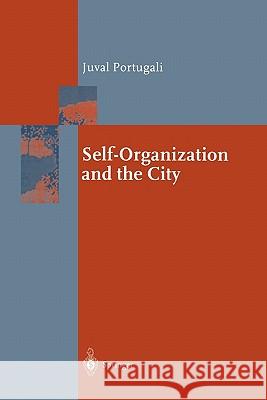
Self-Organization and the City Juval Portugali H. Haken 9783642084812 Springer - książkaWidoczna okładka, to zdjęcie poglądowe, a rzeczywista szata graficzna może różnić się od prezentowanej.

Self-Organization and the City

ISBN-13: 9783642084812 / Angielski / Miękka / 2010 / 352 str.

Juval Portugali; H. Haken
cena 403,47
(netto: 384,26 VAT:  5%)

Najniższa cena z 30 dni: 385,52
Termin realizacji zamówienia:
ok. 22 dni roboczych
Bez gwarancji dostawy przed świętami

Darmowa dostawa!

Cities first came into existence more than five thousand years ago. How to deal with these partly fascinating, partly frightening creatures of mankind, both practically and intellectually, concerns all of us and, in particular, presents areal challenge to city planners. Each historical epoch has had its own par- ticular attitudes associated with the "Zeitgeist." Accordingly, the planning and steering of cities were based on quite different criteria. But in spite of these differences, the concept of planning and steering was, and still is, the cornerstone of our dealing with cities. Nevertheless, the planner's dilemma is becoming more and more visible: cities and megacities seem to be un- plannable. In this book, Juval Portugali intro duces a new idea: Cities are self- organizing systems. To substantiate his revolutionary concept, he uses several interlinked methods. On the one hand, and to my own delight, he employs in his arguments theoretical tools developed in the interdisciplinary field of synergetics. On the other hand, jointly with his co-workers, he has performed detailed model calculations on cellular nets. It has been a great pleasure and a wonderful experience for me to discuss these concepts with Juval Portugali over a number of years. I was repeatedly and deeply impressed by the way he established profound and often surprising links to other fields of science.


Kategorie:
Nauka, Fizyka
Kategorie BISAC:
Social Science > Sociology - Urban
Science > Earth Sciences - Geography
Science > Fizyka matematyczna
Wydawca:
Springer
Seria wydawnicza:
Springer Series in Synergetics
Język:
Angielski
ISBN-13:
9783642084812
Rok wydania:
2010
Numer serii:
000022132
Ilość stron:
352
Waga:
0.57 kg
Wymiary:
23.5 x 15.5
Oprawa:
Miękka
Wolumenów:
01

From the reviews
"The author and his associates (...) are to be congratulated on such a sustained and convincing tour de force. This book succintly and succesfully discusses urban process and urban revolution, the utility of heuristic models in studying social, economic, and cultural segregation in cities, and the development of synergetic theories of cities and city planning. (...) it deserves the very widest readership in urban planning and beyond." (Environment and Planning B, 2001)

I On Cities and Urbanism.- 1. Cities as Concepts.- 1.1 Cities Have Been with Us for over 5000 Years.- 1.2 The Aristotelian City.- 1.3 The City of Wittgenstein.- 1.4 The City as a (Pattern) Language.- 1.5 The Prototypicality of Core Cities.- 1.6 The Ideal-Type City of Max Weber.- 1.7 IRN Cities.- 2. Prototype Urbanisms.- 2.1 The Ecocity.- 2.1.1 Eco-nomic Cities.- 2.1.2 Eco-logical Cities.- 2.1.3 Their Common Origin.- 2.2 Sir Isaac Newton’s Cities.- 2.3 Chicago.- 2.4 Monstrocity.- 2.5 Taming Megalopolis.- 2.6 Plan the Beast.- 2.6.1 The Disillusionment, or the First Planning Dilemma.- 2.7 The City of (In)Justice.- 2.8 The Humanistic City of Everyday Life.- 2.8.1 The City of Daily Routines.- 2.8.2 The Cognitive City in the Head.- 2.8.3 The Humanistic City.- 2.9 The Marx(ist) City.- 2.10 De-Visualized Cities.- 2.11 The Split.- 2.12 The Second Planning Dilemma.- 2.13 The Postmodern City.- 2.14 Los Angeles.- 2.15 The Hypermodern Self-Organizing City.- 3. Self-Organizing Cities.- 3.1 A Concise Introduction to Self-Organization.- 3.2 Dissipative Cities.- 3.3 Synergetic Cities.- 3.3.1 The Laser Paradigm.- 3.3.2 The Paradigm of Pattern Formation.- 3.3.3 The Paradigm of Pattern Recognition.- 3.3.4 Slow Cities and Fast Regions.- 3.3.5 Pattern Formation and Pattern Recognition in the City.- 3.4 Chaotic Cities.- 3.5 Fractal Cities.- 3.6 Cellular Automata Cities.- 3.7 Sandpile Cities.- 3.8 FACS and IRN Cities.- II City Games.- 4. Free Agents in a Cellular Space.- 4.1 Free Agents.- 4.1.1 Between Atoms and Free Agents.- 4.1.2 Intentionality, Hermeneutics and Memory.- 4.1.3 Internal and External Information.- 4.2 In-Formation.- 4.2.1 Between the Local and the Global.- 4.3 Self-Organization with Free Agents.- 4.3.1 Stratigraphic Change.- 4.3.2 Furcative Change.- 4.3.3 Hermeneutic Change.- 4.4 Free Agents in a Cellular Space (FAGS).- 4.4.1 Cellular Automata.- 4.4.2 City.- 4.4.3 City-1.- 4.4.4 City-2.- 4.4.5 City-3.- 4.4.6 City-4 and City-5.- 4.4.7 Modeling Groups Internal Complexity.- 4.5 Urban Games with FACS.- 5. City: The Greens and the Blues.- 5.1 Introduction.- 5.2 City: A Heuristic Model.- 5.3 City: A Formal Description of the Cellular-Automata Model.- 5.3.1 Internal Migrations.- 5.3.2 Occupation by Immigrants: Rules Ft+2/3.- 5.4 The Properties of the Model.- 5.4.1 Self-Organization.- 5.4.2 A Probabilistic CA Model.- 5.4.3 A Genuinely Spatial Model.- 5.4.4 A Heuristic Model.- 5.4.5 Between the Local and the Global.- 5.5 Three Heuristic Games.- 5.5.1 Game 1: Segregative Blues Versus Segregative Greens.- 5.5.2 Game 2: Neutral and Segregative Greens Versus Segregative Blues.- 5.5.3 Game 3: Neutral and Segregative Blues Versus Neutral and Segregative Greens.- 5.6 Intention Versus Behavior in a City.- 5.6.1 Intention Versus Behavior in Games 1, 2 and 3.- 5.7 Stability and Instability in the City.- 5.7.1 Predictability Versus Unpredictability.- 5.7.2 Local Versus Global Stability and Instability.- 5.7.3 Stability Versus Instability in Games 1, 2 and 3.- 5.8 The Captivity Principle.- 5.9 Conclusions.- 6. International Migration and the Internal Structure of Cities.- 6.1 Introduction.- 6.2 City-1: An Heuristic Immigration Absorption Model.- 6.2.1 A Formal Description of City-1.- 6.2.2 Some Properties of City-1.- 6.3 Selected Results.- 6.3.1 Stability of the Socio—spatial Structure of the City in Face of Massive Waves of International Migration.- 6.3.2 Competing Order Parameters in a Self-Organizing City.- 6.4 Concluding Notes.- 7. Spatial Cognitive Dissonance and Socio—spatial Emergence in a Self-Organizing City.- 7.1 Introduction.- 7.2 Intention Versus Behavior.- 7.2.1 Classical Social Theory.- 7.2.2 Self-Organization Theory.- 7.2.3 Cognitive Dissonance.- 7.3 The Model.- 7.3.1 Preliminaries.- 7.3.2 Spatial Cognitive Dissonance and Its Implications.- 7.3.3 In the Queue.- 7.3.4 Further Structural Changes in the City.- 7.3.5 Socio—spatial Emergence.- 7.3.6 City-2 as a Heuristic—Hermeneutic Model.- 7.3.7 The Interpretation Screen.- 7.4 Results and Interpretations.- 7.4.1 Spatial Dialectics.- 7.4.2 Internal Versus External Spatial Information and Cultural Emergence.- 7.4.3 City-3: Human Agents Between the Local and the Global.- 7.5 Conclusions.- 8. Individuals’ Cultural Code and Residential Self-Organization in the City.- 8.1 Introduction.- 8.2 The Memetic Code.- 8.3 The Model.- 8.3.1 The Definition of the m-Code.- 8.3.2 Cultural Groups.- 8.3.3 Model Dynamics: Trade Off Between Migration and Individual’s Change.- 8.4 Results.- 8.4.1 Parameter Value and Initial Conditions.- 8.4.2 Presentation of the City Patterns.- 8.4.3 Model Dynamics for Low-Dimensional Cultural Identity: K = 1 and K = 2.- 8.4.4 Model Dynamics for High-Dimensional Cultural Identity: K = 5.- 8.5 Concluding Notes.- 9. From CA- to GIS-City.- 9.1 Introduction.- 9.2 The GIS (Geographical Information System)-City.- 9.3 Model Description.- 9.4 Preliminary Results.- 9.4.1 Scenario A: A City with No Internal Boundaries.- 9.4.2 Scenario B: City of Quarters, with the Roads as Internal Boundaries.- 10. Internal Complexity and Socio-spatial Segregation of Groups in a Self-Organizing City.- 10.1 Introduction.- 10.1.1 Hierarchical and Non-hierarchical Cultural Groups.- 10.1.2 Cultural Generative Orders.- 10.1.3 Aims.- 10.2 The City-6 Model.- 10.2.1 The Cellular Space.- 10.2.2 The Agents.- 10.2.3 Decision-Making.- 10.2.4 The Q-Analysis Device.- 10.3 Game 1: Forms of Unintended Consequences.- 10.3.1 Initial Conditions.- 10.3.2 Results and Discussion.- 10.4 Internal Relations Between Cultural Orders.- 10.4.1 Q-analysis.- 10.4.2 Game 2: The Emergence of a Cultural Order Parameter in Self-Organization Process.- 10.4.3 Game 3: The Relations Between Cultural Levels — Synergetics and Dissonance.- III Self-Organizing Planning.- 11. Planning the Unplannable: Self-Organization and City Planning.- 11.1 Introduction.- 11.1.1 The First Planning Dilemma.- 11.1.2 The Second Planning Dilemma.- 11.1.3 The Third Planning Dilemma.- 11.2 The Planning Dilemma of Self-Organizing Cities.- 11.3 In Search of a New Planning Approach.- 11.3.1 Just-in-Time Versus Just-in-Case.- 11.3.2 A City Is Not a Tree; Nor Is It an Aristotelian Category.- 11.3.3 Push Planning.- 11.3.4 The Food-Market of New York City.- 11.4 Preliminary Principles for a Self-Organizing Planning.- 11.4.1 Parallel Distributed Planning (“PDP”) in a Self-Organizing City.- 11.4.2 Decision Making Agents as Self-Organizing Systems.- 11.4.3 Self-Organization in Private and Collective Planning.- 11.4.4 Planning Synergetic Cities.- 11.4.5 Plans as Patterns of Routinized Activities.- 11.4.6 Enslavement to, and Emergence of, a City’s Order-Parameter Plans.- 11.4.7 Between Fast Local Plans and Slow Global Plans.- 11.5 Planning the Ideology of the Unplannable.- 11.5.1 Planning the Ideology of Planning.- 11.5.2 Planning Is an Ideological False Consciousness.- 11.5.3 Planning Between Nationalism and Urbanism.- 11.6 SOCity: A Virtual Self-Planned City.- 11.6.1 SOCity.- 11.6.2 A Concluding Note.- 12. Artificial Planning Experience.- 12.1 Introduction.- 12.2 Planning by Means of Artificial Experience (AE).- 12.3 The Planning Game.- 12.3.1 An Example.- 12.4 Conclusions.- IV Synergetic Cities.- 13. Synergetic Cities I: The Pattern Recognition Approach.- 13.1 Approaches of Synergetics.- 13.2 The Pattern Recognition Approach to Cities.- 13.3 The Model.- 13.4 Linear Models.- 13.5 Nonlinear Models.- 13.6 Another Origin of the Saturation of Attention.- 13.7 Concluding Remarks.- 14. Synergetic Cities II: Pattern Recognition, Cognitive Mapping and Decision-Making.- 14.1 Introduction.- 14.2 Pattern Recognition as Decision-Making.- 14.3 An Extension Concerning Cognitive Mapping.- 14.4 Optimization.- 14.5 Mathematical Formulation.- 14.6 Discussion.- 14.7 Decision-Making Heuristics.- 14.8 SIRN (Synergetic Inter-representation Networks) and Decision-Making.- 14.8.1 Intra-personal Decision Making.- 14.8.2 Interpersonal and Collective Decision Making.- 14.9 An Outline for a SIRN Decision-Making Model.- V Self-Organization and Urban Revolutions.- 15. Self-Organization and Urban Revolutions.- 15.1 From the Urban Revolution to La Révolution Urbaine.- 15.1.1 Gordon V. Childe: The Urban Revolution.- 15.1.2 A Spencerian Interpretation.- 15.1.3 The First City.- 15.1.4 Henri Lefebvre: La Révolution Urbaine.- 15.1.5 Manuel Castells: Network Society with its Information Megacity.- 15.1.6 The Modern, the Postmodern and the Hyper-modern City.- 15.2 Self-Organization, Social Theory and Socio-spatial Revolutions.- 15.2.1 On Punctuated Equilibria and Social Revolutions.- 15.2.2 Similarities Between Self-Organization and Social Theory.- 15.2.3 The Differences.- 15.2.4 Self-Organization, Social Theory and Urban Revolutions.- 15.3 Self-Organized Urban Revolutions.- 15.3.1 The First Urban Revolution from the Perspective of Self-Organization.- 15.3.2 A Sequence of Urban Revolutions.- 15.4 Self-Organized Urban Revolutions at the End of the Second Millennium.- 15.4.1 Cities as a Self-Organized Family Resemblance Category.- 15.4.2 Urbanism as a Generative Order Parameter.- 15.4.3 Two Cognitive Maps: a Territory and Its Cities Versus a City and Its Territory.- 15.4.4 From Nationalism to Urbanism: A New Urban Revolution at the Gate of the 21st Century?.- Concluding Notes: Self-Organizing Cities at the Gate of the 21st Century.

Haken, H. Haken, University of Stuttgart, Germany.... więcej >


Udostępnij

Facebook - konto krainaksiazek.pl


Opinie o Krainaksiazek.pl na Opineo.pl

Partner Mybenefit

Krainaksiazek.pl w programie rzetelna firma Krainaksiaze.pl - płatności przez paypal

Czytaj nas na:

Facebook - krainaksiazek.pl
  • książki na zamówienie
  • granty
  • książka na prezent
  • kontakt
  • pomoc
  • opinie
  • regulamin
  • polityka prywatności

Zobacz:

  • Księgarnia czeska

  • Wydawnictwo Książkowe Klimaty

1997-2025 DolnySlask.com Agencja Internetowa

© 1997-2022 krainaksiazek.pl
     
KONTAKT | REGULAMIN | POLITYKA PRYWATNOŚCI | USTAWIENIA PRYWATNOŚCI
Zobacz: Księgarnia Czeska | Wydawnictwo Książkowe Klimaty | Mapa strony | Lista autorów
KrainaKsiazek.PL - Księgarnia Internetowa

Polityka prywatnosci - link
Krainaksiazek.pl - płatnośc Przelewy24
Przechowalnia Przechowalnia





