Selenium and Nano-Selenium in Environmental Stress Management and Crop Quality Improvement » książka





Selenium and Nano-Selenium in Environmental Stress Management and Crop Quality Improvement
ISBN-13: 9783031070624 / Angielski / Twarda / 2022
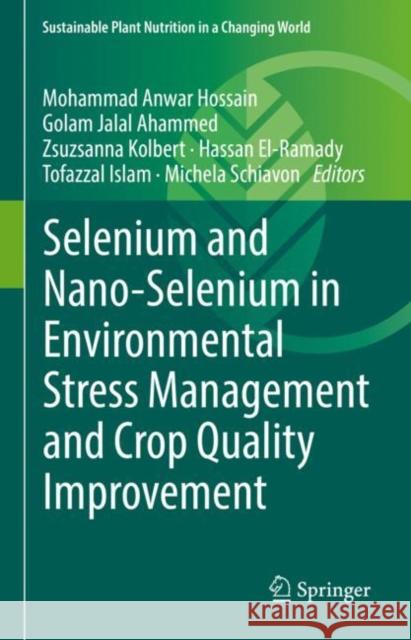
Selenium and Nano-Selenium in Environmental Stress Management and Crop Quality Improvement
ISBN-13: 9783031070624 / Angielski / Twarda / 2022
(netto: 766,76 VAT: 5%)
Najniższa cena z 30 dni: 771,08
ok. 16-18 dni roboczych.
Darmowa dostawa!
Crop plants growing under field conditions are constantly exposed to various abiotic and biotic stress factors leading to decreased yield and quality of produce. In order to achieve sustainable development in agriculture and to increase agricultural production for feeding an increasing global population, it is necessary to use ecologically compatible and environmentally friendly strategies to decrease the adverse effects of stresses on the plant. Selenium is one of the critical elements from the biological contexts because it is essential for human health; however, it becomes toxic at high concentrations. It has been widely reported that selenium can promote plant growth and alleviate various stresses as well as increase the quantity and quality of the yield of many plant species. Nonetheless, at high concentrations, selenium causes phytotoxicity. In the last decade, nanotechnology has emerged as a prominent tool for enhancing agricultural productivity. The production and applications of nanoparticles (NPs) have greatly increased in many industries, such as energy production, healthcare, agriculture, and environmental protection. The application of NPs has attracted interest for their potential to alleviate abiotic and biotic stresses in a more rapid, cost-effective, and more sustainable way than conventional treatment technologies. Recently, research related to selenium-NPs-mediated abiotic stresses and nutritional improvements in plants has received considerable interest by the scientific community. While significant progress was made in selenium biochemistry in relation to stress tolerance, an in-depth understanding of the molecular mechanisms associated with the selenium- and nano-selenium-mediated stress tolerance and bio-fortification in plants is still lacking. Gaining a better knowledge of the regulatory and molecular mechanisms that control selenium uptake, assimilation, and tolerance in plants is therefore vital and necessary to develop modern crop varieties that are more resilient to environmental stress.
(1)Sources of selenium and nano-selenium in soil and plants
(a)Dr. Hassan El-Ramady, Professor, Soil and Water Department, faculty of Agriculture, Kafrelsheikh University, Egypt, email: hassan.elramady@agr.kfs.edu.eg
(b)Dr. Graham Lyons,Research Associate, The University of Adelaide, Australia, email:graham.lyons@adelaide.edu.au
(c) Dr. Steve McGrath,Principal Research Scientist - Head of Department for Sustainable Agriculture Sciences – Harpenden, UK, email:steve.mcgrath@rothamsted.ac.uk
(2)Use of selenium and nano-selenium in agro-biotechnologies
(a)Dr. Eva Domokos-Szabolcsy, Plant Physiology and Biotechnology Department, University of Debrecen, Debrecen, Hungary, email:szabolcsy@agr.unideb.hu
(b)Dr. Daniel C.W. Tsang, Environmental Engineering, The Hong Kong Polytechnic University, Hung Hom, Kowloon, Hong Kong, China, email: dan.tsang@polyu.edu.hk
(c) Professor, GijsDuLaing, Ghent University, Belgium, email:gijs.dulaing@ugent.be
(d) Dr. Xuebin Yin, Suzhou Institute for Advanced Study University of Science and Technology of China, China, email: xbyin@ustc.edu.cn
(3)Selenium and nano-selenium as a new frontier of biostimulants
(a)Dr. Julia Medrano Macías, Horticulture Department, Agrarian Autonomous University Antonio Narro, Calzada Antonio Narro 1923, Saltillo 25315, Mexico, email:jmedmac@gmail.com
(b) Professor Yong Sik Ok,Korea Biochar Research Center, O-Jeong Eco-Resilience Institute (OJERI), Division of Environmental Science and Ecological Engineering, Korea University, Seoul 02841, Republic of Korea, email: yongsikok@korea.ac.kr
(c) Professor Luiz Roberto Guimarães Guilherme, Federal University of Lavras, Brazil, email: guilherm@dcs.ufla.br
(4)Selenium and nano-selenium in plant nutrition and crop quality
(a)Dr. Hassan El-Ramady, Professor, Soil and Water Department, faculty of Agriculture, Kafrelsheikh University, Egypt, email: hassan.elramady@agr.kfs.edu.eg
(b)Dr. Hebat-Allah A.Hussein, Botany and Microbiology Department, Faculty of Science (Girls Branch), Al-Azhar University, Cairo, Egypt, email: hebahussein@azhar.edu.eg
(c) Valery P. Kalinitchenko, Institute of Fertility of Soils of South Russia, Krivoshlykova str., 2, Persianovka, Rostov Region 346493, Russia, email: kalinitch@mail.ru
(5)Uptake and metabolism of selenium in plants: recent progress and future perspectives
(a)Dr. ZsuzsannaKolbert, Associate Professor, Department of Plant Biology, Hungary, email: kolzsu@bio.u-szeged.hu
(b)Professor Elizabeth Pilon-Smits, Colorado State University, Biology Department, Fort Collins, CO 80523, USA, E-mail address: epsmits@colostate.edu
(c) Dr.MihalyDernovics, Department of Plant Physiology, Agricultural Institute, Centre for Agricultural Research, Hungarian Academy of Sciences, email:dernovics.mihaly@agrar.mta.hu
(d)Dr. Rudra D. Tripathia, CSIR-National Botanical Research Institute, Council of Scientific and Industrial Research, Lucknow, India, email: tripathird@gmail.com
(6)Synthesis and characterization of nano-selenium using plant biomolecules and their potential applications
(a)Professor MeryamSardar, Enzyme Technology Lab, Department of Biosciences, JamiaMilliaIslamia, New Delhi, 110025, India, email: msardar@jmi.ac.in(b) Dr. Regina SharmilaDass, Molecular Fungal Genetics and Mycotoxicology Research Unit, Department of Microbiology, Pondicherry University, India, email: reginadass@gmail.com
(c) Dr. NareshkumarArjunan, Department of Zoology, School of Life Sciences, Periyar University, Salem 636011, India, email: naresh@periyaruniversity.ac.in
(7)Selenium and nano-selenium mediated salt stress tolerance in plants
(a)Dr.ChaolongZu, Tobacco Research Institute/Maize Research Center, Anhui Academy of Agricultural Sciences, Hefei 230031, P. R. China, email: : lcz2468@163.com
(b)Professor Mona H. Soliman,Biology Department, Faculty of Science, Taibah University, Yanbu El-Bahr, 46429, Saudi Arabia, email:monahsh1@gmail.com
(c)Dr. Seyed MortezaZahedi, Assistant Professor, Department of Horticultural Science, Faculty of Agriculture, University of Maragheh, Maragheh, Iran, email: s.m.zahedi@maragheh.ac.ir
(8)Selenium and nano-selenium mediated drought stress tolerance in plants
(a) Professor PV Vara Prasad, Department of Agronomy, Throckmorton Plant Science Center and ‡Department of Chemistry, Kansas State University, Manhattan, Kansas 66506, United States, email: vara@ksu.edu
(b) Professor EmidioAlbertini, Department of Agricultural, Food and Environmental Sciences, University of Perugia, Perugia, Italy, email: emidio.albertini@unipg.it
(c) Professor Ejaz Ahmad Waraich,Department of Crop Physiology, University of Agriculture, Faisalabad, Pakistan,eamail:uaf_ewarraich@yahoo.com
(9)Selenium and nano-selenium mediated heat stress tolerance in plants
(a) Professor BarbaraHawrylak-Nowak, Department of Plant Physiology, University of Life Sciences in Lublin, Lublin, Poland, email: barbara.nowak@up.lublin.pl
(b) Professor PV Vara Prasad, Department of Agronomy, Throckmorton Plant Science Center and ‡Department of Chemistry, Kansas State University, Manhattan, Kansas 66506, United States, email: vara@ksu.edu
(c) ProfessorMuhammad Iqbal, Department of Botany, Government College University, Faisalabad 38000, Pakistan, email: iqbaluaf@yahoo.com
(d) Dr. Raffaella Cerana,Dipartimento di Scienzedell’Ambiente e della Terra, UniversitàdegliStudi di Milano-Bicocca, 20126 Milan, Italy, email: raffaella.cerana@unimib.it
(10)Selenium and nano-selenium mediated cold stress tolerance in plants
(a)Professor Muhammad Iqbal, Department of Botany, Government College University, Faisalabad 38000, Pakistan, email: iqbaluaf@yahoo.com
(b)PrfessorMaryam Haghighi, Horticulture Department, College of Agriculture, IsfahanUniversity of Technology, Isfahan, Iran, email: mhaghighi@cc.iut.ac.ir
(c) Dr. K.F. Cao, State Key Laboratory of Conservation and Utilization of Subtropical Agro-bio-resources and Guangxi Key Laboratory of Forest Ecology and Conservation, College of Forestry, Guangxi University, Nanning, 530004, Guangxi, PR China, email: kunfangcao@gxu.edu.cn
(11)Selenium and nano-selenium mediated heavy metal stress tolerance in plants
(a) Dr. Parvaiz Ahmad, Department of Botany and Microbiology, College of Science, King Saud University, Riyadh, Saudi Arabia; Email: parvaizbot@yahoo.com; pahmad@ksu.edu.sa
(b)Professor Xiaoe Yang, Ministry of Education (MOE) Key Laboratory of Environmental Remediation and Ecosystem Health, College of Environmental and Resources Science, Zhejiang University, Hangzhou 310058, People's Republic of China, email: xeyang@zju.edu.cn
(c)Dr. Fahim Nawaz, Department of Crop Physiology, University of Agriculture, Faisalabad, Pakistan, email: fahim5382@gmail.com; fahim.nawaz@plants.ox.ac.uk
(d)Dr. Issam Saidi,Unité de recherche de PhysiologieetBiochimie de la Réponse des Plantes aux ContraintesAbiotiques, Tunisia, email: issamfst@yahoo.fr
(12)Selenium and nano-selenium mediated biotic stress tolerance in plants
(a) Dr. Xiaohu Zhao, College of Resources and Environment, Huazhong Agricultural University, Wuhan 430070, China, email:xhzhao@mail.hzau.edu.cn
(b)Dr. Erika J. Espinosa-Ortiz, UNESCO-IHE Institute for Water Education, 2601DA Delft, The Netherlands, email:jime_na_es@yahoo.com.mx
(c)Dr. Marwa Mahmoud Abdel-Kareem, Botany & Microbiology Department, Sohag University, Egypt, email:marwaabdelkareem7@gmail.com
(13)Selenium bioavailability and nutritional improvements in crop plants
(a)Dr. Saddam Hussain Department of Agronomy, University of Agriculture Faisalabad, Pakistan, shussain@uaf.edu.pk
(b)Dr. ZhiqiangGao, College of Agriculture, Shanxi Agricultural University, Taigu, China,ZhiqiangGao, email: gaosxau@163.com
(c)Dr. Yu-DongWang, School of Life Sciences and State Key Laboratory of Agrobiotechnology, The Chinese University of Hong Kong, Hong Kong, China, email: ydwang_aca@yahoo.com
(d)Dr. Yum-Shing Wong, School of Life Sciences and State Key Laboratory of Agrobiotechnology, The Chinese University of Hong Kong, Hong Kong, China, email:yumshingwong@cuhk.edu.hk
(14)Effect of selenium application on quality improvements of seeds and fruits
(a)Dr.Zhiqiang Gao, College of Agriculture, Shanxi Agricultural University, Taigu, China,ZhiqiangGao, email: gaosxau@163.com
(b) Dr. Karliana Oliveira,Departamento de Ciências da Terra, Faculdade de Ciências e Tecnologia, Universidade Nova de Lisboa, Campus da Caparica, 2829-516 Caparica, Portugal, email: k.oliveira@campus.fct.unl.pt
(c) Professor Fernando CebolaLidon,Departamento de Ciências da Terra, Faculdade de Ciências e Tecnologia (FCT), Universidade Nova de Lisboa (UNL), Caparica, Portugal, email: fjl@fct.unl.pt
(15)The genetics of selenium accumulation by plants: recent progress and future perspectives
(a)Professor Philip J White, Ecological Science Group, The James Hutton Institute, Invergowrie, Dundee DD2 5DA, UK, email: philip.white@hutton.ac.uk
(b) Professor Doug Van Hoewyk, Coastal Carolina University, USA, email: dougvh@coastal.edu
Professor Minglin Lang, College of Life Science, University of Chinese Academy of Sciences, P.R. China, email:langml@ucas.ac.cn
(c) Dr.Xiaofang Jin, Fruit and Tea Research Institute, Hubei Academy of Agricultural Sciences, Wuhan, Hubei, China, email: xfjin@126.com(16)Agronomic bio-fortification crops with exogenous selenium application
(a)Professor Martin R Broadley, School of Biosciences, University of Nottingham,email:martin.broadley@nottingham.ac.uk
(b)Dr. Gary Bañuelos, U.S. Department of Agriculture-Agricultural Research Service, Water Management Research Unit, Parlier, California, and adjunct professor at the University of California and California State University-Fresno, USA,email: mail: gary.banuelos@usda.gov
(c) Professor André Rodrigues dos Reis, São Paulo State University (UNESP), RuaDomingos da Costa Lopes 780, Tupã, SP, Postal Code 17602-496, Brazil: andre.reis@unesp.br
(d) Dr. M.J. Poblaciones,Department of Agronomy and Forest Environment Engineering, University of Extremadura Avda., Spain, email: majops@unex.es
(e) Dr. Guilherme Lopes, Department of Soil Science, Federal University of Lavras, Campus UFLA, Lavras, MG, 37200-000, Brazil, email:guilherme.lopes@ufla.br
(17)Selenium toxicity and tolerance in plants: recent progress and future perspectives
(a)Dr.FarzanehGarousi, University of Debrecen, Faculty of Agricultural and Food Sciences and Environmental Management, Institute of Food Technology, HU-4032, Debrecen, Hungary,email: farzaneh@agr.unideb.hu
(b) Professor André Rodrigues dos Reis, São Paulo State University (UNESP), RuaDomingos da Costa Lopes 780, Tupã, SP, Postal Code 17602-496, Brazil: andre.reis@unesp.br
(c)ProfessorWeijun Zhou, Institute of Crop Science,Zhejiang University, China, email: e: wjzhou@zju.edu.cn
(18) Selenium bio-fortification for quality and nutritional improvements
(a)Dr.Mervi M. Seppa ̈nen,Department of Agricultural Sciences, University ofHelsinki, P.O. Box 27, Latokartanonkaari 5-7, 00014 Helsinki, Finland, email: mervi.seppanen@helsinki.fi
(b)Professor Antonio Juárez-Maldonado, Departamento de Botánica, Universidad AutónomaAgraria Antonio Narro, Mexico, Departamento de Botánica, Universidad Autónoma Agraria Antonio Narro, Saltillo COA 25315, Mexico
email: antonio.juarez@uaaan.edu.mx (c) Dr. Grzegorz Izydorczyk, Department of Advanced Material Technologies, Faculty of Chemistry, Wroclaw University of Science and Technology, Poland, email: grzegorz.izydorczyk@pwr.edu.pl(d)Dr Roberto d’Amato,Università degli Studi di Perugia,Italy, email: roberto.damato@unipg.it
(e) Dr.Paolo Benincasa, Associate Professor, Department of Agricultural Food and Environmental Sciences,Università degli Studi di Perugia, email:paolo.benincasa@unipg.it
(19)Manipulation of selenium metabolism in plants for tolerance and accumulation
(a)Dr. MichelaSchiavon, Associate Professor, Dipartimento di Agronomia, Animali, Alimenti, Risorsenaturali e Ambiente, UniversitàdegliStudi di Padova, Legnaro, Italy, email: michela.schiavon@unipd.it
(b) Professor Kristen R. Hladun, Department of Entomology, University of California, 900 University Ave., Riverside, CA 92521, United States, email: kristen.hladun@ucr.edu
(c) Dr. WeihongXu, College of Resources and Environmental Sciences, Southwest University, Chongqing 400715, People’s Republic of China, email: xuwei_hong@163.com
(20)Selenium hyper-accumulation and phytoremediation: recent progress and future perspectives
(a)Dr. ZsuzsannaKolbert*, Associate Professor, Department of Plant Biology, Hungary, email: kolzsu@bio.u-szeged.hu
(b) Dr. MichelaSchiavon, Associate Professor, Dipartimento di Agronomia, Animali, Alimenti, Risorsenaturali e Ambiente, UniversitàdegliStudi di Padova, Legnaro, Italy, email: michela.schiavon@unipd.it
(c)Professor Fang-Jie Zhao, Nanjing Agricultural University,email: Fangjie.zhao@njau.edu.cn
(d) Professor Norman Terry, Department of Plant and Microbial Biology, University of California Berkeley, 111 Koshland Hall, Berkeley, USA, email:nterry@berkeley.edu
(e) Professor JieLuo, College of Tropical Crops,Hainan University, China, email: jie.luo@mail.hzau.edu.cn
(21) Selenium in food chain in relation to human and animal nutrition and health
(a)Professor Gerhard N Schrauzer, Department of Chemistry and Biochemistry, University of California-San Diego, La Jolla, CA, USA email: gschrauzer@ucsd.edu
(b)Professor Peter F. Surai, Division of Environmental and Evolutionary Biology, University of Glasgow, Glasgow, Scotland, UK, email: psurai@mail.ru
Crop plants growing under field conditions are constantly exposed to various abiotic and biotic stress factors leading to decreased yield and quality of produce. In order to achieve sustainable development in agriculture and to increase agricultural production for feeding an increasing global population, it is necessary to use ecologically compatible and environmentally friendly strategies to decrease the adverse effects of stresses on the plant. Selenium is one of the critical elements from the biological contexts because it is essential for human health; however, it becomes toxic at high concentrations. It has been widely reported that selenium can promote plant growth and alleviate various stresses as well as increase the quantity and quality of the yield of many plant species. Nonetheless, at high concentrations, selenium causes phytotoxicity. In the last decade, nanotechnology has emerged as a prominent tool for enhancing agricultural productivity. The production and applications of nanoparticles (NPs) have greatly increased in many industries, such as energy production, healthcare, agriculture, and environmental protection. The application of NPs has attracted interest for their potential to alleviate abiotic and biotic stresses in a more rapid, cost-effective, and more sustainable way than conventional treatment technologies. Recently, research related to selenium-NPs-mediated abiotic stresses and nutritional improvements in plants has received considerable interest by the scientific community. While significant progress was made in selenium biochemistry in relation to stress tolerance, an in-depth understanding of the molecular mechanisms associated with the selenium- and nano-selenium-mediated stress tolerance and bio-fortification in plants is still lacking. Gaining a better knowledge of the regulatory and molecular mechanisms that control selenium uptake, assimilation, and tolerance in plants is therefore vital and necessary to develop modern crop varieties that are more resilient to environmental stress.




Czytaj nas na:
1997-2026 DolnySlask.com Agencja Internetowa
KrainaKsiazek.PL - Księgarnia Internetowa


