• Wyszukiwanie zaawansowane
  • Kategorie
  • Kategorie BISAC
  • Książki na zamówienie
  • Promocje
  • Granty
  • Książka na prezent
  • Opinie
  • Pomoc
  • Załóż konto
  • Zaloguj się

Security Risk Assessment and Management: A Professional Practice Guide for Protecting Buildings and Infrastructures » książka


zaloguj się | załóż konto
Logo Krainaksiazek.pl

koszyk

konto

szukaj
topmenu
Księgarnia internetowa
Szukaj
Książki na zamówienie
Promocje
Granty
Książka na prezent
Moje konto
Pomoc
 
 
Wyszukiwanie zaawansowane
Pusty koszyk
Bezpłatna dostawa dla zamówień powyżej 20 złBezpłatna dostawa dla zamówień powyżej 20 zł

Kategorie główne

• Nauka
 [2946600]
• Literatura piękna
 [1856966]

  więcej...
• Turystyka
 [72221]
• Informatyka
 [151456]
• Komiksy
 [35826]
• Encyklopedie
 [23190]
• Dziecięca
 [619653]
• Hobby
 [140543]
• AudioBooki
 [1577]
• Literatura faktu
 [228355]
• Muzyka CD
 [410]
• Słowniki
 [2874]
• Inne
 [445822]
• Kalendarze
 [1744]
• Podręczniki
 [167141]
• Poradniki
 [482898]
• Religia
 [510455]
• Czasopisma
 [526]
• Sport
 [61590]
• Sztuka
 [243598]
• CD, DVD, Video
 [3423]
• Technologie
 [219201]
• Zdrowie
 [101638]
• Książkowe Klimaty
 [124]
• Zabawki
 [2473]
• Puzzle, gry
 [3898]
• Literatura w języku ukraińskim
 [254]
• Art. papiernicze i szkolne
 [8170]
Kategorie szczegółowe BISAC

Security Risk Assessment and Management: A Professional Practice Guide for Protecting Buildings and Infrastructures

ISBN-13: 9780471793526 / Angielski / Twarda / 2007 / 384 str.
Betty E. Biringer; Rudolph V. Matalucci; Sharon O'Connor
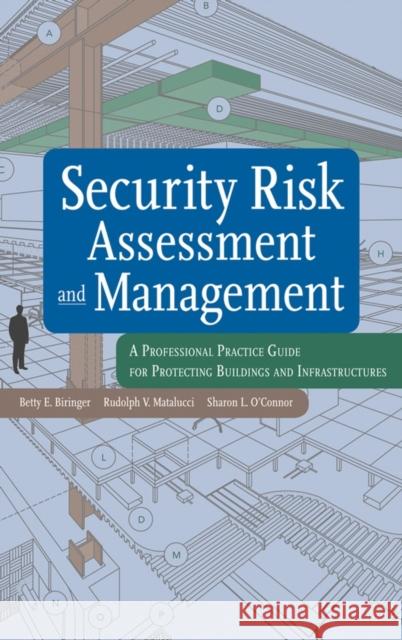
Security Risk Assessment and Management: A Professional Practice Guide for Protecting Buildings and Infrastructures Biringer, Betty E. 9780471793526 John Wiley & Sons - książkaWidoczna okładka, to zdjęcie poglądowe, a rzeczywista szata graficzna może różnić się od prezentowanej.

Security Risk Assessment and Management: A Professional Practice Guide for Protecting Buildings and Infrastructures

ISBN-13: 9780471793526 / Angielski / Twarda / 2007 / 384 str.

Betty E. Biringer; Rudolph V. Matalucci; Sharon O'Connor
cena 476,28 zł
(netto: 453,60 VAT:  5%)

Najniższa cena z 30 dni: 472,37 zł
Termin realizacji zamówienia:
ok. 30 dni roboczych
Bez gwarancji dostawy przed świętami

Darmowa dostawa!

Proven set of best practices for security risk assessment and management, explained in plain English This guidebook sets forth a systematic, proven set of best practices for security risk assessment and management of buildings and their supporting infrastructures. These practices are all designed to optimize the security of workplace environments for occupants and to protect the interests of owners and other stakeholders. The methods set forth by the authors stem from their research at Sandia National Laboratories and their practical experience working with both government and private facilities. Following the authors' step-by-step methodology for performing a complete risk assessment, you learn to:

  • Identify regional and site-specific threats that are likely and credible
  • Evaluate the consequences of these threats, including loss of life and property, economic impact, as well as damage to symbolic value and public confidence
  • Assess the effectiveness of physical and cyber security systems and determine site-specific vulnerabilities in the security system
The authors further provide you with the analytical tools needed to determine whether to accept a calculated estimate of risk or to reduce the estimated risk to a level that meets your particular security needs. You then learn to implement a risk-reduction program through proven methods to upgrade security to protect against a malicious act and/or mitigate the consequences of the act. This comprehensive risk assessment and management approach has been used by various organizations, including the U.S. Bureau of Reclamation, the U.S. Army Corps of Engineers, the Bonneville Power Administration, and numerous private corporations, to assess and manage security risk at their national infrastructure facilities. With its plain-English presentation coupled with step-by-step procedures, flowcharts, worksheets, and checklists, you can easily implement the same proven approach and methods for your organization or clients. Additional forms and resources are available online at www.wiley.com/go/securityrisk.

Kategorie:
Technologie
Kategorie BISAC:
Business & Economics > Kierownictwo i motywacja
Technology & Engineering > Civil - General
Wydawca:
John Wiley & Sons
Język:
Angielski
ISBN-13:
9780471793526
Rok wydania:
2007
Ilość stron:
384
Waga:
0.67 kg
Wymiary:
23.57 x 16.36 x 2.41
Oprawa:
Twarda
Wolumenów:
01
Dodatkowe informacje:
Bibliografia
Glosariusz/słownik
Wydanie ilustrowane

"Used by government and private corporations, it sets forth a systematic, proven set of best practices for security risk assessment and management of both buildings and their supporting infrastructure." ( ENR.com; 11/7/07)

1. Security Risk Assessment and Management Process.

1.1 Introduction.

1.2 Security Risk Equation.

1.3 Security Risk Assessment and Management Process.

1.3.1 Facility Characterization.

1.3.2 Threat Analysis.

1.3.3 Consequence Analysis.

1.3.4 System Effectiveness Assessment.

1.3.5 Risk Estimation.

1.3.6 Comparison of Estimated Risk Levels.

1.3.7 Risk Reduction Strategies.

1.4 Presentation to Management.

1.5 Risk Management Decisions.

1.6 Information Protection.

1.7 Process Summary.

1.8 References.

1.9 Exercises.

2. Screening Analysis.

2.1 Introduction.

2.2 Screening Analysis Methods.

2.3 Summary.

2.4 References.

2.5 Exercises.

3. Facility Characterization.

3.1 Introduction.

3.2 Undesired Events.

3.3 Facility Description.

3.3.1 Physical Details.

3.3.2 Cyber Information System.

3.3.3 Facility Operations.

3.3.4 Security Protection Systems.

3.3.5 Workforce Description.

3.3.6 Restrictions, Requirements, Limitations.

3.4 Critical Assets.

3.4.1 Generic Fault Tree.

3.4.2 Identifying Critical Assets.

3.5 Protection Objectives.

3.6 Summary.

3.7 References.

3.8 Exercises.

4. Threat Analysis.

4.1 Introduction.

4.2 Sources of Threat Information.

4.2.1 Local and State Sources.

4.2.2 National Sources.

4.3 Adversary Spectrum.

4.4 Adversary Capability.

4.5 Threat Potential for Attack.

4.5.1 Outsider Threat.

4.5.2 Insider Threat.

4.6 Summary.

4.7 References.

4.8 Exercises.

5. Consequence Analysis.

5.1 Introduction.

5.2 Reference Table of Consequences.

5.3 Consequence Values for Undesired Events.

5.4 Summary.

5.5 References.

5.6 Exercises.

6. Asset Prioritization.

6.1 Introduction.

6.2 Prioritization Matrix.

6.3 Summary.

6.4 References.

6.5 Exercises.

7. System Effectiveness.

7.1 Introduction.

7.2 Protection System Effectiveness.

7.2.1 Adversary Strategies.

7.2.2 Physical Protection System Effectiveness.

7.2.3 Cyber Protection System Effectiveness.

7.3 Summary.

7.4 References.

7.5 Exercises.

8. Estimating Security Risk.

8.1 Introduction.

8.2 Estimating Security Risk.

8.2.1 Conditional Risk.

8.2.2 Relative Risk.

8.3 Summary.

8.4 References.

8.5 Exercises.

9. Risk Reduction Strategies.

9.1 Introduction.

9.2 Strategies for Reducing Likelihood of Attack.

9.3 Strategies for Increasing Protection System Effectiveness.

9.3.1 Physical Protection System Upgrades.

9.3.2 Cyber Protection System Upgrades.

9.3.3 Protection System Upgrade Package(s).

9.4 Strategies for Mitigating Consequences.

9.4.1 Construction Hardening.

9.4.2 Redundancy.

9.4.3 Optimized Recovery Strategies.

9.4.4 Emergency Planning.

9.5 Combinations of Reduction Strategies.

9.6 Summary.

9.7 References.

9.8 Exercises.

10. Evaluating Impacts.

10.1 Risk Level.

10.2 Costs.

10.3 Operations/Schedules.

10.4 Public Opinion.

10.5 Other Site–Specific Concerns.

10.6 Review Threat Analysis.

10.7 Summary.

10.8 References.

10.9 Exercises.

11. Risk Management Decisions.

11.1 Introduction.

11.2 Risk Assessment Results.

11.2.1 Executive Summary.

11.2.2 Introduction.

11.2.3 Threat Analysis.

11.2.4 Consequence Analysis.

11.2.5 System Effectiveness Assessment.

11.2.6 Risk Estimation.

11.2.7 Risk Reduction Strategies and Packages.

11.2.8 Impact Analysis.

11.2.9 Supporting Documentation.

11.2.10 Report Overview.

11.3 Risk Management Decisions.

11.4 Establish Design Basis Threat (DBT).

11.5 Summary.

11.6 References.

11.7 Exercises.

12. Summary.

12.1 Facility Characterization.

12.2 Threat Analysis.

12.3 Consequence Analysis.

12.4 System Effectiveness Assessment.

12.5 Risk Estimation.

12.6 Comparison of Estimated Risk Level to Threshold.

12.7 Risk Reduction Strategies.

12.8 Analysis of Impacts Imposed by Risk Reduction Upgrade Packages.

12.9 Presentation to Management.

12.10 Risk Management Decisions.

BETTY E. BIRINGER is currently the manager of the Security Risk Assessment Department at Sandia National Laboratories. She has developed security risk assessment methodologies for dams, high–voltage electric power transmission, chemical facilities, communities, and energy infrastructures that connect the gas industry to the electric power grid. She previously managed projects for the Office of Counterintelligence, where she developed a risk method to address the insider threat.

RUDOLPH V. MATALUCCI, PhD, PE, is a retired Lieutenant Colonel in the United States Air Force and President of Rudolph Matalucci Consultants, Inc. Prior to starting his consulting firm, Dr. Matalucci was a project engineer/manager for Sandia National Laboratories, where he directed numerous risk–related projects for the Department of Energy, the Department of Defense, several other government agencies, and private organizations. He has developed, validated, implemented, and taught risk assessment methodologies for dams/locks/levees, electric power generation/transmission facilities, buildings, and other infrastructures.

SHARON L. O′CONNOR is a Principal Member of the Laboratory Staff in the Security Systems and Technology Center at Sandia National Laboratories. For the last ten years, she has supported Architectural Surety© and security risk assessment work. Her baccalaureate degree is from the University of New Mexico.

Proven set of best practices for security risk assessment and management, explained in plain English

This guidebook sets forth a systematic, proven set of best practices for security risk assessment and management of buildings and their supporting infrastructures. These practices are all designed to optimize the security of workplace environments for occupants and to protect the interests of owners and other stakeholders. The methods set forth by the authors stem from their research at Sandia National Laboratories and their practical experience working with both government and private facilities.

Following the authors′ step–by–step methodology for performing a complete risk assessment, you learn to:

  • Identify regional and site–specific threats that are likely and credible
  • Evaluate the consequences of these threats, including loss of life and property, economic impact, as well as damage to symbolic value and public confidence
  • Assess the effectiveness of physical and cyber security systems and determine site–specific vulnerabilities in the security system

The authors further provide you with the analytical tools needed to determine whether to accept a calculated estimate of risk or to reduce the estimated risk to a level that meets your particular security needs. You then learn to implement a risk–reduction program through proven methods to upgrade security to protect against a malicious act and/or mitigate the consequences of the act.

This comprehensive risk assessment and management approach has been used by various organizations, including the U.S. Bureau of Reclamation, the U.S. Army Corps of Engineers, the Bonneville Power Administration, and numerous private corporations, to assess and manage security risk at their national infrastructure facilities. With its plain–English presentation coupled with step–by–step procedures, flowcharts, worksheets, and checklists, you can easily implement the same proven approach and methods for your organization or clients. Additional forms and resources are available online at www.wiley.com/go/securityrisk.

Biringer, Betty E. BETTY E. BIRINGER is currently the manager of the ... więcej >


Udostępnij

Facebook - konto krainaksiazek.pl


Opinie o Krainaksiazek.pl na Opineo.pl

Partner Mybenefit

Krainaksiazek.pl w programie rzetelna firma Krainaksiaze.pl - płatności przez paypal

Czytaj nas na:

Facebook - krainaksiazek.pl
  • książki na zamówienie
  • granty
  • książka na prezent
  • kontakt
  • pomoc
  • opinie
  • regulamin
  • polityka prywatności

Zobacz:

  • Księgarnia czeska

  • Wydawnictwo Książkowe Klimaty

1997-2025 DolnySlask.com Agencja Internetowa

© 1997-2022 krainaksiazek.pl
     
KONTAKT | REGULAMIN | POLITYKA PRYWATNOŚCI | USTAWIENIA PRYWATNOŚCI
Zobacz: Księgarnia Czeska | Wydawnictwo Książkowe Klimaty | Mapa strony | Lista autorów
KrainaKsiazek.PL - Księgarnia Internetowa

Polityka prywatnosci - link
Krainaksiazek.pl - płatnośc Przelewy24
Przechowalnia Przechowalnia






