Second International Handbook of Science Education » książka





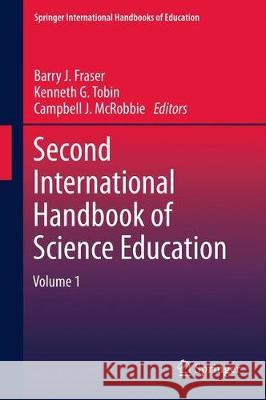
Second International Handbook of Science Education
ISBN-13: 9789402404951 / Angielski / Miękka / 2016 / 1564 str.
Second International Handbook of Science Education
ISBN-13: 9789402404951 / Angielski / Miękka / 2016 / 1564 str.
(netto: 2108,66 VAT: 5%)
Najniższa cena z 30 dni: 1927,76
ok. 16-18 dni roboczych.
Darmowa dostawa!
From the book reviews:
“The Handbook is international both in the sense of being aimed at the international field, and in terms of its authorship. … this book comprises an immense effort, and is an extensive resource that will inevitably be found valuable for years to come. The chapters are largely very well written, and are certainly informative. … The Handbook is a massive project and inevitably one finds things to quibble over, as well as much to admire and appreciate.” (Keith S. Taber, Science & Education, October, 2014)PART ONE
Preface
Section 1: Sociocultural Perspectives and Urban Education
KENNETH TOBIN
1.1 Sociocultural Perspectives on Science Education
STACY OLITSKY & CATHERINE MILNE
1.2 Understanding Engagement in Science Education: The Psychological and the Social
YEW-JIN LEE
1.3 Identity-Based Research in Science Education
JRÈNE RAHM
1.4 Diverse Urban Youth’s Learning of Science Outside School in University Outreach and Community Science Programs
CHRISTOPHER EMDIN
1.5 Reality Pedagogy and Urban Science Education: Toward a Comprehensive Understanding of the Urban Science Classroom
DONNA KING & STEPHEN M. RITCHIE
1.6 Learning Science Through Real-World Contexts
ROWHEA ELMESKY
1.7 Collaborative Research Models for Transforming Teaching and Learning Experiences
MARIA VARELAS, JUSTINE M. KANE, ELI TUCKER-RAYMOND & CHRISTINE C. PAPPAS
1.8 Science Learning in Urban Elementary School Classrooms: Liberatory Education and Issues of Access, Participation and Achievement
Section 2: Learning and Conceptual Change
REINDERS DUIT & DAVID F. TREAGUST
2.1 How Can Conceptual Change Contribute to Theory and Practice in Science Education?
STELLA VOSNIADOU
2.2 Reframing the Classical Approach to Conceptual Change: Preconceptions, Misconceptions and Synthetic Models
GREGORY P. THOMAS
2.3 Metacognition in Science Education: Past, Present and Future Considerations
BRUCE WALDRIP & VAUGHAN PRAIN
2.4 Learning From and Through Representations in Science
LYNN STEPHENS & JOHN J. CLEMENT
2.5 The Role of Thought Experiments in Science and Science Learning
COLETTE MURPHY
2.6 Vygotsky and Primary Science
AVI HOFSTEIN & PER M. KIND
2.7 Learning In and From Science Laboratories
URI ZOLLER & TAMI LEVY NAHUM
2.8 From Teaching to KNOW to Learning to THINK in Science Education
EDUARDO F. MORTIMER, PHIL SCOTT & CHARBEL N. EL-HANI
2.9 The Heterogeneity of Discourse in Science Classrooms: The Conceptual Profile Approach
KNUT NEUMANN, ALEXANDER KAUERTZ & HANS E. FISCHER
2.10 Quality of Instruction in Science Education
FANG-YING YANG & CHIN-CHUNG TSAI
2.11 Personal Epistemology and Science Learning: A Review of Empirical Studies
GREGORY J. KELLY, SCOTT MCDONALD & PER-OLOF WICKMAN
2.12 Science Learning and Epistemology
Section 3: Teacher Education and Professional Development
JOHN WALLACE & JOHN LOUGHRAN
3.1 Science Teacher Learning
SHIRLEY SIMON & SANDRA CAMPBELL
3.2 Teacher Learning and Professional Development in Science Education
PAULINE W.U. CHINN
3.3 Developing Teachers’ Place-Based and Culture-Based Pedagogical Content Knowledge and Agency
NORMAN G. LEDERMAN & JUDITH S. LEDERMAN
3.4 Nature of Scientific Knowledge and Scientific Inquiry: Building Instructional Capacity Through Professional Development
THOMAS KOBALLA, JR. & LESLIE U. BRADBURY
3.5 Mentoring in Support of Reform-Based Science Teaching
PETER C. TAYLOR, ELISABETH SETTELMAIER & BAL CHANDRA LUITEL
3.6 Multi-Paradigmatic Transformative Research as/for Teacher Education: An Integral Perspective
JULIE A. BIANCHINI
3.7 Teaching While Still Learning to Teach: Beginning Science Teachers’ Views, Experiences and Classroom Practices
AMANDA BERRY & JOHN LOUGHRAN
3.8 Developing Science Teacher Educators’ Pedagogy of Teacher Education
SONYA N. MARTIN & CHRISTINA SIRY
3.9 Using Video in Science Teacher Education: An Analysis of the Utlilization of Video-Based Media by Teacher Educators and Researchers
HANS E. FISCHER, ANDREAS BOROWSKI & OLIVER TEPNER
3.10 Professional Knowledge of Science Teachers
JALE CAKIROGLU, YESIM CAPA AYDIN & ANITA WOOLFOLK HOY
3.11 Science Teaching Efficacy Beliefs
JAMES J. GALLAGHER, ROBERT E. FLODEN & YOVITA GWEKWERERE
3.12 Context for Developing Leadership in Science and Mathematics Education in the United States
LYNN A. BRYAN
3.13 Research on Science Teacher Beliefs
Section 4: Equity and Social Justice
KATHRYN SCANTLEBURY
4.1 Still Part of the Conversation: Gender Issues in Science Education
ADRIANE SLATON & ANGELA CALABRESE BARTON
4.2 Respect and Science Learning
DEBRA PANIZZON
4.3 Science Education in Rural Settings: Exploring the ‘State of Play’ Internationally
ELIZABETH MCKINLEY & GEORGINA STEWART
4.4 Out of Place: Indigenous Knowledge in the Science Curriculum
KATHERINE RICHARDSON BRUNA
4.5 On Knowing and US Mexican Youth: Bordering Science Education Research, Practice and Policy
EILEEN CARLTON PARSONS, JAMES COOPER & JAMILA SMITH SIMPSON
4.6 Science Education Research Involving Blacks in the United Sates during 1997–2007: Synthesis, Critique and Recommendations
MARIA S. RIVERA MAULUCCI
4.7 Social Justice Research in Science Education: Methodologies, Positioning and Implications for Future Research
Section 5: Assessment and Evaluation
RUSSELL TYTLER & JONATHAN OSBORNE
5.1 Student Attitudes and Aspirations Towards Science
KAREN KERR & COLETTE MURPHY
5.2 Children’s Attitudes to Primary Science
XIUFENG LIU
5.3 Developing Measurement Instruments for Science Education Research
MANFRED PRENZEL, TINA SEIDEL & MAREIKE KOBARG
5.4 Science Teaching and Learning: An International Comparative Perspective
BRONWEN COWIE
5.5 Focusing on the Classroom: Assessment for Learning
IRIT SASSON & YEHUDIT J. DORI
5.6 Transfer Skills and Their Case-Based Assessment
ALEXANDER KAUERTZ, KNUT NEUMANN & HENDRIK HAERTIG
5.7 Competence in Science Education
FRANCES LAWRENZ & CHRISOPHER DAVID DESJARDINS
5.8 Trends in Government-Funded Multi-Site K–12 Science Program Evaluation
PART TWO
Section 6: Curriculum and Reform
GRADY VENVILLE, LÉONIE J. RENNIE & JOHN WALLACE
6.1 Curriculum Integration: Challenging the Assumption of School Science as Powerful Knowledge
CLARE CHRISTENSEN & PETER J. FENSHAM
6.2 Risk, Uncertainty and Complexity in Science Education
RICHARD K. COLL & NEIL TAYLOR
6.3 An International Perspective on Science Curriculum Development and Implementation
DAVID FORTUS & JOSEPH KRAJCIK
6.4 Curriculum Coherence and Learning Progressions
TROY D. SADLER & VAILLE DAWSON
6.5 Socio-Scientific Issues in Science Education: Contexts for the Promotion of Key Learning Outcomes
ALISTER JONES
6.6 Technology in Science Education: Context, Contestation and Connection
APRIL LUEHMANN & JEREMIAH FRINK
6.7 Web 2.0 Technologies, New Media Literacies and Science Education: Exploring the Potential to Transform
STEPHEN M. RITCHIE
6.8 Leading the Transformation of Learning and Praxis in Science Classrooms
SUSAN A. KIRCH
6.9 Understanding Scientific Uncertainty as a Teaching and Learning Goal
MICHAEL P. MUELLER & DEBORAH TIPPINS
6.10 Citizen Science, Ecojustice and Science Education: Rethinking and Education from Nowhere
HANNA J. ARZI
6.11 Change – A Desired Permanent State in Science Education
LYN CARTER
6.12 Globalisation and Science Education: Global Information Culture, Postcolonialism and Sustainability
SHARON J. LYNCH
6.13 Metaphor and Theory for Scale-Up Research: Eagles in the Anacostia and Activity Systems
Section 7: Argumentation and Nature of Science
JONATHAN OSBORNE
7.1 The Role of Argument: Learning How to Learn in School Science
CATHERINE MILNE
7.2 Beyond Argument in Science: Science Education as Connected and Separate Knowing
CHRISTINE V. MCDONALD & CAMPBELL J. MCROBBIE
7.3 Utilising Argumentation to Teach Nature of Science
DAVID GEELAN
7.4 Teacher Explanations
MARÍA PILAR JIMÉNEZ-ALEIXANDRE & BLANCA PUIG
7.5 Argumentation, Evidence Evaluation and Critical Thinking
JOHN R. STAVER
7.6 Constructivism and Realism: Dueling Paradigms
MICHIEL VAN EIJCK
7.7 Capturing the Dynamics of Science in Science Education
FOUAD ABD-EL-KHALICK
7.8 Nature of Science in Science Education: Toward a Coherent Framework for Synergistic Research and Development
Section 8: Out-of-School Learning
JOHN H. FALK & LYNN D. DIERKING
8.1 Lifelong Science Learning for Adults: The Role of Free-Choice Experiences
JUSTIN DILLON
8.2 Science, the Environment and Education Beyond the Classroom
J. RANDY MCGINNIS, EMILY HESTNESS, KELLY RIEDINGER, PHYLLIS KATZ, GILI MARBACH-AD & AMY DAI
8.3 Informal Science Education in Formal Science Teacher Preparation
TALI TAL
8.4 Out-of-School: Learning Experiences, Teaching and Students’ Learning
PETER AUBUSSON, JANETTE GRIFFIN & MATTHEW KEARNEY
8.5 Learning Beyond the Classroom: Implications for School Science
KOSHI DHINGRA
8.6 Science Stories on Television
PREETI GUPTA & JENNIFER D. ADAMS
8.7 Museum–University Partnerships for Preservice Science Education
JENNIFER D. ADAMS
8.8 Community Science: Capitalizing on Local Ways of Enacting Science in Science Education
DAVID ANDERSON & KIRSTEN M. ELLENBOGEN
8.9 Learning Science in Informal Contexts – Epistemological Perspectives and Paradigms
Section 9: Learning Environments
BARRY J. FRASER
9.1 Classroom Learning Environments: Retrospect, Context and Prospect
THEO WUBBELS & MIEKE BREKELMANS
9.2 Teacher–Students Relationships in the Classroom
JILL M. ALDRIDGE
9.3 Outcomes-Focused Learning Environments
DAVID B. ZANDVLIET
9.4 ICT Learning Environments and Science Education: Perception to Practice
REBEKAH K. NIX
9.5 Cultivating Constructivist Classrooms through Evaluation of an Integrated Science Learning Environment
CATHERINE MARTIN-DUNLOP & BARRY J. FRASER
9.6 Using a Learning Environment Perspective in Evaluating an Innovative Science Course for Prospective Elementary Teachers
DONNA DEGENNARO
9.7 Evolving Learning Designs and Emerging Technologies
JEFFREY P. DORMAN
9.8 The Impact of Student Clustering on the Results of Statistical Tests
Section 10: Literacy and Language
NANCY R. ROMANCE & MICHAEL R. VITALE
10.1 Interdisciplinary Perspectives Linking Science and Literacy in Grades K–5: Implications for Policy and Practice
BRIAN HAND & VAUGHAN PRAIN
10.2 Writing as a Learning Tool in Science: Lessons Learnt and Future Agendas
MARIONA ESPINET, MERCÈ IZQUIERDO, JOSEP BONIL & S. LIZETTE RAMOS DE ROBLES
10.3 The Role of Languages in Modeling the Natural World: Perspectives in Science Education
WILLIAM G. HOLLIDAY & STEPHEN D. CAIN
10.4 Teaching Science Reading Comprehension: A Realistic, Research-Based Approach
RANDY K. YERRICK, ANNA M. LIUZZO & JANINA BRUTT-GRIFFLER
10.5 Building Common Language, Experiences and Learning Spaces with Lower-Track Science Students
PEI-LING HSU & WOLFF-MICHAEL ROTH
10.6 Understanding Beliefs, Identity, Conceptions and Motivations from a Discursive Psychology Perspective
Section 11: Research Methods
FREDERICK ERICKSON
11.1 Qualitative Research Methods for Science Education
JAY L. LEMKE
11.2 Analysing Verbal Data: Principals, Methods and Problems
SHIRLEY R. STEINBERG & JOE L. KINCHELOE
11.3 Employing the Bricolage as Critical Research in Science Education
WOLFF-MICHAEL ROTH & PEI-LING HSU
11.4 Analyzing Verbal Data: An Object Lesson
Barry Fraser is John Curtin Distinguished Professor, Director of the Science and Mathematics Education Centre, and Dean of Graduate Studies in the Faculty of Science and Engineering at Curtin University. He is responsible for the world's largest graduate program in science and mathematics education and a Fellow of six learned academies/associations. His research interests include learning environments, educational evaluation and science education. He is the founding Editor of Springer’s Learning Environments Research: An International Journal.
Kenneth Tobin is Presidential Professor of Urban Education at the Graduate Center of the City University of New York. Prior to becoming a university science educator in Australia in 1974, he taught high school physics, chemistry, biology general science and mathematics for 10 years. He began a program of research in 1973 that continues to the present day—teaching and learning of science and learning to teach science. His current research focuses on the teaching and learning of science in urban schools in New York City. He is the founding Co-editor of Springer’s Cultural Studies of Science Education.
Campbell McRobbie is Emeritus Professor and former Director of the Centre for Mathematics and Science Education at Queensland University of Technology. He has an extensive research background in education, focusing on learning environments in science, students’ conceptions of science, and design and technology education. He was editor of Springer’s Research in Science Education in its formative years as an international journal.
More than 100 leading scholars from the global science education community contributed 96 chapters in 11 sections of the Second International Handbook of Science Education, which contains a synthesis of cutting edge research that picks up from where the inaugural Handbook left off. Some sections build from the first Handbook, whereas others address issues that have arisen in the new millennium. Innovative theoretical frameworks, research methods, and research foci are addressed along with new approaches to persistent problems. The sections that comprise the Second International Handbook of Science Education are: sociocultural perspectives and urban education; learning and conceptual change; teacher education and professional development; equity and social justice; assessment and evaluation; curriculum and reform; argumentation and nature of science; out-of-school learning; learning environments; literacy and language; and research methods. Leading scholars in science education present diverse perspectives and robust methods that highlight what we know in a given area, what needs to be done next, and implications for policy and practice. The way in which the Handbook features difference reflects an editorial standpoint that differences are resources for positively transforming science education while at the same time accurately reflecting the potential of science education at the present time.




Czytaj nas na:
1997-2026 DolnySlask.com Agencja Internetowa
KrainaKsiazek.PL - Księgarnia Internetowa


