• Wyszukiwanie zaawansowane
  • Kategorie
  • Kategorie BISAC
  • Książki na zamówienie
  • Promocje
  • Granty
  • Książka na prezent
  • Opinie
  • Pomoc
  • Załóż konto
  • Zaloguj się

Searching Behaviour: The Behavioural Ecology of Finding Resources » książka


zaloguj się | załóż konto
Logo Krainaksiazek.pl

koszyk

konto

szukaj
topmenu
Księgarnia internetowa
Szukaj
Książki na zamówienie
Promocje
Granty
Książka na prezent
Moje konto
Pomoc
 
 
Wyszukiwanie zaawansowane
Pusty koszyk
Bezpłatna dostawa dla zamówień powyżej 20 złBezpłatna dostawa dla zamówień powyżej 20 zł

Kategorie główne

• Nauka
 [2946912]
• Literatura piękna
 [1852311]

  więcej...
• Turystyka
 [71421]
• Informatyka
 [150889]
• Komiksy
 [35717]
• Encyklopedie
 [23177]
• Dziecięca
 [617324]
• Hobby
 [138808]
• AudioBooki
 [1671]
• Literatura faktu
 [228371]
• Muzyka CD
 [400]
• Słowniki
 [2841]
• Inne
 [445428]
• Kalendarze
 [1545]
• Podręczniki
 [166819]
• Poradniki
 [480180]
• Religia
 [510412]
• Czasopisma
 [525]
• Sport
 [61271]
• Sztuka
 [242929]
• CD, DVD, Video
 [3371]
• Technologie
 [219258]
• Zdrowie
 [100961]
• Książkowe Klimaty
 [124]
• Zabawki
 [2341]
• Puzzle, gry
 [3766]
• Literatura w języku ukraińskim
 [255]
• Art. papiernicze i szkolne
 [7810]
Kategorie szczegółowe BISAC

Searching Behaviour: The Behavioural Ecology of Finding Resources

ISBN-13: 9780412292101 / Angielski / Twarda / 1991 / 358 str.
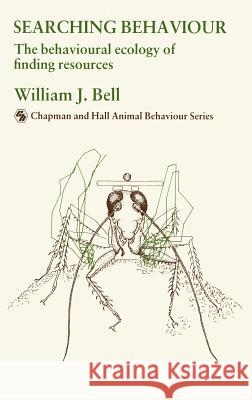
William J. Bell; W. J. Bell
Searching Behaviour: The Behavioural Ecology of Finding Resources Bell, W. J. 9780412292101 Chapman & Hall - książkaWidoczna okładka, to zdjęcie poglądowe, a rzeczywista szata graficzna może różnić się od prezentowanej.

Searching Behaviour: The Behavioural Ecology of Finding Resources

ISBN-13: 9780412292101 / Angielski / Twarda / 1991 / 358 str.

William J. Bell; W. J. Bell
cena 803,21
(netto: 764,96 VAT:  5%)

Najniższa cena z 30 dni: 771,08
Termin realizacji zamówienia:
ok. 22 dni roboczych
Dostawa w 2026 r.

Darmowa dostawa!
inne wydania

This is a book about proximate mechanisms. Although some theoreti cal structure is used to introduce the subject, the intent is to offer a comprehensive view of the mechanistic side of searching (or foraging) so as to balance the current emphasis of books on mathematical and functional models. It seems to me that the pendulum needs to swing back to studies of how animals behave, and that maybe in so doing models will become valuable again in driving experimentation. I have probably included too many examples in this book, and some are even presented in great detail. Hopefully, they provide a complete picture of the kind of animals used, the experimental setup, the kinds of data yielded, and how the data were analysed. I have done this in response to frustrating experiences of reading chapters in behavioural ecobgy books that provide insufficient information with which to evaluate an author's conclusion."


Kategorie:
Nauka, Biologia i przyroda
Kategorie BISAC:
Gardening > General
Science > Life Sciences - Ecology
Science > Life Sciences - Evolution
Wydawca:
Chapman & Hall
Seria wydawnicza:
Topics in the Earth Sciences
Język:
Angielski
ISBN-13:
9780412292101
Rok wydania:
1991
Wydanie:
1990
Numer serii:
000030098
Ilość stron:
358
Waga:
0.70 kg
Wymiary:
23.39 x 15.6 x 2.24
Oprawa:
Twarda
Wolumenów:
01

it can be recommended to anyone interested in learning about the background to this field of research - The Biologist

One Introduction.- 1 Theoretical framework.- 1.1 Animal abilities (internal constraints).- 1.2 Resource availability and distribution (external constraints).- 1.3 Efficiency and optimization.- 1.4 Trade-offs: competition and risks.- 1.5 Plasticity in searching behaviour.- 1.6 Summary and conclusions.- Two Information for the Localization and Assessment of Resources.- 2 Orientation cues: information for searching.- 2.1 Orientation based on external sensory information.- 2.2 Orientation based on internally-stored or internally-derived information.- 2.3 Stochastic influences or ‘noise’.- 2.4 Summary and conclusions.- 3 Scanning mechanisms.- 3.1 Vision.- 3.2 Mechanoreception.- 3.3 Contact chemoreception and olfaction.- 3.4 Audition.- 3.5 Summary and conclusions.- 4 Initiating factors: when to search.- 4.1 Searching rhythms.- 4.2 Resource stimulus.- 4.3 Physiological state.- 4.4 Summary and conclusions.- 5 Assessment mechanisms: resource, patch and habitat selection.- 5.1 Assessment of resources.- 5.2 Assessment of patches and habitats.- 5.3 Summary and conclusions.- Three Search Mechanisms.- 6 Locating patches and distant resources.- 6.1 Searching when no environmental cues are available.- 6.2 Searching based on environmental cues.- 6.3 Summary and conclusions.- 7 Restricting search to a patch.- 7.1 Looping/spiralling or zigzag motor patterns.- 7.2 Patch-edge recognition.- 7.3 Variable move lengths.- 7.4 Changes in arrival-departure directions.- 7.5 Summary and conclusions.- 8 Foraging in the most profitable patches and leaving when profitability declines.- 8.1 Simple patch-departure mechanisms.- 8.2 Counting and keeping track of time to decide when to leave a patch.- 8.3 Can animals really estimate capture rate?.- 8.4 Summary and conclusions.- 9 When to return to a resource patch.- 9.1 Cropping.- 9.2 Traplining.- 9.3 Leaving patches early.- 9.4 Summary and conclusions.- 10 Learning to forage efficiently.- 10.1 Conditioning.- 10.2 Sampling between patches.- 10.3 Switching between patches conditional on what other individuals are doing.- 10.4 Sampling and spatial memory.- 10.5 More on spatial memory.- 10.6 Summary and conclusions.- 11 Exploratory behaviour.- 11.1 Summary and conclusions.- 12 Central place foraging.- 12.1 Distance travelled and patch choice as related to metabolic costs.- 12.2 Distance travelled as a function of predation risks.- 12.3 Group effects.- 12.4 Summary and conclusions.- Four Sources of Variability.- 13 External environment.- 13.1 Abiotic factors.- 13.2 Biotic environment.- 13.3 Influences of other individuals.- 13.4 Alternatives to searching.- 13.5 Summary and conclusions.- 14 Internal environment.- 14.1 Deprivation: time-dependent effects on searching.- 14.2 Status-dependent changes in searching behaviour.- 14.3 Summary and conclusions.- 15 Genetic factors.- 15.1 Variability in searching traits.- 15.2 Interactions between internal and external environment and genes.- 15.3 Summary and conclusions.- 16 Ontogenetic and maternal influences.- 16.1 Maternal effects.- 16.2 Juvenile behaviours.- 16.3 Early adult experiences.- 16.4 Summary and conclusions.- Five Methodology.- 17 Analysing search tracks.- 17.1 Data collection.- 17.2 Analysis of tracks.- 17.3 Summary and conclusions.- 18 Computer simulations of search behaviour locomotory patterns.- 18.1 Summary and conclusions.- References.

Bell, William J. William J. Bell (1943--1998) was a revered entomol... więcej >


Udostępnij

Facebook - konto krainaksiazek.pl


Opinie o Krainaksiazek.pl na Opineo.pl

Partner Mybenefit

Krainaksiazek.pl w programie rzetelna firma Krainaksiaze.pl - płatności przez paypal

Czytaj nas na:

Facebook - krainaksiazek.pl
  • książki na zamówienie
  • granty
  • książka na prezent
  • kontakt
  • pomoc
  • opinie
  • regulamin
  • polityka prywatności

Zobacz:

  • Księgarnia czeska

  • Wydawnictwo Książkowe Klimaty

1997-2025 DolnySlask.com Agencja Internetowa

© 1997-2022 krainaksiazek.pl
     
KONTAKT | REGULAMIN | POLITYKA PRYWATNOŚCI | USTAWIENIA PRYWATNOŚCI
Zobacz: Księgarnia Czeska | Wydawnictwo Książkowe Klimaty | Mapa strony | Lista autorów
KrainaKsiazek.PL - Księgarnia Internetowa

Polityka prywatnosci - link
Krainaksiazek.pl - płatnośc Przelewy24
Przechowalnia Przechowalnia






