• Wyszukiwanie zaawansowane
  • Kategorie
  • Kategorie BISAC
  • Książki na zamówienie
  • Promocje
  • Granty
  • Książka na prezent
  • Opinie
  • Pomoc
  • Załóż konto
  • Zaloguj się

Scientific Visual Representations in History » książka


zaloguj się | załóż konto
Logo Krainaksiazek.pl

koszyk

konto

szukaj
topmenu
Księgarnia internetowa
Szukaj
Książki na zamówienie
Promocje
Granty
Książka na prezent
Moje konto
Pomoc
 
 
Wyszukiwanie zaawansowane
Pusty koszyk
Bezpłatna dostawa dla zamówień powyżej 20 złBezpłatna dostawa dla zamówień powyżej 20 zł

Kategorie główne

• Nauka
 [2950560]
• Literatura piękna
 [1849509]

  więcej...
• Turystyka
 [71097]
• Informatyka
 [151150]
• Komiksy
 [35848]
• Encyklopedie
 [23178]
• Dziecięca
 [617388]
• Hobby
 [139064]
• AudioBooki
 [1657]
• Literatura faktu
 [228597]
• Muzyka CD
 [383]
• Słowniki
 [2855]
• Inne
 [445295]
• Kalendarze
 [1464]
• Podręczniki
 [167547]
• Poradniki
 [480102]
• Religia
 [510749]
• Czasopisma
 [516]
• Sport
 [61293]
• Sztuka
 [243352]
• CD, DVD, Video
 [3414]
• Technologie
 [219456]
• Zdrowie
 [101002]
• Książkowe Klimaty
 [124]
• Zabawki
 [2311]
• Puzzle, gry
 [3459]
• Literatura w języku ukraińskim
 [254]
• Art. papiernicze i szkolne
 [8079]
Kategorie szczegółowe BISAC

Scientific Visual Representations in History

ISBN-13: 9783031113161 / Angielski / Twarda / 2023 / 360 str.
Matteo Valleriani; Giulia Giannini; Enrico Giannetto
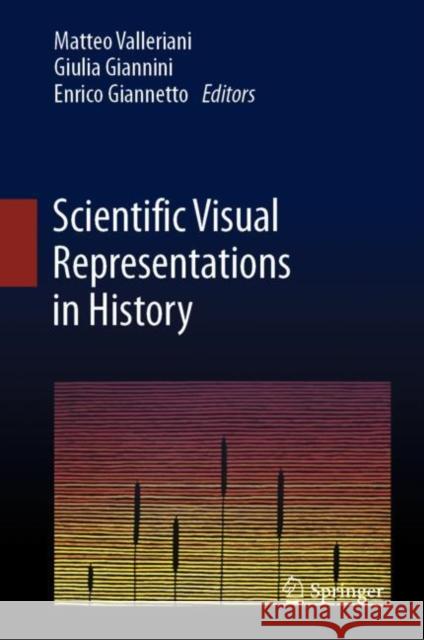
Scientific Visual Representations in History Matteo Valleriani Giulia Giannini Enrico Giannetto 9783031113161 Springer - książkaWidoczna okładka, to zdjęcie poglądowe, a rzeczywista szata graficzna może różnić się od prezentowanej.

Scientific Visual Representations in History

ISBN-13: 9783031113161 / Angielski / Twarda / 2023 / 360 str.

Matteo Valleriani; Giulia Giannini; Enrico Giannetto
cena 341,34
(netto: 325,09 VAT:  5%)

Najniższa cena z 30 dni: 327,68
Termin realizacji zamówienia:
ok. 22 dni roboczych
Dostawa w 2026 r.

Darmowa dostawa!
inne wydania

This book explores continuity and ruptures in the historical use of visual representations in science and related disciplines such as art history and anthropology. The book also considers more recent developments that attest to the unprecedented importance of scientific visualizations, such as video recordings, animations, simulations, graphs, and enhanced realities. The volume collects historical reflections concerned with the use of visual material, visualization, and vision in science from a historical perspective, ranging across multiple cultures from antiquity until present day.The focus is on visual representations such as drawings, prints, tables, mathematical symbols, photos, data visualizations, mapping processes, and (on a meta-level) visualizations of data extracted from historical sources to visually support the historical research itself. Continuity and ruptures between the past and present use of visual material are presented against the backdrop of the epistemic functions of visual material in science. The function of visual material is defined according to three major epistemic categories: exploration, transformation, and transmission of knowledge.


This book explores continuity and ruptures in the historical use of visual representations in science and related disciplines such as art history and anthropology. The book also considers more recent developments that attest to the unprecedented importance of scientific visualizations, such as video recordings, animations, simulations, graphs, and enhanced realities. The volume collects historical reflections concerned with the use of visual material, visualization, and vision in science from a historical perspective, ranging across multiple cultures from antiquity until present day.The focus is on visual representations such as drawings, prints, tables, mathematical symbols, photos, data visualizations, mapping processes, and (on a meta-level) visualizations of data extracted from historical sources to visually support the historical research itself. Continuity and ruptures between the past and present use of visual material are presented against the backdrop of the epistemic functions of visual material in science. The function of visual material is defined according to three major epistemic categories: exploration, transformation, and transmission of knowledge.

Kategorie:
Nauka, Biologia i przyroda
Kategorie BISAC:
Science > History
Philosophy > Krytyka
Art > General
Wydawca:
Springer
Język:
Angielski
ISBN-13:
9783031113161
Rok wydania:
2023
Dostępne języki:
Ilość stron:
360
Oprawa:
Twarda
Dodatkowe informacje:
Wydanie ilustrowane

Foreword

Matteo Valleriani, Giulia Giannini, Enrico Giannetto

Section 1 – Transmission

Visual Culture of University Knowledge: The Lecture Notebooks from Louvain and Douai (17th-18th centuries)

Gwendoline de Mûelenaere - University of Louvain, Belgium

The Illustrated Printed Page as a Tool for Thinking and Transmitting Knowledge. The Case of Renaissance Astronomical Books

Isabelle Pantin - École Normale Supérieure de Paris, France

Representing Experience in the Early Royal Society. The Case of Robert Hooke?s Micrographia (1665)

Salvatore Ricciardo - University of Bergamo, Italy

Vision on Vision: Early Modern Scientific Images on Cosmology Explored by Means of Second Order Images

Matteo Valleriani - Max Planck Institute for the History of Science - Technische Universität Berlin, Germany

Florian Kräutli - Max Planck Institute for the History of Science, Germany

Section 2 – Transformation

Theorizing Technology: Theōria, Diagram, and Artifact in Hero of Alexandria

Courtney Roby - Cornell University, USA

Artistic 'Libido' and Scientific Truth in 16th Century Woodcut Illustrations

Magdalena Bushart - Technische Universität Berlin, Germany

Capturing, Modeling, Overviewing and Making Credible: The Functions of Visual at the Accademia del Cimento

Giulia Giannini – Università Statale di Milano, Italy

The Transformations of Physico-Mathematical Visual Thinking: from Descartes to Quantum Physics

Enrico Giannetto - University of Bergamo, Italy

Section 3 – Exploration

Transporting Asian and Australasian Nature to Europe: Photographs from the Voyage of HMS. Challenger 1872–1876

Stephanie Hood - Max Planck Institute for the History of Science, Germany

Visualising Biodata in the Laboratory. Image-makers, Practices and Reinvention in Magnetic Resonance Technology

Silvia Casini - The University of Aberdeen, Scotland

Arguing from Appearance: The Numerical Reconstruction of Galactic Tails and Bridges

Matthias Schemmel - Max Planck Institute for the History of Science, Germany

Ethnoscience and Spatial Representations of Climate Change

Elena Bougleux - University of Bergamo, Italy

Matteo Valleriani is a research group leader at the Department I at the Max Planck Institute for the History of Science in Berlin, honorary professor at the Technische Universität of Berlin, and professor by Special Appointments at the University of Tel Aviv. He investigates the relation between diffusion processes of scientific, practical, and technological knowledge and their economic and political preconditions. His research focuses on the Hellenistic period, the late Middle Ages, and the Early  Modern Period. Among his principal research endeavors, he leads the project “The Sphere: Knowledge System Evolution and the Shared Scientific Identity of Europe,” which investigates the formation and evolution of a shared scientific identity in Europe between the thirteenth and seventeenth centuries. Among his publications, he has authored the book Galileo Engineer (Springer 2010), is editor of The Structures of Practical Knowledge (Springer Nature 2017), and published De sphaera of Johannes de Sacrobosco in the Early Modern Period. The Authors of the Commentaries (Springer Nature 2020)

Giulia Giannini is Associate Professor of History of Science at the University of Milan (Italy). She is the principal investigator of the ERC Consolidator research project “TACITROOTS – The Accademia del Cimento in Florence: tracing the roots of the European scientific enterprise”, which investigates the historical process of establishment of scientific societies in Europe, the emergence of a shared scientific discourse, and its normalization (Horizon 2020, GA 818098). She worked at the Center Koyré in Paris and at the Max Planck Institute for the History of Science in Berlin. Her research interests focus on the history of experimentation, and on cultural, political, and social studies of science in Early Modern Europe. Among recent project, she is the co-editor, with Mordechai Feingold, of The Institutionalization of Science in Early Modern Europe (Brill 2020).

Enrico Giannetto was a graduate at the University of Padova in elementary particle theoretical physics, and then he studied early universe cosmology at the ISAS of Trieste. He studied history of science at the Domus Galilaeana in Pisa and obtained his doctorate in theoretical physics of condensed matter at the University of Messina. He has been working as a researcher for ten years at the University of Pavia within the History of Science & Science Education Group. Here, he taught in particular General Physics. Since 2001, he is a full professor of History of Physics and History of Science, since 2002 at the University of Bergamo, Italy. Here, he has been teaching many disciplines from History of Scientific Thinking, to Theoretical Philosophy, Epistemology of Complexity, and Physics. His researches are focused on a perspective of a wide history of cultures where mythology, history of religions, anthropology, philosophy, human and natural science are entangled. In particular, he has done research works on the following disciplines among others: quantum chromodynamics, quantum electrodynamics, early universe quantum cosmology, phase transitions in cosmology and condensed matter, special and general relativity, foundations of quantum mechanics, quantum logic; history of quantum physics, of relativity, of chaos physics, of elementary particle physics, of medieval physics, of romantic natural philosophy, of the scientific revolution and of theoretical physics, history of psychology versus physics, science education, hermeneutics, philosophy of dialogue, anthropology of scientific thinking, and history of primeval Christianity. He has published more than 200 scientific papers and four major books: Saggi di Storie del Pensiero Scientifico, Bergamo University Press, Bergamo 2005; Il vangelo di Giuda—traduzione dal copto e commento, Medusa, Milano 2006; “Un fisico delle origini. Heidegger, la scienza e la Natura, Donzelli, Roma 2010; Sguardi sul pensiero contemporaneo. Filosofia e scienze per cambiare il mondo, libreriauniversitaria.it, Limena (PD) 2018.

This book explores continuity and ruptures in the historical use of visual representations in science and related disciplines such as art history and anthropology. The book also considers more recent developments that attest to the unprecedented importance of scientific visualizations, such as video recordings, animations, simulations, graphs, and enhanced realities. The volume collects historical reflections concerned with the use of visual material, visualization, and vision in science from a historical perspective, ranging across multiple cultures from antiquity until present day.

The focus is on visual representations such as drawings, prints, tables, mathematical symbols, photos, data visualizations, mapping processes, and (on a meta-level) visualizations of data extracted from historical sources to visually support the historical research itself. Continuity and ruptures between the past and present use of visual material are presented against the backdrop of the epistemic functions of visual material in science. The function of visual material is defined according to three major epistemic categories: exploration, transformation, and transmission of knowledge.




Udostępnij

Facebook - konto krainaksiazek.pl


Opinie o Krainaksiazek.pl na Opineo.pl

Partner Mybenefit

Krainaksiazek.pl w programie rzetelna firma Krainaksiaze.pl - płatności przez paypal

Czytaj nas na:

Facebook - krainaksiazek.pl
  • książki na zamówienie
  • granty
  • książka na prezent
  • kontakt
  • pomoc
  • opinie
  • regulamin
  • polityka prywatności

Zobacz:

  • Księgarnia czeska

  • Wydawnictwo Książkowe Klimaty

1997-2025 DolnySlask.com Agencja Internetowa

© 1997-2022 krainaksiazek.pl
     
KONTAKT | REGULAMIN | POLITYKA PRYWATNOŚCI | USTAWIENIA PRYWATNOŚCI
Zobacz: Księgarnia Czeska | Wydawnictwo Książkowe Klimaty | Mapa strony | Lista autorów
KrainaKsiazek.PL - Księgarnia Internetowa

Polityka prywatnosci - link
Krainaksiazek.pl - płatnośc Przelewy24
Przechowalnia Przechowalnia




